Long Live the Underground!
Share
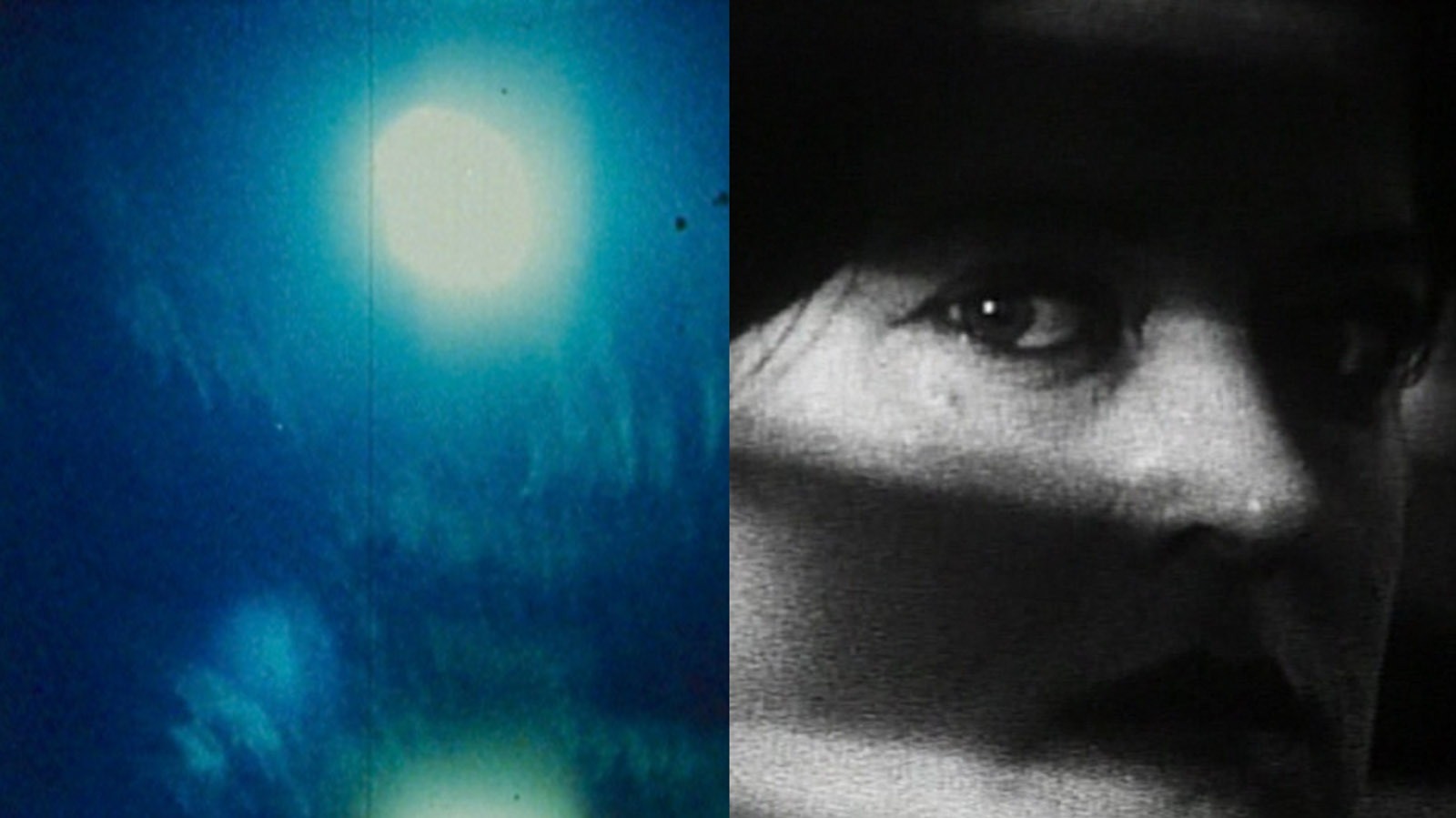
Stan Brakhage’s films may “explode with sensual beauty,” as Fred Camper wrote in 2010, but they can also engage with some of the darkest moments of the soul with a profoundly emotional intensity. As Marilyn Brakhage has written, in Anticipation of the Night (1958), “the subjective camera of the unseen hero restlessly pursues elliptical transformations of imagery in an associative montage culminating in the shadow of a man who has hanged himself.”
It wasn’t the subject matter of Anticipation of the Night, though, that led Cinema 16, the film society founded in New York by Amos Vogel, to turn down a screening. Instead, it was a perceived formlessness that Jonas Mekas heralded as “a totally new, subjective cinema.” The rejection of Brakhage’s film by Cinema 16 led Mekas and nearly two dozen other filmmakers to form the New American Cinema Group and to found the Film-Makers’ Cooperative in 1961: “We don’t want false, polished, slick films—we prefer them rough, unpolished, but alive; we don’t want rosy films—we want them the color of blood.”
The Cooperative aimed to distribute the work of any artist who chose to submit it, and five years later, the late Ken Jacobs initiated the Millennium Film Workshop, which provided equipment, work spaces, and weekly screenings. Both landmark institutions are still thriving, and from Wednesday through October 8, the Museum of Modern Art will salute their legacies and ongoing impact with a multifaceted series, Long Live the Underground! Celebrating Six Decades of the Film-Makers’ Cooperative and Millennium Film Workshop.
“Somehow, by breaking all the rules of conventional cinema, underground film excavated the unconscious of American culture,” writes Ara Osterweil—a painter, professor, and the author of Flesh Cinema: The Corporeal Turn in American Avant-Garde Film—for MoMA’s Magazine. “When I first encountered underground films from the 1960s as a graduate student in my 20s, they blasted open new imaginative possibilities for the convergence of art, life, sexuality, and friendship . . . What a pleasure to re-experience cinematic gems like Ken Jacobs’s ludic portrait of Jack Smith in Little Stabs at Happiness (1963), Storm de Hirsch’s trippy extravaganza Peyote Queen (1965), Paul Sharits’s viscerally throbbing Piece Mandala/End War (1966), Tom Chomont’s sensuous Phases of the Moon (1968), or Joyce Wieland’s casting of New York City’s most popular rodent in her allegorical critique of the Vietnam War: Rat Life and Diet in North America (1968).”
Osterweil also emphasizes that the series pushes way past mere nostalgia. “Startling films like Palcorecore (Dana Dawud, 2023) remind us how urgent these institutions remain for the dissemination of unexpected visions of our devastated yet still wondrous world,” she writes. “Even two-minute sketches like How to Disappear Completely (Cameron Granger, 2020) and LESPRI (Jard Lerebours, 2024) demonstrate the profound capacity of experimental film not only to speak to but to work through personal and collective trauma.”
Don’t miss out on your Daily briefing! Subscribe to the RSS feed.