Art with a Life of Its Own: A Conversation with Gary Hustwit
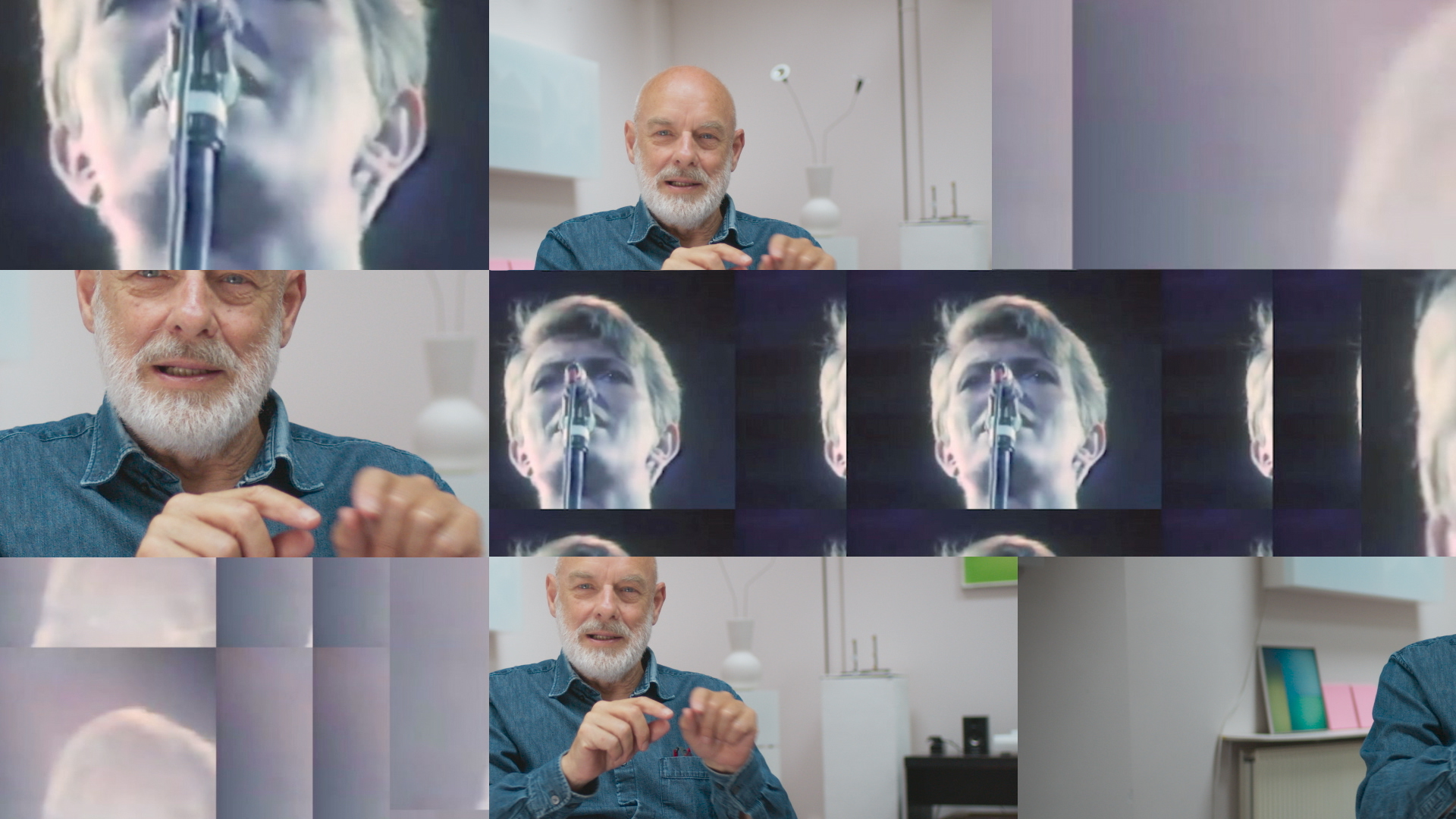
Over the course of his first three documentaries—Helvetica (2007), Objectified (2009), and Urbanized (2011)—Gary Hustwit established a clean and clear cinematic language that he used to describe the complex and often contradictory systems of thinking that designers use to shape the world around us. His latest film, Eno (2024), a kaleidoscopic portrait of the legendary musician, artist, and producer Brian Eno, strips that language down to its basic grammar, then allows it to rebuild itself. Eno is an ambitious formal experiment in what Hustwit calls “generative” filmmaking. The term is fraught these days, but there’s no AI slop in Hustwit’s approach. Instead, Hustwit and his collaborators have designed software to edit and assemble real footage on the fly, surrendering direct control of the final edit to foreground the very human choices happening at the structural level. To celebrate the arrival of his films on the Criterion Channel, I sat down with Hustwit to discuss his approach to designing films.





More: Interviews
Cinema as a Buddhist Practice: A Conversation with Khyentse Norbu
The Bhutanese director and leading Tibetan Buddhist teacher talks about his wide range of aesthetic influences, his experience working with Bernardo Bertolucci, and film’s connection to meditation.
“A Radical Democracy of Images”: Mike Mills on His Work Outside of Feature Filmmaking
The filmmaker looks back on the experiences that have shaped his creative life, including his time in art school, his work as a graphic designer and music-video director, and his early interest in documentary cinema.
Courtney Love Looks Back on Her Life as a Movie Star
The beloved rock musician reflects on her formative experiences as an actor and her close collaborations with directors Miloš Forman and Alex Cox.
Charting the Rise of Trans Filmmaking with Caden Mark Gardner and Willow Catelyn Maclay
The curators of a showcase of trans directors now playing on the Criterion Channel discuss the work of these trailblazing artists, who have brought new layers of nuance and insight to cinematic depictions of their community.