Tribeca 2026: “AI Is Here”
Share
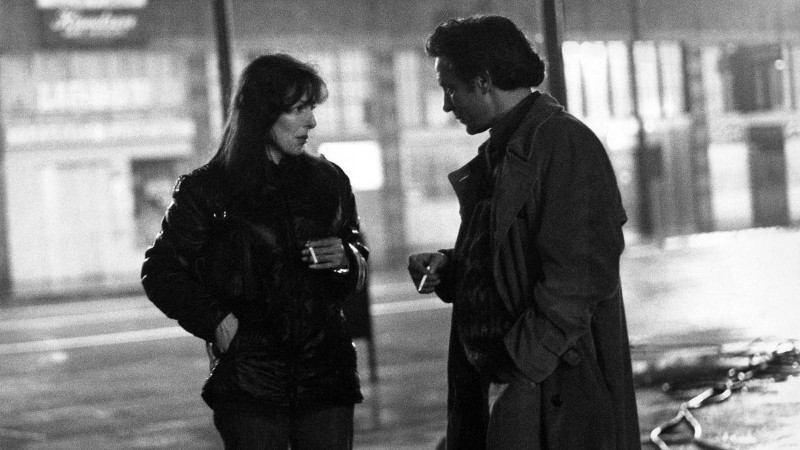
In the run-up to today’s opening of the twenty-fifth Tribeca Festival, the New York Times’ Sarah Bahr has spoken with Robert De Niro and Jane Rosenthal—who cofounded the event in the immediate wake of 9/11 to help revive the Lower Manhattan neighborhood—and Rebecca Glashow, the new CEO of Tribeca Enterprises, which owns and operates the festival. Bahr asks all three what they’re most looking forward to in this year’s edition, and De Niro’s answer is the Q&A he’ll be taking part in alongside Martin Scorsese and Jodie Foster prior to Friday’s fiftieth-anniversary screening of Taxi Driver.
A few years ago, we posted a clip from the audio commentary that Scorsese and Taxi Driver screenwriter Paul Schrader recorded for our 1990 release of the film on laserdisc. De Niro, of course, stars as Travis Bickle, a Vietnam War veteran coming undone as he drives through the streets of New York at night. Schrader says he wrote the screenplay “essentially for myself—as therapy.” And he was surprised to discover that so many people had “plugged into my own neurosis, bordering on psychosis.” Taxi Driver was “very much a serendipity,” he adds, noting that he, Scorsese, and De Niro had come together at “a certain point” in their lives, “all needing to say the same thing.”
In a way, the three men have synched up again. Schrader has recently been so AI-curious that he “procured an online AI girlfriend. What a disappointment.” But that hasn’t stopped him from predicting that the day will soon come when “us carbon-based fools spend our money empathizing and caring about silicon-based creations.” Beyond AI-generated actors, he can see a future when AI writes a screenplay that measures up to his own work.
Schrader has already prompted ChatGPT to come up with an idea for a Schrader-like script idea, and it gave him The Collection Agency, the story of a lapsed Catholic who meets a girl harboring an old secret. “I could send it out,” he told an audience at Amazon’s AI on the Lot event last month. “I know what response I would get: This is second-rate Schrader . . . but it’s going to be first-rate Schrader soon enough.”
As a kid, long before he picked up a camera, Scorsese famously drew up a set of storyboards for a historical epic set in ancient Rome. By hand, of course. “For seventy years, I’ve been creating my own storyboards,” says Scorsese in a statement released with yesterday’s endorsement of Flux, a text-to-image model created by the AI startup Black Forest Labs.
In an accompanying video, Scorsese describes a scene set in an “almost medieval” town in the Caucasus, and lo, Flux conjures an establishing shot. “I’m interested in the intersection of technology and storytelling, and seeing how that can push the bounds of creativity to create deeper and richer experiences for audiences,” says Scorsese, praising the “cinematic intelligence” that he believes AI might offer. “Remember, cinema is a young medium, only around 125 years old, so we have to be open to how it can evolve.”
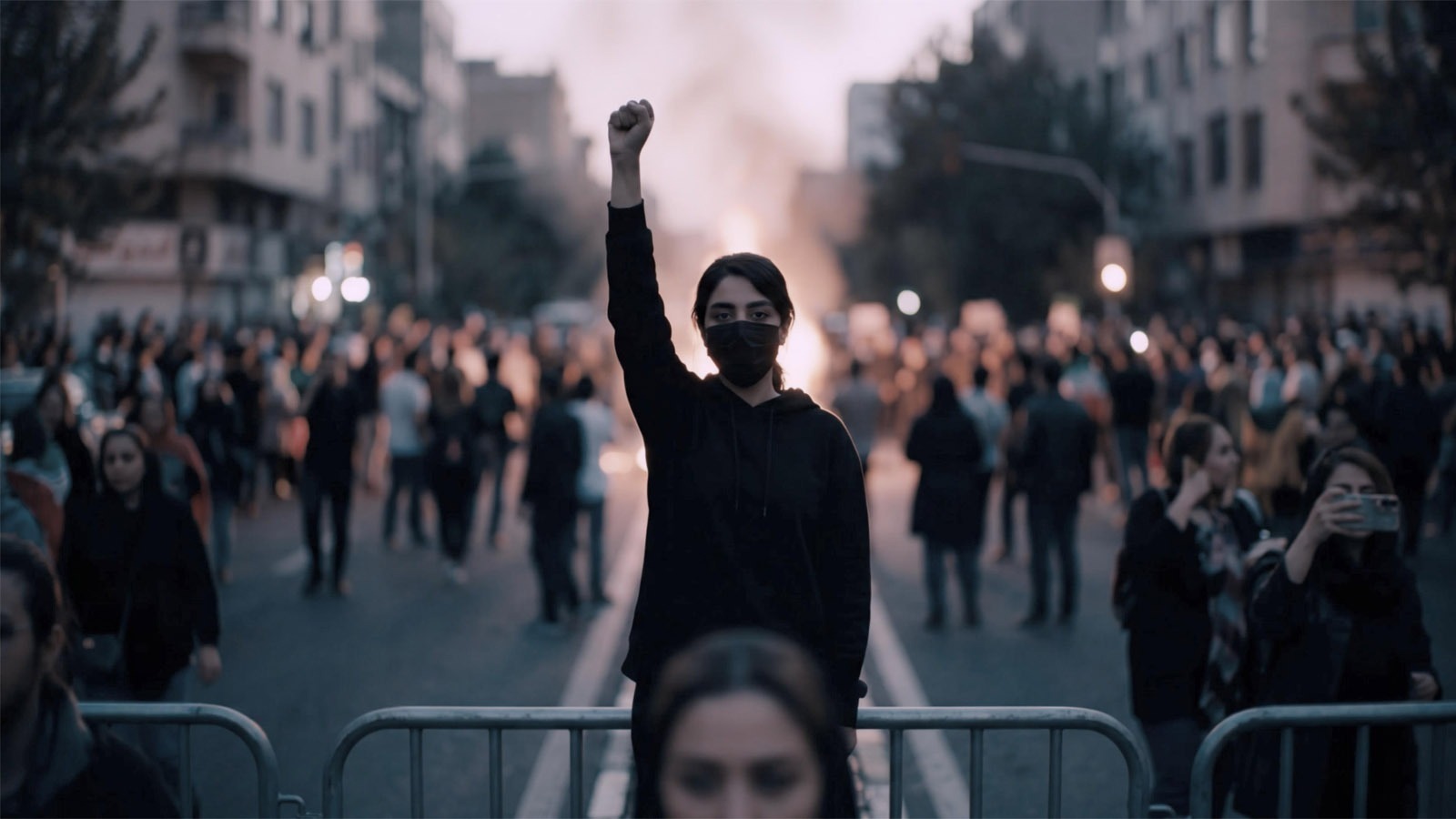
As for De Niro, it’s difficult to imagine that he gets too deep into the weeds of programming Tribeca’s lineups, but as a cofounder, he is in a sense a cohost for the premiere of Dreams of Violets, the first AI-generated feature to screen as part of a major festival’s official selection. Directed by Ash Koosha, the film centers on a group of strangers who meet in an alleyway during the protests in Tehran against the Islamist regime in January. Those protests spread across hundreds of cities throughout Iran and led to a government crackdown and the deaths of an estimated seven thousand people.
“I would say eighty percent of [Dreams of Violets] is a recreation of events that actually happened,” Koosha tells Cath Clarke in the Guardian. Before Iranian authorities cut off access to the internet, “we saw things that were just horrifying. It was a bloodbath.” Koosha, a cofounder of the AI company Claigrid and the studio Foundation 0, decided that it was “time to use technology to keep something alive.” In less than three months, he’d completed Dreams of Violets. “If you wanted to do it in CGI, it would cost millions,” he says. “I spent under $2,000.”
“I understand that an AI-generated film about people who actually died raises difficult questions,” says Koosha in a statement. “I have thought about those questions for every minute of every day I have worked on this film. My answer is that the alternative—silence, forgetting, the regime’s preferred outcome—is worse. The film exists because the dead deserve to be witnessed and because the families inside Iran, who cannot speak, deserve someone outside who refuses to forget.”
“AI is here,” Rebecca Glashow tells Sarah Bahr. “It’s part of our everyday lives, and so it’s inevitable that it’ll impact how people tell stories.”
A Few Highlights
Tribeca 2026 will open this evening with Earth, Wind & Fire (To Be Celestial VS That’s the Weight of the World), the latest celebration of Black music titans from Questlove (Summer of Soul, Sly Loves!). The screening will be followed by a live performance from EW&F and The Roots. Alicia Keys: Girl From Hell’s Kitchen, from director One9 (Nas: Time Is Illmatic), will close out this year’s edition on June 13.
This year’s Tribeca package in the New York Times includes Nicolas Rapold’s profile of André Holland, who stars in two films premiering at the festival, Alex Vlack’s The Revisionist and Sheldon Candis’s They Fight. In The Revisionist, Holland plays “a struggling writer who seizes the chance to interview a friend’s father, a legendary author (Dustin Hoffman), to the friend’s consternation,” and in They Fight, he’s “a youth boxing coach in Washington, D.C., pulling himself together after a stint in prison.”
Shivani Vora interviews Edward Burns, “the festival’s most frequent returning filmmaker.” Burns’s latest feature, Finnegan’s Foursome, is a comedy about two brothers who take their families to Ireland to take part in a golf tournament in honor of their late father. Erik Piepenburg talks with Jeffrey Schwarz, whose documentary Mineshaft: The Cruising Murders takes us back to the summer of 1979, when New York’s gay community did all they could to disrupt the making of William Friedkin’s Cruising (1980).
Natalia Winkelman opens her overview of Tribeca highlights with Sophia Takal’s Act One, starring “the captivating Ella Beatty, the daughter of Annette Bening and Warren Beatty,” as Hannah, a lonely and aspiring actor who falls under the magnetic spell of acting instructor Melanie (Ari Graynor). Melanie says that she and Hannah share a calling to become “change agents” whose charge is to “show people the path to living their truth.”
“Takal wants Melanie to sound ridiculous, a spout of highfalutin creative babble,” writes Winkelman. “But the character’s rhetoric reminded me a little of the Tribeca Festival itself. For years now, the event has lived in buzzword land. Premieres occur alongside summits, performances, and showcases led by ‘storytellers’ and ‘creators.’ Some attendees may skip movies for live podcast recordings or video game demos. The festival has long been known for its kitchen-sink mélange of high and low, mixed with lots and lots of mushy middle.” And now, “securely in early adulthood, Tribeca has become its own known quantity: maximalist and scattershot, but worth moviegoers’ attention.”
For Cultured, Elissa Suh gets eight recommendations from Tribeca Director Cara Cusumano. “For something that feels slightly out of joint with reality—or, more simply, ‘weird as hell,’ as Cusumano puts it—try Ponderosa, which moves through its uneasy world with a logic all its own,” writes Suh. “Alexis Bledel, Jack Dylan Grazer, and Bill Camp star in a film that reportedly went through the festival programming team at unusual speed—the kind of work that demands immediate discussion afterward. Directed by Rob Rice and shot by rising indie cinematographer Barton Cortright (who also shot another festival entry, Lucy Schulman), it’s daring, disorienting, and best approached as cold as possible.”
At Vulture, Mike Albo profiles the subject of Jyllian Gunther and Stephanie Schwam’s Bang My Box: The Robin Byrd Story. From 1977 until 1998, Byrd, “perpetually clad in a spiderweb crochet bikini,” hosted strippers, porn stars, and local celebrities such as Sandra Bernhard and Michael Musto on her Manhattan Cable Network late-night show. “While AIDS was all but ignored on mainstream television,” writes Albo, “Byrd’s good-natured reminders about safe sex reached thousands across the boroughs struggling with fear and isolation. If there is a media figure she most resembles, it’s Fred Rogers, who also had an uncanny ability to send good energy through the screen and soothe viewers in the (very different) neighborhood. ‘I didn’t even show sex,’ Byrd says. ‘I wanted to turn you on and tuck you in to have good dreams.’”
Don’t miss out on your Daily briefing! Subscribe to the RSS feed.