Meiko Kaji in New York
Share
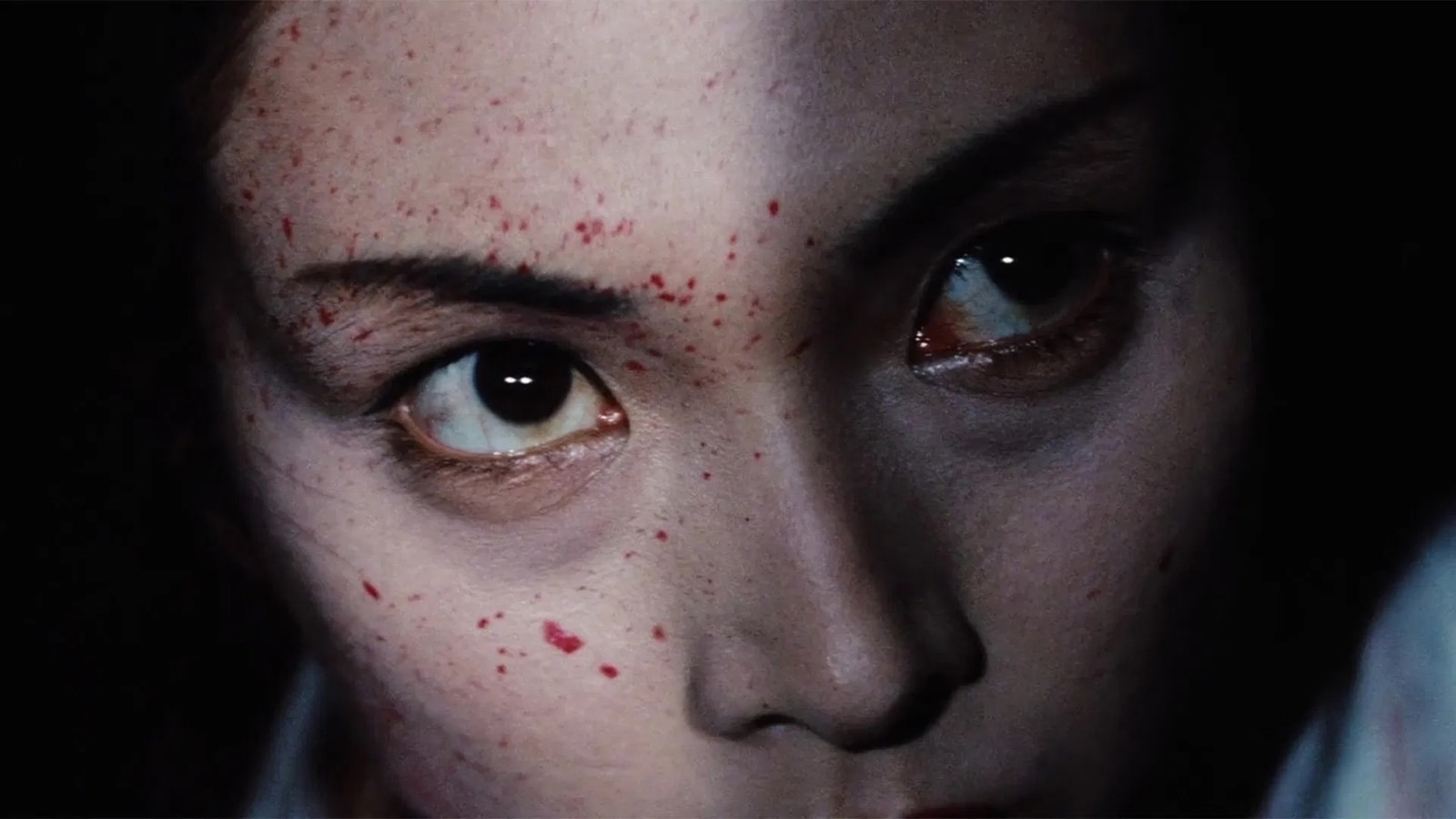
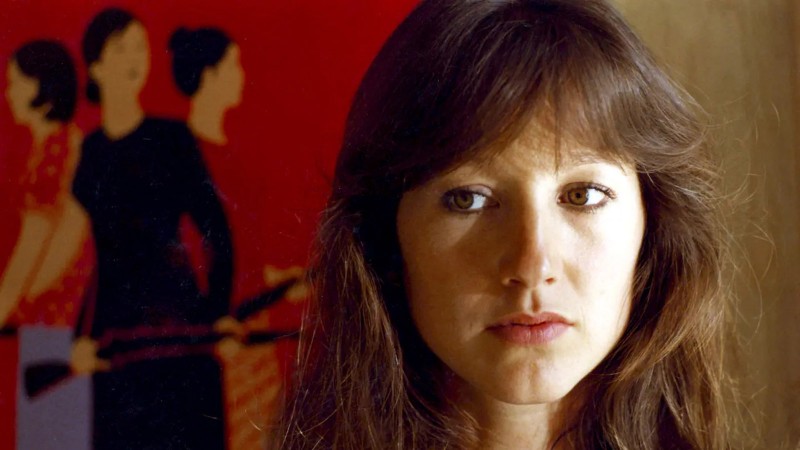
Toshiya Fujita’s Lady Snowblood (1973) will naturally be the opening night film on Friday when Japan Society launches a Meiko Kaji retrospective set to run through April 4. In her first public appearance in New York in more than forty years, Kaji, the subject of the latest Outskirts Film Podcast, will introduce the bloody classic that Howard Hampton has called “a mind-melting witches’ brew of Rosemary’s Baby, Lady Macbeth, and ‘Snow White.’” After the screening, she’ll take part in a Q&A.
Adapted from the manga series written by Kazuo Koike (Lone Wolf and Cub) and illustrated by Kazuo Kamimura, and set in the waning years of the nineteenth century, Lady Snowblood tracks the revenge-fueled journey of Yuki (Kaji), who slashes her way through Meiji-era Japan in her search for the outlaws who killed her father and brother and raped her mother. Kaji’s performance is “pervasively, rapturously iconic,” writes Hampton, adding that “her eyes were her most unforgettable feature: a penetrating stare that was sharper than a swordsman’s blade or a serpent’s tooth. She made the female gaze deadlier than the male’s.”
Born Masako Ota in Tokyo, Kaji was in her early twenties when she took her stage name and broke through in Teruo Ishii’s Blind Woman’s Curse (1970), starring as Akemi, the tattooed leader of her late father’s yakuza gang. Reviewing this spectacular oddity at Midnight Eye in 2007, Tom Mes noted that the “mix of yakuza, ghost story, and ero-guro [erotic grotesque] resembles complete delirium at times, aided by several jarring jump cuts that further dilute any sense of logic and rationale. The very least one can say is that there is no shortage of eye candy, with gaudily colored set pieces like the circus tent filled with wax dummies, the Dobashi hide-out with its mirrors, trap doors, and torture dungeons, and the final confrontation between Akemi and her blind nemesis, set against a phantasmagorical painted backdrop of spiraling clouds.”
Kaji barely had time to wipe off her dragon tattoo makeup before headlining five girl-gang biker movies shot in rapid succession. In a 2016 piece for Notebook, Josh Cabrita wrote that the Stray Cat Rock series, “with its unabashed feminist, anti-colonialist, and anti-militaristic politics, is a surprisingly detailed and sprawling account of both the radical spirit that intoxicated the air and the racist, sexist, and nationalist sentiments that were planning a coup in Japan around the same time. Packaged in a consumable genre form, as ubiquitous as the films’ reoccurring Coke bottles, the series is an effective bait-and-switch, a ‘fuck you’ from inside the system.”
Japan Society will screen a 35 mm print of Yasuharu Hasebe’s Stray Cat Rock: Sex Hunter (1970), which, as Cabrita noted, “revolves around a ‘half-breed,’ a half-Japanese native and half-Black man who is defended by the Stray Cats from a racist, rival gang.” In April, New York’s Spectacle will present this one along with Hasebe’s Stray Cat Rock: Machine Animal (1970) and Toshiya Fujita’s Stray Cat Rock: Beat ’71 (1971).
Of the ten or so films based on Toru Shinohara’s manga series Sasori, Kaji stars in the first four as Nami, a woman imprisoned after being betrayed by her lover. Shunya Ito directed only the first three of these tales of her quest for vengeance, and these are the three programmer Alexander Fee has selected for the Japan Society series. Beginning with Female Prisoner #701: Scorpion (1972), the tension between the mostly male authorities and “the female convicts’ efforts to assert bodily autonomy drives the first two films in the series with an assuredness that successfully navigates a varied spectrum of scenes that range from the severe to the absurd,” wrote Clayton Dillard at Slant in 2016.
“That’s especially the case in Female Prisoner Scorpion: Jailhouse 41 [1972], the best film in the series and something of a carnivalesque masterpiece in its own right,” wrote Dillard. “Though the first film is assuredly gonzo with its slippage from realist to kabuki styles and back again, Jailhouse 41 makes few bids for realism of any sort, instead doubling down on its surrealist, headlong immersion into the vortex of a bizarro genre premise.” And Fee notes that Female Prisoner Scorpion: Beast Stable (1973) is “the most horror-tinged entry, and arguably the most violent.”
Kaji stars as a different Nami in Kazuhiko Yamaguchi’s Wandering Ginza Butterfly (1972). Having served time for killing a high-ranking yakuza member, this Nami aims to go straight and takes a job at her uncle’s pool hall—where, of course, the yakuza reappear to trouble her days and neon-lit nights all over again. Tom Mes has found that Kaji’s performance here is “reminiscent in places of the lighter moments from the Stray Cat Rock series, as she moves from funny to powerful to vulnerable with remarkable ease, equally convincing in all her guises and retaining an air of cool authority.”
After Lady Snowblood and its sequel, Lady Snowblood: Love Song of Vengeance (1974), Kaji appeared in two films directed by Kinji Fukasaku. In New Battles Without Honor and Humanity: The Boss’s Head (1975), she plays Misako, the wife of a heroin-addicted hit man, and in Yakuza Graveyard (1976), she’s Keiko, the wife of an imprisoned crime boss. “Cramped with shootouts, betrayal, and grudges, the screen (and, by extension, society) has no room for the outdated honor the characters yearn for,” wrote Fernando F. Croce in his 2006 review of Yakuza Graveyard for Slant.
Directed by Yasuzo Masumura, The Love Suicides at Sonezaki (1978) is not to be confused with Masahiro Shinoda’s Double Suicide (1969), even though both films are Art Theatre Guild productions based on plays Chikamatsu Monzaemon wrote in the early eighteenth century. In Sonezaki, Kaji costars with rock star Ryudo Uzaki as Ohatsu, a courtesan, and her client, Tokubei, an apprentice for a soy merchant. They are deeply, profoundly in love, but Tokubei’s boss has arranged for him to be married to another woman.
For Hayley Scanlon, The Love Suicides at Sonezaki is “a melancholy exploration of the limitations of love as a path to freedom in which the demands of a conformist, hierarchical society erode the will of those who refuse to compromise their personal integrity on its behalf until they finally accept that there is no way in which they can possibility continue to live inside it.” Kaji will introduce Sunday’s screening of an imported 35 mm print and then stick around to take part in another Q&A.
Don’t miss out on your Daily briefing! Subscribe to the RSS feed.