Robert Duvall’s Boundless Range
Share
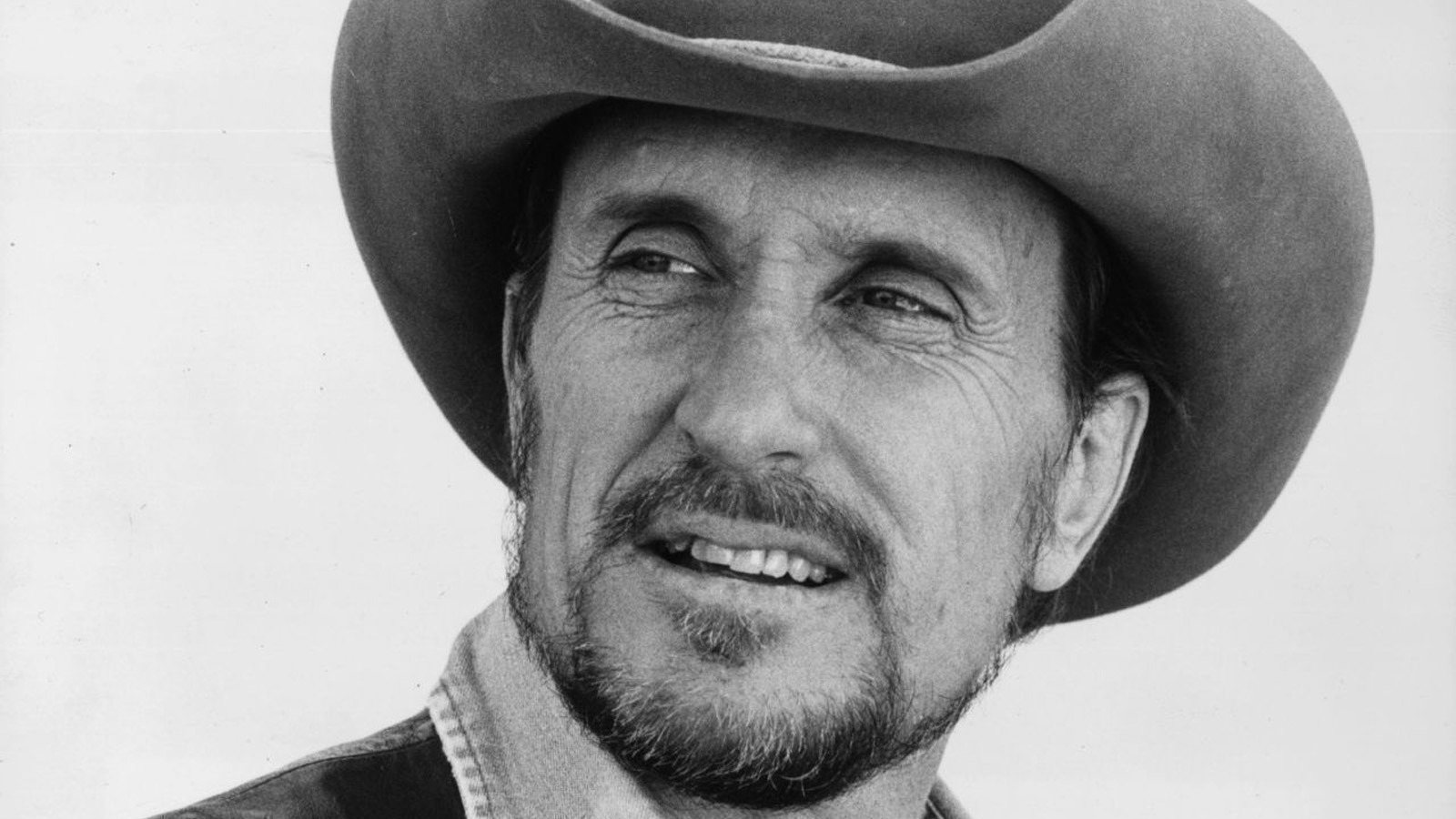
At least two of the many critics writing tributes to Robert Duvall, who passed away over the weekend at the age of ninety-five, have stated that their favorite of his well over a hundred performances is his leading turn in a film the actor wrote and spent thirteen years developing and financing before directing himself. For the Guardian’s Peter Bradshaw and Variety’s Owen Gleiberman, Duvall’s portrayal of the evangelical preacher Sonny in The Apostle (1997) tops even his Tom Hagen, Don Corleone’s consigliere in the first two Godfather movies, and his Mac Sledge, the country singer struggling to put his life back together in Tender Mercies (1983).
Duvall was so accomplished as an actor known for his uncanny ability to thoroughly embody a character that it’s perilously easy to overlook his work as a writer and director. He launched his directorial career at the height of his fame in 1974 with We’re Not the Jet Set, a documentary about a rodeo family in Nebraska. After meeting a precocious Romani American ten-year-old on the streets of New York, he wrote and directed Angelo My Love (1983). “Casting Angelo’s family and friends to enact episodes Duvall constructed around them,” writes Tom Charity for Sight and Sound, “this is not your typical actor’s film, but a slice of NYC neorealism, infused with cinema vérité instincts.”
The Apostle is “a film about faith and the South that’s neither blandly uplifting nor smugly judgmental,” writes Noel Murray in the New York Times. Sonny is “no angel, but also no phony. He believes what he preaches, and excels at winning people over. His deep understanding of his flock’s weaknesses and strengths—as well as his own—lead to a climactic sermon that’s one of the most electrifying pieces of screen acting of the late twentieth century.”
In the fourth feature he wrote and directed, Assassination Tango (2002), Duvall plays John J., a hit man sent to carry out a job in Buenos Aires. There, he meets and falls for his dance instructor, played by Argentinian actor Luciana Pedraza, who became Duvall’s fourth wife in 2005.
Duvall’s John is “a strange, complicated cat who’s at once a loving married family man and a dangerous hired gun,” writes the NYT’s Manohla Dargis, “and he seems as capable of inhabiting as many roles as the actor playing him. The night in question, he is about to pull off a sanguineous job with his customary finesse. First, though, he puts on a sharp black hat and dark clothes and primps in front of a mirror, dabbing lotion on his cheeks. And then John carefully smooths the wrinkles on his throat, an unmistakably vulnerable moment that Duvall holds on for a few seconds with memorable, sublimely knowing grace.”
“The tango is a dance that seems to contain contradictions, an undertaking with erotic overtones that nevertheless requires more discipline than abandon,” writes Glenn Kenny at the Decider. “As an actor, [Duvall’s] discipline was such that he inhabited his roles not just with a passionate intensity but a both-feet-on-the-ground credibility.”
Born the second of three sons of William Duvall, a Rear Admiral in the U.S. Navy, and Mildred Duvall, who dabbled in acting, young Robert grew up for the most part in and around in Annapolis, Maryland. He spent a year in the Army in the mid-1950s, and while stationed in Georgia, he took a role in an amateur production of a light comedy and realized that he felt most at ease while performing.
In 1955, Duvall headed to New York to study under the renowned teacher Sanford Meisner, and he became tight, lifelong friends with James Caan, Gene Hackman, and Dustin Hoffman. Roles in local playhouses led to a friendship with playwright and screenwriter Horton Foote, who would eventually recommend Duvall for the role of Boo Radley in Robert Mulligan’s To Kill a Mockingbird (1962).
After dozens of performances in such television series as Alfred Hitchcock Presents, Naked City, and The Twilight Zone, Boo—the wordless presence who terrifies young Scout (Mary Badham) and her friends until he rescues them—was Duvall’s first role in a feature film. “With his shock of blond hair and his haunted, sunken eyes,” writes the Atlantic’s David Sims, “he somehow looked both childlike and ancient, and although Duvall wouldn’t rise to proper fame for another ten years, Mockingbird was, for most of the world, an introduction to a man who’d be one of Hollywood’s most versatile and fascinating screen presences for decades to come.”
The Rain People (1969) was Duvall’s first collaboration with Francis Ford Coppola, who directed the actor in his breakout role, Tom Hagen, in The Godfather (1972) and The Godfather Part II (1974). “Though part of a crime syndicate,” writes Owen Gleiberman, “Duvall’s Hagen had qualities that seemed both corporate and priestly: a calm sense of rectitude and loyalty, along with an eerie ability to fade into the woodwork when necessary. The performance was so convincing that it was hard, at that point, not to look at Duvall and assume that those qualities defined him as an actor.”
Two years later, though, Duvall played Frank Hackett, a shouty television exec who turns the evening news into a ratings-grabber in Network (1976), directed by Sidney Lumet and written with unchecked fury by Paddy Chayefsky. “This was the other side of Duvall,” writes Gleiberman, “the showman boiling over with bluster, the amoral life of the party, with a grin as wide as a shark’s. So here was the grand paradox, and the real meaning of Duvall’s range. Few could portray a courtly gentleman as convincingly as he did; he could embody the soul of decency. Yet he was also driven to explore the dark side, and he did so as profoundly as any actor of the last half century.”
As the Wagner-blasting surfing enthusiast Lieutenant Colonel Bill Kilgore in Coppola’s Apocalypse Now (1979), Duvall is on screen for all of eleven minutes, but he delivers the most memorable and memeable line in the Vietnam War epic: “I love the smell of napalm in the morning . . . Smells like . . . victory.”
“There aren’t many more pungent monologues in American movies than this,” writes Tom Charity. “The way Robert Duvall conjures the aroma, wafting his fingers beneath his nose like he’s sitting down to a delicious meal. The prolonged pause he takes before settling on the word victory . . . even as it comes with a satisfied smirk. It’s a spellbinding performance—funny, horrifying—a portrait of absolute self-assurance—and moral oblivion—in the midst of chaos and carnage, smoke, explosions (Kilgore doesn’t flinch).”
“People come up to me and say it like we’re the only two people in the world who know,” Duvall once remarked. “The moment was already indestructible,” writes the Telegraph’s Robbie Collin, “but listen again to the beautifully underplayed ambiguity of Kilgore’s parting comment, ‘Someday this war’s gonna end.’ It’s like he’s breaking the bad news to his troops as gently as he can.”
Two months later, Duvall was back on the screen as another Lieutenant Colonel, Wilbur “Bull” Meechum, in Lewis John Carlino’s The Great Santini (1979). “At once grandiose and insecure, Meechum turns pickup basketball games into tests of will and teases his son Ben (Michael O’Keefe) to the edge of cruelty,” writes Josh Rottenberg in the Los Angeles Times. Here, Duvall “offered a more intimate variation on a military man—essentially Kilgore without an actual war, just a domestic battlefield. The Great Santini struggled to find an audience—the studio fretted that the title sounded like a circus movie—but the performance earned Duvall his third Oscar nomination and confirmed he could carry a film on his uneasy balance between charm and menace.”
Eventually nominated seven times, Duvall won his one Oscar for playing an alcoholic determined to start over and settle down with a widow (Tess Harper) and her young son in Tender Mercies (1983), written by Horton Foote and directed by Bruce Beresford. “It’s a lovely, gentle performance from Duvall, who incidentally has a great singing voice and performs two songs of his own composition, ‘Fool’s Waltz’ and ‘I’ve Decided to Leave Here Forever,’” writes Peter Bradshaw. “The whole movie is itself like a country song, melancholy and a little mawkish, with Duvall at its center.”
Duvall’s own favorite role was Gus McCrae, a retired Texas Ranger who teams up with an old friend (Tommy Lee Jones) to lead a cattle drive from Texas to Montana in the 1870s in Lonesome Dove (1989), a four-part miniseries based on Larry McMurtry’s 1985 novel. “When I finished Lonesome Dove,” Duvall once recalled, “I said to myself, Now I can retire. I’ve done something. Let the English play Hamlet. I’ll play Augustus McCrae.”
Dozens of roles followed over the next three decades, and a few appreciations over the last few days have singled out Duvall’s turn as a Chicago power broker in Steve McQueen’s Widows (2018). “He is plainly not a good man, with a casual racism and contempt for his own constituents,” writes the LAT’s Mark Olsen, “but in just a few scenes Duvall somehow gives the character a stalwart appeal, someone who sees himself as manning the barricades against impending societal change.”
McQueen and Duvall were “getting on all right,” the director recalls in the Guardian, “and then all of a sudden, he gets a bit annoyed. It got to a point where I didn’t really understand what was going on, as we’d been having a good time. It turned out he was nervous . . . And I was gobsmacked—he’s been doing this for I don’t know how long, back to the 1960s, and then I realized that, for him, it’s brand new every time. That’s a sign of a great artist: he doesn’t rely on what he’s done before he’s going into it. He was a veteran, a legend, and yet he was nervous.”
“Duvall vested the characters he played with a live-wire crackle that was distinctively his own,” writes Time’s Stephanie Zacharek, “a current of energy that you couldn’t divorce from his definitive physicality. His eyes could be steely; they could also dance with light and joy. The characters he specialized in weren’t always immediately likable or wholly trustworthy, but he beckoned and seduced us into believing in them.”
Don’t miss out on your Daily briefing! Subscribe to the RSS feed.