Rotterdam Awards and Critical Favorites
Share
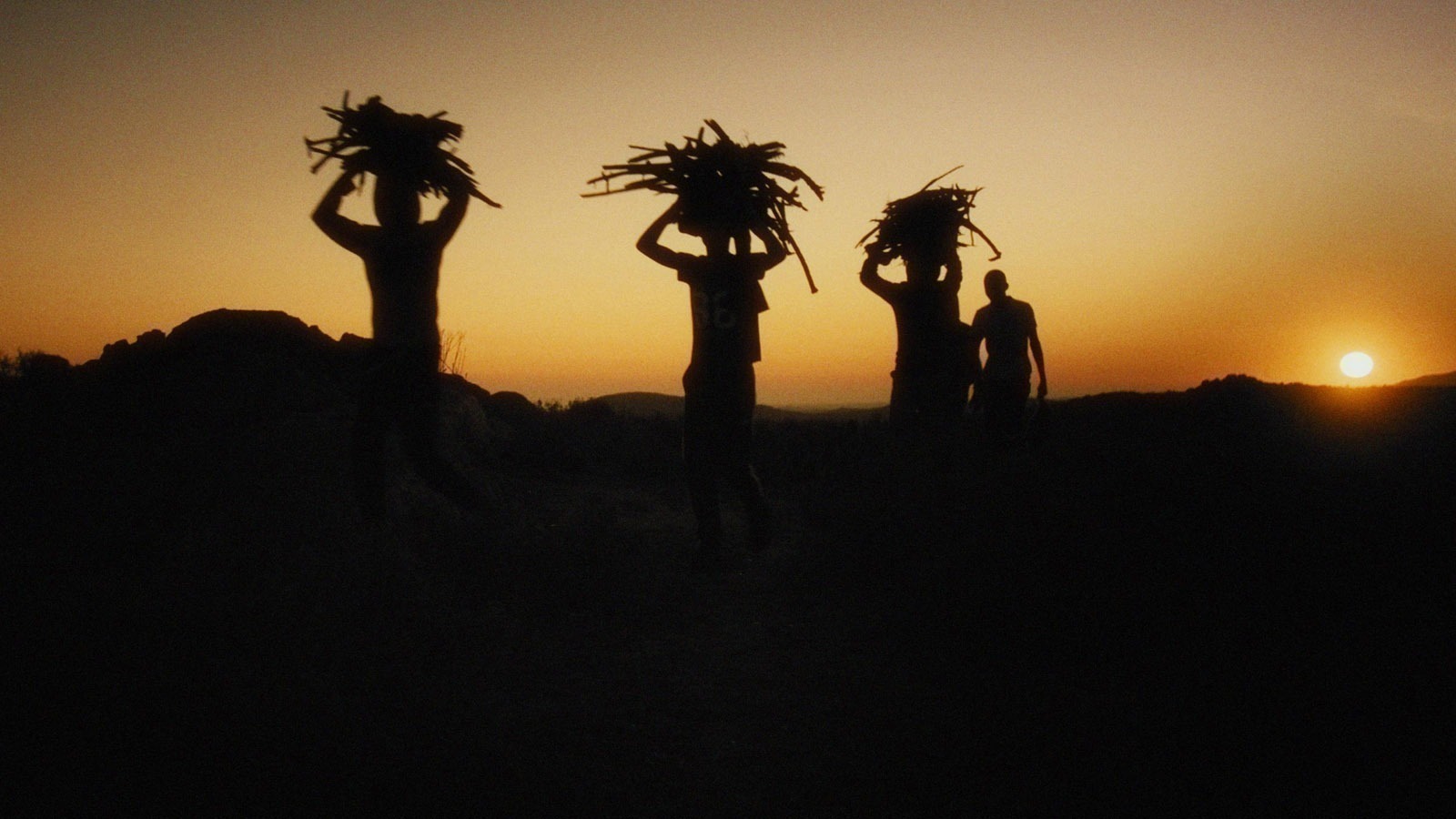
With Variations on a Theme, South African codirectors Jason Jacobs and Devon Delmar have won the Tiger Award in Rotterdam, joining an illustrious roster of past winners that includes Hong Sangsoo (The Day a Pig Fell into the Well, 1997), Christopher Nolan (Following, 1999), Kelly Reichardt (Old Joy, 2006), and Paz Encina (EAMI, 2022). In Variations, Jacobs’s grandmother Hettie Farmer plays an elderly goat herder taken in by a scam promising the long-overdue reparations for her father’s service abroad in the Second World War.
Variations is “a worthy, quietly more radical follow-up to the duo’s excellent, Venice-premiered 2024 debut Carissa, another portrait of a marginalized Cape community of the type that tends to get little representation in South African cinema,” writes Guy Lodge in Variety. Jacobs and Delmar prove to be “proudly regional filmmakers with a lyrical sensibility to stand beside that of fellow Southern African auteur Lemohang Jeremiah Mosese. But there’s a warmly observational, literary quality to their work, too, lovingly attentive to language and local custom, in the spirit of such long-gone storytellers as Herman Charles Bosman and Eugène Marais.”
Tiger Competition jurors Soheila Golestani, Marcelo Gomes, Ariane Labed, Kristy Matheson, and Jurica Pavičić presented Special Jury Awards to Angelica Ruffier’s La belle année and Ana Urushadze’s Supporting Role. Coming to terms with the death of her father and memories of an all-consuming crush she had on her history teacher when she was sixteen, Ruffier plays herself in La belle année, a film she has described as autofiction. “Part documentary, part indie drama, part archival essay, La belle année is at once intoxicating, sad, thought-provoking, and affirming,” finds Ben Nicholson at the Film Verdict.
Urushadze’s Scary Mother (2017) won the Best First Feature award in Locarno as well as the top prize in Sarajevo, and now, nearly a decade later, Urushadze returns with Supporting Role, which, along with the Special Jury Award, has also won the FIPRESCI Prize from the International Federation of Film Critics. Georgian actor Dato Bakhtadze, whose Hollywood credits include Wanted (2008), Crash (2004), and Extraction 2 (2023), plays Niaz, a fading movie star who is offended when a young female director insists that he audition for a supporting role in her debut feature.
“A blue parrot,” writes Lee Marshall in Screen, “an actress with only half a face, an old acquaintance who has taken to portraying his artist friends as desserts, a strange Armenian duo who invite Niaz to one of Tbilisi’s famous sulphur-spring bathhouses—such incidents and symbols could easily turn absurd, or pretentious in a Fellini-goes-to-Georgia kind of way. But Bakhtadze’s relatable performance as a man who is genuinely lost and confused, not least by the contrast between the hero roles he plays and the mess he’s made of his life, provides Supporting Role with its emotional anchor.”
Rezwan Shahriar Sumit’s Master, starring Nasir Uddin Khan as an idealistic teacher who is elected into a position of modest power in his small Bangladeshi town, won the Big Screen Award. Jurors Jan-Willem van Ewijk, Sara Ishaq, Loes Luca, Chris Oosterom, and Mila Schlingemann call Master “a universal story about a person striving to hold on to their moral compass, only to be reshaped by the persuasive and destructive forces of power and capitalism.” Guy Lodge finds Master to be “an eye-opening look at institutional structures in a country that rarely gets much screen time internationally, and a timeworn tale designed to rouse rage against the machine in local and global audiences alike.”
For Slant, Diego Semerene writes about three more standouts in the Big Screen Competition. Ivo Ferreira’s Projecto Global tracks three fictional members of the very real Forças Populares 25 de Abril, a group of militant revolutionaries operating in Portugal in the 1980s in the wake of the Carnation Revolution of 1974. “For Ferreira,” writes Semerene, “a post-dictatorship isn’t a question of sides, because the way he sees it, there’s no such thing as the end of a dictatorship. Projecto Global’s enrapturing aesthetic rigor makes it easy to lose sight of the weight of its political denunciation.”
For Semerene, Łukasz Ronduda’s Tell Me What You Feel is “a poignant account of love and art’s deceivingly seductive status as panacea to the irreducible gap between the self and others,” and as for Philip Yung’s Cyclone: “Apart from Saim Sadiq’s Joyland, it’s difficult to think of another film that similarly refuses to reduce a trans woman to her relationship to her own transness.”
At the Film Verdict, Max Borg notes that there was a powerful strand of horror woven throughout this year’s lineup, “including some vintage Japanese titles in the V-Cinema retrospective and a restored 3D version of the Korean classic The Devil and the Beauty in the Cinema Regained sidebar . . . Whether it was haunted toilets in Brazil (Bowels of Hell), witchcraft in the Basque region (Gaua), or a father in South Korea trying to bring his teenage child back from the undead (My Daughter Is a Zombie), there was no shortage of thrills and scares.”
Throughout Rotterdam’s fifty-fifth edition, which wrapped over the weekend, eleven critics posted ratings of the films they were seeing at Moirée. On the Moirée Podcast, Blake Williams, Vadim Rizov, Beatrice Loayza, Forrest Cardamenis, and Jordan Cronk discuss a good handful of them, including the highest ranked film on the grid, Chronovisor, directed by Jack Auen and Kevin Walker of the collective Cosmic Salon.
Anne-Laure Sellier, a professor of behavioral studies at HEC Paris, plays an academic researching claims made in the 1950s that a Benedictine monk had been able to peer back through time and witness such historical events as the crucifixion of Christ through a camera-like device. “Everything from the caliginous lighting to the grainy textures—the film was shot in warm, low-lit Super 16 mm by Leo Zhang—suggests a universe perched somewhere between the realms of the living and the dead,” writes Leonardo Goi at the Film Stage. “It is a small wonder that Auen and Walker should succeed in turning scholarly research into the stuff of a thriller; it is a much bigger one that their erudite film should convey the discombobulating power of its ideas, and the dizzying effect that comes from bringing those out of a library—or a movie theater—and into the world.”
Don’t miss out on your Daily briefing! Subscribe to the RSS feed.