Only Humans Love Movies
Share
The Iranian regime is “a failed state politically, ideologically, economically, culturally, and environmentally, and it is not going to be able to last,” Jafar Panahi tells NPR’s Leila Fadel. The occasion for the interview is the recent arrest of Mehdi Mahmoudian, who worked with Panahi on the screenplay for It Was Just an Accident (2025).
Mahmoudian’s crime seems to have been joining sixteen other artists, activists, and human-rights lawyers in signing a statement declaring that responsibility for last month’s mass killing of protestors lies with Iran’s supreme leader, Ali Khamenei. Other signatories include Panahi and Mohammad Rasoulof (The Seed of the Sacred Fig), who brought his new short film, Sense of Water, to Rotterdam last week. Rasoulof took the opportunity to “express my sense of deep shared grief” with the Iranian people.
As it happens, Masterpieces of the Iranian New Wave, the series curated by Ehsan Khoshbakht, is currently on at the Barbican through February 26. If you’re in London, Anahit Behrooz has a few recommendations in AnOther Magazine. Londoners should also take note of Beginning from Beginning Again: The Cinema of Isiah Medina, a retrospective opening tomorrow at the Institute of Contemporary Arts. Medina’s cinema is one “of the cut, of difference, of reconsidering every assumption of more than a century’s worth of filmmaking,” Phil Coldiron has written in Cinema Scope.
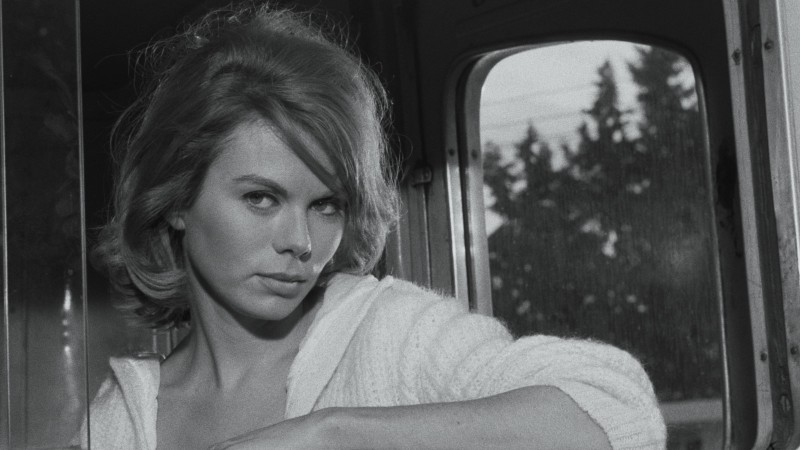
Last Friday, Christa Lang-Fuller passed away at the age of eighty-two. Born Christa Langewiesche in Germany, Lang-Fuller moved to Paris when she was seventeen, did some modeling (she sat for sculptor Paul Belmondo, the father of Jean-Paul) and began appearing in films by Claude Chabrol (The Champagne Murders), Jean-Luc Godard (Alphaville), Roger Vadim (Circle of Love), and her husband, Sam Fuller (The Big Red One, White Dog, Street of No Return).
This week’s highlights:
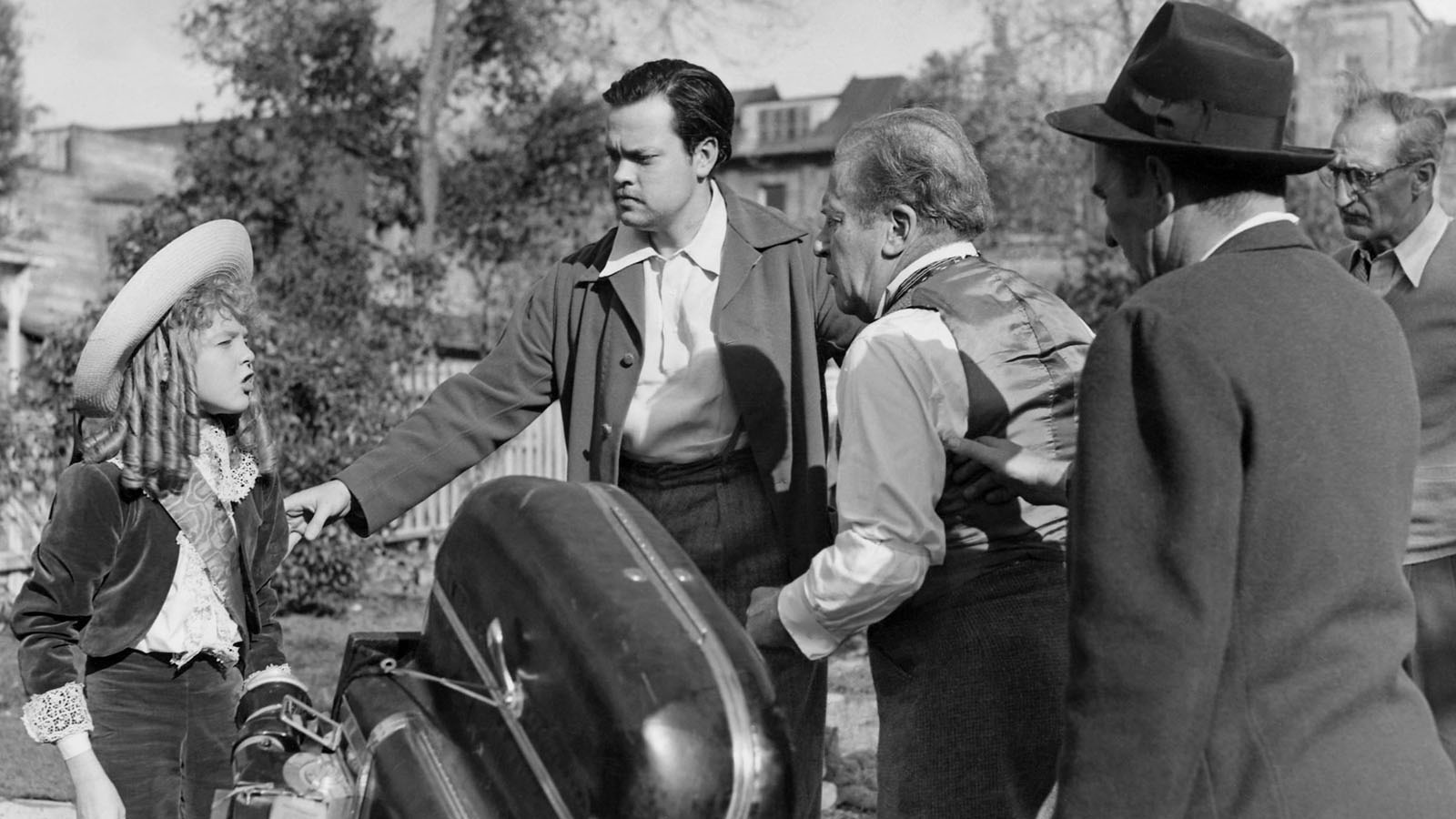
- Whatever thoughts or feelings AI may spark in your mind or gut, Michael Schulman’s piece in the New Yorker on Edward Saatchi’s intention to utilize the technology to reconstruct Orson Welles’s original cut of The Magnificent Ambersons (1942) is fascinating. Welles’s second feature, infamously “mangled” by RKO, has been one of Saatchi’s obsessions for much of his life. “Is it going to emotionally communicate, or is it just going to feel dead?” he wonders about the project he’s undertaken. Brian Rose spent five years piecing together a version that Saatchi and his team are essentially using as a storyboard, and he, too, pauses now and then: “The aura of [the Venus de Milo] is the fact that it’s missing the arms and a foot. It’s a much more iconic work than it would be if it was complete.”
- In the new issue of the Point Magazine, Andrew Eckholm writes about Wes Anderson as “an American nostalgist whose career has coincided with the collapse of any stable sense of what Americans ought to be nostalgic for.” It’s from this standpoint that he offers fresh readings of The Grand Budapest Hotel (2014), Isle of Dogs (2018), The French Dispatch (2021), Asteroid City (2023), and The Phoenician Scheme (2025). “What Anderson’s history films reflect about our era better than any others I know,” writes Eckholm, “is the feeling of certainties coming undone, the piercing of illusions one after another.”
- “A stylish mash-up with an offbeat cast, Michael Almereyda’s 1995 film Nadja takes its title from André Breton’s surrealist novel of Parisian happenstances and transposes the premise of the 1936 chestnut Dracula’s Daughter to ungentrified, if elegantly black-and-white, NoHo,” writes J. Hoberman in the New York Times. “The movie is a triumph of low-budget filmmaking, which, shot in part with a toy PXL camcorder and newly restored in 4K, will shimmer for a week on the screen at Brooklyn Academy of Music.” Nadja stars Elina Löwensohn, who was known at the time for her work with Hal Hartley, Peter Fonda as Van Helsing, and executive producer David Lynch as a morgue attendant. At Hammer to Nail, Jonathan Marlow suggests that “if there had ever been a period when Guy Maddin was recruited by Roger Corman to direct a psychological horror-drama,” the result might look something like Nadia. For Amy Taubin at Screen Slate, “Almereyda’s film is simply an intermittently glorious Godardian collage, its sources as much literary and musical as filmic.”
- The Belgian magazine and streaming library yanco has teamed up with the Kurzfilm Festival Hamburg and Talking Shorts to poll 270 film professionals—filmmakers, curators, critics, and scholars—to come up with a list of the 105 best short films of all time. Topping that list is Chris Marker’s La Jetée (1963), and the top ten includes work by Maya Deren, Forugh Farrokhzad, and Alain Resnais. A discussion of the list—and canon-making in general—is scheduled for February 15 at the Berlinale. The magazine side of yanco, by the way, is one to keep an eye on; contributors include Öykü Sofuoğlu, Gerard-Jan Claes, Savina Petkova, and Flavia Dima, who in the meantime has also been talking with Lucrecia Martel for Sabzian.
- “Where do underappreciated movies go after they’ve had their chance to shine?” asks Time’s Stephanie Zacharek. She’s drawn fifty of the best of them back into the spotlight with an unranked but generously annotated list of the most-underappreciated features of the twenty-first century. As might be expected, Jane Campion’s Bright Star (2009) is here, and so is Tran Anh Hung’s The Taste of Things (2023), but Chris Rock’s “extremely funny” Top Five (2014) is too. “We’ve all got plenty of lists of the Greatest This and the Greatest That,” writes Zacharek. “Time for a list of Movies That Live in Our Memories for Indefinable Reasons—a category that AI could neither generate nor comprehend, because loving movies is the province only of humans.”
Don’t miss out on your Daily briefing! Subscribe to the RSS feed.