Andrzej Wajda: Portraits of History and Humanity
Share
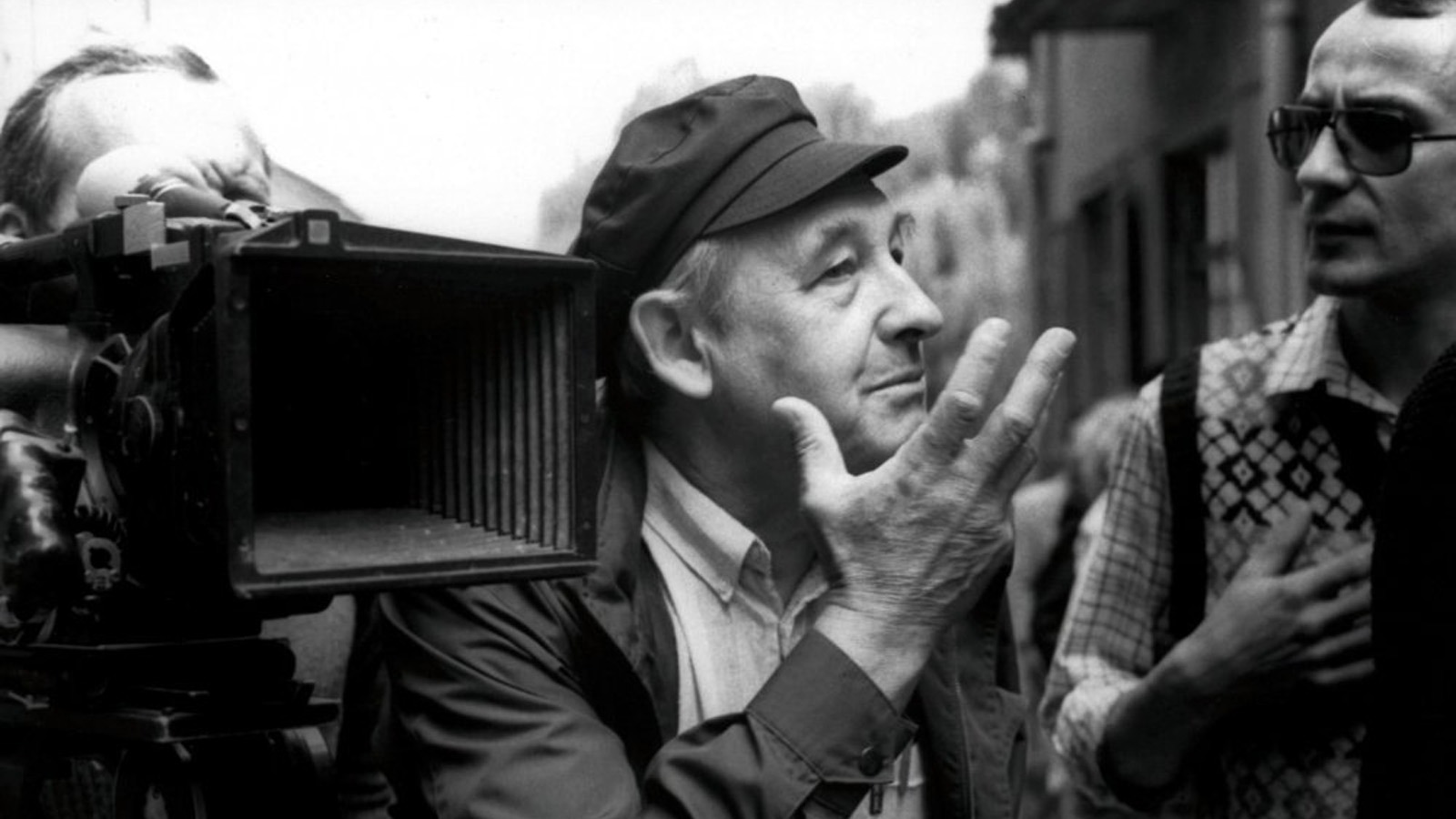
Andrzej Wajda, cinema’s great historian of Poland in the twentieth century, was born on March 6, 1926. The BFI is celebrating the centenary with Andrzej Wajda: Portraits of History and Humanity, a season of eighteen films, and several screenings are being introduced by critics and scholars, including Michał Oleszczyk.
“Wajda’s transformations over the decades were numerous,” wrote Oleszczyk a few months after the director passed away in 2016. “In the 1950s, he was instrumental in defining the Polish Film School as a movement that tackled wartime experience in the face of the historical lies perpetuated by the regime. The ’60s found him exploring a fresh interest in nouvelle vague experimentation”—see, for example, Innocent Sorcerers (1960)—“and the ’70s marked a ripening of both his poetic, strongly visual streak (The Wedding) and his politically charged, investigative side (Man of Marble). From the ’80s onward, Wajda erred as often as he struck gold, and while the ’90s brought many a failure, they by no means sapped his creative energy.”
Wajda was twenty-seven when he shot his first feature, A Generation (1955), set in 1942 and starring Tadeusz Łomnicki as Stach, a scrappy young man who joins the underground resistance to the Nazi occupation. “Named ‘the single most important breakthrough in Polish film history’ by no less than Roman Polanski, who played a supporting role in it,” notes Oleszczyk, “A Generation embodies Wajda’s struggle to get his films approved by state authorities while also maintaining their subversive potential.”
A Generation is also the first feature in a trilogy that became known as Three War Films. The New Yorker’s Richard Brody has called Kanal (1957) a “gruesome chronicle” of the final days of the Warsaw Uprising, and Zbigniew Cybulski stars in Ashes and Diamonds (1958) as a resistance fighter charged with assassinating an incoming commissar.
“Cybulski was often called Poland’s James Dean, though his fused toughness and boyishness seem to make him both its Dean and its Brando,” writes Paul Coates. “Cybulski’s performance electrified Wajda, who described it as the film’s uncensorable essence.” Cybulski was only thirty-nine when he died in a train accident in 1967, and with Everything for Sale (1969), Wajda paid homage to his leading actor with a film many have thought of as Wajda’s 8½.
Introducing the interview she conducted with Wajda for Film Comment just weeks before he died, Ela Bittencourt noted that the filmmaker’s “education at an arts academy in Krakow, bold sense of composition, often inspired by Romanticism and other Polish painting traditions, and rare gift for literary adaptation are all especially evident in such masterpieces as Ashes (1965), Landscape After the Battle (1970), The Wedding (1972), The Promised Land (1974), and The Maidens of Wilko (1979).”
When Ignatiy Vishnevetsky wrote the A.V. Club’s tribute, he suggested that the real masterpiece is Man of Marble (1977): “An inventive and wide-ranging deconstruction of Communist mythmaking that riffs on Wajda’s beloved Citizen Kane (along with many other films), the film follows a chain-smoking young documentary filmmaker (Krystyna Janda) as she investigates the fate of a forgotten 1950s propaganda hero (Jerzy Radziwilowicz, in a star-making performance), initially seen only in faked newsreels and later in flashback. Wajda would eventually follow up Man of Marble in an inferior and more topical sequel, Man of Iron (1981), focused on his country’s Solidarity movement, which would win him the Palme D’Or at the Cannes Film Festival.”
Talking to the BFI’s Alex Ramon, Agnieszka Holland recalls Wajda taking her under his wing when she returned to Poland after studying in Prague—where she had been arrested for her support of the dissidents during the Prague Spring of 1968. Holland became Wajda’s assistant, at times officially and at times, when the communist censors were especially fierce, unofficially. She wrote the screenplay for Wajda’s Rough Treatment (1978), and after the Polish government’s crackdown on the Solidarity movement and the imposition of martial law in 1981, she worked with him on Danton (1983) and A Love in Germany (1983).
“Wajda disliked conflict, especially with creative collaborators,” says Holland. “But in crucial moments he would never back down. He was a courageous man, and a man of principle, as was demonstrated multiple times under the communist regime and then also, later, under [Polish President Lech] Kaczyński’s right-wing government.”
The BFI season will wrap with Afterimage (2016), and writing for Film Comment, Adam Nayman found it telling that the Wajda’s final film “focuses on the stubbornness of an artist defiantly practicing his craft under the shadow of authoritarian rule. That shadow is made literal when we see the famed Polish constructivist painter Władysław Strzemiński (Bogusław Linda) sitting at his easel while a massive banner depicting Stalin is draped over his apartment window, darkening the room and the canvas. Wajda’s talent for crafting big, striking synecdoches of complex social or historical realities remained undimmed to the end.”
Don’t miss out on your Daily briefing! Subscribe to the RSS feed.