Seoul After Dark
Share
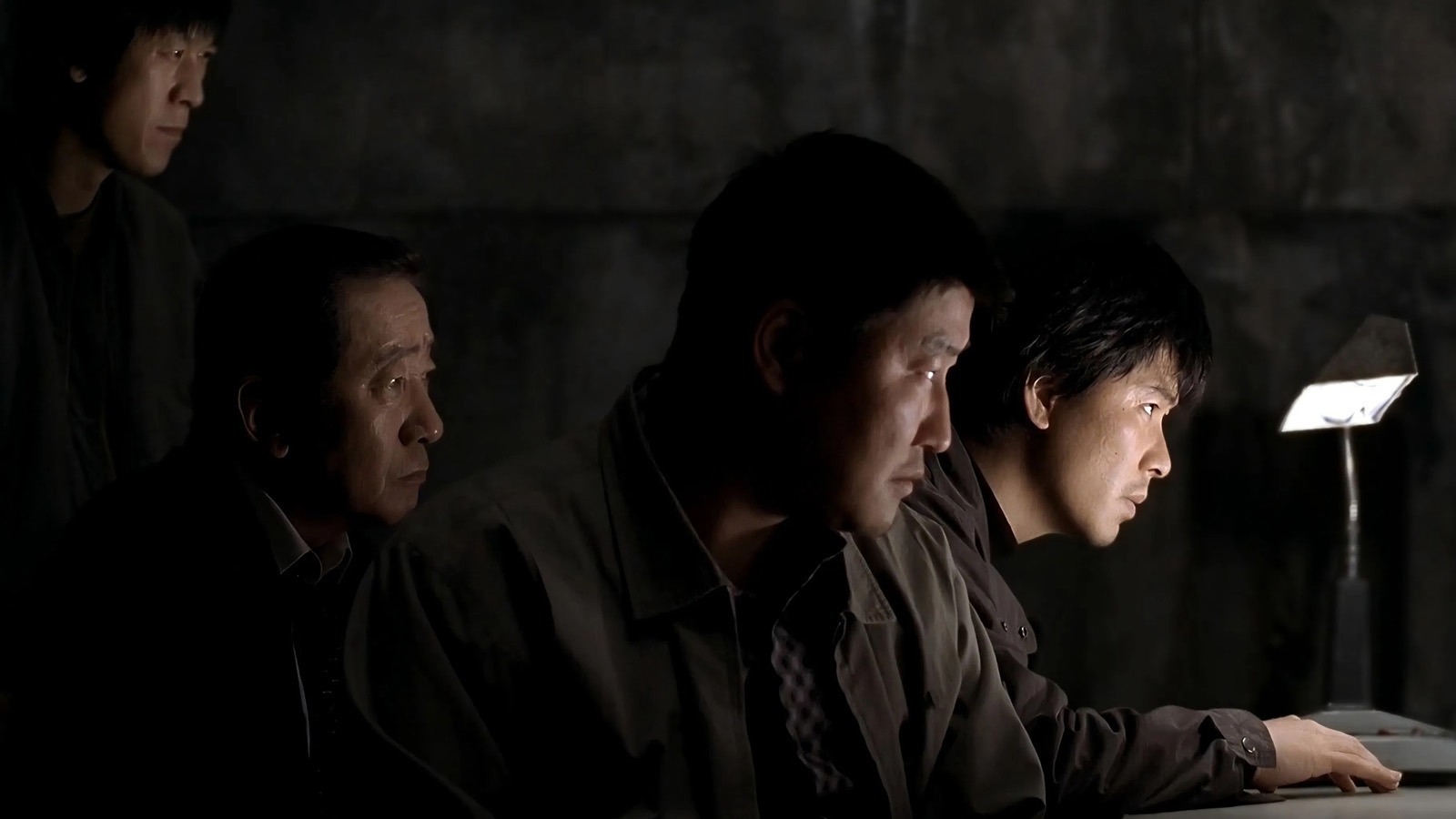
Bong Joon Ho, Park Chan-wook, and Hong Sangsoo are among the directors who have selected films to screen as part of Seoul After Dark: Personal Memories of Korean Cinema, the series running at the Museum of Modern Art in New York through February 25. Organized by Dave Kehr and commemorating the fiftieth anniversary of the Korean Film Archive, the program “traces a particular lineage within Korean cinema: the persistent examination of social fracture through the aesthetics of crime and noir.”
Bong’s Memories of Murder (2003), based on the haphazard investigation into a series of killings in the late 1980s, fits the bill. “Memories is a gritty crime saga that can also be seen—even enjoyed—as an absurdist comedy of errors,” writes Ed Park. “A period piece from which all nostalgia has been eliminated, the film casts a tragic light not just on the barbarically defiled victims but also on the whole nerve-racked nation.”
Bong’s two selections are Ha Gil-jong’s The Pollen of Flowers (1972), a psychosexual drama often compared to Pier Paolo Pasolini’s Teorema (1968), and Bae Chang-ho’s People in the Slum (1982), an episodic portrait of a working-class community about to be displaced. People in the Slum is “not an overtly political film,” writes Hayley Scanlon, “but takes as its heroes those who have lost out in the nation’s bold forward march into the capitalist future.”
Bae’s Our Joyful Young Days (1987), the story of an ill-fated love affair, is director Hwang Dong-hyuk’s selection for the program. Hwang, best known for creating the global smash hit series Squid Game, is represented in the series with The Fortress (2017). This “grim look back at the infamous 1636 siege of a mountain stronghold, is so evocative that by the end viewers may be as cold and hungry as the movie’s cast of courtiers,” wrote Noel Murray in the Los Angeles Times.
“Blending plot elements of Double Indemnity and Natural Born Killers with the ripe sensuality of Francis Coppola’s take on Dracula,” Park Chan-wook’s Thirst (2009) “should make audiences sit up in startled pleasure,” wrote Time’s Richard Corliss. And Park’s The Handmaiden (2016) is “a love story, revenge thriller, and puzzle film set in Japanese-occupied Korea in the 1930s,” wrote Matt Zoller Seitz at RogerEbert.com. “It is voluptuously beautiful, frankly sexual, occasionally perverse, and horrifically violent.”
Park has selected two films for the series. When the Berlinale screened The Last Witness (1980) in 2017, the programmers noted that Lee Doo-yong’s thirty-sixth feature “violates all conventions: a nonconformist, melancholy loner of a detective, who identifies with the tragic fate of a former North Korean fighter to the point of self-destruction; a corrupt justice system and an incompetent police force; rapes and sexual assaults—the censors lopped nearly an hour off the epic running time of Lee’s most daring film.” The Korean Film Archive has since restored that hour.
In Hah Myung-joong’s Life Line (1986), the villagers on an isolated island rise up against their landlords. “The picturesque depiction of the island—attained through overexposure and wide shots—combined with an abundance of sexual imagery, reads as a performative act of self-reflection on the Korean cinema in the 1980s,” writes Chan Yong Bu in his program notes for Crime Scenes as History. Five Korean Films, a series slated to run at the Harvard Film Archive from March 6 through April 18: “Far from an apolitical aesthetic experiment, the film stages itself as a site where a military dictatorship’s crime against cinema is laid bare, offering a searing indictment of the era.”
Hong Sangsoo’s Walk Up (2002), “exquisitely shot in black and white and unspooling in Hong’s preferred seriocomic idiom of long, boozy meals, and funny-sad chatter,” wrote Justin Chang for the Los Angeles Times, “is a triptych of tales set in a three-floor walk-up (‘three stories’ pun hopefully very much intended). If that sounds dull or confusing, it isn’t: Walk Up flows as absorbingly as a dream and is no less pleasurable to puzzle over afterward.”
Hong’s selection is Chunhyang (2000), the ninety-eighth feature directed by Im Kwon-taek. In his review for the Village Voice, Ed Park wrote that the life of legendary painter Ohwon and his “complicated times unfold in lush natural tableaux, deft brush strokes, and Lear-caliber shouting fits, a portrait of the artist as the last innocent man in tumultuous nineteenth-century Korea.”
In The World of Love (2025), the third feature from Yoon Ga-eun, Seo Su-bin turns in a remarkable debut performance as a high-school student who will not allow the sexual assault she experienced as a child define her. Yoon’s “deceptively light touch belies the substance and complexity of this thoughtful and nuanced drama,” writes Wendy Ide in Screen, and MoMA notes that Bong Joon Ho has called the film a masterpiece.
Yoon’s selection is The Murmuring (1995), directed by Byun Young-joo, a founding member of the feminist filmmaking collective Bariteo. The Murmuring is the first film in a trilogy focusing on the stories of women who survived being forced to serve as “comfort women” by the Japanese army during the Second World War.
Teo Yoo is best known outside of Korea for his performance as Hae Sung, the childhood friend who resurfaces in the life of Nora (Greta Lee) in Celine Song’s Past Lives (2023). At the height of the pandemic, Yoo found himself stuck in a hotel in Antwerp. Zooming with a few fellow actors, he shot Log in Belgium (2021). Yoo’s selection is Chang Yoon-hyun’s The Contact (1997), a big hit that “catapulted Jeon Do-yeon to stardom,” as Kyu Hyun Kim has noted at Koreanfilm.org.
Art director Ryu Seong-hie, who has worked with Bong Joon Ho and Park Chan-wook, has selected Jang Joon-hwan’s Save the Green Planet! (2003), which Yorgos Lanthimos remade last year as Bugonia. The MoMA series also offers Lee Man-Hee’s crime melodrama Black Hair (1964), Lee Myung-se’s action thriller Nowhere to Hide (1999), Lee Chang-dong’s psychological drama Oasis (2003), and Na Hong-jin’s The Chaser (2008), which Joseph Jon Lanthier, writing for Slant, has called “a clever riff on cops-and-criminals formalism that interpolates old-fashioned plot devices (a missing girl, a cryptic phone number, an epicene serial killer, a corrupt mayor) into a Borgesian web of forking paths and gleeful MacGuffins.”
Don’t miss out on your Daily briefing! Subscribe to the RSS feed.