Catherine O’Hara’s Chameleonic Comedy
Share
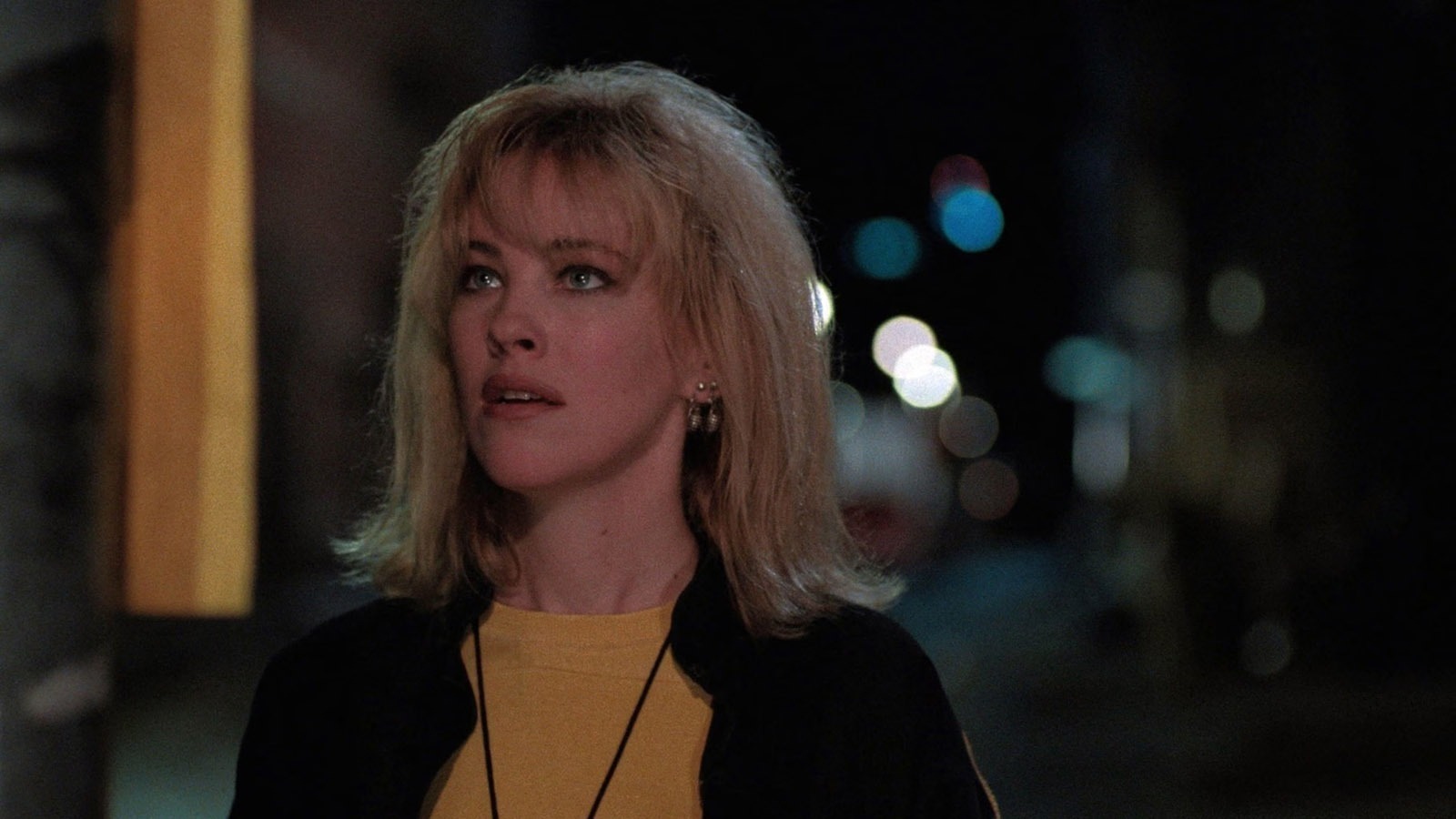
When Catherine O’Hara passed away last Friday at the age of seventy-one, the outpouring of shock, grief, and deep appreciation was sudden and profuse. It came in a sudden flood from her fans; her directors, including Martin Scorsese (After Hours), Tim Burton (Beetlejuice), and Christopher Guest (Waiting for Guffman); and her costars. Among her most notable on-screen collaborators offering tributes are Martin Short (SCTV), Macaulay Culkin (Home Alone), and, of course, Eugene Levy, a close collaborator from O’Hara’s earliest days as a performer with the Second City improvisational comedy troupe through several Christopher Guest movies to her late-career triumph, playing Moira Rose on Schitt’s Creek.
In his tribute for the Ringer, television critic Alan Sepinwall says it best: “Catherine O’Hara was one of the funniest human beings to ever grace this planet. It just took most of the planet a while to realize it.” O’Hara’s “presence in a movie or TV episode made you smile and feel reassured something good was about to happen, even if you weren’t a hundred percent sure where you’d seen her before.”
The sixth of seven children in a Toronto family of Irish Catholics who loved to make each other laugh, O’Hara was still in her teens when her brother introduced her to his girlfriend, Gilda Radner, a Second City player who would soon break through on Saturday Night Live. “It was all Gilda as far as opening up my world to Second City,” O’Hara told the New Yorker’s Rachel Syme in 2019.
She auditioned and flopped, but she then took a job as a waitress at the theater and eventually became Radner’s understudy before joining the cast. In the mid-1970s, producer Andrew Alexander dreamed up and launched SCTV, the sketch-comedy show whose cast members included O’Hara, Eugene Levy, John Candy, Rick Moranis, Andrea Martin, and Joe Flaherty. The Guardian’s Ryan Gilbey notes that in Sam Wasson’s book Improv Nation, the author calls O’Hara “one of the most fluid improvisers of her generation. Others may be crazier; none were as elegantly at ease.”
“Her multilayered portrayal of deeply disturbed female characters, many of whom had been somehow mangled by show business, fit seamlessly into a series whose format was designed as a weekly X-ray of the kind of superficial, hacky, cliché-ridden commercial television that was omnipresent at the time,” writes comedian and author Merrill Markoe for Rolling Stone. “Catherine was the queen of self-abusing, hard-living, and heading-over-the-hill entertainment veterans—women who were trapped behind a façade of slick showbiz tics that barely covered the active volcano of psychosis bubbling right under their surface.”
“Put a young Catherine O’Hara in the 1930s,” writes the Hollywood Reporter’s Daniel Fienberg, “and she would have been a screwball comedy star without equal, which I’m not just saying because O’Hara’s Katharine Hepburn impression was one of her very best bits. Put a middle-aged O’Hara in the ’50s or ’60s and one can only imagine what Billy Wilder might have written for her.”
Around the time that SCTV was winding down in the mid-1980s, O’Hara was at the Toronto International Film Festival when she and her sister bumped into one of that year’s honorees, Martin Scorsese. “He looks over and goes, ‘Hey, SCTV!,’” she told Mara Reinstein in Parade in 2024. “Like, what?! Then he invited us to join him, Robert De Niro, Harvey Keitel, and other people for dinner. At the dinner, he rips out a piece of his passport to give me his phone number, which I held on to forever but never called because I’m shy. That’s how I ended up in After Hours. He did end up telling me that he got into a lot of trouble for that page missing from his passport.”
Griffin Dunne stars in After Hours (1985) as Paul, a yuppie trapped in an all-night odyssey through SoHo, and as Sheila O’Malley puts it, O’Hara’s Gail is one of “four blond women who lure Paul into the tangled web of his fate.” “At first,” writes Esther Zuckerman in the New York Times, “it appears as if she might come to Paul’s aid, but she quickly reveals herself to be a creature of mischief. As Gail, O’Hara’s eyes burn with what seems at first like seduction but ultimately reveals itself to be pure chaos.”
Talking to E. Alex Jung in Vulture in 2019, O’Hara recalled, with her typical humility, feeling “very intimidated” to find herself on the set of Heartburn (1986) with Jack Nicholson, Meryl Streep, Stockard Channing, and Miloš Forman. “And that’s Mike Nichols, God bless him, just picking out some little creature that he thought, Ooh, this’ll be fun to throw this into the mix.”
Tim Burton cast O’Hara in Beetlejuice (1988) as Delia Deetz, a self-possessed but talentless sculptor and stepmother to Winona Ryder’s Lydia. Just after Beetlejuice became a resounding hit, Burton told Patrick Goldstein in the Los Angeles Times that “Catherine’s so good, maybe too good. She works on levels that people don’t even know. I think she scares people because she operates at such high levels.”
In Burton’s stop-motion animated The Nightmare Before Christmas (1993), O’Hara voiced several characters, including Sally, the ragdoll who falls in love with Jack Skellington. “Given the more clipped, brassy tone she was best-known for in comedies,” writes Jesse Hassenger for the Guardian, “her work as Sally, a soulful wallflower and twisted vine of yearning, is pretty stunning; you’d never guess it was her.”
Having cowritten and costarred in the late Rob Reiner’s This Is Spinal Tap (1984), Christopher Guest further explored the potential of the improvisational mockumentary in his films Waiting for Guffman (1996), Best in Show (2000), A Mighty Wind (2003), and For Your Consideration (2006), all of them featuring O’Hara and Eugene Levy in their ensemble casts. As Richard Lawson puts it, “the Christopher Guest movies became the holy Books of O’Hara, movies I would watch over and over again throughout college and beyond, marveling that someone could be as specifically funny as O’Hara, that she could be so clued into such minute modes of behavior. And yet, she was also so big, so loopy and vivid.”
Early in the 2010s, Eugene Levy and his son, Dan Levy, began developing a show about a wealthy family embezzled out of their fortune and forced to move into a motel in a small town. “Schitt’s Creek didn’t get much notice when it was just on the CBC in Canada and Pop in America,” notes Alan Sepinwall, “but it became one of the biggest beneficiaries ever of the Netflix Bump. By the end of the sixth and final season, Schitt’s Creek became so big, and so beloved, that it made television history as the first comedy to ever sweep every single category for which it was nominated at that year’s Emmys.”
O’Hara’s Moira Rose, wife of Johnny (Eugene Levy) and mother of David (Dan Levy) and Alexis (Annie Murphy), is a former soap-opera star with a wall of wigs and an accent that can tour the globe within a single sentence. “To put it simply,” writes Ty Burr, “Moira is Catherine O’Hara’s masterpiece, a sweetly delusional grande dame—a Canadian Norma Desmond—who bends the world to the gravitational force of her own addled egotism.” The devoted fans and, of course, the Emmys became “the belated reward of a woman who can stand alongside Lucille Ball, Imogene Coca, and Carol Burnett in the pantheon of TV comedy.”
“In her most ridiculous assignments,” writes the Atlantic’s Shirley Li, O’Hara “ensured that her characters were rooted in something familiar, while in her most straightforward roles, O’Hara found ways to cut loose. Consider her most recent appearances: In the Hollywood-skewering comedy The Studio, O’Hara turned a laughable veteran executive into a sympathetic figure. In the postapocalyptic drama The Last of Us, O’Hara translated her character’s thinly veiled resentment into impeccably deployed zingers. She nabbed Emmy nominations for both performances last year.”
“I love playing people who have no real sense of the impression they’re making on anyone else,” O’Hara told E. Alex Jung. As an actor, “you need to let go of wanting to show off and just be. That’s the trick in life, too. Just be.”
Don’t miss out on your Daily briefing! Subscribe to the RSS feed.