Luis Buñuel: Desire and Deviance
Share
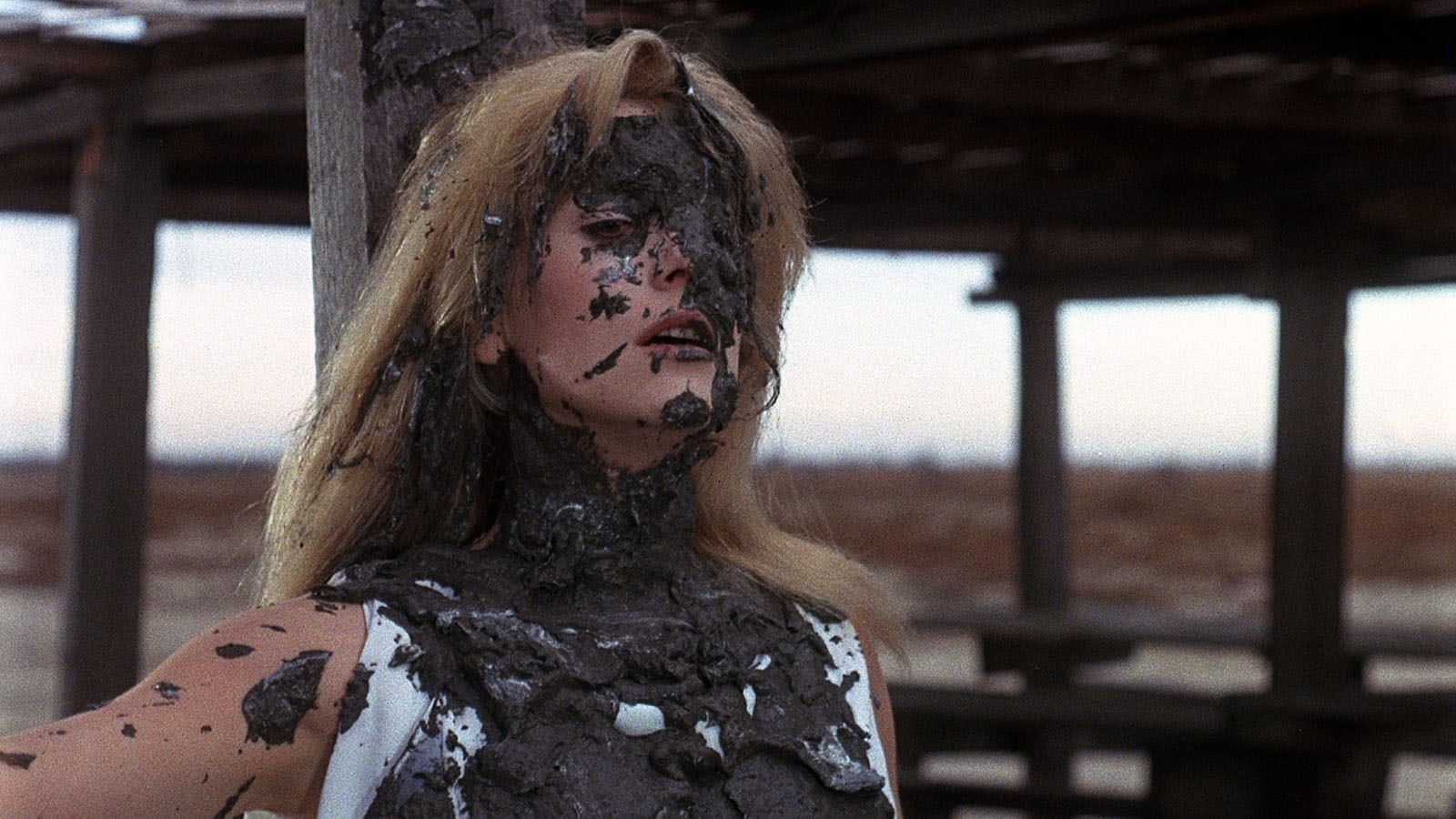
Guillaume Apollinaire may have coined the term surréalisme in 1917, but most pin the birth of the movement to the publication of André Breton’s “Manifesto of Surrealism” in 1924. The centenary has been celebrated over the past few years with exhibitions and events around the world, one of the most prominent being Dreamworld: Surrealism at 100, currently on view at the Philadelphia Art Museum through February 16.
In 1929, the poster boy of the movement, Salvador Dalí, teamed up with a fellow Spaniard, Luis Buñuel, who at the time was working in France as an assistant director for Jean Epstein, to turn their dreams into a screenplay that became Un chien andalou (1929). From this first, now-classic short through “to his final feature, That Obscure Object of Desire (1977),” wrote Adrian Martin in 2020, “Buñuel always stayed true to those primary surrealist principles with which he most identified: a spirit of revolt; the subversive power of passionate love, both romantic and erotic; a belief in the creativity of the unconscious (dreams and fantasies); a pronounced taste for black humor; and, last but never least, an abiding contempt for institutional religion and its representatives.”
Luis Buñuel: Desire and Deviance, a series of recent restorations and rare 35 mm prints, opens in Toronto on Friday and runs through February 25. TIFF Cinematheque senior coordinator Amanda Brason wraps her introductory program notes with a quote from a piece Michael Atkinson wrote for us in 2001: “It was a worldview fraught with contradictions, defined by patience and scorn, peopled with pious sinners and debauched saints, visually Spartan and yet spasming with bouts of the irrational. This was Luis’s world—welcome to it.”
With his first feature, L’age d’or (1930), Buñuel “established the thematic, formal, and especially structural templates he would follow for his nearly fifty years of filmmaking to come,” wrote Calum Marsh for the Village Voice in 2014. “A polemical, vignette-style feature with serious sexual and anti-religious overtones, L’age d’or is, in many ways, the archetypal Buñuel picture—with transgressions his later work would frequently recapitulate.”
After the outbreak of the Spanish Civil War in 1936, Buñuel worked for the Republican government, which sent him to Hollywood in 1938. When Franco and his fascists won the war and seized power, Buñuel found himself stuck in the States. His welcome wore out when Dalí claimed that he had split with Buñuel because he was a communist and an atheist. Buñuel found a new home in Mexico.
Partly inspired by a film he greatly admired, Vittorio De Sica’s Shoeshine (1946), Buñuel cowrote and directed Los olvidados (1950), a group portrait of impoverished kids in a Mexico City slum that infuriated the Mexican press but won him the award for Best Director at Cannes. As Slant’s Ed Gonzalez wrote in 2002, Los olvidados “purposefully lacks optimism; indeed, the director saw danger in giving solutions to problems best left to ‘the hands of the progressive forces of our times.’ This objectivity is all over the film, and nowhere is this more memorable than in the way Buñuel powerfully introduces the titular forgotten ones via a mock game of bullfight, with the camera taking the point of view of a red cape as a group of boys with grotesque faces charge toward it as if purposefully antagonizing the spectator. This is the intensity of Buñuel’s gaze.”
Arturo de Córdova stars in Él (1953) as a seemingly cosmopolitan man who becomes obsessively overprotective of his new wife (Delia Garcés). “Despite being relatively unknown among Mexican audiences,” writes Fernanda Solórzano, “Él is one of the most fascinating works in the history of the nation’s cinema because it slyly combines the conventions of popular Mexican filmmaking with the surrealist sensibility that made its director, Luis Buñuel, a legendary figure in his native Spain—all while catching viewers off guard and immersing them in its protagonist’s delirium.”
In his 1954 adaptation of Emily Brontë’s Wuthering Heights, Abismos de pasión, Buñuel recasts Catherine and Heathcliff as Catalina (Irasema Dilián) and Alejandro (Jorge Mistral) and places them on a hacienda in rural Mexico. At Screen Slate, Cosmo Bjorkenheim finds that “the fiery temperaments and ‘abysses of passion’ that the title promises have turned the whole melancholy, Gothic story into a chest-baring, fist-shaking proto-telenovela.”
Buñuel returned to Europe in 1960, and Franco invited him to once again make a film in his native country. Buñuel RSVP’d with Viridiana (1961), a film J. Hoberman has called “a masterful prank.” In this winner of the Palme d’Or, a novice nun (Silvia Pinal) finds herself trapped on the estate of her uncle (Fernando Rey). “Pathology abounds,” wrote Hoberman in the New York Times last fall. “Seemingly every other shot implies some perversion or worse. Viridiana, named for an obscure medieval saint, is a pious masochist with a turbulent unconscious.”
In The Exterminating Angel (1962), shot in Mexico, “we watch a trivial breach of etiquette transform into the destruction of civilization,” wrote Marsha Kinder in 2009. Writing for Film Comment in 2017, Mark Harris called The Exterminating Angel a “dark, icy allegorical comedy about well-heeled dinner guests who enjoy themselves at the long banquet table of a luxe formal party and then, over the next hours and days, descend from gentility into savagery as they find themselves unable to leave, for reasons that are never articulated.” As Jonathan Romney has put it in the Guardian, the film is “a chamber drama par excellence, about characters who can’t leave the chamber.”
Diary of a Chambermaid (1964), an adaptation of Octave Mirbeau’s 1900 novel, was the first of a string of great works made in France and Buñuel’s first of many collaborations with screenwriter Jean-Claude Carrière and producer Serge Silberman. Jeanne Moreau stars as Célestine, the maid, and as Michael Atkinson pointed out, also “the director’s proxy, witnessing every manifestation of mundane cruelty, hypocrisy, bigotry, molestation (the old patriarch fondles her calf while she reads, and insists she wears ridiculous pumps after dark) and predation, culminating in a neighboring girl’s rape/murder in the woods.”
For Melissa Anderson, Belle de jour (1967) is “the greatest—and most successful—film of [Buñuel’s] extremely rich late period.” Starring Catherine Deneuve as Séverine, a Parisian housewife who quietly slips away each afternoon to turn a trick or two, the film “stands out as the director’s most intricate character study—but of a protagonist who resists definition; the heroine, frequently trussed up and mussed up, retains an odd, opaque dignity in her debauchery.”
Like The Exterminating Angel, The Discreet Charm of the Bourgeoisie (1972) gathers a cluster of bourgeois friends—here played by Stéphane Audran, Jean-Pierre Cassel, Paul Frankeur, Bulle Ogier, Fernando Rey, and Delphine Seyrig—but it reverses the dilemma. All they want to do is sit down and enjoy a meal together, but they can’t seem to get there.
Discreet Charm “creates a fluid continuum,” writes Adrian Martin, “where we pass from ordinary reality, via odd details, to an immersion in unconscious fantasy—sometimes literally in a fast zoom of the camera, as when the bishop (Julien Bertheau) lives out his dream of becoming a gardener by donning the appropriate outfit. This flexibly oneiric world tends to follow the viciously circular logic identified by French critic and scholar Marie-Claire Ropars-Wuilleumier: ‘Obstacles create frustration, frustration prompts dreams, and the dreams repeat the obstacles.’”
That Obscure Object of Desire (1977) stars Fernando Rey as Mathieu, an aging Frenchman enthralled by a much younger Spanish beauty, Conchita, played alternately by Carole Bouquet and Ángela Molina. “Constantly changing, she is unknowable, complicated, perverse,” wrote Dave Kehr in the Chicago Reader in 1985, “but she is also an eternal erotic principle. Buñuel draws his paradoxes—is it love or sex, sadism or masochism, life or death?—with a perfectly clear, perfectly impregnable style.” With his final film, “the old surrealist created another masterpiece.”
Don’t miss out on your Daily briefing! Subscribe to the RSS feed.