Revisitations
Share
The last Sundance in Park City, Utah, is now underway, prompting the Hollywood Reporter to put together an oral history. Ryan Coogler, Chloé Zhao, John Sayles, Marielle Heller, Kenneth Lonergan, Todd Field, Darren Aronofsky, Rian Johnson, Karyn Kusama, Nicole Holofcener, and Lulu Wang are among the many filmmakers who have stories to tell about getting their films into the festival, crashing in crowded condos, attending great and disastrous screenings, and—for the lucky ones—closing deals.
Quentin Tarantino recalls working on Reservoir Dogs, first as a short in 1991, and then as a feature that took the festival by storm in 1992. “I remember being accepted to the lab and showing up to literally do scenes from my script with Terry Gilliam, Volker Schlöndorff, and Stanley Donen,” recalls Tarantino. “They were in my editing room as I edited my first scene on videocassette. We made a cut and they would write notes like Olympic judges.”
This year’s Sundance is also the first since the festival’s cofounder and guiding spirit, Robert Redford, passed away. “There was no one else like Redford because he was a guy just so clearly in love with storytelling, actors, writers, and directors, and he used his position to accentuate that,” Richard Linklater tells THR’s Chris Gardner. “He set something in motion like a great discoverer who finds new land. He followed an impulse to get this thing going and he kept it going by putting his lifeblood into it.”
This week’s highlights:
- Opening tomorrow at New York’s Metrograph, Max Ophuls: Motion Within Motion showcases twelve films by “the master orchestrator of a dazzling phantasmagoria,” as Andrew Sarris referred to him in 1986. Writing for Metrograph’s Journal, Genevieve Yue takes a look at the oeuvre through the lens of The Company’s in Love (1932). This first feature is “marked by Ophuls’s signature fascinations: tragic heroines, doomed romances, waltzes, staircases, train rides, and the opulence of Belle Epoque Europe, which he depicted in meticulously crafted mises-en-scènes . . . The Company’s tone may be light but the implications about the costs of stardom, and the autonomy of women, are anything but.”
- David Lynch would have turned eighty on Tuesday. At Posteritati, Michael Ontkean, who played Sheriff Harry S. Truman in the first two seasons of Twin Peaks (1990–1991), remembers Lynch as “a carpenter of the soul.” For A Rabbit’s Foot, Luke Georgiades discusses the series with co-creator Mark Frost, actor Dana Ashbrook, executive producer Sabrina Sutherland, and sound designer Dean Hurley. And in the latest issue of Sight and Sound, Phil Hoad outlines how Lynch regained his artistic and financial footing after the initial critical and commercial failure of Dune (1984).
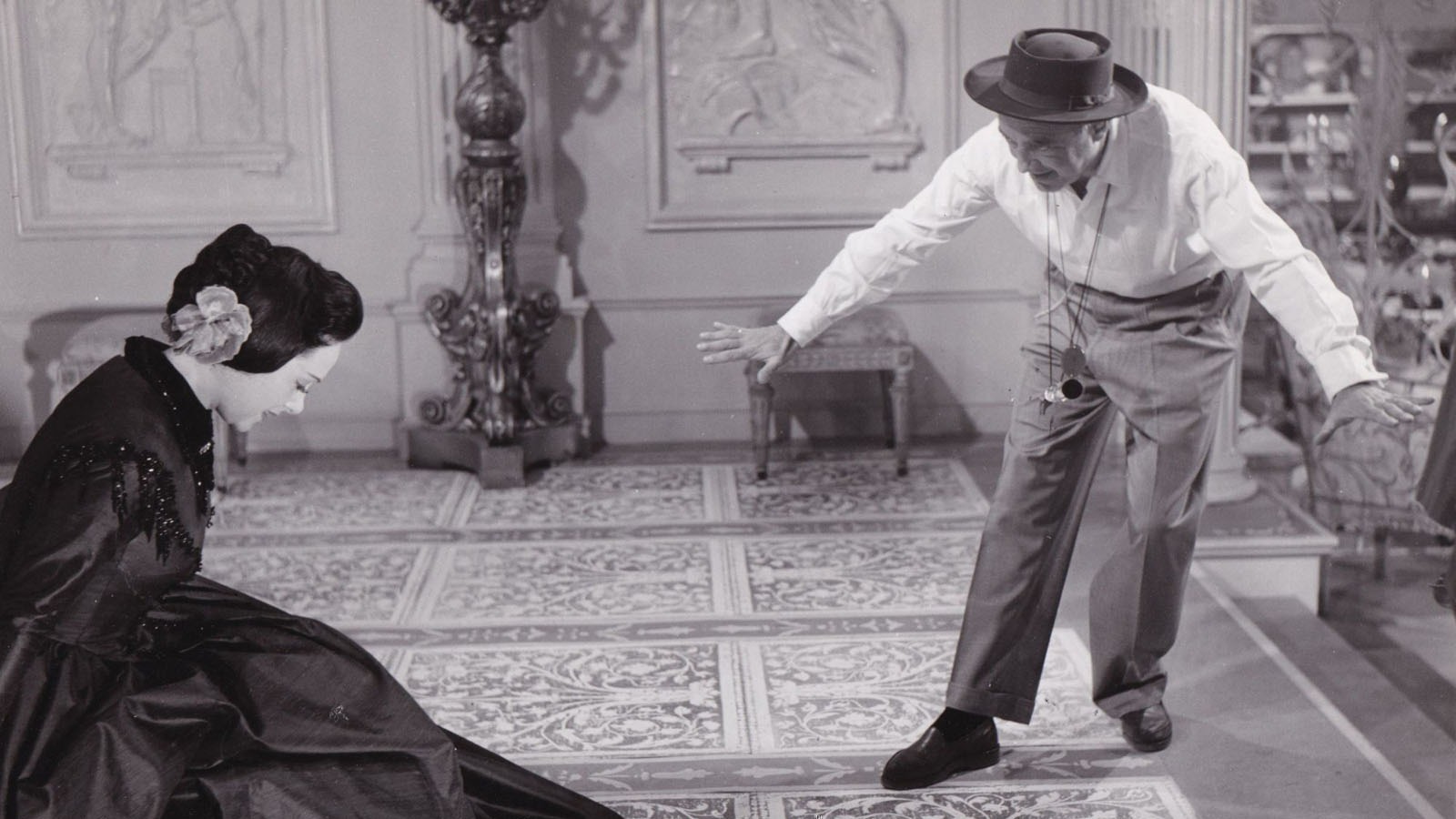
- Dennis Doros and Amy Heller’s reconstruction of Erich von Stroheim’s ill-fated Queen Kelly (1929), starring Gloria Swanson as an orphan punished for her affair with a cruel queen’s fiancé, will roll out across the country over the next few months. “Both the story and Stroheim’s approach to it were, in some ways, crowning realizations of themes—erotic obsession, imperial cruelty, and the rot behind aristocratic style—that he’d been developing throughout the decade,” writes the New Yorker’s Richard Brody. “He displayed those ideas as much in the decorative forms of royal opulence and colonial decadence as in the drama of arrogance and licentiousness. What’s more, the tale, of steadfast purpose in the face of oppression and corruption, meshed with the story of his life—both the one that he told and the one that he actually lived.”
- Now in its nineteenth year, Kristin Thompson’s annual year-end list of the ten best films released nine decades ago—she’s now worked her way up to 1935—begins with “the three best of the bunch, and the rest are in no particular order.” Those three are Jean Renoir’s Toni, essentially a melodrama with “some striking shots” despite “the rather bland settings”; Yasujiro Ozu’s “last surviving silent film,” An Inn in Tokyo, wherein that immediately recognizable style is “fully developed”; and Alfred Hitchcock’s The 39 Steps, which sparks Thompson’s reflections on the impact of Film Odyssey, a 1972 PBS series hosted by Charles Champlain. Among the remaining seven is Jacques Feyder’s Carnival in Flanders, and a new restoration will soon see its world premiere in the Berlinale Classics program.
- “The more magically a writer extracts meaning from a particular periodized zeitgeist, the greater the suspicion that they’re dealing from a stacked deck,” wrote Brendan Boyle and Adam Nayman nearly a year ago when they launched their quarterly series “The Biden Years On-Screen” in the Los Angeles Review of Books. Nodding to a tradition of matching movies with their times that reaches back to Siegfried Kracauer and runs through J. Hoberman’s books on the dawn of the Cold War, the 1960s, and the Reagan era, Boyle and Nayman probe what now seems like a mere blip in history, so close yet so, so far away. In the third and latest installment, the writers look back on Todd Field’s Tár (2022) and the culture wars, the gender dynamics of the Barbenheimer phenomenon, and an early distress signal, Alejandro Gómez Monteverde’s Sound of Freedom, the surprise blockbuster of the summer of 2023.
Don’t miss out on your Daily briefing! Subscribe to the RSS feed.