Sentimental Value Tops the EFAs
Share
Saturday night’s European Film Awards ceremony in Berlin opened with a sobering alarm from Jafar Panahi. As the Iranian regime cracks down on protestors who have risen up across the nation over the past few weeks, the death toll has risen to more than twelve thousand, according to Iran International. Panahi called on filmmakers and artists around the world to speak out: “We at least must refuse to remain silent, because silence in a time of crime is not neutrality. Silence is a participation in darkness.”
Panahi’s It Was Just an Accident, the winner of the Palme d’Or in Cannes, was nominated for three EFAs but won none. Despite facing a one-year prison sentence and a two-year travel ban—the charge is “creating propaganda against the political system”—Panahi, talking to CNN on Friday, reaffirmed his commitment to return to Iran once awards season wraps with the presentation of this year’s Oscars on March 15.
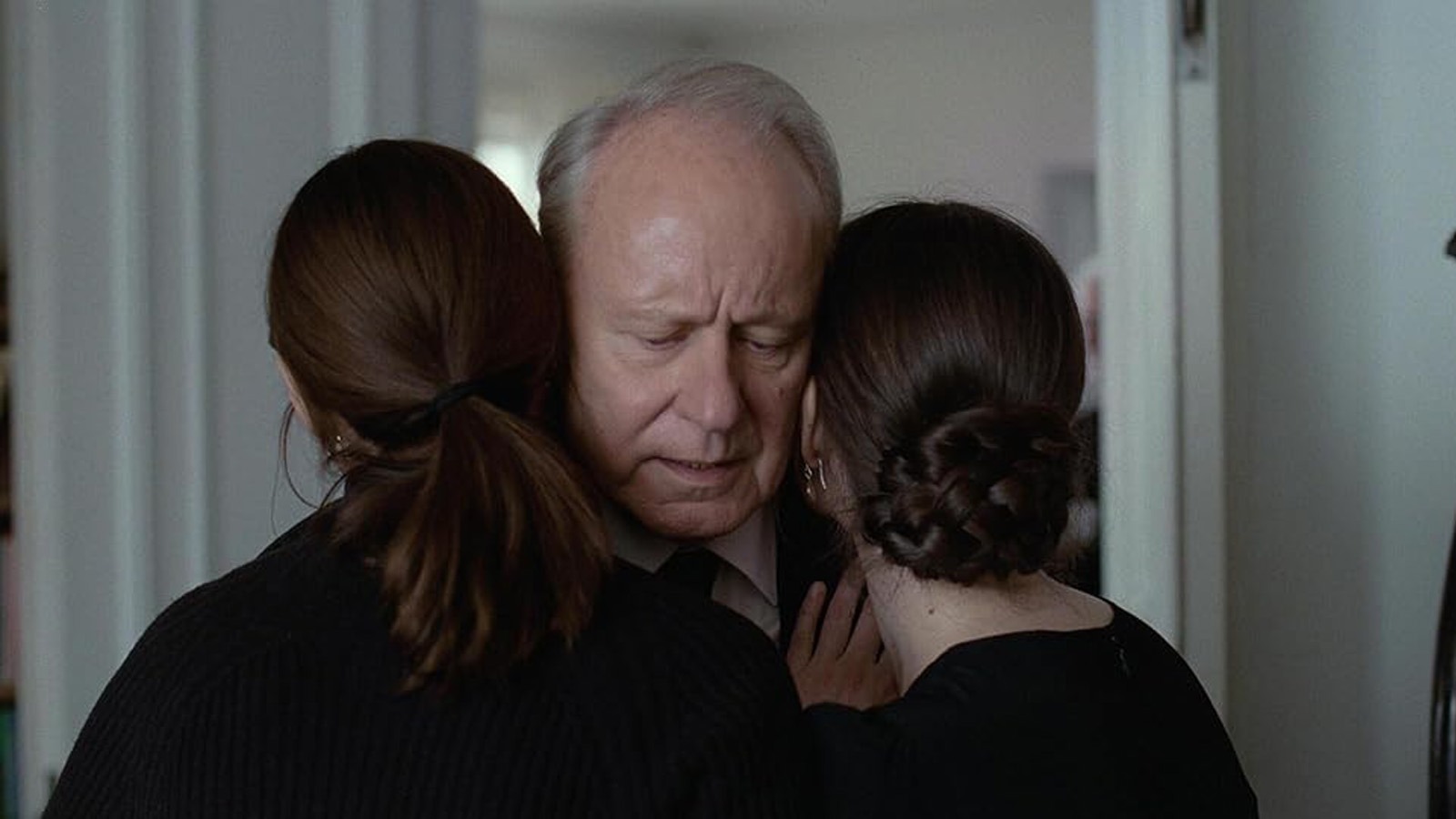
By the end of the EFA ceremony, the night belonged to Joachim Trier’s Sentimental Value, the winner of the awards for European Film, Director, Actress (Renate Reinsve), Actor (Stellan Skarsgård), Screenwriter (Trier and Eskil Vogt), and Composer (Hania Rani). Skarsgård, who later that evening had a few sharp words for Trump and his threat to take over Greenland, plays Gustav Borg, a celebrated director who hasn’t made a proper feature in fifteen years. With his new screenplay, he hopes to both reestablish his reputation and reunite with his estranged daughters, Nora (Reinsve) and Agnes (Inga Ibsdotter Lilleaas).
With his moment-by-moment analysis of Sentimental Value for the Norwegian journal Montages, Dag Sødtholt sets Trier’s sixth feature within the context of the oeuvre. In the Metropolitan Review, Sam Jennings writes that Trier’s “visual style is a flawless marriage of art-house observation, brief flashes of punk immediacy, and occasionally thrilling push-ins and montages that come from a more obviously American pop film tradition—just as the subject and tone of the film runs the gamut from Ibsen to Hollywood to documentary, from high to low.”
The European Film Academy, which presents the awards, has teamed up with Deutsche Welle and the Hollywood Reporter to host a roundtable discussion with Trier, Panahi, Oliver Laxe (Sirât), and Mascha Schilinski (Sound of Falling), and Trier recently joined Kathryn Bigelow, James Cameron, Ryan Coogler, Yorgos Lanthimos, and Chloé Zhao in this year’s Directors Roundtable hosted by the Hollywood Reporter. Talk Easy host Sam Fragoso has spoken with both Trier and Reinsve, and, writing for Sight and Sound, Molly Haskell notes that “Reinsve showed in her earlier film with Trier, The Worst Person in the World (2021), that she could test the audience’s patience and win them back, play romcom and stick pins in it, sometimes simultaneously.”
Laxe’s Sirât, a harrowing, techno-driven road movie tearing across the Moroccan desert, won the EFAs for European Cinematographer (Mauro Herce), Editor (Cristóbal Fernández), Production Designer (Laia Ateca), Sound Designer (Yasmina Praderas, Amanda Villavieja, Laia Casanovas), and Casting Director (Nadia Acimi, Luís Bértolo, María Rodrigo). Sirât “begins in exhilaration and concludes in despair,” wrote the New Yorker’s Justin Chang in November, “and what unfolds in between is an experience of singularly turbulent and transfixing power; for sheer visceral excitement and sustained emotional force, I haven’t encountered its equal this year.”
In his review for 4Columns, Leo Goldsmith notes that “Laxe’s previous work as a director has often deployed adventure, either in the form of a journey—varyingly pleasant (2010’s You All Are Captains) or perilous (2016’s Mimosas)—or a battle with the elements (as in the massive and terrifying conflagrations in his 2019 film Fire Will Come). These movies are sparsely plotted and deliberately paced documentary-fiction hybrids, and thus fit squarely within the discourse of contemporary art cinema. But Sirât is, by comparison, something more grandiose and self-consciously epic, an apocalyptic action spectacle whose back half in particular is structured around an increasingly grim and nerve-wracking sequence of events, catastrophes, and even explosions.”
Igor Bezinović’s Fiume o morte!, last year’s winner of Rotterdam’s Tiger Award, won the EFA for European Documentary, and Ugo Bienvenu’s Arco won the award for European Animated Feature Film. “With his debut feature,” writes Oliver Weir at the Film Stage, “Bienvenu puts a unique, thought-provoking twist on the solarpunk genre.”
An award for European Achievement in World Cinema went to Alice Rohrwacher, who is currently planning to shoot a silent film, and the EFA for European Lifetime Achievement went to Liv Ullmann. “I’m Norwegian,” said Ullmann, and “we have laws that say that if you misuse the Nobel Prize we take it away from you.” Fair enough.
Don’t miss out on your Daily briefing! Subscribe to the RSS feed.