Beyond Horizons
Share
The Berlinale has spent the week presenting lineups, and on Friday, the festival announced that its seventy-sixth edition will open on February 12 with Shahrbanoo Sadat’s No Good Men. When Sadat’s Wolf and Sheep (2016), set in the remote mountains of central Afghanistan in the 1980s, premiered in the Directors’ Fortnight program in Cannes, the Hollywood Reporter’s David Rooney called it “an absorbing ethnographic docudrama hybrid, marbled with a curious vein of phantasmagoric storytelling.”
Wolf and Sheep is the first of a projected five films to be based on the unpublished diaries of Anwar Hashimi, whose story continues in Sadat’s The Orphanage (2019), another Directors’ Fortnight premiere and, for the Guardian’s Peter Bradshaw, “a terrific child’s-eye movie, bustling with freshness and old-fashioned storytelling gusto.” Hashimi appears in supporting roles in both films, and in No Good Men, he plays Qodrat, a man who sets out just before the return of the Taliban to prove to Kabul TV reporter Naru (Sadat herself) that there are indeed at least a few good men in Afghanistan.
This week’s highlights:
- Filmmaker has been rolling out online a special edition of the Reflections section from the final issue edited by Scott Macaulay. This is a robust collection of offerings, and one of them is an exchange between Michael Almereyda and Radu Jude about three giants both admire: Sergei Eisenstein, Orson Welles, and Jean-Luc Godard. “It’s not hard to track Welles and Godard inheriting and expanding Eisenstein’s lessons, aggressively playing with images and sounds in every movie they made,” writes Almereyda. “As versatile as they were, you can reliably identify a film by Eisenstein, Welles, or Godard within thirty seconds, no matter what patch or period you might happen to land on.”
- Almereyda’s forthcoming adaptation of Don DeLillo’s 2016 novel Zero K is one of the many irons Brazilian producer Rodrigo Teixeira (Frances Ha, Call Me by Your Name, I’m Still Here) has in the fire. Introducing his tremendously fun interview for the Film Stage, Nick Newman suggests that Teixeira “has perhaps become the single greatest shadow player in contemporary cinema.” Teixeira contrasts the states of American and Brazilian cinema and speaks at length and with boundless enthusiasm about James Gray’s Paper Tiger (currently in post), Gabe Klinger’s Isabel (slated to premiere in Berlin), and setting up Brian De Palma’s Sweet Vengeance: “Production is packaging. Packaging, packaging, packaging.”
- “I think of Castration Movie as a horror film of language,” filmmaker Louise Weard tells Chris Shields at the Los Angeles Review of Books. “Hearing the way people talk to each other, I want that to feel like violence. Or it’s like, can I make gore but out of cringe situations?” Drawing inspiration from mumblecore and Dogma 95, Weard’s ten-hour film is also “a very political movie. I am approaching it the same way Third Cinemas of the 1960s and ’70s would . . . And so it’s kind of baked into the DNA of taking what I call a ‘third-gender approach’ to cinema.” Weard will discuss her project with Aoife Josie Clements following a screening of the first part on Saturday, January 24, at the Roxy Cinema in New York, and then talk about the second part the following day with Avalon Fast.
- The Los Angeles Times has gathered a team of current and former contributors to put together a list of the “101 best Los Angeles movies, ranked.” As anyone would reasonably expect, Paul Thomas Anderson is well represented here with Boogie Nights (1997) at #7, Magnolia (1999) at #17, Licorice Pizza (2021) at #38, and Inherent Vice (2014) at #87. Robert Altman, David Lynch, and Quentin Tarantino pop up here and there, and at #6 we find Thom Andersen’s outstanding essay film Los Angeles Plays Itself (2003). Topping the list is what Mark Olsen calls “the most emblematic Los Angeles movie of them all,” Roman Polanski’s Chinatown (1974).
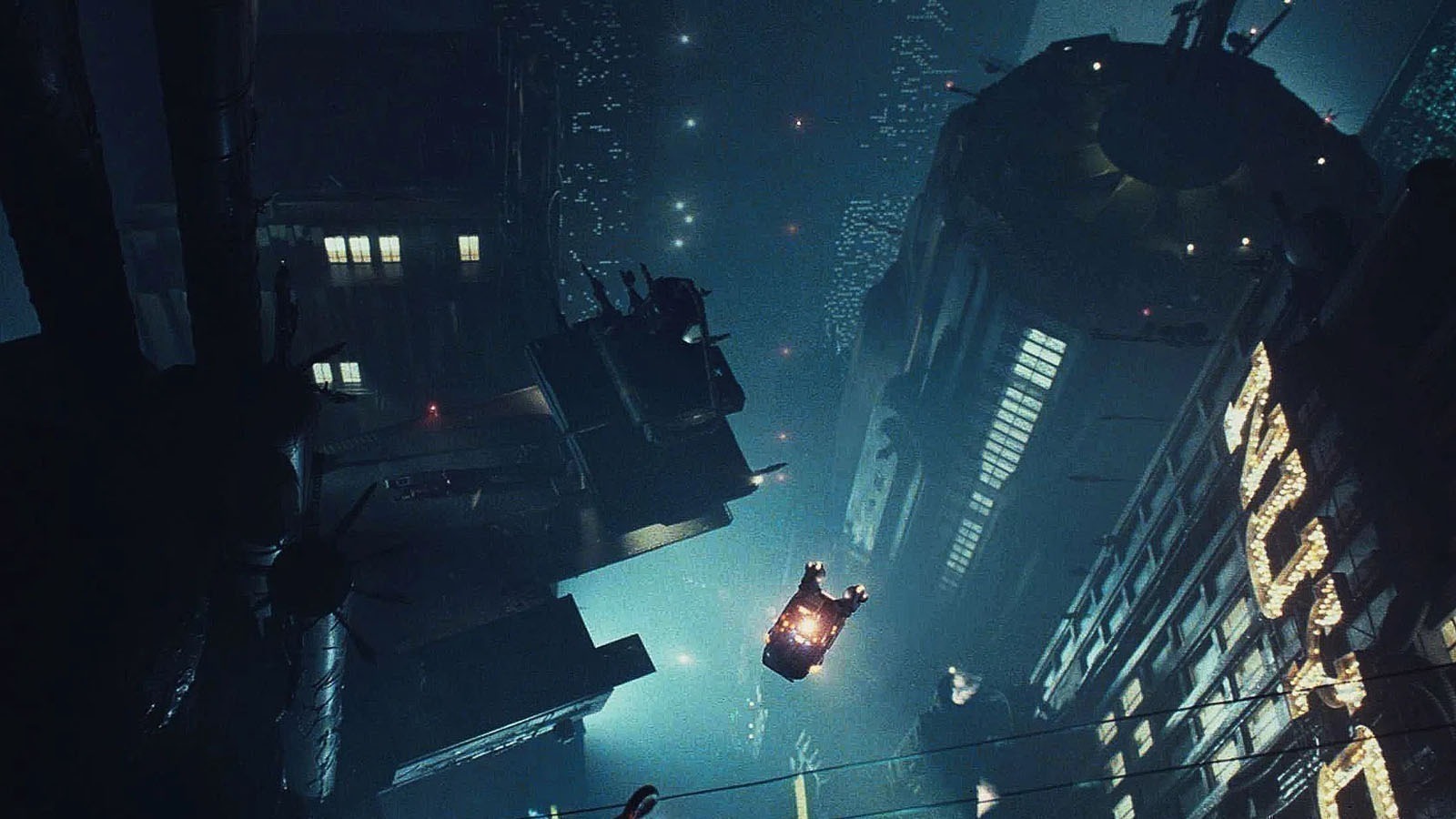
- Tomorrow evening in Seattle, Ridley Scott’s Blade Runner (1982), #5 on the LAT’s list, will screen with live accompaniment from the Avex Ensemble. The film conjures a vision of Los Angeles in 2019, a city that lay “beyond the darkness, the rain that never stops, the blasts of smoke from utility holes, passing vehicles, and wall vents,” writes Charles Mudede at the Stranger. “These elements isolate each scene—Rick Deckard (Harrison Ford) crossing a wet street, or waiting for ramen, or entering a spinner. As for the rest of LA, it’s in the music. Vangelis scored less a movie and more an invisible metropolis.”
Don’t miss out on your Daily briefing! Subscribe to the RSS feed.