“We’re Trying!”
Share
Now on through February 2, To Save and Project, MoMA’s annual festival of film preservation, presents new restorations of classics and rediscoveries and will wrap with the world premiere of “never-before-seen Andy Warhol film rarities.” In the New York Times, Ben Kenigsberg reports on the reconstruction of G. W. Pabst’s The Joyless Street (1925), starring Greta Garbo, and for MoMA’s Magazine, curators Jason Persse, Ron Magliozzi, and Katie Trainor delve into the archives of Russ Meyer, whose Vixen! (1968) screens next Friday.
MoMA will also present Uncle Mustache (1970) and Bashu, the Little Stranger (1986), two films by Bahram Beyzaie, the Iranian writer and director for the stage and screen who passed away over the holidays at the age of eighty-seven. Beyzaie’s films are “seamless blends of myth, symbolism, folklore, and classical Persian literature,” writes Ehsan Khoshbakht for the Guardian. “Within their dizzying labyrinth of rituals, cinema becomes an act of dreaming.”
Khoshbakht has curated a season of Iranian New Wave films for the Barbican in London that will run from February 4 through 26 and include Beyzaie’s The Journey (1972) and The Ballad of Tara (1979), both of which will screen at Metrograph in New York as part of the series Travel Companions: Bahram Beyzaie & Amir Naderi, which opens on January 31.
Currently, Metrograph is presenting Amos Poe and No Wave Cinema, a series that has become a tribute following Poe’s passing on Christmas Day. He was seventy-six. Writing for Filmmaker, Jaime Levinas, a student of Poe’s who became a friend, remembers the director of The Foreigner (1978) and Subway Riders (1981) as “one of the true pioneers” of the filmmaking scene in 1970s and ’80s New York. “What continues to captivate me and still resonates with so many of my fellow filmmakers today about No Wave,” writes Levinas, “is its punk, no-budget conviction that cinema doesn’t need permission or gatekeepers to exist.”
This week’s highlights:
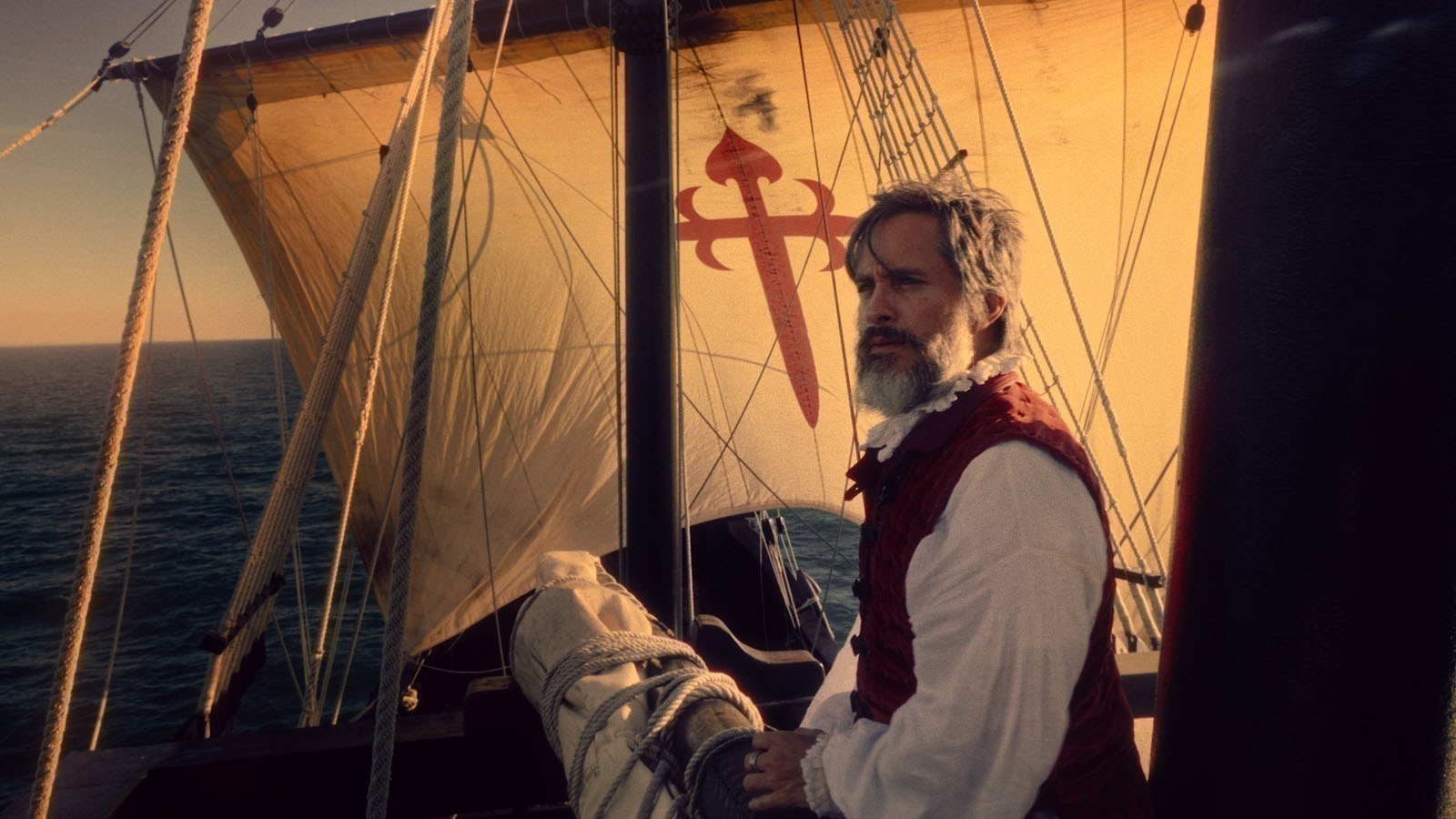
- Lav Diaz’s Magellan, starring Gael García Bernal as the Portuguese explorer who set out to circumnavigate the globe but lost his life in the Philippines in 1521, is “a tale of death, disease, mutiny, and mutually assured destruction,” and it’s “the most powerful anti-imperialist epic I’ve seen since Lucrecia Martel’s Zama (2018),” writes Justin Chang in the New Yorker. “It’s both mythology and history,” Diaz tells Marshall Shaffer at Slant. “It’s a cliché, but history keeps repeating itself. We’re circling this abyss, and I don’t know if it’s gonna change. We try to create discourse using the medium of cinema, but at the same time, you question if it can really help change things. We’re trying!”
- A Rabbit’s Foot’s Fatima Khan has a terrific conversation with Mira Nair about Mississippi Masala (1991), directing Denzel Washington (“he had seen and loved Salaam Bombay!—that’s why he took the meeting”), and the film she’s working on now about Amrita Sher-Gil, “the Indo-Hungarian painter, our subcontinent’s Frida Kahlo, a pioneer of Indian modernism.” Naturally, Khan simply has to ask about her son, Zohran Mamdani, New York’s new mayor. “I don’t really think in terms of pride,” says Nair, “but I am moved by how resolutely himself he is. He only does what he believes in. That’s brave—because it’s not ambition-driven. And it’s the same mantra I teach at Maisha Film Lab, my free film school in East Africa: If we don’t tell our own stories, no one else will.”
- Tracking the lives of five teens, Jean-Pierre and Luc Dardenne’s Young Mothers is “a subtle variation on their deceptively simple brand of neorealism,” writes Jake Cole at Slant. For RogerEbert.com, Isaac Feldberg talks with the brothers about their new film before steering the conversation to Émilie Dequenne, who won the award for Best Actress in Cannes for her debut performance in Rosetta (1999). Cancer took Dequenne last spring, when she was only forty-three. Luc Dardenne recalls auditioning her for “a scene where Rosetta is carrying the propane gas tank and stumbles under its weight,” and “it was the way that she completely melted down crying during the scene that convinced us, ‘It’s you. You are this role. You are Rosetta.’”
- Now that the final issue overseen by editor Scott Macaulay is wrapped and out, Filmmaker is about to undergo some major changes. Vadim Rizov, director of editorial operations, has been let go. He’s put together an overview of some of his best work, and it is indeed a treasure trove. The magazine has also posted a conversation between Guy Maddin and David C. Roberts about piecing together cinematic city symphonies. Maddin’s The Green Fog (2017), codirected with Evan and Galen Johnson, retells the story of Hitchcock’s Vertigo through clips from films shot in and around the San Francisco Bay Area. And Roberts’s Song of My City (2025) revisits 1970s New York through footage from movies of that decade. “So the garbage, the urine town smells, it’s all just mixed together in the emulsion to me, and I just can’t imagine New York looking as good,” says Maddin, “even if someone with a big budget set out to make a New York movie set in the ’70s today.”
- Film historian and regular Sight and Sound contributor Michael Brooke has been “an ardent fan of central and eastern European culture for pretty much a full half-century.” Since New Year’s Day, he’s been sending out a couple of newsletters each weekday, brief but deeply insightful pieces on such subjects as jazz and Polish cinema, the films of Andrzej Wajda, and more recent works such as Cristian Mungiu’s 2016 film Graduation (“there’s more than a whiff of Michael Haneke in his basilisk-eyed view of humanity”) and Dea Kulumbegashvili’s “brave, genuinely risk-taking” April (2024).
Don’t miss out on your Daily briefing! Subscribe to the RSS feed.