From First Bloom to Resplendent Decay
Share
This short week has packed a few hard punches. The day after Udo Kier died, Jimmy Cliff passed away at the age of eighty-one. Rolling Stone’s Daniel Kreps calls Cliff an “original rude boy and soulful reggae legend who helped spread the genre’s reach from Jamaica to the world with The Harder They Come,” the 1972 film directed by Perry Henzell—and of course, the LP, which Rolling Stone ranked at #3 last year on its list of the 101 Greatest Soundtracks of All Time, calling it “the single greatest reggae mixtape ever made.”
In the New York Times, Jin Yu Young and Pragati K. B. remember Dharmendra as “a Bollywood actor of easygoing machismo who became one of India’s most versatile stars, playing swoon-worthy romantic leads, flashy action heroes, and witty comics in a career spanning nearly seven decades.” Dharmendra, perhaps best known outside of India for starring in Ramesh Sippy’s recently revived Sholay (1975) alongside Amitabh Bachchan, was eighty-nine.
Lee Tamahori, whose directorial debut, Once Were Warriors (1994), became the highest-grossing film in New Zealand’s history, has died at seventy-five. Tamahori started out as an assistant director (Merry Christmas Mr. Lawrence, The Quiet Earth) and went on to direct Nick Nolte and Jennifer Connelly in Mulholland Falls (1996), Anthony Hopkins and Alec Baldwin in The Edge (1997), and Pierce Brosnan as James Bond in Die Another Day (2002).
This week’s highlights:
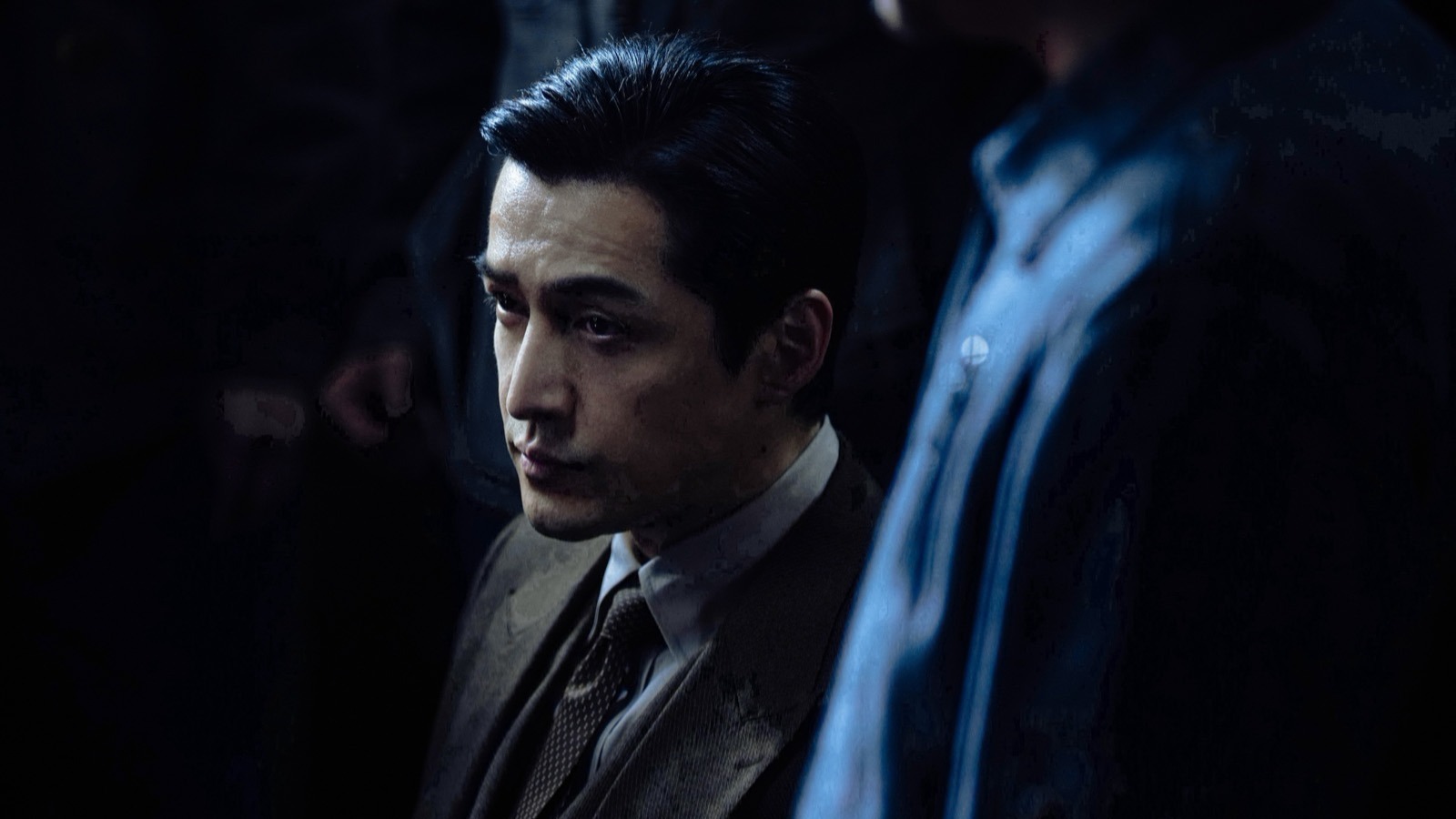
- On Monday, we launched the exclusive online premiere of Wong Kar Wai’s series Blossoms Shanghai—a massive hit in China—with the first three of thirty episodes rolling out each week through the end of January. John Powers set the stage earlier this month with a guide to the characters and a primer on the boom-boom years set off with the 1990 creation of the Shanghai Stock Market. Now, the first stateside reviews are in. “Few filmmakers so deftly use sheer style to heighten dramatic effect,” writes Chris Vognar in the Boston Globe. IndieWire’s Ben Travers finds the series “sly and funny, charming and fierce,” and for Peter Sobczynski at RogerEbert.com, Blossoms Shanghai “feels of a piece with such classics as Chungking Express, In the Mood for Love, and 2046.”
- IndieWire is spending this entire week with Stanley Kubrick’s Eyes Wide Shut (1999). So far, Ryan Lattanzio has spoken with cinematographer Larry Smith, who has overseen the new restoration we’ve just released on 4K and Blu-ray, and with Todd Field, who played the blindfolded pianist Nick Nightingale before going on to direct—with Kubrick’s confident encouragement—In the Bedroom (2001). At the Film Stage, Nick Newman talks with editor Nigel Galt, who tells him that Kubrick “always believed that editing was the most important part of filmmaking. He said, ‘This is why we shoot this stuff: so we can make it work in the cutting room.’” And while Kubrick died just days after the film was first screened for Warner Bros., Tom Cruise, and Nicole Kidman, the cut of Eyes Wide Shut we see today is “Stanley’s cut,” insists Galt.
- The Quietus has published two outstanding pieces this week. Owen Hatherley writes about Wrack and Ruin: The Rubble Film at DEFA, a collection of five East German postwar films that remain “fascinating as attempts to make antifascist commercial blockbusters, in a devastated society that would have preferred to think about almost anything else.” And Jude Rogers talks with members of the team behind Edge of Darkness (1985), “a revenge thriller, a mystical nuclear-and-environmental-apocalypse fable, a clear-eyed political document of the mid-1980s, a ghost story.” The tremendous success of the six-episode BBC series “speaks of a time when the public service broadcaster had the guts to commission a drama which connected profoundly with social unease, while also being deeply weird.”
- Jean Vigo’s L’Atalante (1934) may center on the story of the love between a barge captain (Jean Dasté) and a country girl (Dita Parlo), but “it’s their bargemate, the uncouth Père Jules, played by Michel Simon, who steals the show,” writes Pamela Hutchinson in the Guardian. Simon was “one of the most distinctive presences in twentieth-century French cinema: a soft-faced, gravelly voiced clown capable of tremendous pathos, and true chaos. Charlie Chaplin called him ‘the greatest actor in the world.’” And Hutchinson notes that, reviewing Claude Berri’s The Two of Us (1967), Renata Adler “called Simon ‘an enormous old genius . . . the general impression is that of an immense, thoughtful, warm-hearted and aquatic geological formation.’ This rock-hewn genius was also well known as an eccentric of the most endearing order.”
- Sight and Sound has republished Gideon Bachmann’s multipart report from the set of Salò, or The 120 Days of Sodom (1976), where he spoke at length with Pier Paolo Pasolini. On his first day, Bachmann found that “the sun had early swept away the Po valley fogs. The shooting is at Cavriana, some miles from Mantua, in the Villa Mirra. It is one of those Napoleon-slept-here places from the immediate pre-Umbertine days, later used as headquarters, after World War I, for a variety of well-meaning international causes. Pasolini has chosen it for its resplendent decay, its overgrown gazebos and its rose bushes choked by wisteria, and perhaps the cemetery smell of its hedges. In a keeper’s cottage on the edge of the grounds he is shooting scenes in dormitories where the victims of orgies pass their tormented nights, to be awakened in the cruel morning by the renewal of the daily, sadistic regimentation.”
Don’t miss out on your Daily briefing! Subscribe to the RSS feed.