Talkies
Share
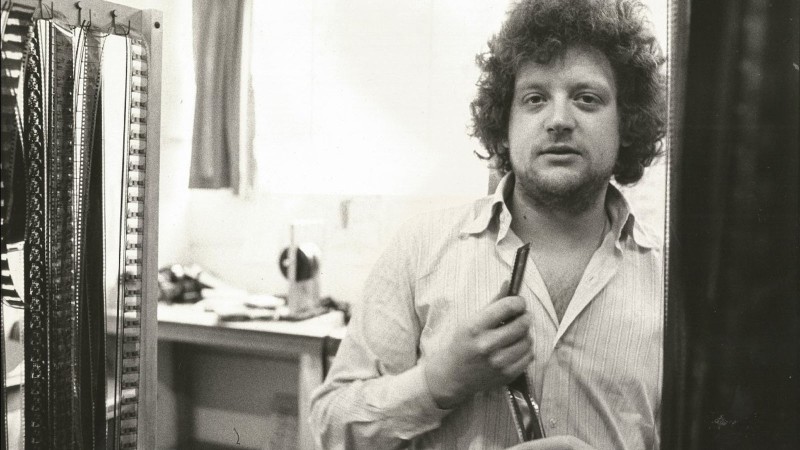
Jeff and Susan Bridges celebrated their second anniversary during the making of Michael Cimino’s Heaven’s Gate (1980). She was an on-set photographer and he, of course, was one of the film’s stars along with Kris Kristofferson, Christopher Walken, John Hurt, and Isabelle Huppert. A Rabbit’s Foot creative director Fatima Khan talks with Susan Bridges about the exhibition of photos she shot forty-five years ago, now on view at Tamsen Gallery in Santa Barbara through the end of the year.
“Getting proof sheets back can be surprising,” says Bridges. “You never know what you’re going to get. Maybe you captured something magical or maybe you forgot to load your camera. When I look at my photographs, I can feel the thundering of horse hooves, the sounds of gunshot, and the smell of fear.”
Starting today, New York’s Film Forum is presenting Le heist français, a two-week, twelve-film series celebrating the seventieth anniversary of Jules Dassin’s Rififi while also featuring four films by Jean-Pierre Melville. Asia Society, in the meantime, is spending the weekend screening films by Uzbek director Ali Khamraev. Writing for Film Comment in 2003, Kent Jones called Khamraev “far and away the most flamboyant director in the entire region and an artist of rock-solid humanism and amazing expressive power.”
Lucile Hadžihalilović will be in Berlin from Sunday through Wednesday, and in London, the exhibition Wes Anderson: The Archives opens at the Design Museum today and will stay open through July 26. “Wesophiles will doubtless relish poring over the spoils,” writes Catherine Slessor in the Guardian, “such as the implausibly intricate scale model of the Darjeeling Express, or the luxurious red velvet and mink number worn by Tilda Swinton as the desiccated dowager, Madame Céline Villeneuve Desgoffe-und-Taxis, in The Grand Budapest Hotel. There is also the actual Grand Budapest Hotel, a towering pink confection resembling a monstrous marzipan wedding cake, along with maquettes of the mutant sea creatures that populate The Life Aquatic with Steve Zissou, and an array of furry, diddy, stop-motion puppets from Fantastic Mr. Fox, lined up like a vulpine identity parade.”
This week’s highlights:
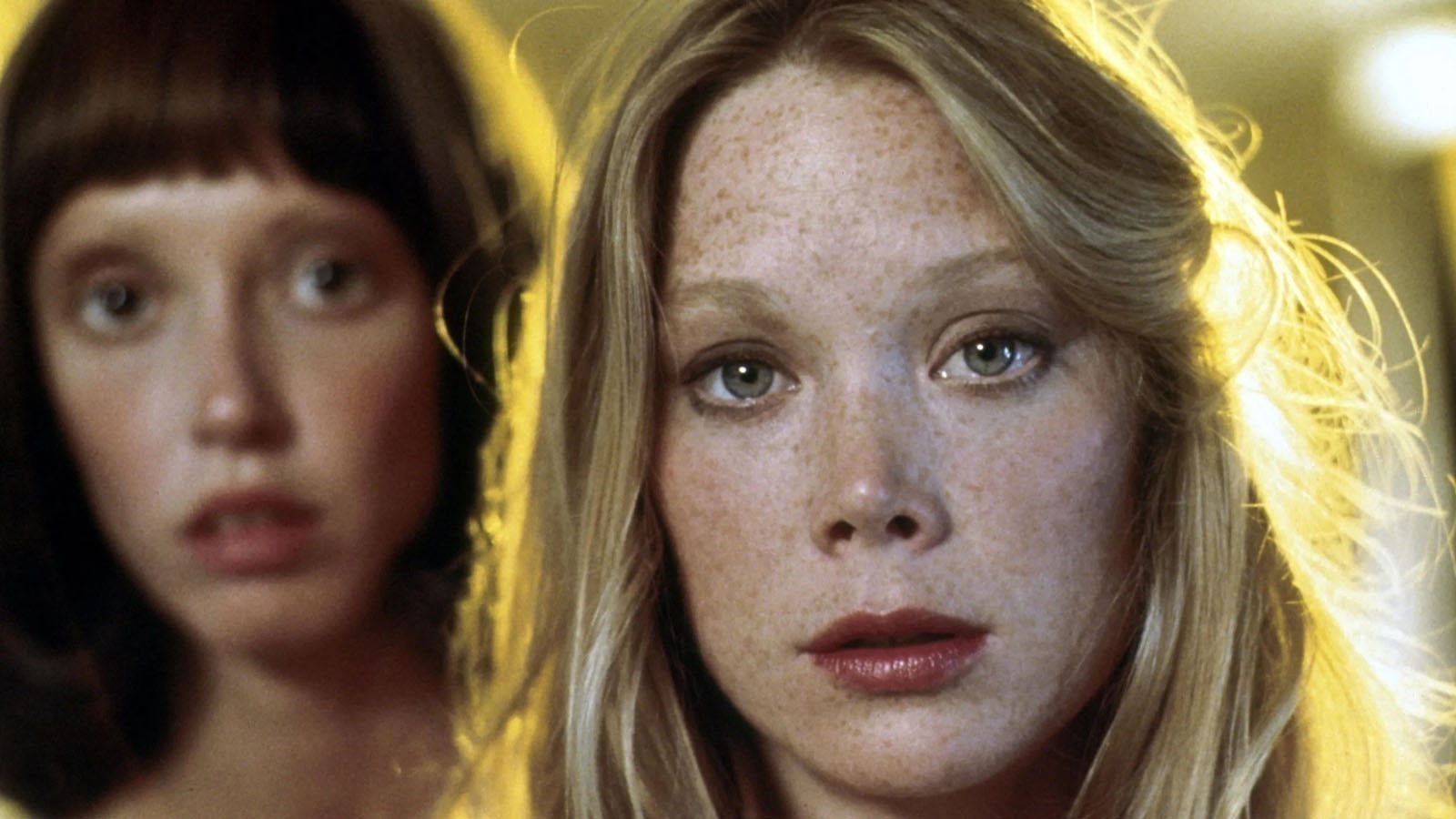
- Sissy Spacek had just completed work on Robert Altman’s 3 Women (1977) when Andy Warhol and Bob Colacello spoke with her for their magazine, Interview. Spacek was set to head to Vienna to make Bad Timing (1980) with Nicolas Roeg, but went with Michael Apted and Coal Miners Daughter (1980) instead. She won an Oscar, while Roeg and Theresa Russell met and eventually married. “It was meant to be,” says Spacek. Warhol was “such a gentleman and so dear to me,” she tells fellow Texan Ethan Hawke in a new and delightful Interview feature. Vulture’s Matthew Jacobs, in the meantime, keeps the focus of his chat with Spacek on 3 Women, Altman, and Shelley Duvall. “God bless her sweet, sweet, wonderful soul,” says Spacek. “We lost touch for a little while after she first moved back to Texas, but we reconnected just a few years ago and we talked regularly before she passed away. She was a gentle spirit.”
- In 1958, André Bazin, a seminal figure in film criticism, spoke with Jean Renoir and Roberto Rossellini and found both remarkably bullish on what was then still a relatively new medium, television. “I thought that I’d made a cinema film,” said Renoir of The Diary of a Chambermaid (1946), “and in fact, without realizing it, I’d made one for television.” And Rossellini told Bazin that “television gives something back to the spectacle of cinema, whether in black and white or in color.” The interview is included in a new issue of Sabzian put together by Tillo Huygelen, “André Bazin, Television Critic,” gathering essays on what the cofounder of Cahiers du cinéma viewed as an integral part of an emerging visual culture.
- Writing for e-flux, filmmaker, artist, and critic Ethan Spigland walks us through a recent exhibition of visual work by Jean-Luc Godard. In twenty-eight “fragments”—brief, numbered paragraphs—in roughly chronological order, Spigland offers his observations on early paintings by the young aspiring artist through countless notebooks to the collage mounted on a wall across from Godard’s desk. “As you turn the corner,” notes Spigland midway through, “you encounter a reconstruction of Godard’s workspace—a small array of modest tools and objects that include Edding markers, pencils, scissors, glue sticks, an iPhone displaying an image of a donkey, and cigars. These artifacts remind us that, for Godard, cinema was above all a form of manual labor, a concrete process of cutting, arranging, and thinking through touch.” Jean-Luc Godard: Unmade and Abandoned, a series programmed by Michael Witt, opens at the ICA in London on Tuesday and runs through June 21.
- We’ll take a closer look at The Secret Agent next week, but the Metrograph series Kleber Mendonça Filho, That Man from Recife opens today, and Nick Pinkerton talks with the Brazilian director for the Journal—which is also running Giovanni Marchini Camia’s conversation with Oliver Laxe (Sirāt) and Ryan Swen’s interview with Sylvia Chang, a pivotal figure of the New Taiwanese Cinema and the Hong Kong New Wave. As an actor, producer, or both, Chang has worked with King Hu, Edward Yang, Johnnie To, Ann Hui, Jia Zhangke, and Bi Gan, and she’s currently starring in Huang Xi’s Daughter’s Daughter (2024), which she coproduced with Hou Hsiao-hsien. “I’m always looking for something different,” says Chang, and with each new project, “I’m just like a newcomer again.” She hopes to direct her next feature—her fourteenth—next year.
- In the Los Angeles Times, Glenn Whipp gets Ryan Coogler and several members of his cast and crew talking about that scene in Sinners, the one that cracks open a juke joint in the Mississippi Delta in 1932 to revel in the past and future of the blues. “I remember every movie that made me say, ‘Yo, what the fuck,’” says Coogler. “And I was feeling like, ‘Man, I don’t know if I’ve given people that feeling enough’ . . . So getting to that scene, I thought, we have a cool opportunity in a movie that’s got all types of supernatural shit that’s in the vampire tradition. Maybe we can take a risk and put the audience in a place that they recognize here, an awesome party and a crazy performance that stops space and time and gives you an out-of-the-body experience.”
Don’t miss out on your Daily briefing! Subscribe to the RSS feed.