Akerman, Altered States, and Avant Ads
Share
We’re still processing the losses of Diane Keaton, to whom Soraya Roberts pays tribute in Defector, and Ken Jacobs, who is the subject of two new remembrances by R. Emmet Sweeney, and for the BFI, William Rose. This week, we learned that Samantha Eggar had passed away at the age of eighty-six.
Best known for appearing opposite the late Terence Stamp in William Wyler’s The Collector (1965), Eggar also starred in David Cronenberg’s The Brood (1979) as a woman who gives birth to little monsters. In the Guardian,Ryan Gilbey notes that Cronenberg once remarked that Eggar “really understood the movie; she said that it reminded her of her own childhood. To me that meant she was seeing past the horror-fantasy elements to the psychological elements, which were really the basic underpinning of the movie.”
This week’s highlights:
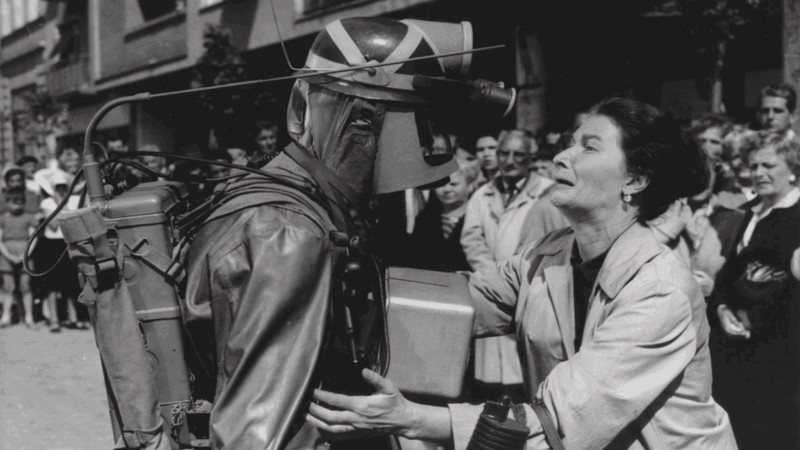
- Metrograph has posted Nick Pinkerton’s interview with Clint Eastwood from its first issue, and the introduction alone is a must-read. Metrograph’s online Journal offers Pinkerton on Juraj Herz’s The Cremator (1969), a film that “considers certain imperishable evils afflicting the body politic.” And reviewing Abel Ferrara’s memoir Scene in the new issue of Harper’s, Pinkerton notes that “Ferrara doesn’t draw an analogy between the film business and criminal endeavor per se; he instead provides ample evidence, gathered over the course of long life experience, that they are one and the same thing.”
- Partly in anticipation of Avant-Garde Ads, an Anthology Film Archives series opening next month and featuring commercial work by such filmmakers as Stan Brakhage, Peter Kubelka, and Nathaniel Dorsky, Notebook editors Chloe Lizotte and Maxwell Paparella introduce the new Insert with “some thoughts on advertising’s power to instill desire and prey upon our human frailty.” The collection features James N. Kienitz Wilkins (Still Film) on the ubiquity of moving images and Tarsem (The Fall) on trying out ideas on someone else’s dime as well as contributions from Mark Asch, Nicholas Henriquez, Nathan Lee, Debashree Mukherjee, Olivia Popp, and Celia Young.
- The Paris Review has pulled James Linville’s 1996 interview with Billy Wilder out from behind its paywall. Anecdotes percolate throughout, all of them centered on twentieth-century luminaries such as Ernst Lubitsch, F. Scott Fitzgerald, Jack Lemmon, Charles Boyer, or Raymond Chandler, “a peculiar guy, but I was very glad to have worked with him.” When Linville asks about Sunset Boulevard (1950), Wilder recalls that he’d long “wanted to do a comedy about Hollywood. God forgive me, I wanted to have Mae West and Marlon Brando.” But Gloria Swanson “had been a big star, in command of an entire studio. She worked with DeMille. Once she was dressed, her hair done to perfection, they placed her on a sedan and two strong men would carry her onto the set so no curl would be displaced. But later she did a couple of sound pictures that were terrible. When I gave her the script, she said, I must do this, and she turned out to be an absolute angel.”
- Last week, David Schwartz wrote for Screen Slate about “an uncanny quality” in Chantal Akerman’s News from Home, shot by Babette Mangolte in Manhattan in 1976, and its “view of an eerily depopulated city in the ‘Ford to New York: Drop Dead’ years.” This week, Akerman and Mangolte’s follow-up to Jeanne Dielman resurfaces in Keith Phipps and Scott Tobias’s discussion at the Reveal of the top hundred films in Sight and Sound’s 2022 “Greatest Films of All Time” poll. “Given that time is a primary theme in Akerman’s work,” writes Tobias, “it would not surprise me if she anticipated that her documentary would change, just as other artists have designed, say, nature-based sculptures that are shaped by passing seasons and the tides.”
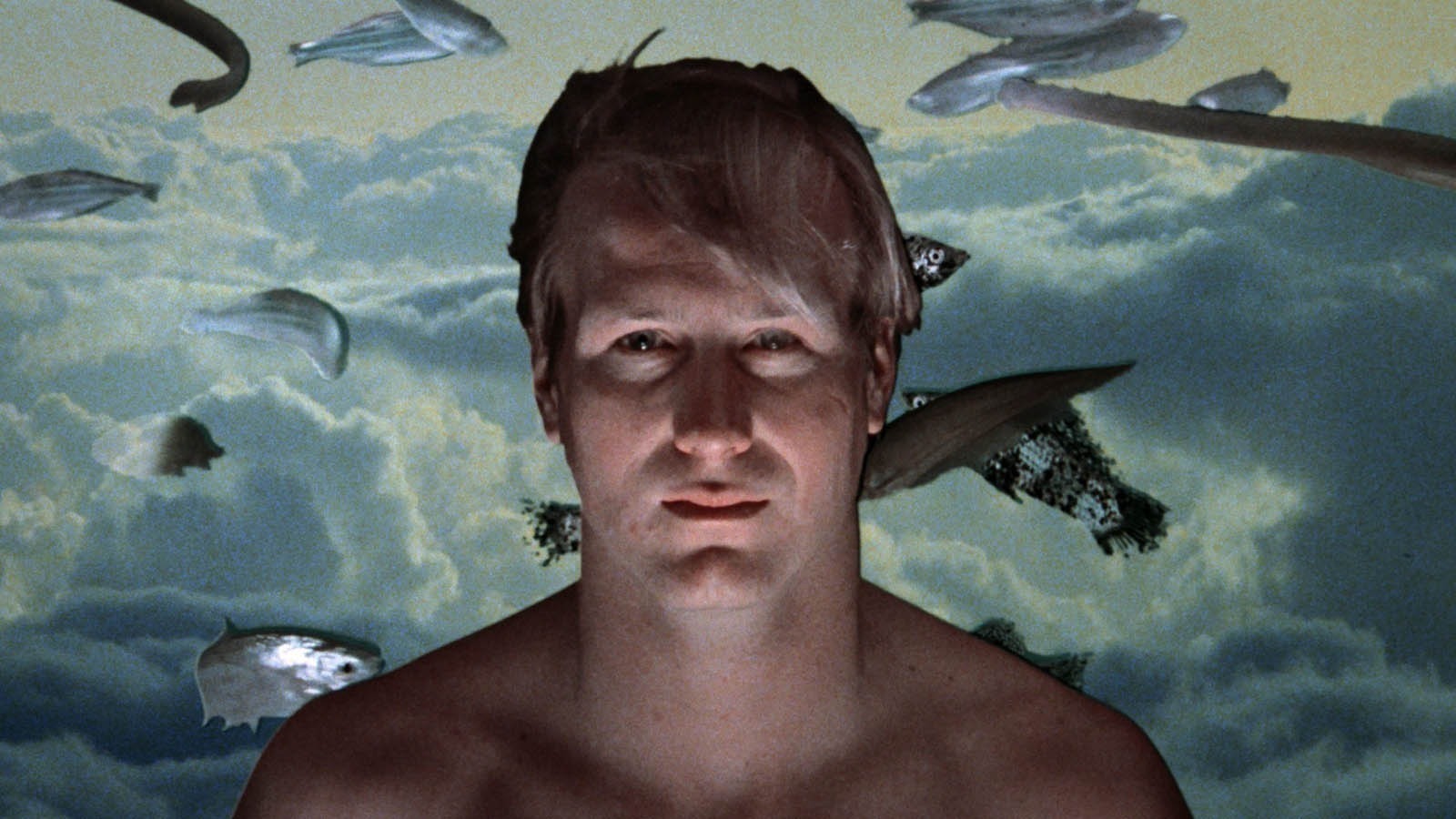
- Written by Paddy Chayefsky (Network) and directed by Ken Russell (Women in Love), Altered States (1980), starring William Hurt as a psychopathologist seeking to unlock primal secrets, is “a textbook example of how a tug of war between writer and director can work in the film’s favor,” writes Budd Wilkins at Slant. “Perhaps it is oversimplistic to map out the movie’s split personality in terms of a battle between Chayefsky’s cerebralism and Russell’s corporeality,” writes Jessica Kiang. “But it’s also fun, so let’s indulge,” and she does. Altered States is “a series of bad trips burned from the brain onto celluloid,” writes Jacob Oller at the A.V. Club, but “the undeniable revelation sought by its fringe-dweller is the same as the one found in hackneyed romances—sometimes you just need to turn yourself into the universe’s throbbing fetus before you realize that we find our answers in each other.”
Don’t miss out on your Daily briefing! Subscribe to the RSS feed.