Sated Desires
Share
The Chicago International Film Festival has announced a lineup of 111 features and seventy shorts, a selection of some of the most talked-about films of the year as well as a good number of premieres. The sixty-first edition runs from October 15 through 26, and we’ll be there! Chicagoans will find the Criterion Mobile Closet at NEWCITY Lincoln Park during the first weekend of the festival, October 17 through 19.
Two festivals are underway in the Windy City right now. In the Chicago Reader, Andrea Thompson previews this year’s Reeling LGBTQ+ International Film Festival (through September 28) and Kat Sachs picks out several highlights screening at the Chicago Underground Film Festival through Sunday. NewCity’s Ray Pride talks with CUFF artistic director Bryan Wendorf about the challenges of running a nonprofit arts organization in 2025 as opposed to when he started out thirty years ago—and about a few of the standouts in this year’s program.
Fantastic Fest is on through Thursday, and the Austin Chronicle’s Richard Whitaker talks with festival director Lisa Dreyer about “surviving and thriving” for twenty years. For Screen Slate, Cat Beckstrand previews this weekend’s Studio 8 Film Festival, a celebration of “the visionary spirit of the film department at the San Francisco Art Institute (SFAI), a core part of the development of experimental film on the West Coast for decades.”
In New York, the Parapraxis Film Festival (today through Thursday) explores the relationship between cinema and psychoanalysis, and Film Forum will be saluting Peter Sellers on his centennial through October 2. Across the Atlantic, San Sebastián opens today; the Viennale (October 16 through 28) has released this year’s trailer, Awakening, directed by Joanna Hogg; and the Berlinale (February 12 through 22) has announced a retrospective dedicated to the cinema of the 1990s.
This week’s highlights:
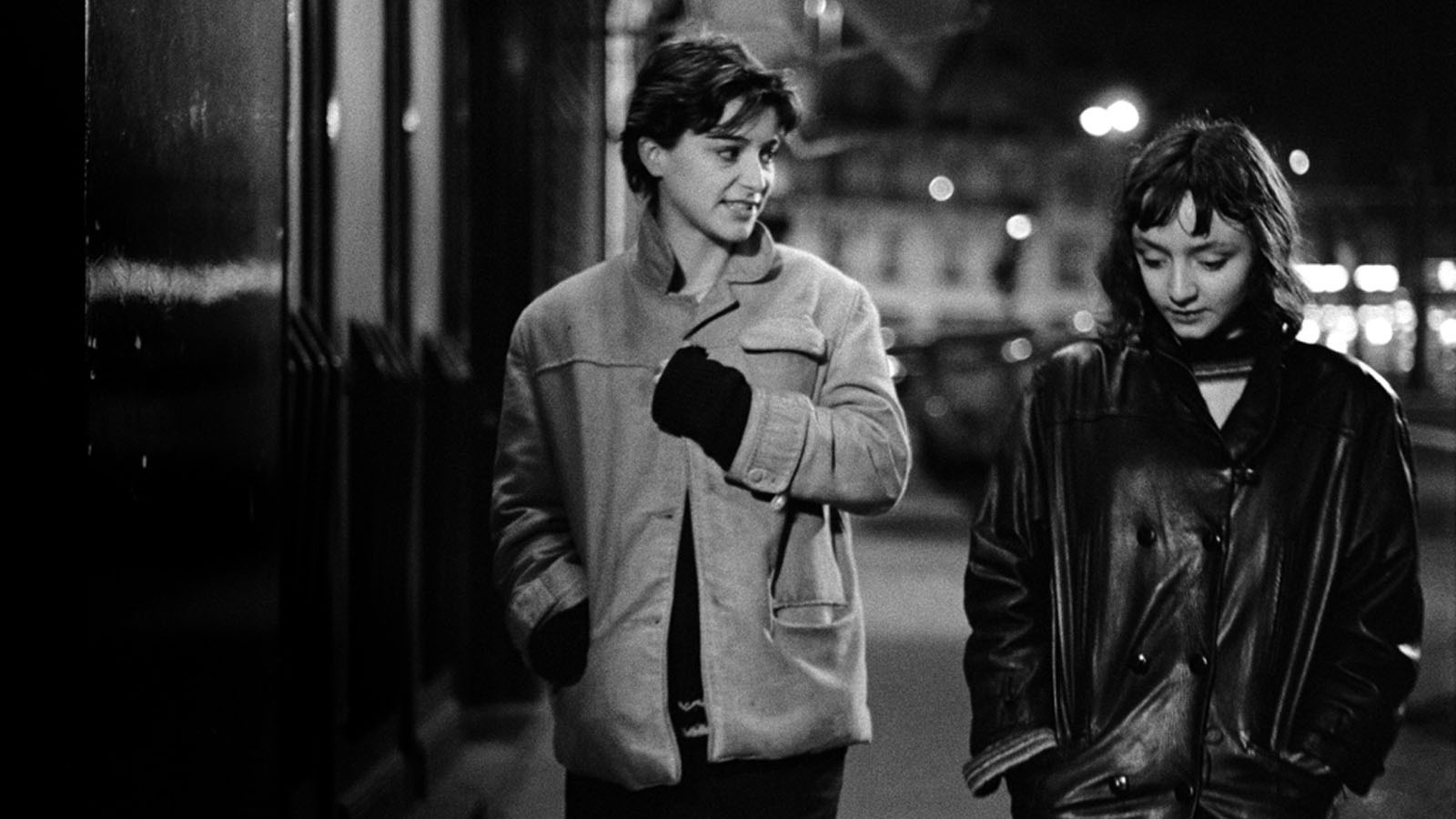
- On the occasion of Chantal Akerman: The Long View, the MoMA retrospective running through October 16, Film Comment has republished Patricia Patterson and Manny Farber’s 1977 piece on Jeanne Dielman (1975). “If there is a key question at the heart of Akerman’s incredibly varied and deeply personal body of work,” writes David Schwartz for Notebook, “it is this: How does one find their place in the world?” 4Columns film editor Melissa Anderson writes about a pair of films screening on September 28 and October 2, I’m Hungry, I’m Cold (1984) and Portrait of a Young Girl at the End of the 1960s in Brussels (1994). “Never interested in explaining lesbian desire,” writes Anderson, “Akerman instead depicted, sometimes elliptically but always indelibly, its pull, its ways of sating the starved.”
- Laurent Kretzschmar has posted two new translations of texts by the renowned critic and editor Serge Daney. Raúl Ruiz’s films are “stories, and they have an initiatory character,” wrote Daney in a piece for Libération in 1984. “Finished, rigged, nested, or malevolent, they possess a mad charm.” And in an excerpt from an essay on Maurice Pialat that ran in a 1992 issue of Trafic, Daney observed that the “most beautiful ‘secondary’ characters in cinema (and only the secondary ones are beautiful) are those who, between two appearances on screen, give the impression of having lived, got some fresh air, taken on color, taken their time. They are like clouds in shots of the sky: not made to ‘stick around.’ It’s for others to stay: the stars, the extras.”
- The new Film Quarterly features a freely accessible interview with Errol Morris as well as articles on Pauline Kael and the “rebranding” of Pamela Anderson. Most recently, Anderson has appeared alongside Liam Neeson in Akiva Schaffer’s The Naked Gun, in which Neeson’s Frank Drebin Jr. attempts to thwart the plans of an evil billionaire (Danny Huston). “It’s not just that the tech bro villain is by now cliché,” writes John Semley in the Baffler, “it’s that they seem to have supplanted any alternative. You don’t much see movies where America’s real-life antagonists get bopped in the nose, smacked in the nutsack, or poked-in-the-eyes anymore. Wherefore the Stooges of yesteryear?”
- The Guardian’s Steve Rose talks with Mike Figgis about Megadoc, his film about the making of Megalopolis, a project Francis Ford Coppola had been intermittently working on for thirty years before it premiered in Cannes last year. For the New Yorker’s Richard Brody, Megadoc is “a fascinating, inspiring view of a filmmaker whose methods are as boldly original as his movie.” Figgis tells Rose that “all the really good docs about filmmaking have been stories about disasters, so every time something negative happened I was thinking: ‘Oh, that’s good for the documentary.’” Figgis adds that Coppola’s process “has always been one of experimentation and actually, putting that into perspective, who else is doing that? Nobody. Whether you like the film or you don’t like the film, no one of that stature is doing it.”
- At Club Ciné, film and theater director Nadia Latif (The Man in My Basement) discusses one of her favorite films, Mira Nair’s Monsoon Wedding (2001). “For me, growing up in Sudan, a Muslim country, weddings are where we connect; they’re social occasions, moments of excess and the rest.” Monsoon Wedding is “quietly radical as it attempts to unpack something totally familiar . . . I’m incapable of watching it without sobbing, not because it’s sad, because it’s so full of humanity. And actually, I think that we could do with more uncynical filmmaking. We talk about ‘entertaining’ and ‘sentimental,’ like they’re bad things but we all love it . . . I’ve probably seen this film over a hundred times.”
Don’t miss out on your Daily briefing! Subscribe to the RSS feed.