From Gospel to Grotesque
Share
The Museum of Modern Art’s retrospective Chantal Akerman: The Long View is on through October 16, and the New Yorker’s Richard Brody recommends catching the rarely screened Portrait of a Young Girl at the End of the 1960s in Brussels (1994), “one of Akerman’s most personal, immediately expressive, and dramatically straightforward movies.” Another complete retrospective, Terence Davies: Time Present and Time Past, opens this evening at the Museum of the Moving Image with a screening of The Long Day Closes (1992) and a celebration of the release of Davies’s only published novel, Hallelujah Now.
As if New Yorkers weren’t already facing tough choices, the Anthology Film Archives series Malcolm X: Multidimensional is on through September 21. “Malcolm X keenly understood how the game of popular perception was rigged and evolved to be a media maestro, carefully choreographing his public performance toward the political ends of global liberation,” writes guest programmer Yasmina Price for Screen Slate.
And there’s more. Kino Polska, a weeklong showcase of recent cinema from Poland, opens today at BAM, and New York Film Festival artistic director Dennis Lim will be spending Sunday at Asia Society, where he will present and discuss Raya Martin’s Independencia (2009) and Shinji Aoyama’s Eureka (2000).
Elsewhere, the Los Angeles Silent Film Festival is on through the weekend, and the Chicago Film Society will screen a 35 mm print of Erich von Stroheim’s Blind Husbands (1919) on Sunday. Across the Atlantic, an Angela Schanelec retrospective is running in London through October 5, and a Margarethe von Trotta exhibition now on view in Berlin through November 9 will be accompanied by a film program starting on September 19.
This week’s highlights:
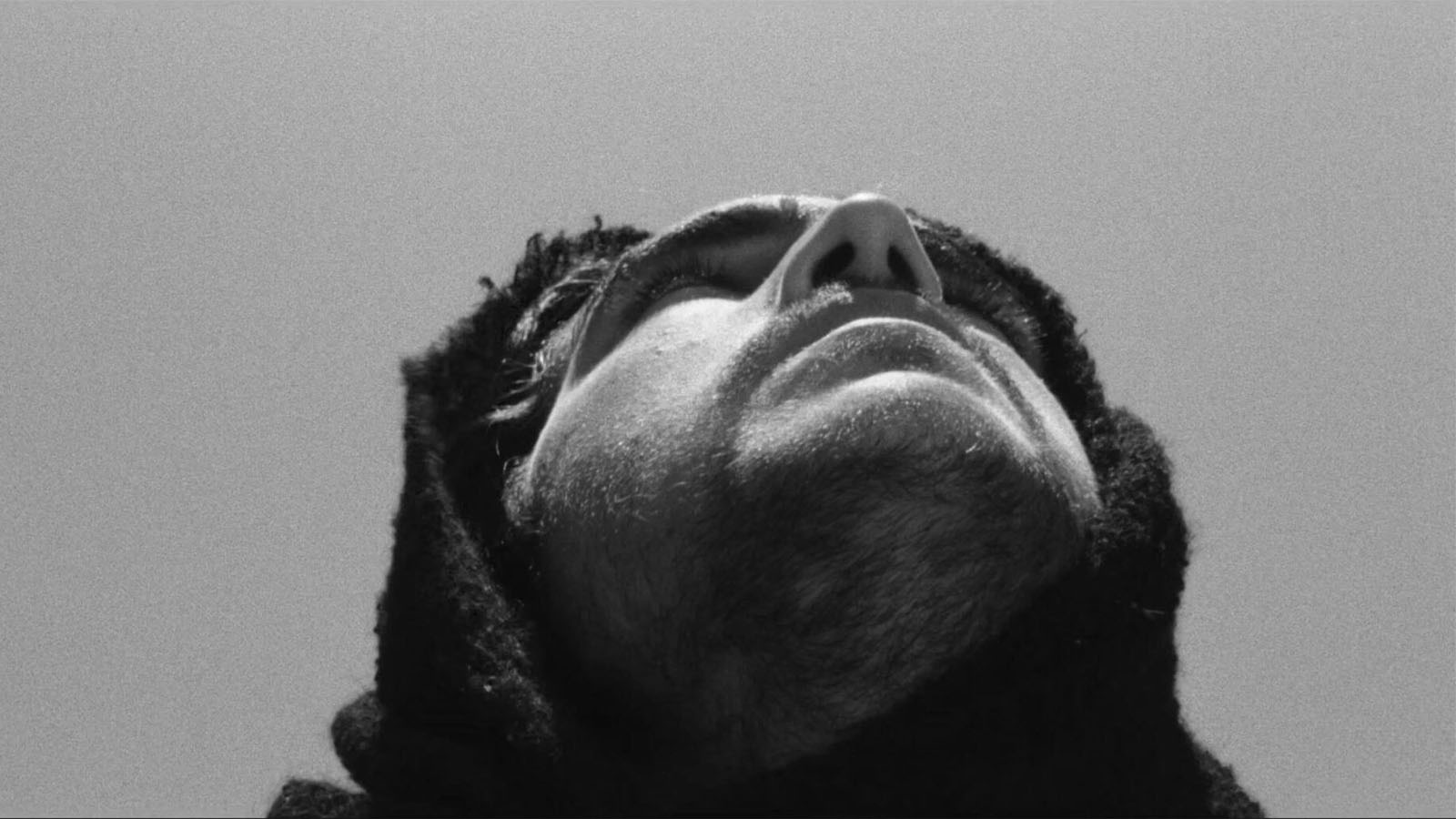
- In The Gospel According to Matthew (1964), Pier Paolo Pasolini “strips Christ of Catholic iconography and reimagines him as a barefoot revolutionary wandering a scorched, peasant landscape,” writes Will Blessing in Bright Lights Film Journal. “It’s a Marxist gospel told through neorealist aesthetics—harsh, reverent, and strange. And yet the film is filled with longing—for purity, for conviction, for a world that still believes in something. That longing turns to ashes in Salò [1976]. There, the fascists quote Nietzsche and Dante while mutilating boys and girls in a villa. Ideology becomes theater, desire becomes control, and beauty itself is used as a weapon. If Gospel was Pasolini reaching for the sacred, Salò is him burying it. That arc—from gospel to grotesque—wasn’t a surrender. It was a diagnosis.”
- “A pair of new films,” begins Leo Robson in a piece for the New Left Review, “directed by filmmakers from Brooklyn, reflects the resilience of the noir-ish New York crime thriller—the genre of The Naked City (1948), Killer’s Kiss (1955) and The French Connection (1971)—but turns out to reveal something else as well: the continuing influence of Akira Kurosawa. With Highest 2 Lowest, Spike Lee offers a remake of one of Kurosawa’s gendaigeki or stories of contemporary Japan, High and Low (1963), about a kidnap gone wrong, while Darren Aronofsky, in the frenetic wrong-man caper Caught Stealing, revisits his formative relationship with a Kurosawa character, the pincered lone wolf or ronin from the jidaigeki or period piece Yojimbo (1961), which Pauline Kael hailed as the ‘first great shaggy-man movie.’”
- You won’t have heard it first from Las Vegas-based writer Nicholas Russell, but The Wizard of Oz at Sphere, an “experience” that tugs and warps the frames of the 1939 classic so that it can fully envelop an audience inside the globe of its 160,000-square foot LED display, is “in effect, a shitty, high-tech rollercoaster.” What turns Russell’s report for Defector into something far richer than a rant are the tangents, the brief reflections on Barry Levinson’s 1998 sci-fi thriller Sphere or on the indignities suffered by Judy Garland and much of the rest of the cast during the making of the original. Even richer is “The Desired Image: On Dramaturgy of the Western,” Russell’s essay in fifteen parts, many of them ruminating on James Benning’s Deseret (1995), for the Cleveland Review of Books.
- Ryusuke Hamaguchi tells Neo Sora that his Happyend (2024) is “an astonishing debut fiction feature” in a conversation moderated by Fumihisa Miyata and translated for Metrograph Journal by Aiko Masubuchi. “Even after the film is over, you’re left with the strong feeling that these characters’ lives are continuing on, that they’re somewhere out in the world. Films that achieve this feeling are incredibly rare, no matter in what country or generation.” Hamaguchi is reminded of work by Edward Yang, Hou Hsiao-hsien, and Takeshi Kitano. “It made me think, ‘I see, when films from that generation get digested by our current generation, it comes out like this.’”
- This week has offered ample evidence that the lazy days of summer are long gone, so let’s wrap with a lightning round. The new Cineaste is out, and so, too, is a Gagosian Quarterly featuring Carlos Valladares on Andy Warhol’s cinephilia. Another Gaze returns with essays on Patricio Guzmán and Lynn Hershman Leeson, and elsewhere we find Lukas Foerster arguing the case for the often-maligned Hollywood director Henry Koster and Adrian Martin drawing our attention to the overlooked critic Jean Collet. A Rabbit’s Foot has Isabelle Huppert on its new cover, and Hal Hartley talks with Brad Hanford (Slant) and Shelby Shaw (Screen Slate) about his new film, Where to Land. Coming full circle, Matt Goldberg offers a Kurosawa primer at Letterboxd and Sabzian is running a 1967 essay on the long take by Pasolini.
Don’t miss out on your Daily briefing! Subscribe to the RSS feed.