Hauntings
Share
As Venice winds down, Toronto has opened with a tribute to a beloved Canadian, Colin Hanks’s John Candy: I Like Me, which for the Hollywood Reporter’s Michael Rechtshaffen is “a big-hearted documentary that’s as embracing and generous of spirit as the man himself.” In the meantime, another Canadian-born actor has been on many minds this week.
Graham Greene, who passed away on Monday at the age of seventy-three, grew up on the Six Nations Reserve in Ontario and considered himself not a Canadian but a North American. Greene was best known for the role that earned him an Oscar nomination, Lakota medicine man Kicking Bird in Kevin Costner’s Dances with Wolves (1990). He also appeared in Die Hard with a Vengeance (1995) and The Green Mile (1999), but at RogerEbert.com, Kaiya Shunyata urges us to remember him first and foremost for his leading role in Ryszard Bugajski’s Clearcut (1991), “which saw him portray a militant Indigenous activist who kidnaps a white lawyer.”
Newly restored, Edward Yang’s Yi Yi (2000) opens today at Film at Lincoln Center, and a couple of weeks ago, Dennis Lim called Yang’s swan song “a multigenerational drama that seems to contain all of human feeling, a magisterial work of hard-won wisdom and deeply moving equipoise.”
Two more new restorations begin their tours of North America in New York today. Film Forum presents Robert Bresson’s Four Nights of a Dreamer (1971), which the late Tony Pipolo once described as “an unexpectedly bright interval between the three somber films that precede it and the trio of martial violence, suicide, and serial murder that follows.”
Nobuhiro Yamashita’s Linda Linda Linda (2005), now playing at IFC Center, “celebrates girl power and teen spirit in equal measure,” writes J. Hoberman in the New York Times. As R. Emmet Sweeney puts it at Screen Slate, it’s “a coming-of-age movie in which no one wants to come of age.”
This evening, Nicolás Pereda will be at Metrograph, which is launching series dedicated to the work of Don Siegel and the late Paul Morrissey. In Los Angeles, the American Cinematheque is saluting Andrzej Wajda with a six-film series, while in Berkeley, The Signature Cinema of Roy Andersson opens tomorrow and runs through October 19. And for Guardian readers, Pamela Hutchinson offers a primer on Anna May Wong as a retrospective runs at BFI Southbank in London through October 6.
This week’s highlights:
- In the new Brooklyn Rail, Charles Switzer revisits Gus Van Sant’s My Own Private Idaho (1991), Gregg Araki’s The Living End (1992), Chen Kaige’s Farewell My Concubine (1993), Lisa Cholodenko’s High Art (1998), and Kimberly Peirce’s Boys Don’t Cry (1999). “There was a certain level of non-negotiable grittiness about the VHS titles I was renting as a teen millennial that felt newer than the glorious happy endings of My Beautiful Laundrette (1985) or Maurice (1987),” writes Switzer, “titles that, although made during the height of the HIV/AIDS epidemic, still observed that optimistic mindset that the Sexual Revolution ushered in. When Gen X got behind the cameras in the nineties, that spirit of expressionistic promise withered as the virus’s body count exploded thanks to conservative-minded political domination. But even with the passage of time and a million and one triumphs and tragedies, several titles in the nineties queer cinema canon still find ways to make tragic and mellow endings feel tonically nostalgic.”
- Alice Diop is the thirtieth filmmaker to contribute a short film to Miuccia Prada and Miu Miu’s ongoing series Women’s Tales. She tells Alexander Fury in AnOther Magazine that Fragments for Venus, drawing on two texts by Robin Coste Lewis, is “concerned with the representation of the Black body in painting and then actually, simply, art history overall. These are questions that both on a cinematic level and a personal level are the ones that are at the source of my work as a filmmaker, from the beginning.” This year’s commission has offered an “opportunity to make a film that is as personal to me as Saint Omer was, and as the film that I’m currently preparing, my next feature, is. Fragments has become a piece of my filmography that’s as important as any other.”
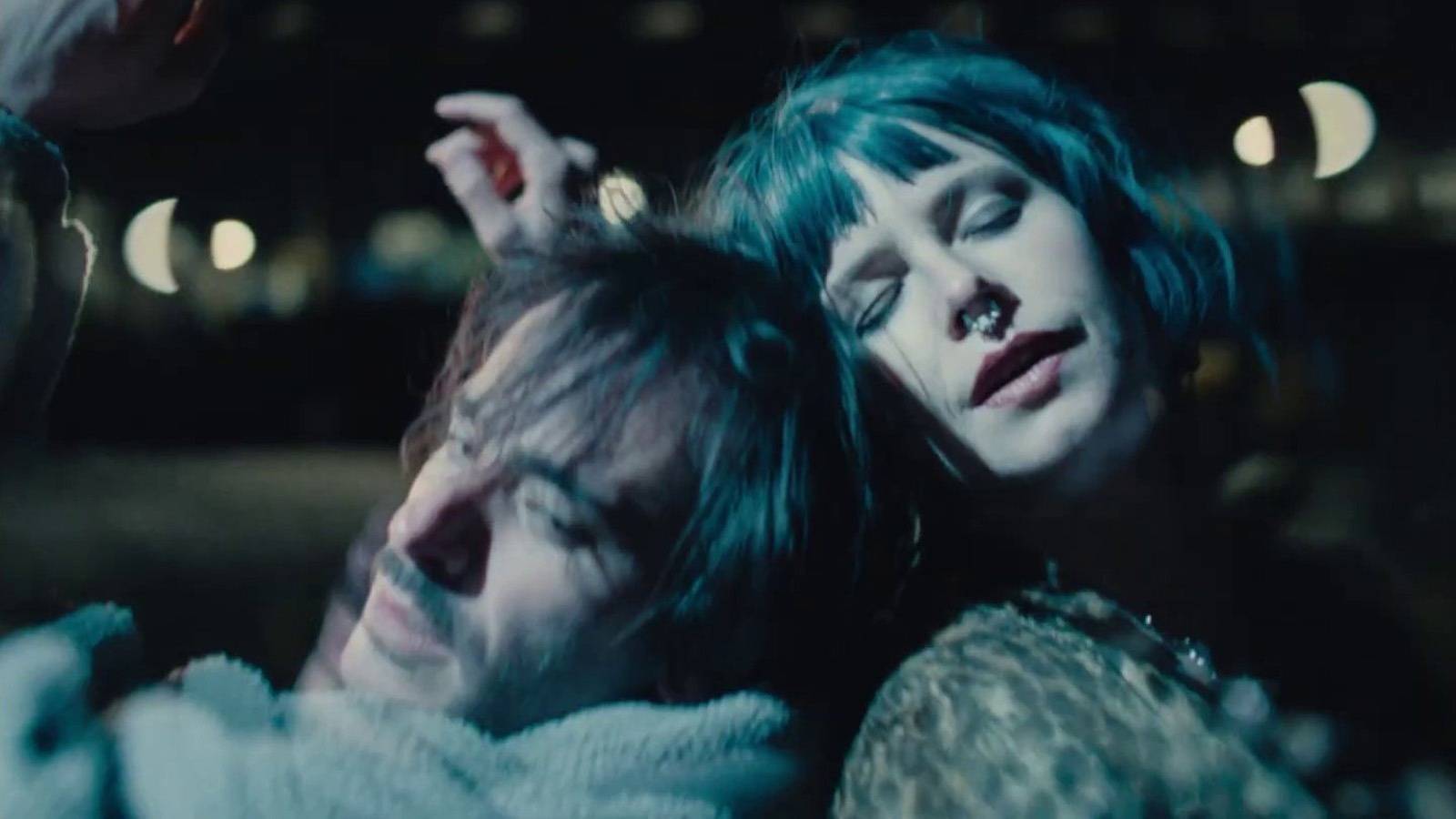
- Filmmaker editor Scott Macaulay talks with director Charlie Kaufman and writer and poet Eva H.D. about their new short film, How to Shoot a Ghost, which has just premiered out of competition in Venice. The film “tangles with ideas around history, memory, cities, and where consciousness goes when the body dies,” writes Macaulay. “Set in Athens, it stars Jessie Buckley (returning from Kaufman’s previous feature, I’m Thinking of Ending Things) and Joseph Akiki as two foreigners in the city who have both met violent, untimely ends.” In an engaging episode of It Happened in Hollywood, Kaufman talks to host Seth Abramovitch primarily about making his directorial debut, Synecdoche, New York (2008), but also about Being John Malkovich (1999), Eternal Sunshine of the Spotless Mind (2004), Anomalisa (2015), and more.
- 4Columns has returned from its summer break, and Michelle Orange finds Andreas Veiel’s Riefenstahl reflective of “a wish for definitive, straightforward judgment of an artist whose fascist ties and aesthetic influence have acquired new resonance. But the case against Leni Riefenstahl, ‘Nazi directress,’ as Veiel has called her, has been locked down for generations, as evidenced by this documentary’s array of public indictments dating back to the early 1950s. More pressing, perhaps, is an equally ardent case for how things could not have been otherwise, even for a woman of her sensibility, vision, and drive.” In the New York Times, Manohla Dargis calls the film “a welcome addition to the historically grounded rebukes to Riefenstahl and her apologists, including bad feminists.”
- In her sole narrative feature, Compensation (1999), Zeinabu irene Davis goes “beyond creating scenes to articulate a sentiment, a feeling, that transports viewers into the lives and worlds of her characters,” writes Racquel Gates. For Letterboxd, Brandon Streussnig talks with Davis about cinema’s unrealized potential for sensuality, her plans for a release of the soundtrack for Compensation on vinyl, and much more. In 2025, filmmakers “have to be even more creative than we may have previously been because funding sources are drying up more and more,” says Davis. “Particularly, the biggest loss to my community is the loss of funding for public television. We can’t stop telling stories. Can’t stop, won’t stop, but we’ve got to figure out other ways of doing things. We have to go back and maybe look at what we’re able to do, even if it’s just taking a photograph a day.”
Don’t miss out on your Daily briefing! Subscribe to the RSS feed.