Top Performances and a Film Maudit
Share
“If Werner has limits, I don’t know what they are,” said Francis Ford Coppola as he presented a Golden Lion for Lifetime Achievement to Werner Herzog in Venice on Wednesday. Later in the evening, the festival’s eighty-second edition opened with Paolo Sorrentino’s La gracia, starring Toni Servillo as fictional Italian president Mariano De Santis. In the Hollywood Reporter, David Rooney notes that De Santis “describes himself as ‘a gray, boring man, a man of the law,’” but is “instead revealed to be a wellspring of deep feeling, humanity and—to his own surprise—doubt.”
Opening today and running through the Labor Day weekend, Telluride will host the world premieres of Scott Cooper’s Springsteen: Deliver Me from Nowhere, Chloé Zhao’s Hamnet, and Edward Berger’s Ballad of a Small Player. Telluride is also aiming to have Jafar Panahi attend a screening of his Palme d’Or winner, It Was Just an Accident. “We got him a travel-ban waiver, and I just pray that he’s able to enter the country with no issues,” festival director Julie Huntsinger tells the Hollywood Reporter.
Don Hertzfeldt’s Animation Mixtape, an eighty-five-minute program of shorts, begins its tour across North America today in New York, where First as Tragedy, Then as Farce: Anti-Fascist Comedies, a series programmed by Conor Williams for BAM, is on through September 4. And from today through September 7 in London, Sabzian is presenting Serge Daney and the Promise of Cinema, “twelve films reflecting his philosophically rich, wide-ranging criticism, fueled by a passionate belief in a cinephilic internationalism.”
October, in the meantime, has already begun to take shape. Vancouver will open its forty-fourth edition (October 2 through 12) with Richard Linklater’s Nouvelle Vague, and the competition is set for the sixty-ninth BFI London Film Festival (October 8 through 19). The Viennale has begun previewing its 2025 edition (October 16 through 28), featuring a Jean Epstein retrospective copresented by the Austrian Film Museum, and AFI Fest has selected its guest artistic director for this year’s edition (October 22 through 26)—Guillermo del Toro, whose Frankenstein will premiere in Venice this weekend.
This week’s highlights:
- As the New Yorker carries on celebrating its centennial, Richard Brody looks back on “the magazine’s illustrious inaugural year of film criticism,” when Charlie Chaplin was all the rage and Irving Thalberg was doing “more than anyone else to kick the Hollywood system into high gear.” In this week’s special double issue, Alex Barasch presents an in-depth profile of a studio that prefers “not to be drawn into what one executive called Hollywood’s ‘hundred years of doing things a certain way.’” A24 “has become synonymous with auteur-driven independent cinema; some think of it as an auteur unto itself,” writes Barasch. “Paradoxically, the unifying quality of its films is that each one feels, for better or worse, like the product of a singular mind.”
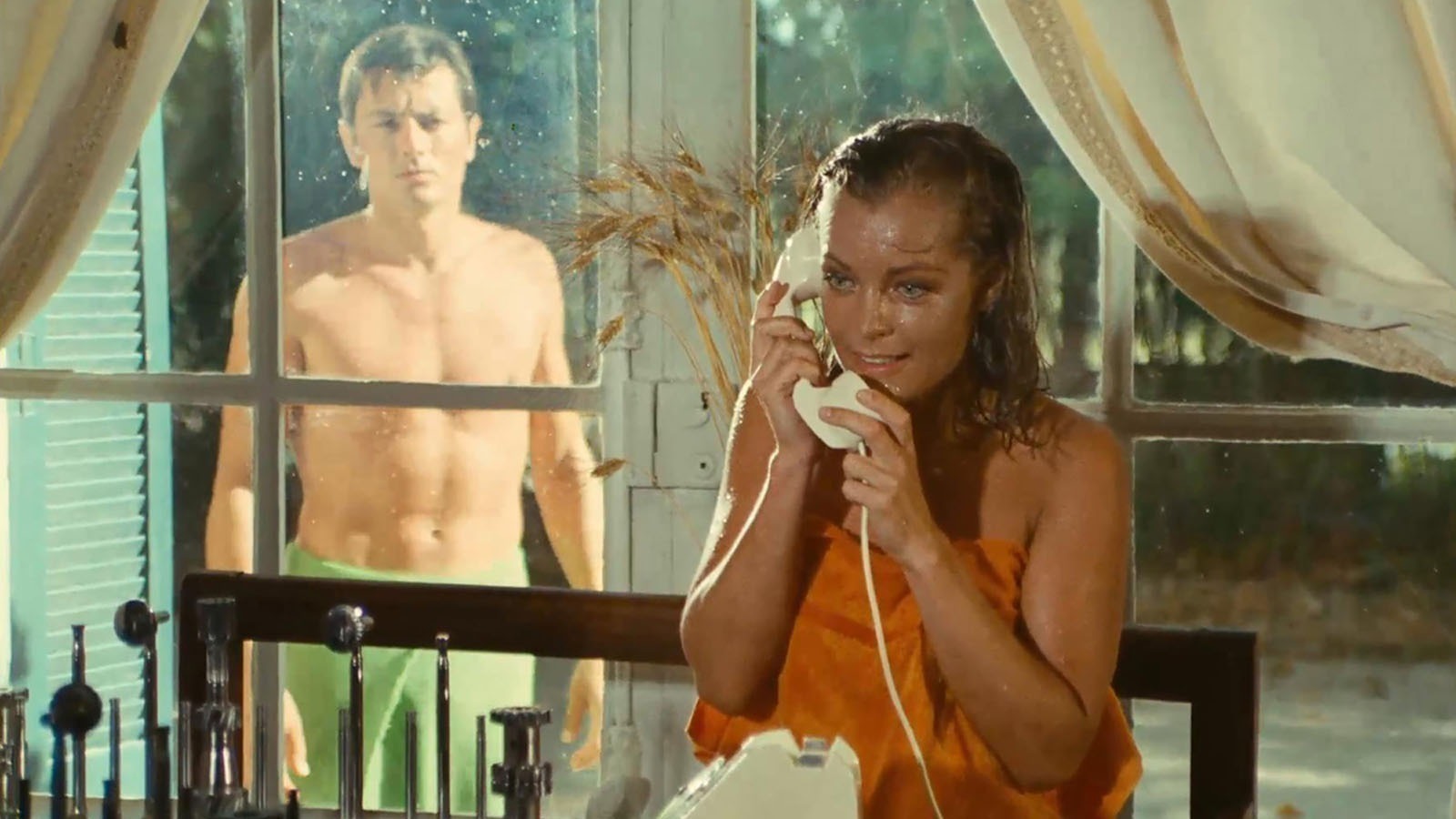
- Metrograph Journal is also running a pair of strong pieces this week. Launching a new column, Nick Pinkerton maps connections between Perceval le Gallois (1978) and Eric Rohmer’s other films and emphasizes the challenges the project presented to cinematographer Néstor Almendros. And Colleen Kelsey finds that the “eroticism” Romy Schneider “suffused in many of her roles was often a prelude, or a companion, to perfectly calibrated detonations of emotion. How she owned the camera so completely, in such an unassuming fashion, remains a mystery of her technique.”
- The Ringer has put together a ranked and annotated list of the “101 Best Movie Performances of the Twenty-First Century” and placed Naomi Watts’s virtuoso turn in David Lynch’s Mulholland Dr. (2001) at the top of it. Watts is followed by two tours de force, both directed by Paul Thomas Anderson: Daniel Day-Lewis in There Will Be Blood (2007) and Philip Seymour Hoffman in The Master (2012). Writing about Hoffman, Adam Nayman finds that “cogitating too hard on the truncated nature of his life and creative output makes me terribly sad. It’s foolish, even irresponsible, to feel possessive over artists we don’t know or to pretend somehow that we do know them through their work. And yet.”
- “Generations of Hong Kong filmmakers have worked to find a cinematic language that could capture an environment so marked by contingency and ephemerality,” writes Dennis Zhou in the New York Review of Books. In the work of Chan Hau Chun, “who has made several works blurring the boundaries between documentary and video art,” we can see “the influence of figures like Tsai [Ming-liang], the Chinese documentarian Wang Bing, and the Thai filmmaker Apichatpong Weerasethakul, not just in their attention to how the surreal and the fantastical leak out of the everyday but also in their comfort with formats that prioritize immediacy and intimacy. Like them, too, Chan has a certain skepticism about what aspects of life a camera can fully capture, even as she tries to document the social reality around her.”
- “I have a particular love for the film maudit,” Joseph McBride tells R. Emmet Sweeney, who considers McBride’s Searching for John Ford to be “the definitive biography.” McBride was interviewing Ford for the book when the director announced his retirement. He’d spent five years trying to make another film after his final feature, 7 Women (1965), the story of Christian missionaries besieged by a Mongolian warlord in 1935 China. Andrew Sarris “wrote a great line in The American Cinema that has always been a touchstone of mine,” says McBride. “He said, ‘the last champions of John Ford have now gathered around 7 Women as a beacon of personal cinema.’”
Don’t miss out on your Daily briefing! Subscribe to the RSS feed.