Chaotic Collisions
Share
The New York Film Festival has announced its Currents lineup, and several of the features it’s selected are premiering right now in Locarno, including Radu Jude’s Dracula, Alexandre Koberidze’s Dry Leaf, and Ben Rivers’s Mare’s Nest. The “international showcase of adventurous new voices and inventive artists” will also present new work from Tsai Ming-liang, Masao Adachi, and Sharon Lockhart.
Toronto, in the meantime, has just about wrapped up its slow-motion rollout of the lineup for its fiftieth edition. If you’re going, you might want to drop by the Criterion Mobile Closet, which will be parked across from TIFF Lightbox on September 4 and 5.
TIFF’s Centerpiece program is loaded up with fifty-five features, including Richard Linklater’s Blue Moon, Christian Petzold’s Miroirs No. 3, and Ratchapoom Boonbunchachoke’s A Useful Ghost. Among this year’s TIFF Docs are Lucrecia Martel’s Landmarks, Laura Poitras and Mark Obenhaus’s Cover-Up, and Gianfranco Rosi’s Below the Clouds.
Wavelengths will present eight features—including Lav Diaz’s Magellan—three shorts programs, and a pairing of Kamal Aljafari’s With Hasan in Gaza with Basma al-Sharif’s It’s So Beautiful Here. Marco Bellocchio’s Portobello will be a highlight of the Primetime program, Idris Elba will bring Dust to Dreams to Short Cuts, and TIFF Classics will present an “eclectic mix” of new restorations.
Jonathan Kaplan, who directed Jodie Foster in The Accused (1988) and Michelle Pfeiffer in Love Field (1992), has passed away at the age of seventy-seven. At the Reveal, Scott Tobias revisits Kaplan’s Over the Edge (1979), “a Gen-X touchstone, with admirers like Kurt Cobain (who told the biographer Michael Azerrad that it ‘pretty much defined my whole personality’) and filmmakers Harmony Korine and Richard Linklater, whose Kids and Dazed and Confused, respectively, bear its unmistakable imprint.”
This week’s highlights:
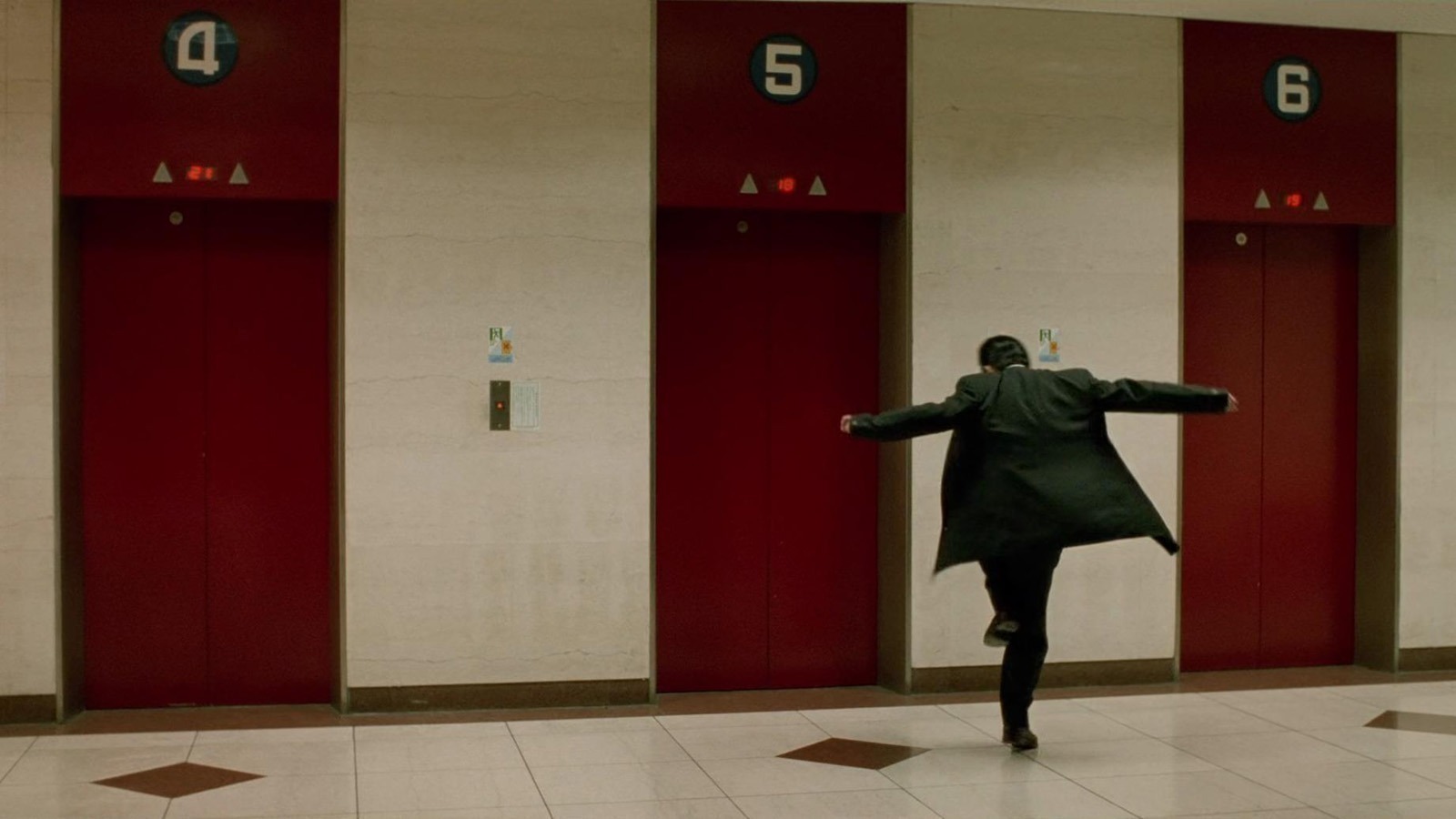
- “Though best known for his vast and sneakily profound dramas A Brighter Summer Day and Yi Yi,” writes the A.V. Club’s Jacob Oller, “Taiwanese New Wave staple Edward Yang’s first comedy is as sharp and urban as the rest of his brief filmography, with a snarky, vicious cynicism aimed at a group of flailing yuppies. A Confucian Confusion [1994] so deeply digs at its vapid corporate ensemble, sexually ping-ponging between one another in pursuit of vague ambitions, material acquisitions, and cultural obligations, that it could be called Taiwanese Psycho. But these chaotic collisions of socially cutthroat Patrick Batemen still possess Yang’s underlying hope, or maybe even expectation, that something sweeter lies beneath all the modern posturing.”
- Kiyoshi Kurosawa “stages big genre premises—a detective stalking a hypnotic serial killer, ghosts invading our world through the internet—from a short distance,” writes Robert Rubsam at Defector. “His figures are typically small, isolated in shots of rotted factories and quiet side streets so wide you can barely make out their faces, and almost always lonely, trapped within a social role—parent, housewife, salaryman, police officer—which barely restrains a violent churn of rage and despair. He prefers apocalyptic stories, yet his characters rarely recognize that their world has already ended, because on the surface, life proceeds the same as ever.”
- For Metrograph Journal, Isabella Trimboli goes long on Magdalena Montezuma, an actor whose “realm was the decadent experiments of her filmmaker friends—[Werner] Schroeter, Ulrike Ottinger, Rainer Werner Fassbinder, Rosa von Praunheim, and Frank Ripploh, among others—where she darkened the dramatic outlines of terrifying divas, ancient tragics, and impish ghouls. Her face was the locus of all this intensity: she was part Silent movie star, part medieval Madonna, and like the changelings of centuries past, her appearance stokes both alarm and awe.”
- It’s been a stellar week at Film Comment, with J. Hoberman offering context and insight into Roman Polanski’s An Officer and a Spy (2019) and the lasting controversies sparked by the Dreyfus affair, and of course, Polanski himself. Filmmaker Matías Piñeiro (You Burn Me) writes about Hong Sangsoo’s By the Stream (2024), which “could be called a ‘river film’—a subcategory of Rivettean origin. River films possess a sense of narrative drift caused by the intersecting paths of autonomous storylines, each associated with a different character . . . I’m reminded of Paul Cézanne’s paintings of apples: like Hong’s characters, they’re not only interactions of colorful strokes or simple lines that define a shape, but a constantly shifting balance between the two.”
- In response to the New York Times’ “100 Best Movies of the 21st Century” poll, Filmmaker has drawn up one of its own for experimental cinema. Topping the list is Peter Hutton’s At Sea (2007), followed closely by Jodie Mack’s The Grand Bizarre (2018) and Arthur Jafa’s Love Is the Message, the Message Is Death (2016). At Letterboxd, more than thirty team members and contributors have each selected and written about an overlooked gem from the past twenty-five years with “fewer than 50,000 watches on Letterboxd.” The collection makes for some terrific reading—and a fine watchlist as well.
Don’t miss out on your Daily briefing! Subscribe to the RSS feed.