On View Now
Share
“It was with Pasolini that I ‘fought’ the most.” Critic, journalist, and activist Goffredo Fofi, who wrote for Positif and cofounded the political and cultural journal Quaderni piacentini, passed away on Monday at the age of eighty-eight. Ansa notes that he “cultivated sometimes abrasive friendships” not only with Pier Paolo Pasolini but also with Mario Monicelli and Federico Fellini and “almost single-handedly raised the criminally undervalued and snubbed comic Totò to his true position of greatness in Italian popular culture.”
In the wake of our recent loss of Flo Jacobs and P. Adams Sitney, David Schwartz, with Amy Taubin’s permission, has posted the interview she conducted with Jacobs that was first published in Optic Antics: The Cinema of Ken Jacobs. And Alexander Horwath, the former director of the Viennale and the Austrian Film Museum and the writer and director of Henry Fonda for President, alerts us to a series of videos, “The Uniqueness of the Cinematic,” a five-part lecture Sitney delivered at the Museum in 1978. “He was (not yet) thirty-four at the time,” notes Horwath, “and apart from all the things he says there, his sheer physical appearance and manner of elucidating his topics is very striking, I think.”
Here’s where we are on the festival calendar: Venice will announce its full lineup on Tuesday, and members of its juries this year will include Cristian Mungiu, Mohammad Rasoulof, RaMell Ross, Fernanda Torres, Charlotte Wells, and Zhao Tao. Locarno’s juries are also set, and in Edinburgh, Ken Loach will look back on his career with writer Paul Laverty and producer Rebecca O’Brien. Michael Mann will receive the Lumière Award in October, and in November, Sabzian will host Isabelle Huppert as she discusses the State of Cinema with critic Jean-Michel Frodon.
FIDMarseille wrapped this past weekend, and the winner of the top award is Rita Azevedo Gomes’s Fuck the Polis. Introducing his interview with Gomes for Filmmaker, Pedro Emilio Segura Bernal calls the film “both a physical and metaphysical odyssey through urban dreamscapes where western history and culture engage in a complex dialogue with literature and poetry—a terrain in which Gomes appropriates and creates a Greece that exists somewhere between documentary reality and poetic reverie.”
This week’s highlights:
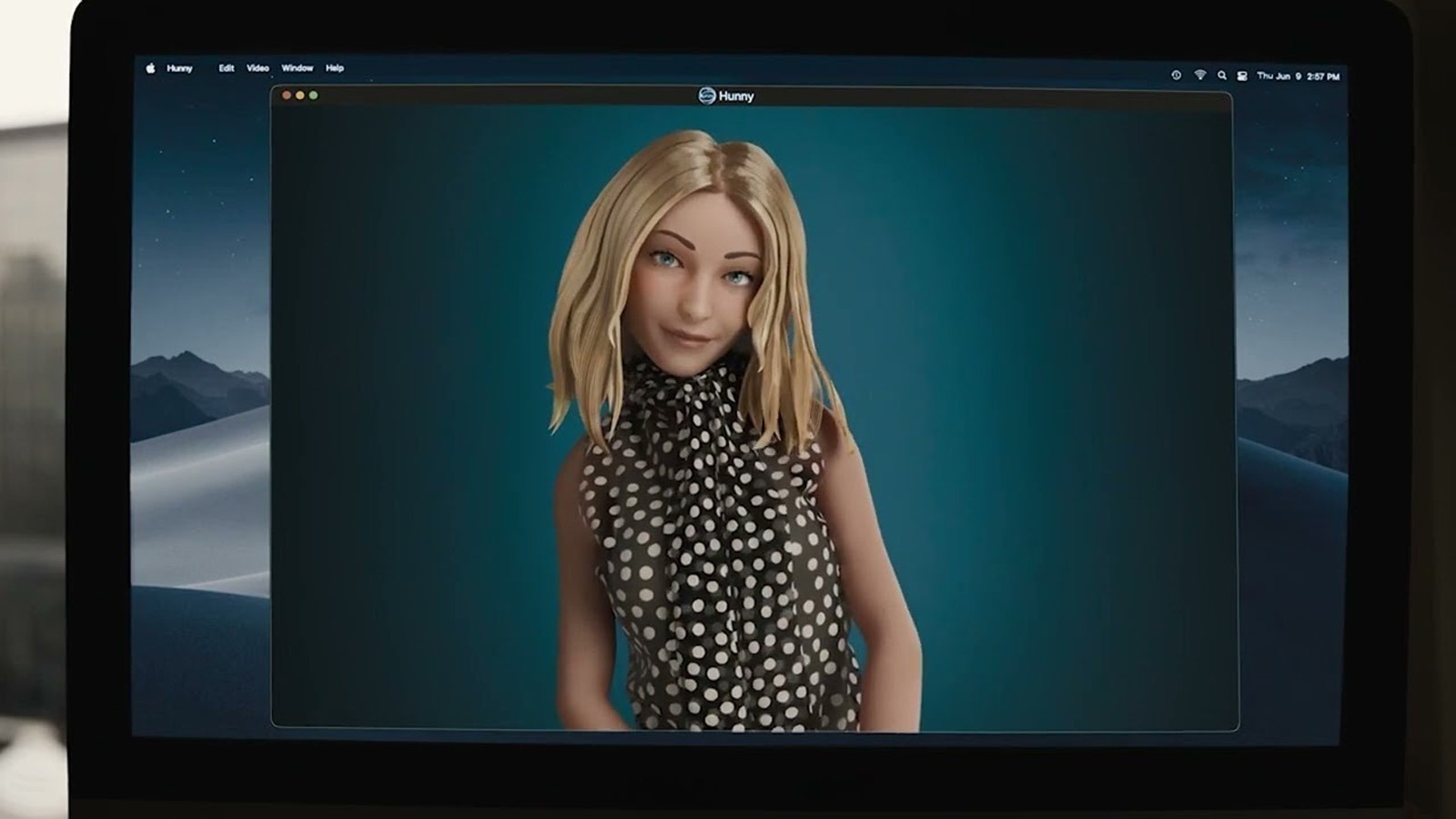
- For Adam Nayman at the Ringer, David Cronenberg’s The Shrouds is the best film of the year so far. Next Thursday, Violet Lucca will be in Austin to take in a screening of a 35 mm print of Crash (1996) and to discuss her book, David Cronenberg: Clinical Trials. In her latest newsletter, Lucca writes about Hunny, a virtual assistant to Vincent Cassel’s Karsh in The Shrouds. Hunny “stands out as the lone female villain in Cronenberg’s filmography,” writes Lucca. While Cronenberg insists that he never intends to predict the future, his films nearly always do “because his stories are extensions of what currently exists,” and in our current trajectory, we find Elon Musk “selling a Grimes avatar to his fans. While Karsh is pulled back to his humanity at the end of The Shrouds, there’s no guarantee other persons living or dead will be.”
- “Since the 1980s, working in still photography, broadcast television, room-filling video installation, and even theater,” writes Jason Farago in the New York Times, Stan Douglas “has reimagined the widest currents of history as mirror images and not-quite-clones.” Ghostlight, “an ambitious retrospective” on view at the Hessel Museum of Art in the Hudson Valley through November 30, “includes some of his most important works in video and photography, built out of eighteenth-century archives and twenty-first-century tech . . . This is serious art for serious people, and Douglas’s imposing videos and photos have bibliographies to match: Brush up on your Beckett and Freud.”
- Agnès Varda’s Paris, From Here to There, an exhibition now on at the Musée Carnavalet in Paris through August 24, “takes an excitingly wide-ranging view of Varda’s photography,” writes the New Yorker’s Richard Brody, “and amplifies that display with connections to her movies, especially her earlier ones, and even to ones that weren’t made or—yes—that have seemingly been lost.” While he was in Paris, Brody stopped by Ciné-Tamaris, the production company that Varda founded, and was “astonished to discover the wealth of materials that it preserves.” Varda’s art and life were “inseparable; she was also an artist of life itself, bringing transformative energy and imagination to whatever was at hand. Thus the world that she filmed bore the trace of her own presence.”
- The exhibition Jeff Wall. Time Stands Still. Photographs, 1980–2023, on view at the Museum of Art, Architecture, and Technology in Lisbon through September 1, has prompted Electra to put the photographer in conversation with a director he admires, Pedro Costa. “Do you think the camera determines our realism?” asks Wall. “The camera itself, the presence of it, because we couldn’t do what we’re doing without it. That is, the automatic capture becomes a fundamental frame of reference. I’m curious about your affection for the camera as such. I learned to really admire my camera. I realized that I had to try and imitate it and be like it to do what I’m doing. Do you feel that way?” Costa: “You should despise this cold, dumb machine.”
- For Berlin Art Link, Johanna Siegler talks with anthropologists, artists, and filmmakers Véréna Paravel and Lucien Castaing-Taylor about Breathing Matter(s), a comprehensive exhibition of their work on view at silent green through August 24. Castaing-Taylor recalls seeing De humani corporis fabrica (2022) about a year after they’d made it and thinking, “’Jesus, this film is intense.’ And if I wasn’t one of the filmmakers, I would kind of hate the film or hate the filmmakers. So I think our films are characterized by a kind of intimacy and proximity and sensorial overload—even though we don’t really feel it ourselves. But I don’t think we’re invested in estrangement. The only way I would say that we are, is that we are invested in a kind of ‘aesthetic of unknowing.’” The show includes work by others the artists have invited, and Paravel says that she doesn’t “love the word ‘community,’ but yes, maybe an artistic cluster of people still trying, still maybe believing that art can do something. Especially now.”
Don’t miss out on your Daily briefing! Subscribe to the RSS feed.