The Secret Agent Network
Share

“Some say that trauma builds character; in Brazil, our historical trauma has built a dark sense of humor,” wrote Rafaela Bassili in an outstanding piece for Notebook last month. “Mocking the absurdity of daily life is a national pastime; laughter is a means of sublimating fear.” Bassili’s engaging primer surveying the impact on Brazilian cinema of the right-wing military dictatorship that ruled the country from 1964 to 1985 is an ideal companion to The Secret Agent Network, a series programmed by Kleber Mendonça Filho and running at Film at Lincoln Center from January 7 through 13.
Critic-turned-filmmaker Mendonça broke through in 2012 with Neighboring Sounds, a mosaic of vignettes set in a cluster of luxurious high-rises in Recife, the city on the northeastern coast of Brazil where Mendonça was born and raised. Aquarius (2016) stars Sônia Braga as a retired music critic who refuses to give up her apartment in a building developers aim to tear down, and Bacurau (2019), codirected with Juliano Dornelles, wields generic tropes borrowed from spaghetti westerns and horror and sci-fi movies to depict a rural community under siege.
The deep research for the nonfiction feature Pictures of Ghosts (2023), an enchanting blend of autobiography and cultural history—with a particular emphasis on Recife’s movie theaters—led directly to The Secret Agent. Set in 1977, more than a decade into the dictatorship, The Secret Agent is, as the New Yorker’s Richard Brody writes, “a political thriller that’s also perhaps the year’s most profuse and populous movie, overflowing with sharply drawn characters who fill the screen with daring action and ardent purpose (whether honorable or corrupt).”
Leading the diverse cast is Wagner Moura as a widower and former professor who arrives in Recife to reunite with his nine-year-old son—but then learns that assassins have been hired to kill him. Until a network of underground activists can secure the documents he needs to leave the country, he’s going by the name Marcelo.
“The reasons behind this assumed name are slowly parceled out through The Secret Agent—including in one bravura flashback that owes much to Nicolas Roeg’s analeptic set pieces in his ’70s touchstones Don’t Look Now and The Man Who Fell to Earth,” writes Melissa Anderson at 4Columns. “A large part of The Secret Agent’s high-spirited energy stems from Mendonça’s fully indulging his enchantment with ’70s cinema, evident not only in the Roeg homage but also in his use of split diopter shots and split screens, paradigmatic formal elements in the films of Brian De Palma. And, as he did in Bacurau, Mendonça casts Udo Kier—perhaps the most emblematic actor of ’70s cult and exploitation cinema—in a bit part here, if for no other reason than he simply could.”
Mendonça “reconstructs the Recife of this era in granular detail,” writes Natalia Keogan at the A.V. Club. “Not only are the architectural intricacies, interiors, and décor impeccably replicated, but the ensemble cast and every background actor possesses a vintage visage. Not a single ‘Instagram face’ is ever in frame: naturally crooked teeth are stained from chain-smoking; hair is requisitely shaggy; more vitally, many are merely unassuming, but simultaneously striking in the same way older relatives appear in weathered family photos.”
Talking to Nick Pinkerton in Metrograph’s Journal, Mendonça says that a “key reference for The Secret Agent was Héctor Babenco’s Lúcio Flávio (1977). We went through certain sequences and froze certain frames, and said: ‘We should do that: those trousers, that T-shirt, that wall. We’ve got to get those cars.’ Because it was shot on the streets. And it was a blockbuster at the time, this gritty, brutal Brazilian thriller. Also, Twenty Years Later (1984) by Eduardo Coutinho, a masterpiece of Brazilian cinema. It’s a documentary made during the dictatorship that haunts me.” Mendonça has programmed both films for The Secret Agent Network.
Dashing, articulate, and violent, Lúcio Flávio became famous in Brazil in the late 1960s and early ’70s for his string of robberies, murders, and escapes. Rafaela Bassili notes that Mendonça has in the past described Babenco’s Lúcio Flávio: The Passenger of Agony “as ‘dirty and mean’ and ‘ours’—meaning, essentially Brazilian. It’s a movie as much about the death squad, an organization of corrupt cops, as it is about Lúcio Flávio, who comes out seeming principled by comparison. Babenco was made to include a card at the end of the film claiming that the officers who both took bribes from Lúcio and conspired to kill him had been duly penalized for their actions. It was a bald-faced lie.”
In 1964, Eduardo Coutinho was working with nonprofessional actors on a film about peasant leader João Pedro Teixeira, who had been assassinated two years earlier, when the military put a stop to the shoot, arrested members of the cast and crew, and seized much of Coutinho’s material. Most of the footage, though, had been sent to Rio de Janeiro for processing and was saved. In 1984, Coutinho approached Teixeira’s wife and others who were to have appeared in the biopic and documented their reactions to the recovered scenes. Man Marked for Death, 20 Years Later is “probably the most powerful Brazilian film I’ve ever seen,” says Mendonça. “It’s my favorite Brazilian film.”
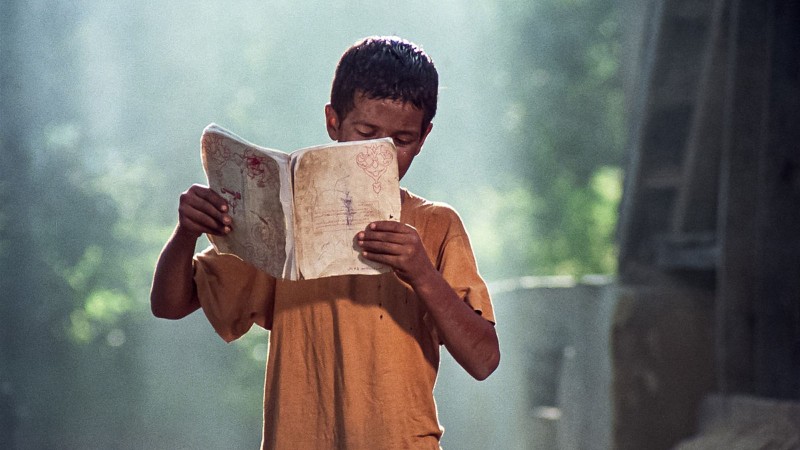
Iracema (1974) is high on the list as well. Directed by Jorge Bodanzky and Orlando Senna, the blend of fiction and nonfiction tracks brash trucker Tião Brasil Grande (Paulo César Peréio) and fifteen-year-old sex worker Iracema (Edna de Castro) as they haul illegal hardwood along the Trans-Amazonian Highway, one of the dictatorship’s showcase projects. “Much of the power of the film comes from its internal asymmetries,” wrote Fábio Andrade for Cinema Tropical a few years ago, noting that Peréio’s performance “clashes with the beautifully-crafted earnestness of Edna de Castro, as well as with locals that ended up interacting with the actors unaware that they were playing fictional characters—a process that could only have been possible before the popularization of television across the country. This formal device powerfully conjures up the chaotic process of Brazilian development, violently throwing different ways of being against each other, generating something both violent and beautiful in its unpredictability.”
In The Secret Agent, Marcelo’s son, Fernando, has nightmares about sharks but nevertheless begs his grandfather, who runs a movie theater, to allow him to see Jaws. Two years after the film’s release, ads are still up all over Recife, and an actual shark has been dredged up and sliced open, releasing a hairy human leg that, in the most whimsical passages of The Secret Agent, hops on its own through the city’s parks, terrorizing clandestine lovers. For the FLC series, Mendonça has selected Steven Spielberg’s follow-up, Close Encounters of the Third Kind (1977). “The most amazing thing about Close Encounters is that it feels very naturalistic and very realistic,” he says. “But then it’s also a science-fiction fantasy about aliens coming to Earth. That mix is really something special. It’s almost like you can establish realism, and then you can build whatever you want as a filmmaker on top of that realism.”
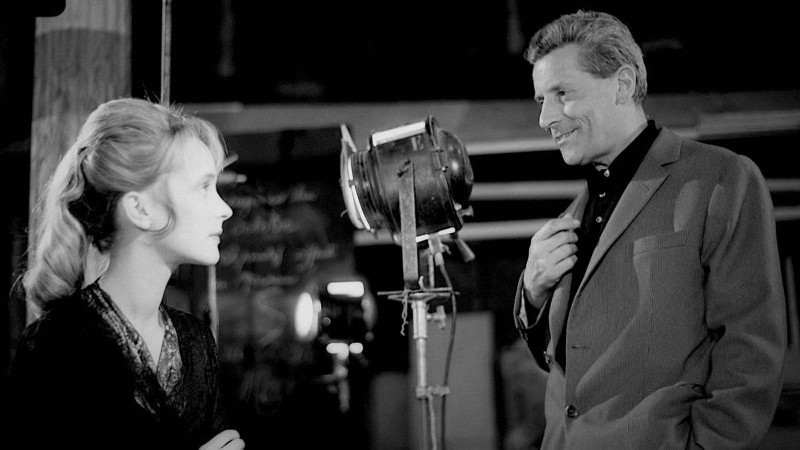
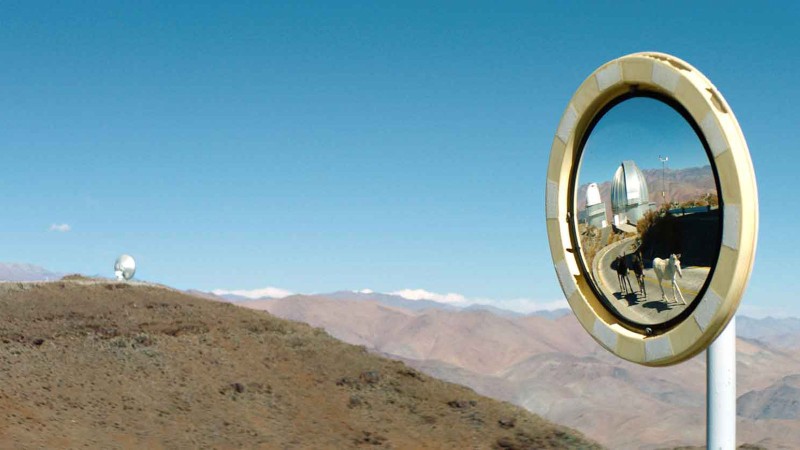
Mendonça has also programmed Michael Anderson’s Orca (1977), one of a slew of movies looking to cash in on the wave of nature’s-revenge movies in the wake of Jaws; Eric Red’s Body Parts (1991), because Mendonça loves “to see an over-the-top B-movie with over-the-top gore and music”; Karel Kachyňa’s Kafkaesque The Ear (1970); John Boorman’s sleek classic Point Blank (1967); and Investigation of a Citizen Above Suspicion (1970), to which, as Evan Calder Williams writes, Elio Petri “brought his already well-honed grotesque, fractured, and black comedic style to the project of tackling salient and hotly debated topics like police corruption, working-class rebellion, gender exploitation, and property relations.”
Back in September, Mendonça told Vulture’s Roxana Hadidi that he had “a good idea” for his next project, “and it’s been in my mind for the last six months. I just have to live this great, amazing time I’m having with The Secret Agent, and then next year, I’ll sit down and write. The next story is actually embedded in Pictures of Ghosts. It should take place in the 1930s in Recife.” In the meantime, starting next month, we will be presenting Neighboring Sounds, Bacurau, and Pictures of Ghosts on the Criterion Channel.
Don’t miss out on your Daily briefing! Subscribe to the RSS feed.