A Bloody Battle over Monterey Pop Festival
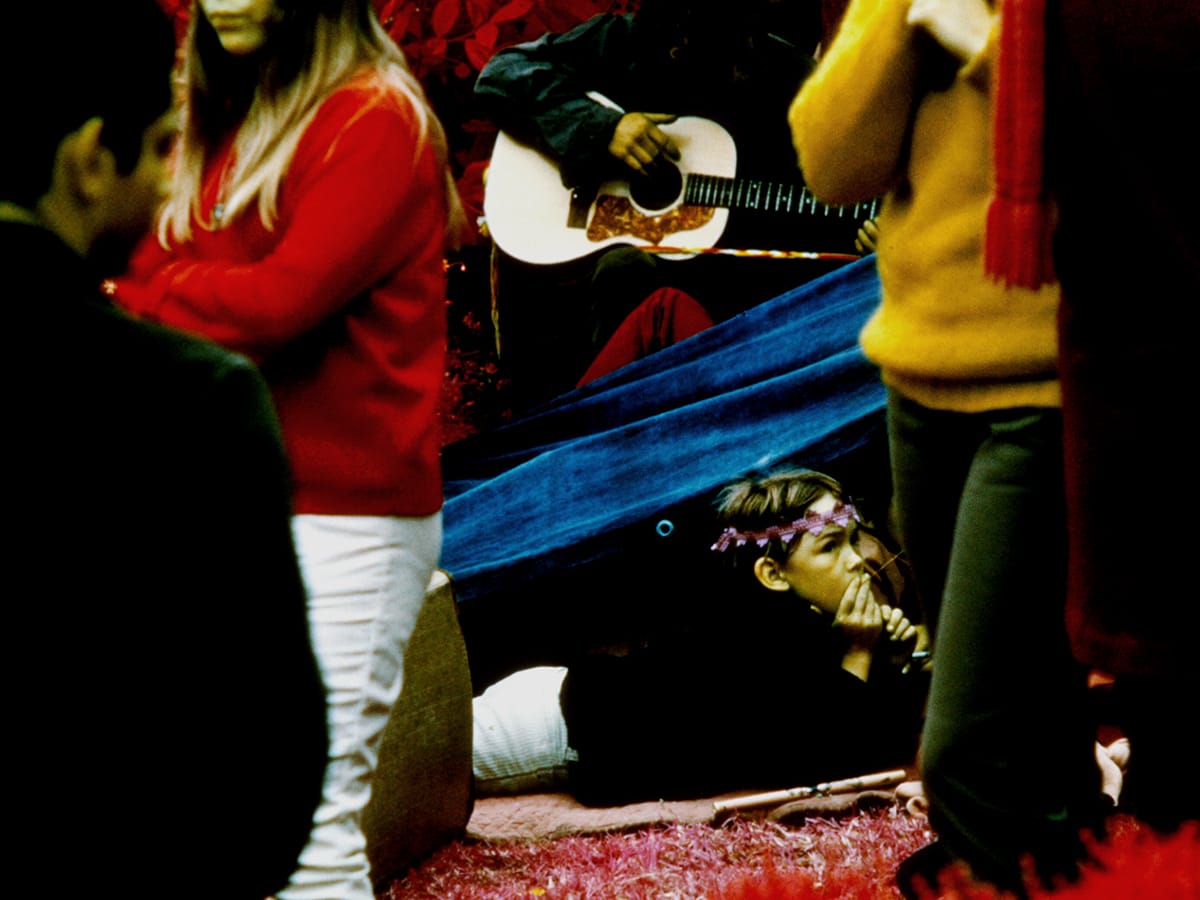
April 6, 1968
MONTEREY—A second Monterey International Pop Festival has for the past month been put in jeopardy by a vicious handful of citizens, cops, and city officials in a small-town drama straight from Peyton Place and The Invaders.
Fighting an ugly collection of voyeuristic “taxpayers”—who have charged that last year’s Pop Festival resulted in [the] sale of pornographic literature, trafficking in narcotics, an invasion of “undesirables,” and “open fornication” (with photographs to prove it)—is an uneasy alliance of normally conservative businessmen, a forthright but nearly powerless group of volunteer citizens, and the two co-producers of last year’s Festival, Lou Adler and John Phillips.
The struggle centers on the Board of Directors of California’s Seventh Agricultural District which rents the Monterey Fairgrounds to various groups, including horse shows, rodeos, fairs, a jazz festival, and, last year, a pop festival. Caught in the middle is George Wise, a quiet and honest man who has managed the Fairgrounds for twelve years, who wants very much to have another Pop Festival, but who is now helpless, caught in a fatal trap originally laid for Phillips and Adler.
The City and County of Monterey (whose Mayor, Sheriff and District Attorney are fighting the Festival) have no legal voice in renting the Fairgrounds, but they can bring to bear enough pressure, and physical force if necessary, to make a bloody corpse out of what they don’t want. (What they have at the very least done is enough to guarantee that if there is a second Festival, at least the first days of it, will be under heavy inspection in a highly suspicious atmosphere.)
The Fairground Board voted at the end of February to begin negotiations with Adler and Phillips for the dates of June 21-22-23, the contract subject to a nominal final approval of the Board before it was finally signed, ordinarily a routine matter. The Board—too weak from the intense pressure to make a final decision and with three members up for re-appointment—reports directly to Sacramento, and is chosen by the Governor’s office, an office now run by Ronald Reagan on whom the ultimate fate of the Pop Festival may depend.
The status of the Festival is up in the air and its chances keep changing, as frightened men are pushed one way one day and another way the next day by forces of hate they cannot withstand. Settlements, compromises, and arrangements are made only to fall apart.
This political science casebook story would appear ridiculous at first, but the issue is not dope or “open fornication,” but has become an inhumane fight of a vestigial collection of public officials—numbering in the dozens—against a citizenry which never really elected them (over 10,000 Monterey residents have signed pro-Festival petitions) that stands with at least the music—if not the ethic—of youth. Phillips characterized it as the “showdown of Monterey.”
One of the City Council members who is for the Festival—in reply to the anti-Festival attacks of Monterey’s mayor—best summarized the illogical outcry: “The real problem is that the young people it attracts have long hair and funny clothes and are somehow different and we don’t understand them so we don’t want them. Isn’t that right?”
The local newspaper—the Monterey Peninsula Herald—carried two stories last February 19, one with the news that the Festival would probably happen again, and another next to it which began: “Almost like Horatio at the Bridge, Monterey Mayor Minnie D. Coyle symbolically stood at the city gates last night ready to protect the citizenry from the ‘flower children.’”
And so it began to happen in Monterey: a bizarre enactment of the entire American tragedy. And the absurdity of it is that this spiteful collection of “officials” of an ordinarily insignificant community has, by an accident of geography, been able to so far prevent the Festival, intimidate honest men, and involve themselves and their petty bourgeois hatreds in an event of worldwide importance and stature.
* * *
One can best understand the significance of this through the eyes of John Phillips—until recently, living off the fat of the land in the Virgin Islands and Greenwich Village—who has, in Monterey, been playing the part of the congenial, eager to please, compromising and reassuring, and smiling-smiling-smiling “ambassador of pop.”
Phillips and Lou Adler, along with various members of The Mamas and the Papas including his wife, Michelle, spent the previous six months traveling around the world. According to him, wherever they went, people wanted to know about the Monterey Pop Festival. (“They don’t ask about the group anymore; they just want to know about Monterey.”)
He and Adler had been undecided about getting involved in another festival: other cities had asked them to come, there were just too many hassles to face, a number of imitators were trying to put on festivals, none of them with any hope of matching Monterey. But that trip brought home the nature of what had taken place last June; like everyone else who was there or who knew about it, the Monterey Pop Festival was just so “beautiful” that it had to happen again.
On March 1, Phillips and Adler returned to Monterey for the first time since the Pop Festival. To Adler, “it was a fact finding trip. We came to see what the opposition was about and what they wanted.” Somehow the anxiety of Fairground manager Wise, the passion of Sam Karas—a local businessman who had helped the Festival last year and was now running a petition and lobbying campaign for another Festival—and the local radio, television and newspaper reporters awaiting them, seemed unnecessarily worried. It was, after all, just a few people to see, a few hands to shake, a few plans to make, and back to Los Angeles to begin the real work for another Pop Festival.
The first stop was a noontime rally at Monterey Peninsula College where several hundred students were waiting to hear Phillips. He really didn’t want to go—and someone even told him that the paper would say that he was starting demonstrations like Mario Savio—but he did go.
At the college he was greeted by Bob Siler, a student who was an usher at last year’s Festival. Siler told Phillips: “We already have over a thousand signatures on our petition. They’re not just students, they are businessmen and older people, too. My Mom, I told her we were starting a ‘People for Pop’ campaign and she told me I better not. She’s on the ‘Stop the Pop’ committee. She wasn’t even there last year. That’s the kind of people we’re up against, like my Mom.”
The most important stop was at the executive offices of Del Monte Properties (the company which has the most substantial holdings on the Monterey Peninsula other than the government, including the Seventeen Mile Drive, the Del Monte Country Club, and several million dollars worth of real estate and influence.) Phillips and Adler had come to talk with Tim Michaud, the president of the company and the chairman of the Pop Festival’s Monterey Citizens Committee.
If it could be said that there is one man without whom it would be impossible to return the Festival to Monterey, it is Tim Michaud, a socially well-connected Republican, and apparently the only person in that whole section of California who has the emotional remove from the piddling nature of the local scene to put the politics, pressures, and positions in the perspective required to make the right move.
* * *
Monterey Mayor Minnie Coyle is a heavy-set spinster with tinted hair whose attacks against the Festival do not seem to be from fear of the unknown but from a curiously personal motive. Last year she asked to be put on the Pop Festival’s all-star Board of Governors. Phillips turned her down. This year she seems to want her revenge on Phillips and all the beautiful people who left her behind. Around her rallied the opponents of the Festival.
On Monday afternoon the Fairground Board met. Michaud was not there. On one side of the open meeting sat three rows of police officers, mayors, a Sheriff, and what seemed like a majority—but in fact was not one—of the local government. One by one they spoke, alternating with speakers from the other side of the room where sat Sam Karas, Bob Siler, and other students and some parents gathered around Adler and Phillips.
Within the hour an open hearing had turned into a debate. Control of the meeting was taken over by a man who flung down photographs of “open fornication,” a District Attorney who lost control of himself after reading a quotation from Lincoln, a police chief who threatened the Board with refusal to provide any men if they allowed the fair, the head of the local Motel Association who said that most of his members would have no rooms available for the Pop Festival, and Pete Arthur, a squat, swarthy man who carries himself like a butcher, the editor of the local newspaper. His editorials and the attitude of his publication had done as much as anything to inflame the community.
Phillips was scheduled to be [the] last speaker. He began a soft-spoken account of last year’s Festival and this year’s objections. Almost at once he was bombarded, not with questions, but accusations, personal attacks, name-calling and an unmistakable form of bitterness. (Later he called it an “inquisition.”)
Neither Phillips nor the President of the Board could control the audience. Phillips made the mistake of fighting back, and he was called a “liar.” The big city celebrity stood before them like a pack of sharks, they tasted Phillips’ blood. And they went for the kill.
(The only reasonable voice at the meeting was that of a man who had heard about the meeting on the radio while driving home. He just wanted to say that the objections to the Festival on the grounds of lack of sanitation facilities were ridiculous. He ran the local “portable toilet” business and could “line up sanitary toilets from Fort Ord to Big Sur.”)
* * *
Lou Adler and John Phillips have in the last weeks transcended show biz. They are not at all sure what they will do next. They do not want to have the Festival outside of California and, for many reasons, do not want to have it in the state’s big cities. They have not really begun to consider the alternatives suggested to them if Monterey is closed: use of private land nearby and even the call for a “Human Be-In” at Monterey on the weekend that had been allotted to the Pop Festival. That part of the immediate future is still uncertain.
Although it seemed like it was just the petty politics of a small town, the fight against the return of the Monterey International Pop Festival has taken on far greater dimensions. For one, the fate of the Festival–which is, after all, a musical event—was moved to a more powerful political arena.
And perhaps it took on a dimension even greater than that: the handful of Monterey citizens who are fighting the Festival—some of them perhaps genuinely sick people, some of them afraid, and some of them just spiteful—in their act of hatred may have started the bloodbath that the new music had hoped to avoid with love.

More: Essays
God Laughs: Stanley Kubrick’s Cinema
Throughout his enormously influential body of work, the great director explored the conflict between humankind’s obsession with control and our capacity for error and failure.
Christiane F.: Up Against the Wall
Uli Edel’s harrowing tale of youth rebellion is one of cinema’s greatest Berlin films, a visceral urban portrait that captures the city’s doom and decadence during the Cold War era.
The Shout: Sound and Fury
Blending elements of psychological thriller, social satire, and psychedelic film, Jerzy Skolimowski’s Cannes-award-winning classic uses its audacious sound design to evoke the terror of English civilization.
Welcome II the Terrordome: The Future Is Furious
A dystopian drama that draws on the influences of African mythology and hip-hop, Ngozi Onwurah’s debut feature uses a mix of speculative forms to expose anti-Blackness as a system that underpins the modern world.