Julio Torres’s Top10
Julio Torres is a writer, director, and comedian from El Salvador. He is a two-time Peabody Award winner for HBO’s Los Espookys and Fantasmas, and earned four Emmy nominations for his work on Saturday Night Live. Torres made his feature directorial debut with Problemista (released by A24 in 2023). His other notable credits include his first solo hour, My Favorite Shapes by Julio Torres, and Color Theories, released as an HBO special following the show’s sold-out off-Broadway run.
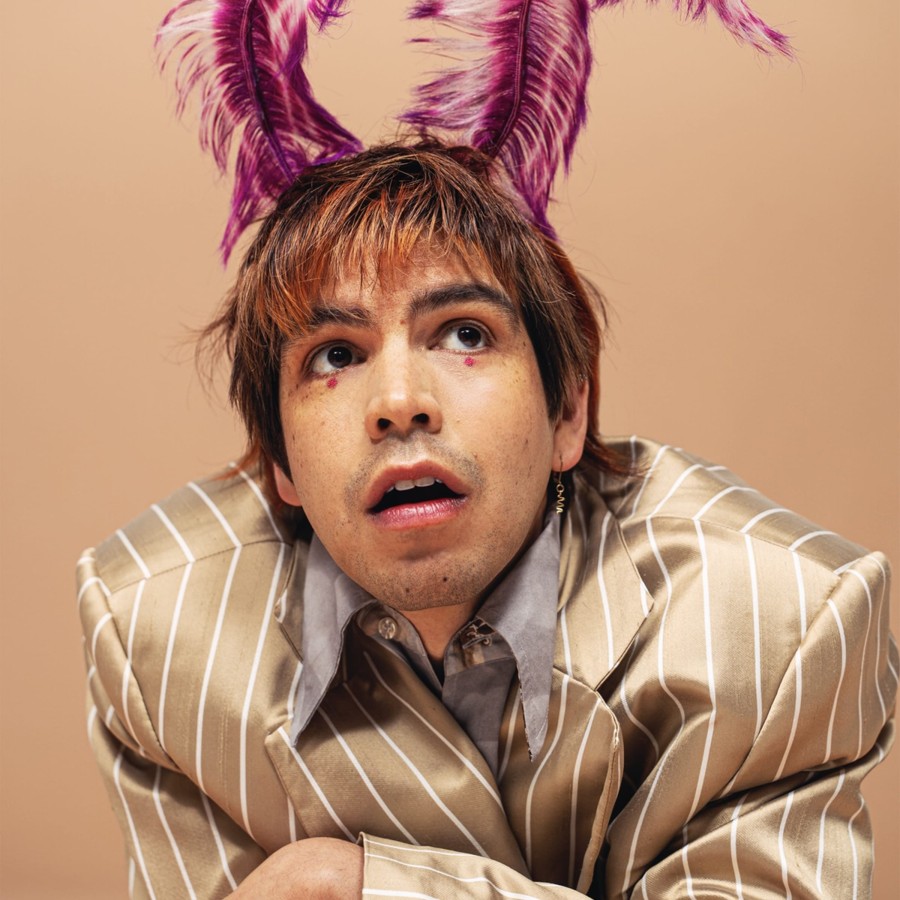
Photo by Andrew Lipovsky
-
1
Jonathan Glazer
Birth
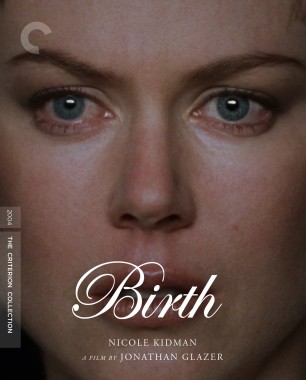
I first saw Birth when I was a teenager. I used to rent movies from a great video store in El Salvador called Evolution Video, and I remember seeing the DVD cover featuring Nicole Kidman with that pixie cut, staring right at you, and I just knew I needed to watch it. When I saw the film, I was so captivated and hypnotized by it. I thought it was the greatest thing I’d ever seen. I love its gentle eeriness and the way it makes you suspend your disbelief. There’s a menacing tenderness to it. It’s wholly unique and really made me fall in love with Kidman as an actor. I rewatched it recently, which made me remember how great Anne Heche is in it. Jonathan Glazer’s career is so varied, and he takes a lot of time between films. It’s a testament to his artistry that his career has unfolded in so many different chapters.
-
2
Spike Lee
Do the Right Thing
I think the New York of Birth is disproportionately represented in film and TV, much more than the New York of Do the Right Thing. As a culture, we’re obsessed with the wealthy and this very narrow idea of what the city is. But Spike Lee presents this empathetic and joyful version of New York.
What I love about this movie is that it treats every character with the same level of dignity and respect. You feel how curious Spike is about the characters and the subjects he’s exploring. It’s very moving. I cry watching it because you, as the viewer, see everyone, but not everyone on-screen is seeing one another. Everyone is coming at life with their own experience. The ending is heart-wrenching in a way that captures the idea of New York being this melting pot—it’s a cliché, but you really feel it. Rosie Perez also gives a particularly great performance that stays with you.
Visually, the film is so heightened, but the world Spike creates is actually what it feels like to be in New York in the summer on a boiling-hot day. It’s very sensory; you can smell it.
-
3
Kaneto Shindo
Kuroneko
I love the patient eeriness of a Japanese ghost story. Much like Birth, Kuroneko is a film in which beauty and tragedy hold hands in a very exquisite way. The film’s occasional over-the-top-ness is very funny but feels earned and intentional. The visuals have stayed with me, and it’s so immersive. I think there should be a film festival dedicated to films that you can really feel the breeze in—it should be called “The Wind Through the Trees Film Festival” and show things like this movie, Onibaba, Stranger by the Lake . . .
I’m attracted to ghost stories and find that there’s something very moving about the limitations of ghosts. There are these arbitrary laws governing what it is to be a ghost, and we’ve all agreed upon them across cultures. I would like to make a ghost story one day.
-
4
Pedro Almodóvar
All About My Mother
Pedro Almodóvar taught so many of us Spanish-speaking mama’s boys. I first saw his films around the same time I saw Birth, in my late teens, when I was really devouring cinema. Volver, another ghost story, was the first one I saw. But All About My Mother is a beautiful memory epic, and when you’re watching it, it feels like you’re really getting to know someone’s story. Pedro has a way of celebrating stories that we all have within ourselves and turning them into these gorgeous melodramas. He’s a fantastic director for actors, and this film is exquisitely acted by everyone in the cast.
It’s another film that is so sensory and so heightened that you’re seeing the world through the director’s eyes. I connect to that as an artist—and that’s the dream, to build your own world on-screen and to have it feel both new and familiar at the same time. Almodóvar is very good at that.
-

5
Abbas Kiarostami
Where Is the Friend’s House?
Where Is the Friend’s House? is my favorite Kiarostami film. I love stories about a single mission, where something doesn’t matter at all to anyone else but matters so completely to the person trying to accomplish it. It evokes a very strong feeling of the modern experience of bureaucracy and the loneliness of trying to complete a task, whether it’s big or small. I think my assistant PTSD flared up while watching this film. There is just something so beautiful and tragic about no one taking this character seriously, because the stakes are so low for everyone else but monumental for him. That is great, great storytelling.
Kiarostami’s exploration of the architecture of the village allows it to be a sort of location-as-antagonist. I love seeing the alleys and stairs and all these places the boy has to traverse.
-
6
Sofia Coppola
The Virgin Suicides
The Virgin Suicides was like Movies 101 for me. I was probably seventeen when I saw it, and I was one of those Tumblr kids for whom it became a whole personality. I love its voyeuristic point of view; you see the sisters, but you don’t know them.
Sofia Coppola brought a renewed sense of the importance of the soundtrack to indie film at that time. She was doing that before people were referring to films as a “mood” or a “vibe.” It’s hard to believe this was her first feature, because she is so totally in command of her point of view. I also think Marie Antoinette birthed the anachronistic costume genre that has now taken over Netflix. The shot of the converse sneakers—there would be no Bridgerton without that!
-
7
Jacques Tati
PlayTime
When I saw PlayTime, I thought, Oh my god. It spoke to me on a different frequency than anything else I’d seen before. My mom is an architect, and my dad is a civil engineer, so the absurdity of architecture—when architecture isn’t quite functioning—has always been really funny to me. This is another instance of a city being an antagonist in a film. It’s so funny. I love how Jacques Tati created this whole world in this minty green and silver hue that’s supposed to evoke sleekness and efficiency, but the film reminds us that humans are animals, and we’re all just fumbling around like a herd. You can really see the city perform.
-
8
Rainer Werner Fassbinder
Ali: Fear Eats the Soul
This film is so empathetic and tender and heartbreaking. I tend to love an imperfect or even delusional love story. “Delusional Romance” would be another great film series.
For some reason, the moment that stays with me most is when Brigitte Mira’s character overhears her coworkers talking about her on the stairs. You feel for her and believe her. It feels like the film is giving her a hug—and you want to hug her! This was the first Fassbinder film that I saw, and it wasn’t until I watched his other films that I understood how rare this tender moment was in his astonishing career.
-

9
Héctor Babenco
Pixote
Pixote is just so Brazilian. It’s exciting and tragic. It’s an epic movie with incredible performances. Watching it, you feel like you’re reading a really delicious novel. I came across it because Martin Scorsese mentioned it on a list of films. It’s interesting how you can feel how his work holds hands with this movie, in the way both portray the tragedy of crime. Society is obsessed with law and order but doesn’t really think about the causes for criminality or the humanity behind it. Pixote is such a beautiful exploration of that.
-
10
Alejandro G. Iñárritu
Amores perros
I would put Amores perros in the same realm as Do the Right Thing for the way it offers a bird’s-eye view of a community. It’s Do the Right Thing: Mexico City. But this movie is also a flawless action film. It’s constantly in motion. It’s so gripping, and it plays with point of view in very beautiful ways. I think of the scene of Gael García Bernal rushing up and down the stairs his house—you feel like you’re right there. It’s a kaleidoscopic take on class and society, but it feels so effortless. It’s truly fly-on-the-wall. It’s loud; it feels like you’re walking down the street and being a part of it.