Lucrecia Dalt’s Top10
Born in Pereira, Colombia, Lucrecia Dalt has carved out a distinctive space in contemporary music. Her trajectory from civil engineer to sound artist began while working at a geotechnical company in Medellín, where she discovered computer-based music production—a revelation that redirected her life and creative focus.
After early recordings with Colombian collective Series and a contribution to Monika Enterprise’s 4 Women No Cry (2008), Dalt’s sound evolved as she moved from Medellín to Barcelona and Berlin. Albums like Commotus (2012), Syzygy (2013), and Ou (2015) traced increasingly abstract territory.
With RVNG Intl., Dalt has released Anticlines (2018), No era sólida (2020), and ¡Ay! (2022), which was named one of the best albums of its year by Pitchfork, the New York Times, and NPR. Dalt has also scored HBO’s The Baby (2022), On Becoming a Guinea Fowl (2024), and Rabbit Trap (2025). Dalt’s latest album, A Danger to Ourselves, turns inward and features vivid, personal soundscapes created with Alex Lázaro and collaborators including David Sylvian, Juana Molina, and Camille Mandoki.
Photo by Sammy Oortman Gerlings
-
1
Jim Jarmusch
Night on Earth
Have we killed the joy of the taxi ride? The spontaneous dialogue that emerges in transit? Rewatching this, I feel a raw nostalgia crawling under my chest, a longing for a time when moments were real, immediate—no buffering, no digital detours. Just the street, the ride, the talk. Pure. Uncut.
The premise of this movie was also an inspiration for Preta, the character I embody in my album ¡Ay!, mixed with a thought I read from Franco Berardi, which I now remember as: when we zoom out, we have no choice but to look at the earth with compassion.
Of all the places where I’ve been riding taxis lately, my favorite is Colombia. The driving there is like chaos—a reckless, passing poetry. Seat belts? You’re lucky if you get them. It’s December, and the local police stations are blasting the best salsa. The driver takes shortcuts to avoid big road jams. His speed surpasses reasonable limits, and he almost runs over a kid walking too close to his car or an object in the middle of the road. He says you should never stop, no matter what, as if doing so would mean losing all meaningful sense of materiality in the world.
Anyway, this movie combines many things I love—Béatrice Dalle, the music of Tom Waits, Gena Rowlands (disguised in black and white), Winona Ryder in one of her best roles, Roberto Benigni (disguised as John Cooper Clarke?—who’s to say). Watching it again, I’m struck by this line: “I decided to kill my love.” Ah, dear, if only we could. Thanks, Jim Jarmusch, for the extended inspiration over the years.
-
2
Donald Cammell and Nicolas Roeg
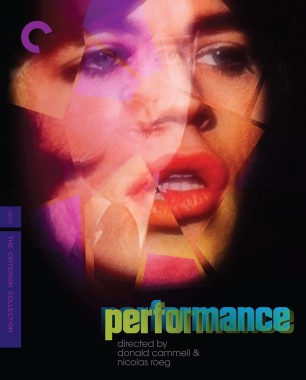
Performance
And more nostalgia with this one, for a time when directors were brave and producers perhaps less obstructive. The radical aesthetics of this film make me ponder a comment that Olivia Laing made in their Top 10 list: “I have a suspicion that cinema ended in 1979.” As I begin to have a sense of the film industry from the perspective of an OST composer, I grasp the restrictive structures directors face when trying to present their ideas in their most adventurous and raw forms. Even David Lynch complains about this in a behind-the-scenes video shot during the making of Twin Peaks: The Return. You can feel his exasperation! So, hats off to those who manage to pull off radical creative work—directors like Yorgos Lanthimos, Leos Carax, Bertrand Bonello, Sophie Fiennes, Jim Jarmusch, Pedro Almodóvar, Lucrecia Martel, Alfonso Cuarón, Jonathan Glazer, Robert Eggers, Paul Thomas Anderson, Julia Ducournau.
Returning to Performance, I can think of two striking moments: one in which we see Mick Jagger in a setting that feels like Cries and Whispers but reflected upside down, and the other—one of the most intense scenes in the film—featuring an image of Borges. Roeg’s radical style of storytelling evokes emotions like nothing else. I’m thinking of the opening sequence in Don’t Look Now—another of my all-time favorites. It’s so intensely poetic, with symbolism that envelops you in anxiety and loss. I could rewatch that sequence over and over for an aesthetic goosebump treat.
Given this list’s heavy focus on identity, I think Roeg is the perfect director to portray all this confusion with aesthetic exuberance and to leave us with many questions, as a great film should.
-

3
John Cassavetes
Opening Night
If only you could cure a marriage with a stunt, right? Again, another deep exploration of identity through the lens of a highly relatable Gena Rowlands, who plays a performer caught in the maelstrom of her own disconnection, yearning to feel love at the surface, as she used to. The film also has an absolutely hilarious, metatheatrical, third-wall-breaking style, with Gena playing alongside her real-life romantic and creative partner, John Cassavetes.
This film hits me as a music performer, because I grapple with the same questions: Where does the act end? Where does the boundary between our real lives and our characters lie? If the only way to survive is to remain in character, what happens when I try to let go of that character? What lingers? A moving memory through night and day? Or the fragile edge of consciousness itself? I wonder.
I stopped performing for two years, and with that, I feel like I killed a part of myself I had forgotten I needed—like air. It’s a force that manifests as creativity itself, a mysterious field that forms in the flow of the absolute now. My provisional conclusion—guided in part by insights from the film—is that no matter how ebrious we are from life itself, when we surrender to chaos, the monster of possibility awakens—ready to expel and illuminate—reminding us that meaning is born from reckoning with the primal, raw, and inevitable.
-
4
Michael Haneke
The Piano Teacher
And this list wouldn’t be complete for me without the brilliant Isabelle Huppert. Who else could embody this role with such cruel restraint, expressed through highly precise eyebrow gestures? This movie is a portrait of a woman who sacrifices it all for her career, obsessed with perfecting the performance of certain classical composers, and who satisfies her desire for human connection through an array of polymorphously perverse practices. For some, this film may be too brutal, but to me, it offers very relevant commentary on the undefined space between what we want and what we’re allowed to desire.
-
5
Bertrand Bonello
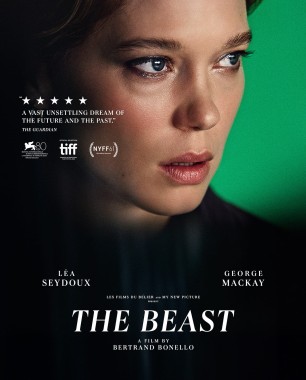
The Beast
I wonder if we’ll eventually become so exhausted by our inability to cope with this saturated yet ultimately trivializing narrative of hyperconnectivity that we might consider undergoing a process of DNA purification—to rid ourselves of any human qualities, like empathy, love, and tenderness, that stand in the way of our new construct of enlightenment? Oh dear! I’d do just about anything to protect the love I still feel inside, and I will train myself to protect that at all costs. What an exquisite movie to watch and analyze—Bonello, as always, is so visually elegant and thought-provoking. This is a movie that stays with you visually and philosophically.
-
6
Jean Cocteau
Orpheus
I entered the universe of the musician David Sylvian, and at the same time entered the world of Cocteau—at home, through Sylvian’s lyrics. Cocteau’s autobiography, Professional Secrets, accompanied me at my desk as I shaped A Danger to Ourselves, and so did his mythic Orpheus, which offered me a wellspring of ideas that I ended up exploring in my lyrics. Like mirrors as a symbol of passing time, of vanity, and of the savagery of language toward the self. They do watch us, right? They watch us age and get closer to death, as Cocteau said. They are strange devices that remind us of our finitude. I try to be more conscious of the overuse of the phrase what if, but mirrors make me wonder: What if they never existed? Would our identities be shaped differently? This movie is pure visual poetry and a statement from a mind capable of exploring creativity with character and intelligence across every possible medium.
-
7
David Lynch
Blue Velvet
Layers—I'm obsessed with them, in everything from geology to psychology. And David Lynch is a master at creating them. He begins this movie by showing us the perfect world of the idyllic American town; beneath it, entanglement, savagery, and obscurity. He uses symbols as devices to access even more layers—an ear, a number, a gesture—that, when explored further, can serve as points of entry into more complex aspects of desire, violence, and the subconscious. This is one of my favorite Lynch films (along with Chapter 8 of The Return) because of its pace, its music, its cruelty, its atmospheres and characters, and its details—one could keep finding clues to eternally decode forever. Like Claire Denis, Lynch reveals the duality of human behavior with raw, unfiltered intensity. His work is a mirror that shows what society prefers to keep invisible.
-
8
Pier Paolo Pasolini
Teorema
Is it Terence Stamp’s azure eyes that act as the catalyst, breaking apart the structured order and behavior of the bourgeois family in this film?
Sometimes you can just go all the way for a glance, a gesture—frozen in time—and from there build a whole reality in your mind. Could it be possible that this movie is a display of all the possible mental, metaphysical, affective adventures of each of the characters—paths to feel something beyond mere, dried-out materiality?
Even when life is consumed by riches and surface pleasures, does this staged nook of comfort truly allow transcendence? No one here notices anything until they do, until they surrender—and when they do, would it be too late to even be surprised by their own capacity to make miracles occur? This film captures a moment—a reflection of our time—that echoes perfectly into ours. We are all chasing some kind of azure-eyed creature that in a leap of faith will show us a path to something greater, something beyond the trivial. But in the end, maybe the chase itself is the only truth that we can hold.
-
9
Andrei Tarkovsky
Solaris
I think the best description I have heard of this movie is from my friend Alex Lazaro. When I told him to watch it, he said: “That’s not a movie, that’s a museum”—and I couldn’t agree more. What a mysterious piece of art. It stays in your heart and mind as movements, gestures, sensations. To me, it’s a device that helps me calibrate the pace of my life and my capacity to stay present.
-
10
Jacques Tati
PlayTime
And to close with less drama, let me invite you along to one of the biggest achievements in set-design exuberance and gentle humor—Playtime, by Jacques Tati. We follow Monsieur Hulot slipping through the cracks of a hyperposed, hyperconsumerist, and hyper-straight-line-walking society—an ever-changing, living, breathing stage of precision and absurdity.
The music intro already sets the tone—first, we hear an agitated drum solo that transforms into a gentle piece of music, which to me indicates the contrast of Mr. Hulot’s gentle existence, a romantic struggling to move in this highly choreographed urban hellscape.
It’s impossible to analyze every detail in this film; you could just pause any scene and realize the many things happening in the foreground and background—and that’s just visually. The biggest joy of the film is its highly sophisticated and surreal use of sound design. You hear footsteps just as loud from far out, a nose spray as loud as a leather chair springing back into form, and—the most satisfying one to me—a pair of batteries falling down the tube of an outrageously intricate broom designed with lights. I could create a whole album just with that sound! And for someone like me who struggles to have a conversation in a café because of the hyperanalysis I experience from sound stimuli, I just wonder how it would be to live in such a world. Oh dear!
Anyway, you’re in for a treat. PlayTime isn’t just a film; it’s an exuberant, detailed celebration of art, humor, and the strange beauty of modern life—one that keeps revealing itself again and again.