Max Richter’s Top10
One of the most influential composers of his generation, Max Richter is known for his ability to seamlessly blend traditional orchestrations with modern electronic elements. Among the more than fifty projects that he has scored are films by Denis Villeneuve, Martin Scorsese, Ari Folman, and Chloé Zhao. Richter is also the cofounder of Studio Richter Mahr, alongside his partner, visual artist Yulia Mahr.
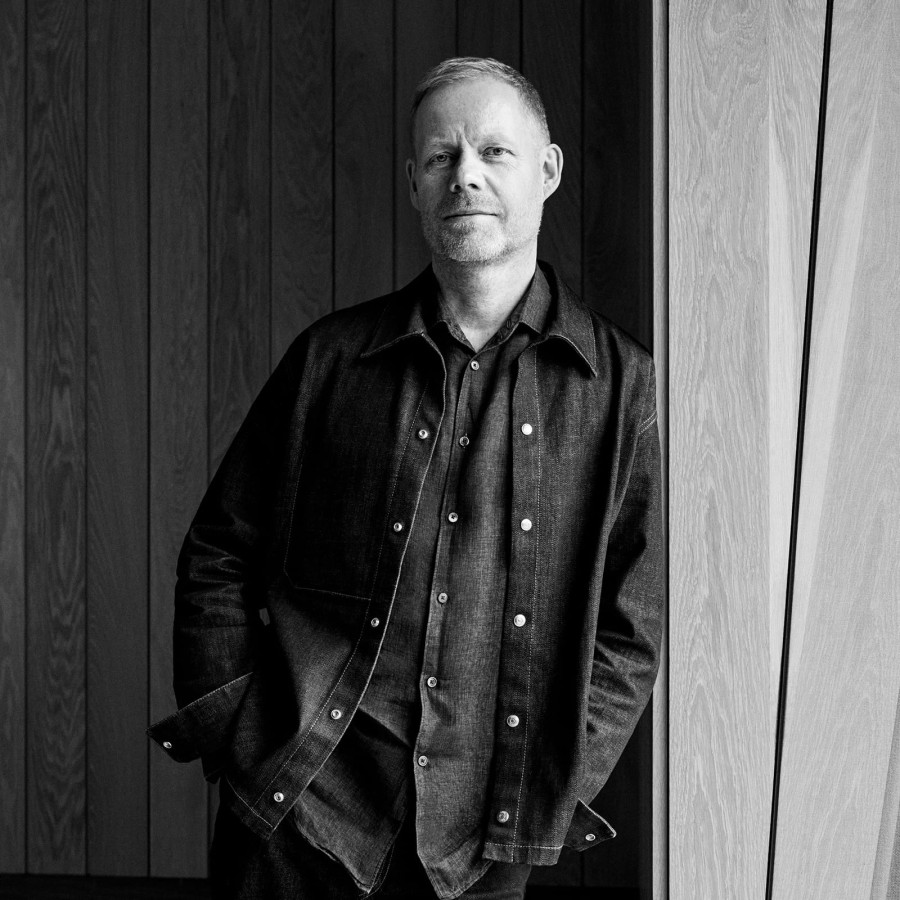
Photo by Rory van Millingen
-
1
Terrence Malick
The Tree of Life
The first time I saw this, I was so absolutely stunned that I went straight back into the theater and watched it again. It pushes the boundaries and possibilities of the cinematic medium and has this immersive, sensorial quality that fills your consciousness in an extraordinary way. I remember reading a quote from one of the editors about how, because of the way they made it, they were able to keep cutting until it felt like real life.
Thematically, it’s about the big questions in life, and it explores them in two ways: the interpersonal family dynamic sequences and these amazing cosmic tableaux that speak to our relationships with nature and time. It’s a complete and fascinating artwork. The overall sensory impact of the film floored me.
-
2
Wes Anderson
The Royal Tenenbaums
This was one of the first Wes Anderson films I saw, and you know, it’s like falling in love. I had such a great time being inside that world. The movie has some bits of pure cinema magic in it. I love the extraordinary slow-motion sequences that were a signature of Wes’s work at that time. There’s a beautiful one in which he drops Nico’s “These Days,” and time just stops.
The film has a wonderful blend of humanity and warmth. It’s about a very dysfunctional family, but it’s also about creativity—and it has one of the best performances by a bird of prey in any movie. I think Mordecai is a very important symbol in the film. That glorious scene when he flies over the rooftops of New York is just a stunning cinematic moment. It also has a fabulous score by Mark Mothersbough.
-
3
Olivier Assayas
Clouds of Sils Maria
There are so many things I love about this film. It’s very strange, actually. There’s a lot going on within it, and things can be quite opaque—who is talking, is it real, what is the timeframe, what is the context, what are the relationships . . . but the film has this amazing atmosphere. It’s about someone living a creative life professionally and trying to discover how that fits into human life generally. It’s also about memory and relationships and trying to make sense of things. It’s beautifully acted and full of strange, surprising situations.
There’s a Mitteleuropa texture to it that’s very familiar for me, because I was born in Germany and have spent a lot of time in that part of the world. So maybe there’s an element of nostalgia in the film that appeals to me.
-
4
Hal Ashby
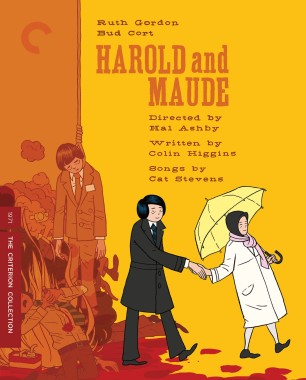
Harold and Maude
When I first saw Harold and Maude as a student, I thought, well, they’ve made a film just for me. I love everything about it.
It’s another film about people trying to find ways to make sense in the world, live in it, and connect. I love both of the main characters. I identified with Harold when I was a kid. He has this fabulous, slightly disenchanted, questioning presence—and he’s an iconoclast. He’s someone who is finding his way on his own rather extreme terms.
The soundtrack is fantastic and features these beautiful Cat Stevens songs. Weirdly, Stevens was initially the second choice; the first was Elton John. Can you imagine? Maybe it would have been wonderful, but that would have been a very different film.
-
5
François Truffaut
The 400 Blows
The 400 Blows leaves an indelible mark, doesn’t it? It’s truly unforgettable. François Truffaut’s exploration of childhood and all of its motivations and questions is so thoughtful and tender. The whole last sequence is just magic.
When I was a student in London, I spent a lot of the time I was supposed to be at the Royal Academy of Music just bunking off and sitting in cinemas. There was an art-house cinema in Hampstead called the Everyman, where you could go in the morning and watch three or four movies, and that’s what I did. I got my cinema education that way, and that’s when I would have seen this film.
-

6
Ingmar Bergman
Fanny and Alexander: Television Version
When I was putting together this list, I realized that a lot of these films are about childhood and family relationships. Fanny and Alexander is a masterpiece that explores both themes. Its world is so fully realized and imagined and filled with detail. The depth of Ingmar Bergman’s imagination and the sense of place he creates are extraordinary. The kids are at the center of this amazing story, but there is a very rich world drawn around them.
Bergman’s vision can be quite bleak; he’s very skeptical about human beings and what they are. But I do think this film has a warmth to it, as does The Magic Flute. With all of its snowy landscapes and the warmth of the light, Fanny and Alexander is also really a Christmas movie for me.
-
7
Noah Baumbach
Frances Ha
Frances Ha has this fantastic freewheeling energy. The performances are terrific, and it has the feeling of a director working in complete sympathy with every element. There’s a magic to it. It also has a sort of Harold and Maude energy in how it portrays a slightly lost figure trying to understand things and not quite knowing how to get a hold of life, which is something we all go through at a certain point. It’s a film that gives me a lot of pure pleasure, and it’s great to spend time in its world.
-
8
Steve James
Hoop Dreams
Hoop Dreams is absolutely amazing. It centers on two kids and their journey toward these mythic, glittering careers in basketball, but it also has such brilliant breadth because it investigates the social and cultural setting that they’re operating in and the economic conditions that influence what’s possible for them.
-

9
Agnès Varda
Jacquot de Nantes
Agnès Varda is an incredible filmmaker. I saw this film when it came out and loved it, and the circumstances of how and why it was made are so special. Agnès’s husband, Jacques Demy, was terminally ill, and she took his stories about his childhood and turned them into a film, which she gifted to him as an opportunity to reexperience his childhood through cinema. It’s such an incredibly beautiful thing to do, from one artist to another. It’s very moving even to just talk about. It’s almost like a metatextual conversation with Demy’s body of work over the course of his life. It’s amazing and should be more well known.
-
10
Federico Fellini
La dolce vita
For me, cinema is a holistic, composite art form, and music is really just one element within it. But of course there are films that you remember by their scores, like La dolce vita, whose images are suffused with Nina Rota’s extraordinary music.
I love Fellini’s films, but I’m especially fond of this one. There are so many bold choices in it. I love the opening, where you have the statue of Jesus flying over the city. It’s so clever and funny and also provocative and satirical. It’s pure Fellini all the way through—everything is over-oxygenated and turned up to eleven. But the movie also plays with some big themes that still feel very relevant today, including questions about the business of celebrity and how people present themselves.