Tommy Dorfman’s Top10
Tommy Dorfman is a writer, director, producer, and actress whose work encompasses film, television, and theater. She wrote, directed, and produced her feature debut, I Wish You All the Best—starring Corey Fogelmanis, Alexandra Daddario, Cole Sprouse, and Lena Dunham—which was released theatrically in the fall of 2025.
-
1
Paul Mazursky
An Unmarried Woman
An Unmarried Woman was the first Criterion film I ever purchased. Lena Dunham suggested I watch it before making my first film, and it has stuck with me intensely ever since and become my comfort movie. I love watching the interviews with Paul Mazursky. The performances in the film are so deeply human and complex, and it’s clear that he allowed his actors the space to bring them to life in this way. The movie really opened my eyes to new ways of working with an ensemble.
The physical language of the film—the pacing, the cinematography—is just breathtaking. There are so many scenes that stand out in my mind: Jill Clayburgh’s Erica dancing in her underwear, the group of women draped on the bed in the morning and the scene of them all at lunch, the ending with her carrying that giant painting . . . You’re watching a woman unravel and then reclaim her life in a magnificent way. It’s such a gift.
-
2
Wes Anderson
Rushmore
I love movies about teenagers. I’m making one now. I hadn’t seen Rushmore until last year, and it was exciting to see a Wes Anderson film so rooted in a teen setting. I think there’s a special magic that can happen in those spaces. There’s a naturalism to the film’s style; it’s tapped into the world we live in in a way that’s different from what we’ve come to expect from his work. It’s always interesting to see how a filmmaker’s approach evolves throughout their careers.
Watching his work now, I sometimes feel it’s so unattainable, like you could never get the money or freedom to make something like that yourself. But then you see his early films and you realize that there are ways to do things practically with design. Within the unique language of the cinematography and design in this film, you can see the seeds of Anderson’s later work and how they’d eventually blossom and grow.
-
3
David Maysles, Albert Maysles, Ellen Hovde, and Muffie Meyer
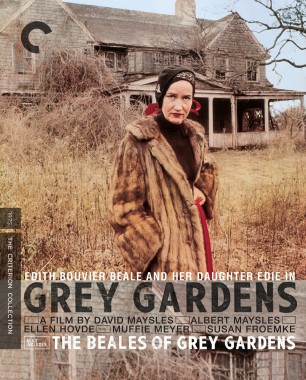
Grey Gardens
I first watched Grey Gardens in high school because of my mom and grandmother—which really tells you all you need to know about me. It was a movie they’d put on in the living room, and I fell in love with these women and their style and freedom of expression.
For women who are trauma-bonded with their relatives, this movie hits a different note. I related to Big Edie and Little Edie’s codependency. When you’re a teenager, it’s hard to have a language for that, but in this film you really see it play out in ways that are complex and challenging to watch at times, but so powerful.
Even through all the humor in the film, there’s a significant amount of grief, pain, and suffering simmering underneath, and all of it boils over but in this very Waspy, contained way. As campy as the film is in its style and iconography, there is still a deep humanity in it.
-
4
Andrew Haigh
Weekend
I saw Weekend in the theater around the time when I moved to New York for college. It was a time when I was coming into myself as a person and an adult. I’d never seen a movie like it before; I related to it in a deeper way and felt I’d lived it. I had rarely ever seen a version of this kind of relationship on-screen, and it became something I was able to reference within the context of my own life.
There’s a huge library of great queer cinema, but Weekend sits in its own pocket for me. It feels so nice to watch something and not have to contort yourself to the identities you’re seeing on-screen so that you relate to it more. As a queer person, I’m often watching a pretty traditional heterosexual dynamic and having to do a lot of emotional gymnastics to put myself in the characters’ shoes and in their drama. But that’s not the case in this film. For me, there’s an ease that comes with watching movies like this, where I’m just there with them and I don’t have to pretend that I’m Brad Pitt. I can just feel like, oh yes, that’s me and my boyfriend Joey.
There’s an elegance and a naturalism to Andrew Haigh’s filmmaking. You really feel like you’re in the room with these characters living out this brief romance—the kind that feels like playing house with someone without needing to build anything real. It opened a door for what movies could be and redefined how I approach what I like watching and the work I want to make.
-
5
Wim Wenders
Pina
I have a Pina Bausch tattoo; I’m such a cliché. The love, heartbreak, and emotionality that Pina Bausch accomplishes in her work have always felt very revolutionary to me.
I grew up dancing, and until I went to college, my whole life was ballet. I saw Pina around the same time I saw Weekend, and it also felt like something I’d never seen on-screen before. Usually, you think of 3D movies in relation to Avatar or Marvel, so to have this technique optimized for dance and theater was breathtaking. At that point in my life, I’d never seen Pina’s work in person. So this was the greatest gift, because it allowed me to immerse myself in the space with her and her company. You experience the performances in a way that’s almost more visceral than being at the theater, because it’s so in your face, like you’re right there alongside them.
-
6
Franco Zeffirelli
Romeo and Juliet
Baz Luhrmann’s Romeo + Juliet was very much part of the zeitgeist when I was growing up, but I didn’t see the Franco Zeffirelli film until a couple years ago, when I was prepping for our Broadway revival. I loved it because it’s a beautifully paced, accurate telling of the text. Even if you haven’t read the play or don’t understand it, this is probably one of the best, most foundational interpretations you could watch. It’s also incredibly acted and so beautifully shot; the lighting is intoxicating.
However, it’s definitely very challenging to revisit now given that it was made at a time when there were not enough boundaries and protections put in place for performers and actors. My generation has to do a lot of negotiating with how to separate the art from the artist, but I think there’s more space now to talk about what has happened and what continues to happen, and advocate for change and safety.
-
7
John Hughes
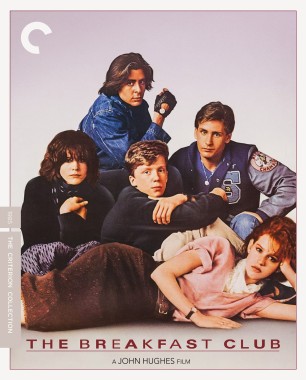
The Breakfast Club
My mom loved John Hughes movies when I was growing up, so we’d go to Blockbuster and rent them. The Breakfast Club stands out for its simplicity and really shows how much you can accomplish when setting a movie in just one location. It’s Hughes at his finest, with an amazing ensemble cast and real, grounded performances.
I love when a director focuses their work so specifically on one genre for a period of time. I don’t think anyone has ever done that for teen movies like John Hughes did—and I’m not sure anybody will. These are very mature and complex teen movies. He accomplished something that I always strive for when approaching my own work, especially in the young-adult space, which is to find ways to craft an authentic world and offer a glimpse into a teenager’s life that isn’t exploitative and speaks to the maturity that so many teenagers have. We don’t often see that in stories about teenagers.
-
8
Lizzie Borden
Working Girls
You can really feel that a woman is behind the camera directing Working Girls. Lizzie Borden neither glamorizes sex work nor portrays it as an incredibly volatile space. It’s a profession, and you’re trying to make a life for yourself within and outside of it. Sex work is so misunderstood and often villainized, so to have a film like this that approaches it from a human perspective is incredibly necessary.
I’ve spent all of my adulthood in New York, and I have many friends who support their artistry through sex work and escorting. Many of them are queer or trans and perform a different version of themselves in their professional lives—and they’re incredibly empowered by it. Working Girls is so much more honest than any of the media I saw about sex work growing up, and I think that stems from the emotional expansiveness that Lizzie Borden has as a director.
-
9
John Waters
Polyester
I don’t know if it would even be possible to work in queer cinema without having a relationship with John Waters’s work in some way. I idolize him.
I’m attracted to artists who do things I could never even strive for. I love experiencing the work of someone creating in a way that is so singular to themselves. With John Waters, there’s a theatricality that’s unlike anything else I’ve seen. It’s intoxicating and sexy and dreamy and fun. I’m also interested in artists who stay in their hometowns and build community there, like he’s done in Baltimore. I admire how he cultivated this company of actors and collaborators. There’s a safety in working within that kind of collaboration, and there’s a magic that comes from it—especially when you’re very under-resourced and have to find inventive ways to tell stories with five hundred dollars instead of five million.
It’s not only that he helped define American queer cinema. His films feel like visceral reactions to what was going on politically and (sub)culturally in the time they were made. Polyester takes a jackhammer to the fallacy of the American dream and the dysfunction of the nuclear family, eviscerating these tropes in a way that is so brave and funny and dark. But his films are also just so fucking fun to watch! We need more camp and silliness in cinema.
-
10
Alexander Payne
Election
Election has aged impeccably, and it’s one of my favorite movies of all time. For all of its absurdity, it feels so real to me. It’s a great political satire, told through the framework of a teen movie. It’s incredibly smart and quippy. And it’s dark, but in my experience, being a teenager is dark!
The way Alexander Payne and his cast build these characters is amazing, and the movie has some of the most incredible acting in this genre. I love Tracy Flick. I think the more you commit to this kind of character, the more human she becomes. But a lot of the behavior in this movie is how people really are; it’s not so far off from how teenagers treat one another and how teachers and their students are sometimes at war.
Chris Klein’s performance is also truly incredible. When he was gracing our screens we did not appreciate it enough. He really fed us in those roles.