Harris Dickinson’s Top10
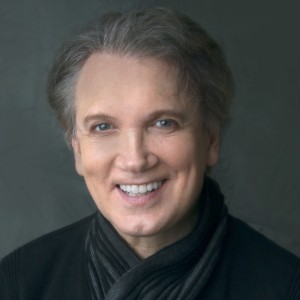
BAFTA-nominated British actor Harris Dickinson burst onto the scene in Eliza Hittman’s 2017 Sundance hit Beach Rats. He has since starred in films such as Triangle of Sadness, Babygirl, and The Iron Claw. His directorial debut feature, Urchin, premiered at the Cannes Film Festival as part of Un Certain Regard.
-
1
Stanley Kubrick
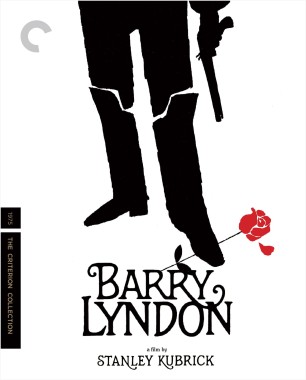
Barry Lyndon
When I was growing up and starting to understand my taste in cinema, my mom and dad knew that I was interested in drama, particularly social drama, so they showed me films by Mike Leigh and Play of the Day programs. But then I saw 2001: A Space Odyssey and realized there was another kind of cinema that was magic and expansive but could still coincide with auteur cinema. It didn’t have to be Star Wars or nothing. When I understood that there are filmmakers who could marry the two, I was intrigued.
Last summer there was a whole Stanley Kubrick season on in London, and this was the first time I watched Barry Lyndon properly. Watching it in the cinema for the first time blew me away and made me feel so inspired. I wasn’t inspired only by the film but by the story around the making of it. It cost $12 million, which was a very big budget at the time. Kubrick had a lot of problems with the locations—he wanted to shoot the film in the UK and went to Ireland but then got chased out by the IRA. Of course, there’s also the technical aspect of the filmmaking, like how he used lenses from NASA to shoot the scenes lit entirely by candlelight. It’s just one of those films that makes you wish you could have been a fly on the wall for the making of it.
It’s a real period epic, and it’s also about a con man traveling through different worlds. It plays with the idea of innocence and corruption, as well as cycles of greed and power. But there’s also amazing humor in it, which is part of the classic Kubrick tone that he manages to strike in all of his films. The cinematography and design are just so thoughtfully considered—Barry Lyndon exemplifies the idea of every frame is a painting. Now it’s one of those films I want to continually rewatch.
-

2
John Cassavetes
Opening Night
The first John Cassavetes film I watched was A Woman Under the Influence, and then I went back and watched the rest of them in order and became obsessed with Gena Rowlands. Opening Night is about someone experiencing this mirage-like psychological battle with herself. Gena is so fucking good because she reveals so much and then pulls it back.
Opening Night plays with the idea of spirituality and the imagination, and has elements of the surreal. It’s about theater and performance, so it’s one of those films that puts the spotlight on acting, which was very exciting for me. I remember seeing it and being so bowled over by all the performances and their physicality.
When we were making my film Urchin, it was very clear that the experience would test Frank Dillane physically and mentally, but he was fully willing to jump in and give his body and soul to the role. As an actor, I know that this can take a toll. I think that’s why we were so interested in filming in wide shots, because his body told so much of the story.
-
3
Dennis Hopper
Easy Rider
For me, as a British person, watching Easy Rider for the first time in my early twenties romanticized the idea of Americana. It’s just so crazy to me that this was Dennis Hopper’s first film. It has an unusual balance of machismo and blokey energy matched with very quiet, delicate scenes and performances. I find that to be a beautiful mixture. It’s not just a roaring, petrol-fueled road movie; it’s got a real sensitivity to it—and a weirdness as well. You feel Hopper’s wild mind running through it in the most wonderful way. There’s also Jack Nicholson—I remember seeing his performance and thinking that if I could get close to that in any way, that would be a dream.
-
4
Mike Leigh
Secrets & Lies
Mike Leigh plays with tenderness really well in this. He strikes a balance of comedy, tenderness, and sincerity in all of his films, and that’s very hard to achieve. He’s the kind of director who investigates, and we know this from the way he develops his films with his actors. It’s palpable here in how his scenes play out and how the drama unfolds. Marianne Jean-Baptiste, Brenda Blethyn, Lesley Manville, and Timothy Spall are just a phenomenal ensemble.
Manville plays a social worker, and we thought of her character when we were making Urchin and trying to bring a little more exuberance to that kind of role. We were looking for ways to not be tied down by the constraints of a bleak institutional setting, and how we could make that cinematic. There are times when Mike Leigh departs from realism in order to favor color and texture, and I find that so interesting and beautiful—it gave me permission to do that in my own filmmaking.
-
5
Jean-Pierre Melville
Le samouraï
I only recently got put on to Le samouraï. I love how delicate it is, how it’s kind of the antithesis of the classic assassin film. When I watched it, I felt a quiet panic. A lot of what it’s dealing with is about consequences, the idea of facing past actions and the way that affects you moving forward.
I love Melville’s framing and choreography in this film. When you first start watching, it feels like it’s going to be quite bleak—and although that’s true, there’s so much poetry in it that it never feels severe. It’s very elegant.
-

6
Agnès Varda
Vagabond
I’m a big fan of Agnès Varda’s films. Vagabond deals with themes that are similar to those in Urchin, but the setting is different—it’s very pastoral. For me, what’s so powerful about the film is its humanity—the way it humanizes someone going through a difficult experience, portraying it very seriously but still managing to find such beauty through Varda’s lens.
Vagabond moves through time in a way that doesn’t have to be explained for you to be able to follow the story. That was something we tried to do in my film as well, to flip between time periods without being overly clear—because ultimately, if an audience is really with a film, it doesn’t matter if you’ve skipped forward a couple days or a month. Varda’s film proved that point perfectly and was very inspiring.
-
7
Paul Thomas Anderson
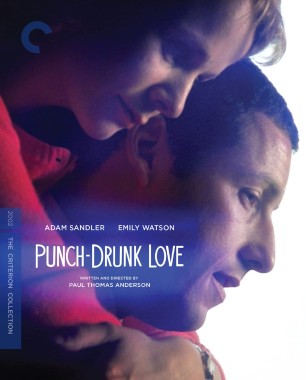
Punch-Drunk Love
Punch-Drunk Love feels like it exists in a state of suspension, like it never settles below the surface of its tone. It manages to stay in that magic, and yet the scenes feel so real.
This was the first time I saw Adam Sandler in a more dramatic role, though there are still amazing comic elements in his performance. All of Paul Thomas Anderson’s work is peppered with perfect situational comedy. That’s something I’m also interested in—how to make moments funny without forcing them and to mine real-life situations that are genuinely odd and surprising and absurd.
Punch-Drunk Love is about self-pity, isn’t it? It’s also about living in that state of “what if.” We spoke about this when making my film—how to have the main character treat each new scene as if there was something amazing waiting on the other side, as if the possibility of hope or rejuvenation were just around the corner. That carried us through and elevated the film out of a feeling of victimhood or tragedy. I screened a few of the films on this list for the crew of Urchin, and this was one of them. I wanted to bring everyone into a sense of excitement about cinema and show what’s out there in the world to inspire us and give us something to aim for.
Jon Brion’s score is so good. There’s a lot of amazing movement in the film, which is not something you can fabricate—either an actor has that physicality about them or they don’t. But as a director, you have to make space for that, and the choreography has to fit. It can be hard to find that freedom while staying within the frame of what you’re making.
-
8
Lino Brocka
Manila in the Claws of Light
Lino Brocka tells sprawling odysseys. What fascinates me so much about him as a filmmaker is the mixture of tones he manages to strike and his wild sense of melodrama.
So much of Manila in the Claws of Light is about a fall from innocence. This young guy comes to live in a very active and dangerous city where everything is up for grabs, and the film shows how that experience completely changes him and how he tries to make sense of that. All of the characters in Brocka’s films are so full of life, even the supporting roles that are only on-screen for a moment. It’s really impressive how he cultivates these performances that feel so alive.
The sense of timing and the way Brocka moves through scenes are so striking. The visual language is interesting because he doesn’t use many close-ups in the beginning, so when he does later on, it’s more impactful and powerful. I love it when a director holds off and doesn’t give full access to the lead character right away.
-
9
Andrei Tarkovsky
Andrei Rublev
It’s very hard to talk about what makes Andrei Rublev so stunning, but I remember seeing it for the first time and thinking, who is this filmmaker? This was the first Andrei Tarkovsky film I saw, and it has stayed with me. It’s about solitude and suppression, and it’s a period epic that’s so well-executed it almost makes other period films look like crap. You see Tarkovsky’s skill for full-on world-building in the most understated and elegant way possible, which is incredible in a film of that scale. There are some wild one-take shots that I don’t know how they pulled off.
I saw this a bit late in my cinema-going life, but I think you need to be a little bit older to fully appreciate Tarkovsky. I don’t think his work is something you can whiz through and fully understand. I certainly didn’t have the understanding to be able to appreciate them at a younger age; it’s taken a while, as it does for a lot of people. I first saw this at the Close-Up Cinema in London. When I’m not working, going to the cinema is kind of all I do; I fill up most of my week with that.
-
10
Götz Spielmann
Revanche
This is another film that deals with an unraveling mind. I really like how the story unfolds. Had it been more linear and conventional, it could have been another archetypical story about a savior and a sex worker, but it turns into a quiet, aggressive thriller. But it’s not a high-octane crime film. It takes its time and is comfortable allowing the quietness to tell the story. It’s unafraid to be bold with framing and moves through landscapes really well, and it keeps you on the edge of your seat in a way that many films with that kind of pacing aren’t able to do.
While making Urchin, I was often questioning whether I was being pretentious with the amount of time I was expecting people to wait for things to happen or allowing moments to linger. But Revanche is a perfect example of how not being self-conscious about that pays off. Also, the acting is just next-level, especially Johannes Kirsch.