Sparks’ Top10
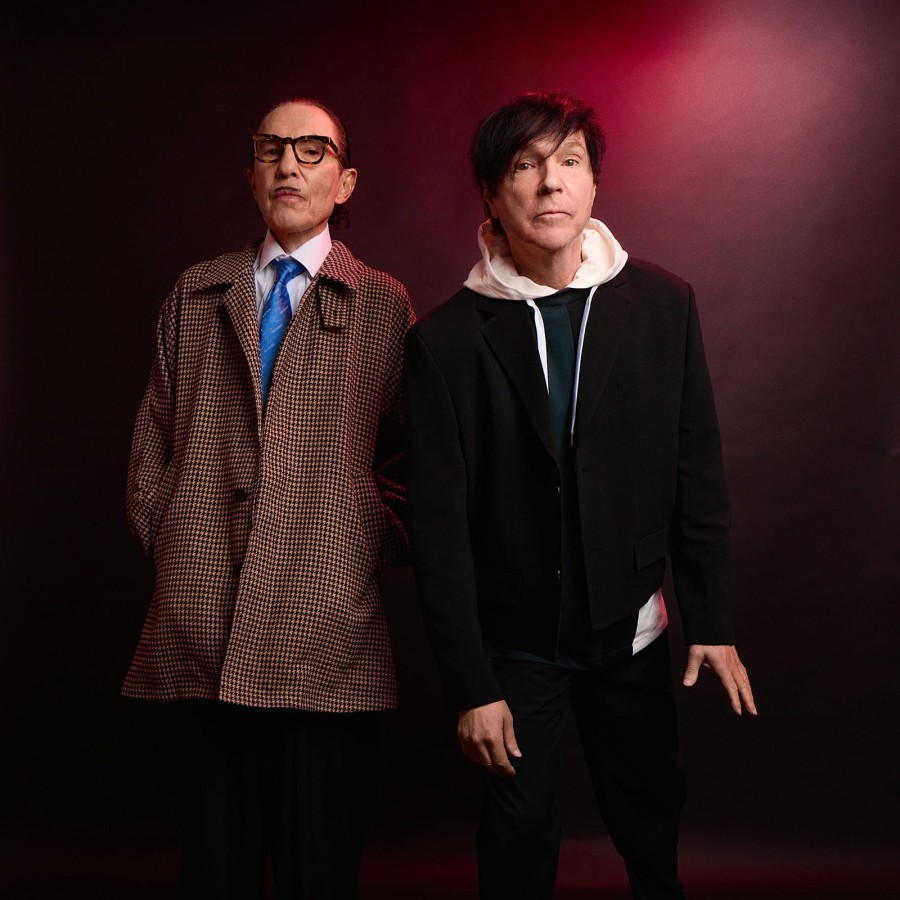
Legendary pop duo Sparks—the fifty-plus-year-long project of brothers Ron and Russell Mael—was formed in 1971. Earlier this year, they released their twenty-eighth studio album, MAD!, via Transgressive Records. Their latest release, the EP MADDER!, was released in October.
Very few artists have had as much influence on decades of popular music as Sparks. Their work includes the 1974 hit record Kimono My House, the Giorgio Moroder–produced 1979 electronic disco album No. 1 In Heaven, and (just in this millennium) eight new studio albums, a radio opera, a collaboration with Franz Ferdinand, a live album, and a film musical (2021’s Annette). In 2021, they were featured in Edgar Wright’s documentary The Sparks Brothers.
Photo by Munachi Osegbu
-
1
Guy Maddin
My Winnipeg
A documentary like no other from a filmmaker like no other, the great Guy Maddin. I must admit that, sadly, I’ve never been to Winnipeg, but I would guess that I would prefer the dreamlike, sometimes true, sometimes who-knows version of the city as presented in this film. I love all of Guy’s work, but I’ve picked My Winnipeg because it’s perhaps the most difficult work to categorize from a director who himself is impossible to categorize.
I discovered Guy’s work a little late in the game with The Saddest Music in the World, and while watching that film, I felt it was somehow akin to my sensibility in a way that no other film I’d seen before had been. I’ve since become friends with Guy, so if that disqualifies me from praising him to the heavens, then so be it. He belongs in the pantheon of great directors of our time. What all of his films show us about the blurred line between what is real and what is not, between what is artifice and what is not, somehow seems more relevant now than ever. Jeez, I love his films! But most of the time I share with Guy is spent speaking about our passion for Japanese baseball players who have excelled in the U.S.; not speaking about film with him seems appropriate. What am I going to say to him about movies that wouldn’t sound foolish? I feel on safer ground discussing Shohei Ohtani.
—Ron Mael
-
2
Jacques Deray
La piscine
The handsomest actor ever, Alain Delon; the equally beautiful and seductive Romy Schneider (who was previously Delon’s real-life partner); and a villa in the luscious French Côte d’Azur. And a swimming pool. Add to the mix the eighteen-year-old Jane Birkin, and you’ve got the makings of a summer ménage of you-know-what. And fave composer Michel Legrand (of The Umbrellas of Cherbourg fame) adds to the sensuality of the goings-on in this 1969 Jacques Deray–directed thriller. A great companion piece is the Luc Larriba book La piscine, which is about the making of the film. Reading the novel further enhances the joie of this film.
—Russell Mael
-
3
Jean-Luc Godard
Band of Outsiders
I maintain a mental collection of great musical scenes from films that aren’t musicals: Leos Carax’s use of “Modern Love” in The Lovers on the Bridge, with Denis Lavant dancing so wildly and beautifully; the opening scene of Spike Lee’s Do the Right Thing, with Rosie Perez dancing/shadow boxing to Public Enemy’s “Fight the Power” blaring; and, for me perhaps best of all, the Madison scene in Godard’s Band of Outsiders, with Anna Karina being the ultimate Anna Karina and coolly dancing with Sami Frey and Claude Brasseur . . . Sublime.
—Ron
-

4
Jacques Tati
Mon oncle
Over the course of several months in the mid-’70s in Paris, we worked with Jacques Tati on a film project of his called Confusion. We were to be actors in this movie about a struggling provincial French TV station. Sadly, the film wasn’t made due to Tati’s unfortunate budgetary battles and his declining health. A major disappointment in our career.
We love his work. Mon oncle is among his many gems. Tati’s singular universe is once again seen through the eyes of his character Monsieur Hulot, this time with an emphasis on his fascination with the modern world and technology.
No traditional dialogue is necessary. Tati’s actions and mumblings speak loud and clear. He was a comic genius.
—Russell
-
5
Abbas Kiarostami
Close-up
I love the films of Abbas Kiarostami. One of his later films, the Japan-set Like Someone in Love, was stunning, with an opening scene in a café/bar that was a virtuosic piece of filmmaking. I always come back, though, to Close-up, with its mysteries of what is real and what isn’t. To me, the question has never been more beautifully portrayed on-screen than in this film.
—Ron
-
6
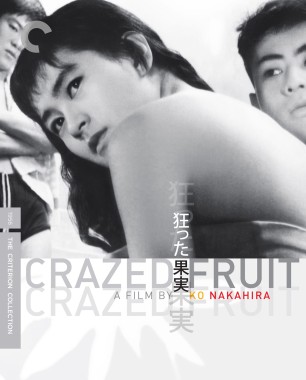
Kô Nakahira
Crazed Fruit
The opening extreme close-up shot of a teen in the open sea piloting a speeding boat toward the camera foreshadows what’s to come in this brilliant 1956 black-and-white film by Japanese New Wave director Ko Nakahira.
Rebellious, affluent youths with way too much free time on their hands turn their backs on traditional mores in postwar Japan. Even Hawaiian shirts look good in this spirited drama set in a rapidly changing society.
—Russell
-
Leonard Kastle
The Honeymoon Killers
The human condition can of course be portrayed in an infinite number of ways in a film, and these two movies exist on opposite ends of the spectrum. One is Japanese, over nine hours long (if you count the three parts as one film), and emotionally and visually stunning, while the other is, well, brazenly American. Both are magnificent.
—Ron
-
8
Hiroshi Teshigahara
Woman in the Dunes
An entomologist’s search for insects turns into a nightmare tale about his entrapment in a deep sandpit with an enigmatic female. Shot in beautiful black and white, director Hiroshi Teshigahara’s 1964 film captures the mystery and sensuality engulfing the couple in this ominous and claustrophobic setting.
Interestingly, later in his career, Teshigahara turned to other art forms, including ikebana.
—Russell
-
9
Jim Jarmusch
Stranger Than Paradise
Artists often seem to feel a little slighted when an early work of theirs is singled out for praise, as it seems to invite the thought, Yes, but what about the rest of what I’ve done? In this case, I mean no such slight, as I admire greatly everything that followed Stranger Than Paradise in Jim Jarmusch’s career. It’s just that this driest of dry comedies introduced me to Mr. Jarmusch’s unique sensibility, and I’ve been hooked ever since. How dry can humor be and still be humorous? That question is answered in Stranger Than Paradise.
—Ron
-

10
Federico Fellini
Nights of Cabiria
Federico Fellini’s real-life partner, actress Giulietta Masina, portrays Cabiria, a woman so heartbreakingly upbeat and optimistic despite the wretched milieu she lives in and so desperately wants to escape. No amount of misfortune dampens her hope to find a way out. Masina’s amazingly moving performance won the Best Actress award at the 1958 Cannes Film Festival. All Fellini really needed to do was shoot two hours of close-ups of Masina’s face. There are four million emotions on her unbelievably lovable and complex character’s mien. An uplifting tearjerker.
—Russell