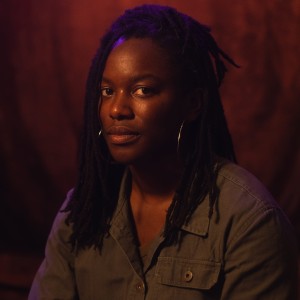
Charles Busch’s Top10
Charles Busch is the author and star of many plays, including the Tony-nominated The Tale of the Allergist’s Wife, as well as Vampire Lesbians of Sodom, one of the longest running plays in off-Broadway history. In 2024, he was inducted into the Theater Hall of Fame.
-
1
Howard Hawks
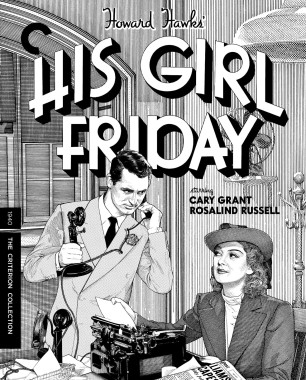
His Girl Friday
His Girl Friday is the most fast-paced of the classic films. I love the speed of it, and the actors pull this off with such precision—Rosalind Russell in particular. I think she is the most skilled of the great comic ladies of her time. She could talk a mile a minute and you’d still understand every single word.
I also love the genesis of the movie. It’s adapted from a very famous play called The Front Page, which is about a newspaper editor and his star reporter, both of whom are men. But when Howard Hawks made his version in 1940, he thought it would be more interesting to make the reporter character a woman and make the movie a battle of the sexes. This is so much more effective, and the story is really forward-thinking and quite feminist. Russell’s and Cary Grant’s characters were married but are divorced at the beginning of the movie. By the end she gets back together with him, but she doesn’t give up her career. He loves that she’s a brilliant reporter. It’s very cool in that way.
The film is also packed with the most fantastic character actors in classic cinema. Every bit part is so juicy it’s like you’re watching each of the actors devouring a big sirloin steak. My whole career, including Psycho Beach Party, has been inspired by classic films like this. Sometimes my work is labeled as “spoof” or “lampoon,” but I think of it more in terms of stepping into the movies I love.
-
2
Alfred Hitchcock
Rebecca
I love Rebecca. It was Alfred Hitchcock’s first American film, and it’s a collaboration between him and the producer David O. Selznick. There was some conflict between them, because Hitchcock was used to making films in England and using his source material as a springboard for something new, whereas Selznick thought that if he was buying the rights to a book, he wanted to see that book on-screen. Ultimately, their collaboration produced something extraordinary, because there’s an emotional sweep to this film that’s not apparent in Hitchcock’s earlier work. It’s a suspenseful mystery, but it’s more romantic than anything he had made before. It has a tragic and haunting quality that prefigures his masterpiece Vertigo many years later. You really identify with the protagonist, a young woman who has married into extraordinary wealth but is so unprepared and lost. You watch her slowly develop until she gets her own spine.
Joan Fontaine and Laurence Olivier are so memorable, and they’re surrounded by the cream of the crop of British émigré actors of 1940s Hollywood. Actors like Florence Bates, Gladys Cooper, Nigel Bruce, and George Sanders bring so much humor and wit to the film. I think humor is something that’s missing from contemporary thrillers. Humor can often diffuse tension, but in Hitchcock’s movies the two elements coexist and complement each other.
-
3
Roman Polanski
Rosemary’s Baby
This might just be my favorite movie. I saw it as a teenager when it first came out, and I still have all of it memorized. I read the book before seeing it, and, in my opinion, there’s never been another screen adaptation so faithful to its source. I remember Roman Polanski said in an interview that because this was his first adaptation, he assumed the screenplay should be written exactly as the story is on the page, down to the description of the clothes.
Rosemary’s Baby is this outrageous story of devil worshippers conjuring forth the living Satan—and yet there’s such reality in the film and concern for the everyday details of New York life. It was made in 1968, but it might as well have been made today. It’s very contemporary, and it feels so much like the world around us that everything that happens in it seems plausible. You really never know who is living next door to you.
The cast is just phenomenal. Ruth Gordon’s Oscar-winning performance! The movie also has a wonderful sense of humor despite being a scary and intense thriller. There’s a moment when Patsy Kelly—one of the great broad comedians of the ’30s, in a rare movie appearance—sticks her tongue out at Mia Farrow as she walks by. The humor gives texture to the movie without diminishing its seriousness.
-
4
Robert Altman
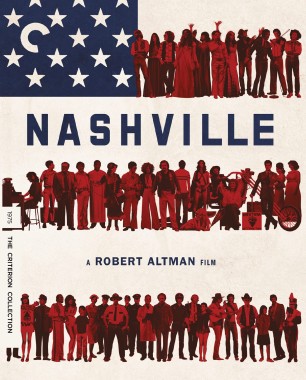
Nashville
I think this is Robert Altman’s masterpiece. It’s a tapestry of what he thought the country-music industry was like—the stars, the managers, the fans, the promoters, the hangers-on, etc. He might have twenty different storylines running through the movie. And yet there’s nothing frustrating about it. We really get to know the essence of each of the many characters.
Some of the actors are giving their finest performances, like Geraldine Chaplin. But Ronee Blakley, as a singer named Barbara Jean, is really the soul of the movie. Blakley was a singer-songwriter, and this was her first film. There’s an iconic scene where she has a breakdown onstage, and it’s so vivid and real that it’s become frequently referenced. I’ve heard many performers say, “I had a real Barbara Jean moment.” It’s so perfect.
-
5
William Wyler
The Heiress
The Heiress is an adaptation of the Henry James novel Washington Square and a very successful stage play it inspired. But Wyler’s film doesn’t feel stage-bound at all, even in the scenes set in the house where most of the film takes place. The film is never flashy, but it feels like a movie, with its subtle camera moves and the deep-focus cinematography that Wyler was known for.
I love the three central performances by Olivia de Havilland, Montgomery Clift, and Ralph Richardson. The dynamic between Richardson and de Havilland as father and daughter is very intense, and you feel the subtle contempt he has for her with just a glance at her fumbling. He is cruel but believably human at the same time. It feels a little bit like Rebecca in how you see de Havilland’s character go from someone who is so timid and undefined to someone who finds her spine over the course of the movie.
-
6
Joseph L. Mankiewicz
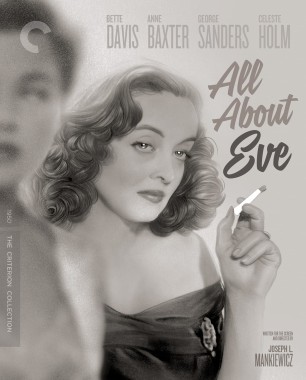
All About Eve
This is one of the great screen comedies. I love actresses; my career is devoted to them. There are certain performances that feel like they exist beyond the screen and beyond the actress playing the role. In All About Eve, it feels as though Margo Channing lives, and Bette Davis just happens to be playing her.
Bette is such an easily caricatured actress, and here she’s playing an actress-y woman, but somehow it’s not an actress-y performance. It’s so real and believable, and so interesting. When you see Bette in earlier Warner Bros. comedies, she seems kind of heavy for the genre. But in All About Eve, she is screamingly funny because the character is so well-written and feels authentic.
Thelma Ritter’s performance as Birdie, Margo’s companion and dresser, is also so funny. There’s a point in the movie when Margot is first getting hip to the fact that the young woman she’s taken under her wing, Eve Harrington (played by Anne Baxter), wants to take over her life, and the only one whom Eve hasn’t fooled is Birdie. They’re in Margo’s dressing room, and Eve has just shown her claws before walking out of the room. We see Birdie give Margo a look of Hmm, what did I tell you? It’s a perfect moment, expressed without any dialogue. For a funny movie that’s famous for its one-liners, the most memorable moments for me are actually silent.
-
7
Irving Rapper
Now, Voyager
This is really the classic women’s picture, but it goes beyond its very soap-opera plot and elevates the whole genre. It’s a movie that in other hands could be rather silly, but Bette Davis illuminates the story with such truth and honesty. The movie starts off like The Heiress, actually. Bette plays an unloved daughter in an aristocratic household. She’s made up to look very dowdy. Her character has a nervous breakdown and is sent to a sanatorium, where she loses weight and emerges as stylish and beautiful as the Warner Bros. designers could make her.
My favorite section of the movie is when she goes on an ocean voyage. She looks beautiful, but she’s still the same damaged person on the inside. She’s awful to anyone who talks to her during the first part of the cruise, very clipped and so defensive. I think it shows a real respect for the audience that the other characters don’t know what she’s gone through and just assume she’s a beautiful woman who is very curt and cold. But we know. She may be out of the sanatorium, but she’s still unhappy. Bette is in a number of films that show us the unpleasantness of misery—when we’re not happy we are not good company. I can’t think of another actress from the golden age of Hollywood who showed us that kind of character.
When she’s kissed for the first time on the cruise—I get choked up just thinking about it. She cries and says, “These are only tears of gratitude—an old maid’s gratitude for the crumbs offered.” It’s heartbreaking. She goes on quite a journey in order to get the maturity and acceptance of the final line of the movie: “Don’t let’s ask for the moon. We have the stars.”
-
8
Franco Zeffirelli
Romeo and Juliet
Franco Zeffirelli’s Romeo and Juliet is such a time capsule of 1968. But what I like about it is that Zeffirelli stayed true to the Shakespearean period and didn’t purposely make the story appeal to young people by doing anything flashy—and yet, it did appeal to a young audience. It has a sort of sixties youth feeling about it; all the boys have long hair and look like Beatles. There isn’t rock music or fancy editing, but at the time we could see and relate to this story of a young generation misunderstood by their elders.
The way minor characters are portrayed on-screen is really interesting. Lady Capulet, for example, is a small part, but the way her scenes are photographed is so important. The camera allows you to see the looks between her and Tybalt, and you instantly know they’re having an affair. So then you understand why she’s there when he’s killed, in the street with her hair down, distraught and demanding that Romeo die. You’d never get the full feeling of that in a stage production.
-
9
John Schlesinger
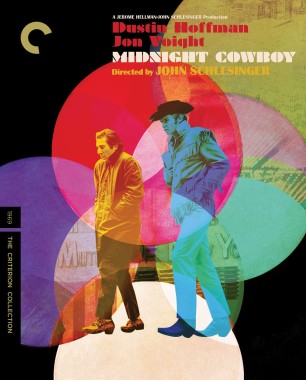
Midnight Cowboy
When Midnight Cowboy came out, it was rated X. I really wanted to see it but was sixteen and couldn’t get into the theater without an adult. I was raised by my aunt in Manhattan, so I asked her if she would take me. She didn’t know what it was, so I read her the capsule review from a magazine but eliminated the words “sordid,” “brutal,” and “lurid,” and stressed the words “wistful,” “emotionally moving,” and “tender.” So she took me, and afterward she was not happy. But I loved it. It was a little embarrassing for me as a budding gay kid to be watching this movie with my aunt, especially when it came to the scene where Jon Voight is given a blowjob by a teenage boy in a movie-theater bathroom.
The performances are incredible. Dustin Hoffman was coming straight off The Graduate, and his role here was much more in keeping with the kind of character-actor theater work he’d done before, specializing in these grotesque roles. But for me, it’s really Voight’s film; it revolves around the complexity and sweetness of his character. We see him do brutal things, but we’re torn because we love him so much and his desperation is so evident. There are also performances by some great character actresses like Sylvia Miles, Brenda Vaccaro, and Ruth White.
Midnight Cowboy and Rosemary’s Baby came out around the same time, and each was directed by a foreign director showing you his impression of New York City. Both movies feel so authentic to the time but don’t feel dated. It’s funny how something can be a time capsule and yet still feel completely fresh in its emotions and writing.
-
10
Robert Epstein
The Times of Harvey Milk
This is another film I get choked up just thinking about. I’m not an aficionado of documentaries, but this almost transcends its category. Harvey Milk’s story is told through a series of talking heads who are all well-chosen. They’re people who were so connected to his life, but they’re all very different. The way they narrate the story makes it feel like we’re seeing the characters grow as we would in a narrative film. In a very visceral and emotional way, we also see Harvey Milk’s career in the context of San Francisco and the gay rights movement.
The first time I performed in San Francisco was just a few years after Harvey was assassinated. I was performing at this gay arts center, and so many of the people who were in this movie and had been part of Harvey’s circle came to my show. I was very fortunate to get to know them. When I finally saw this movie, I was thrilled and so moved to see them in it.