Streams of Narrative
Share
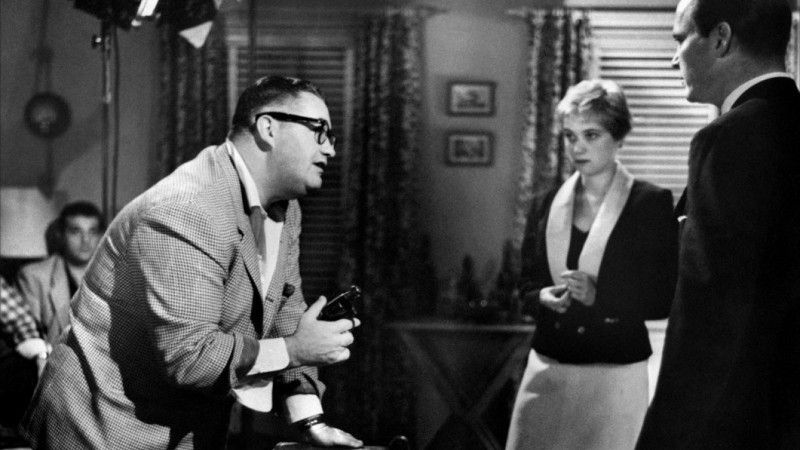
One of the finest appreciations of television director James Burrows is a piece on his recurring role—as a television director—on the HBO comedy series The Comeback. When he wrote it in April, Slate’s Sam Adams couldn’t have known that we would lose Burrows just two months later. He was eighty-five.
Before delving into the poignancy of Burrows’s performance in the sitcom starring and cocreated by Lisa Kudrow, Adams lays the groundwork: “A sitcom veteran whose credits stretch all the way back to The Mary Tyler Moore Show, he was, with one exception, nominated for an Emmy every year between 1980 and 2005—a period during which he directed 237 episodes of Cheers and shot the pilots for Friends, Frasier, and Will & Grace. His 2022 memoir, Directed by James Burrows, overflows with casually dispensed bits of wisdom—it’s the multicamera equivalent of Sidney Lumet’s Making Movies—and reveals him to be not just one of the most successful but one of the most thoughtful craftsmen the television medium has ever known.”
As Il Cinema Ritrovato heads into the final weekend of its fortieth edition, Karlovy Vary (July 3 through 11) is preparing to celebrate its sixtieth edition and eighty-year run. This past week, KVIFF has announced awards and special screenings honoring Dustin Hoffman (The Graduate), Juliette Binoche (Certified Copy, Three Colors: Blue, In-I in Motion), Jeffrey Wright (Basquiat), and cinematographer Robert Richardson (Jana Hojdová’s Robert Richardson: The White Devil). Other special guests include Harvey Keitel (Mean Streets) and Kevin Bacon and Kyra Sedgwick, who will present Family Movie, a horror-comedy they’ve codirected that stars their kids, Travis and Sosie Bacon.
Another guest KVIFF was hoping to invite is Jafar Panahi, who has coproduced and edited Nader Saeivar’s main-competition entry, Hijamat. But when an Iranian court upheld a verdict finding Panahi guilty of “propaganda against the regime” earlier this month, those plans fell through. Facing a sentence of one year in prison and a two-year travel ban, Panahi can appeal but not yet leave the country. “Obviously, we’re very sad,” KVIFF artistic director Karel Och tells the Hollywood Reporter’s Georg Szalai. “We just can’t stop admiring this man, not just for his artistry, but also for his human approach and his courage, which is just jaw-dropping.”
The New York Asian Film Festival (July 10 through 26) will host the North American premiere of Na Hong-jin’s Hope and present its Daniel A. Craft Award for Excellence in Action Cinema to Na on July 20. In Locarno (August 5 through 15), Virginie Efira will receive the Leopard Club Award, and the extraordinary make-up artist Rick Baker will be honored with the Vision Award. And Venice (September 2 through 12) has named the jurors who will join president Maggie Gyllenhaal.
This week’s highlights:
- Sabzian is running transcripts of Pedro Costa’s introductions to three films he’s selected recently for programs in Stockholm and Copenhagen. Kenji Mizoguchi’s Flame of My Love (1949) reminds him that Jean-Marie Straub “always hinted that he considered Mizoguchi the greatest of all filmmakers. Even greater than Renoir or Ford.” While discussing Jacques Tourneur’s Stars in My Crown (1950), Costa tells the story of how, in the mid-1990s, he decided that he needed to stay and work in Fontainhas for a while. And in The Fearmakers (1958), Tourneur was working with “a broken man, with what was left of Dana Andrews . . . one feels that Jacques and Dana were really scared of what was coming. Maybe what they were afraid of is finally here; it’s among us now.”
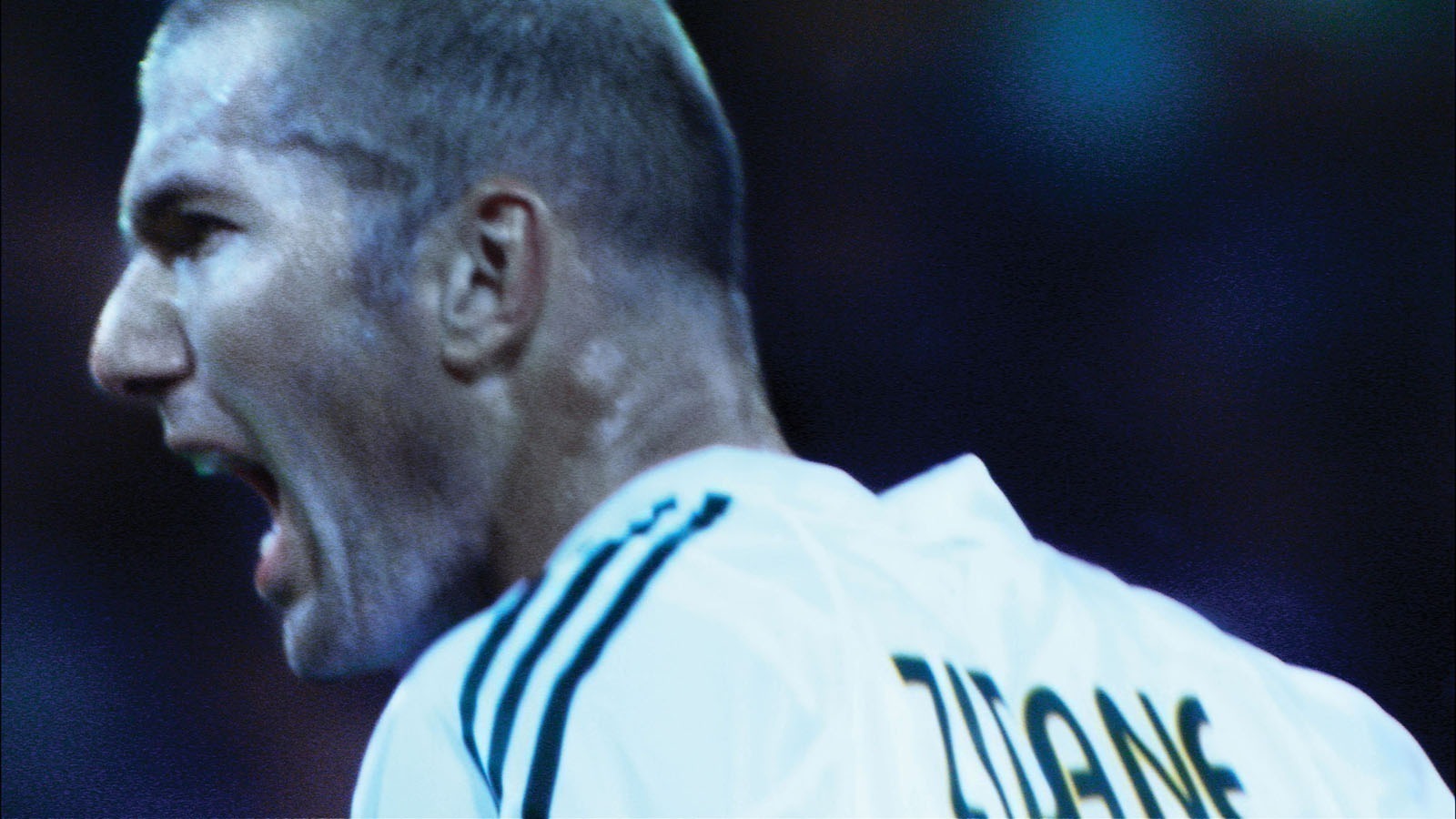
- Throughout this year’s World Cup, the Guggenheim is presenting Douglas Gordon and Philippe Parreno’s Zidane, a 21st Century Portrait (2006), a two-channel video projection tracking Zinédine Zidane, the outstanding midfielder, as Real Madrid faced off against Villarreal in a 2005 La Liga match. Seventeen cameras remained trained on Zidane exclusively throughout the game while “the droning score by Scottish prog band Mogwai swells or, eerily, drops out entirely,” as Mark Asch writes for Screen Slate. “Zidane has setbacks (Juan Román Riquelme gives Villarreal a first-half lead after the referee awards a dubious penalty), comebacks (Zidane is involved in the buildup for Real’s two second-half goals), and a shocking final twist; it’s also full of stars, as befitting the peak of Real’s galactico era.” For Samuel Brodsky at Film Comment, the film’s “transcendental power . . . lies in the moments when we see Zidane simply observing, waiting.” For further World Cup–related viewing, see the lists put together by Carlos Aguilar for the New York Times and Alexandre Koberidze for Metrograph’s Journal.
- Playwright and poet Dan O’Brien has a beautiful piece in the new Film Quarterly on Carson Lund’s Eephus (2024), “a perfect little film: ‘perfect’ because I enjoyed watching it without reservation, and ‘perfect’ because it seems to be wholly the film it wants to be; ‘little’ because nothing much happens, and what does happen is happening at a community baseball field in small-town Massachusetts. (Gilles Deleuze praises ‘minor literature,’ and Eephus surely qualifies as ‘minor cinema,’ in the most positive sense.) Two teams composed of mostly middle-aged white men, the Riverdogs and Adler’s Paint, convene to play one last game before the field will be demolished to make way for the construction of a new school. That’s about it, in terms of plot . . . How can a film that disregards so many so-called principles of dramatic writing still manage to be so compelling? Since I happen to write plays, and this film reminds me of one, I thought I might try to answer this question for myself.”
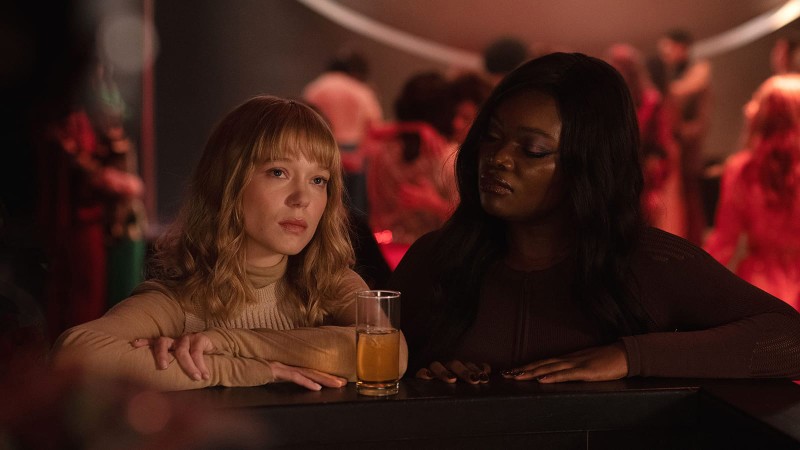
- “If there’s anything that could be said to characterize ‘A film by Louise Weard,’ it’s everything,” writes Frank Falisi at the top of his interview with the director of the ongoing series Castration Movie for In Review Online. “We’re now over 120 years into cinema’s life as an art form,” says Weard, “which kind of coincides with the modernist novel, right? And so yes, I do view these movies as trying to do something literary with the film format. I’m definitely approaching what a modernist cinema can look like. Every shooting choice, all of the editing decisions, the structural choices of the storytelling, the dialogue . . . It’s all meant to push cinema in this way. I think you could find some comparisons to stream-of-consciousness writing, like Mrs. Dalloway, in how we handle some of our dialogue and party scenes in Castration Movie.”
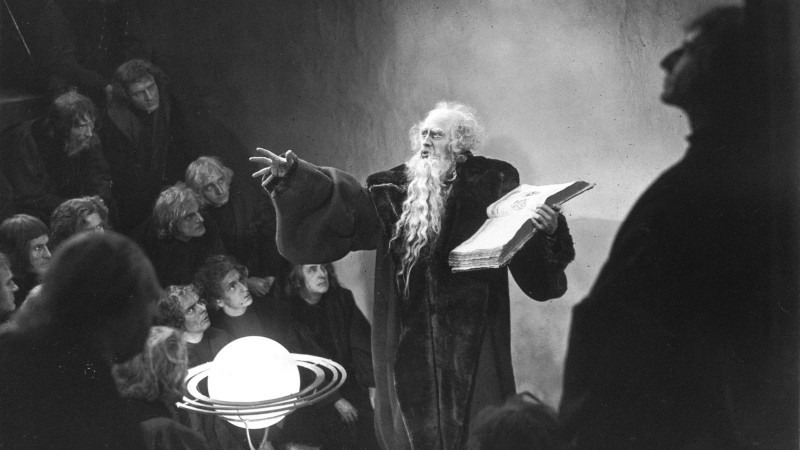
- For the New York Times, Milana Mazaeva and Neil MacFarquhar profile Alexander Sokurov (Russian Ark), who won the Golden Lion in Venice for Faust (2011). Sokurov has been openly critical of Vladimir Putin and Russia’s invasion of Ukraine, but for some exiled Russian artists, not critical enough. They managed to pressure the Venice Biennale to drop Sokurov from its list of guest speakers. “In many ways his fate is the fate of a talented loner,” Anton Dolin, a prominent Russian film critic living in exile, tells Mazaeva and MacFarquhar. “That explains both the cult around him and the hostility toward him. On the one hand, his films are banned in Russia. On the other hand, he remains highly respected and continues to participate in state councils and institutions.” And Sokurov, who turned seventy-five earlier this month, has no plans to leave the country: “I am sitting in this boat, and if it starts to sink, I will go down with it.”
Don’t miss out on your Daily briefing! Subscribe to the RSS feed.