A Season’s Updates
Share
The juries for Sundance are set, the Berlinale has added dozens of titles, and the full lineups are out for Berlin Critics’ Week,Slamdance, and SXSW. Filmmakers Janicza Bravo, Azazel Jacobs, Jennie Livingston, and A. V. Rockwell are among the seventeen jury members who will select the winners of five competitions during the last Sundance in Park City, Utah, before the festival moves to Boulder, Colorado. The 2026 edition will open next Thursday, the awards will be presented on January 30, and the last day of movie-watching for both in-person and virtual attendees will be February 1.
Slamdance, which had been running concurrently with Sundance in Park City for nearly thirty years, is now preparing to stage its second edition in Los Angeles from February 19 through 25 and on the Slamdance Channel from February 24 through March 6. Of the 141 films in this year’s program, eighteen will premiere in the narrative and documentary competitions, and each of these are directorial debuts made for under one million dollars.
As previously announced, Boots Riley’s sci-fi comedy I Love Boosters, starring Keke Palmer and Demi Moore, will open SXSW 2026 on March 12. The other features in the Headliners program are BenDavid Grabinski’s action comedy Mike & Nick & Nick & Alice, starring Vince Vaughn, James Marsden, and Eiza González as two gangsters and the woman they love; Jorma Taccone’s comedic thriller Over Your Dead Body, with Samara Weaving and Jason Segel as a couple supposedly trying to reconnect while each is harboring secret plans to kill the other; Matt Bettinelli-Olpin and Tyler Gillett’s horror sequel Ready or Not 2: Here I Come, also featuring Samara Weaving; and more comedy and more horror in Kirill Sokolov’s They Will Kill You, starring Zazie Beetz.
In 2007, John Carney broke through at Sundance with Once, and in the New York Times, A. O. Scott wrote that the director had “pulled off the enviable trick of dressing unabashed romantic sentiment in a style that felt rough and real, so that every cliché he touched felt shiny and new.” This year, Carney will bring his latest film, Power Ballad, to Austin. Paul Rudd stars as Rick, a wedding singer past his prime, and Nick Jonas plays a fading boy-band star. The real trouble starts when Danny turns one of Rick’s tunes into a hit.
Joe Swanberg returns to SXSW with the first full-length feature he’s directed since Win It All (2017). The Sun Never Sets stars Dakota Fanning, Jake Johnson, and Cory Michael Smith, presumably as the three corners in “a confusing and volatile triangle.” The TV Premiere program will open with David E. Kelley’s Margo’s Got Money Troubles, starring Elle Fanning as the daughter of a former Hooter’s waitress (Michelle Pfeiffer) and a former wrestler (Nick Offerman). The fortieth edition of SXSW will run through March 18.
Berlin
This year’s Berlin Critics’ Week will open on February 8 with an informal screening at a bar of Die Bettwurst (1971), the first full-length feature by the late Rosa von Praunheim. The Week then formally opens the following evening with a public discussion of such questions as “What do we actually mean by a culture of debate? Why has it become endangered, and why is it worth defending?” Screenings and discussions then carry on through February 17.
Among the newly added Berlinale Special screenings is the world premiere of Ulrike Ottinger’s The Blood Countess, starring Isabelle Huppert and featured up high in last week’s roundup on this year’s most-anticipated films. Other new additions include Ruth Beckermann’s Wax & Gold, a reflection on the histories of Ethiopia and Europe; Edwin’s Sleep No More, a horror movie about the exploitation of labor; Mark Cousins’s The Story of Documentary Film; and new adaptations of Isabel Allende’s The House of the Spirits and William Golding’s Lord of the Flies.
Among the thirty-two films lined up for the Forum is one that might be paired with Ruth Beckermann’s. Black Lions–Roman Wolves is Haile Gerima’s “sweeping survey of Italy's brutal colonial legacy in Ethiopia.” Volker Koepp, whose documentary Leaving and Staying was a Forum highlight three years ago, returns with Cronos: Flow of Time, a journey through Lithuania, Moldova, and Ukraine. There will also be new films from James Benning (Eight Bridges), Ted Fendt (Foreign Travel), Nicolás Pereda (Everything Else Is Noise), and Rithy Panh (We Are the Fruits of the Forest).
Forum Expanded, a program of installations, films, videos, and performances from thirty countries, will honor the late Ken and Flo Jacobs with a screening of their 2005 film Let There Be Whistleblowers. Two more noteworthy revivals: Yoko Ono’s Film No. 4 (Bottoms) (1966) and Claudia von Alemann and Reinold E. Thiel’s Exprmntl 4 Knokke (1968), a documentation of spontaneous happenings at a Belgian seaside resort just months before May ’68. New works include Burak Çevik’s The Weary Hours of Two Lab Assistants and Anocha Suwichakornpong’s Narrative. Suwichakornpong (Mundane History, By the Time It Gets Dark) stages a fictional trial in the wake of the Thai military crackdown in 2010.
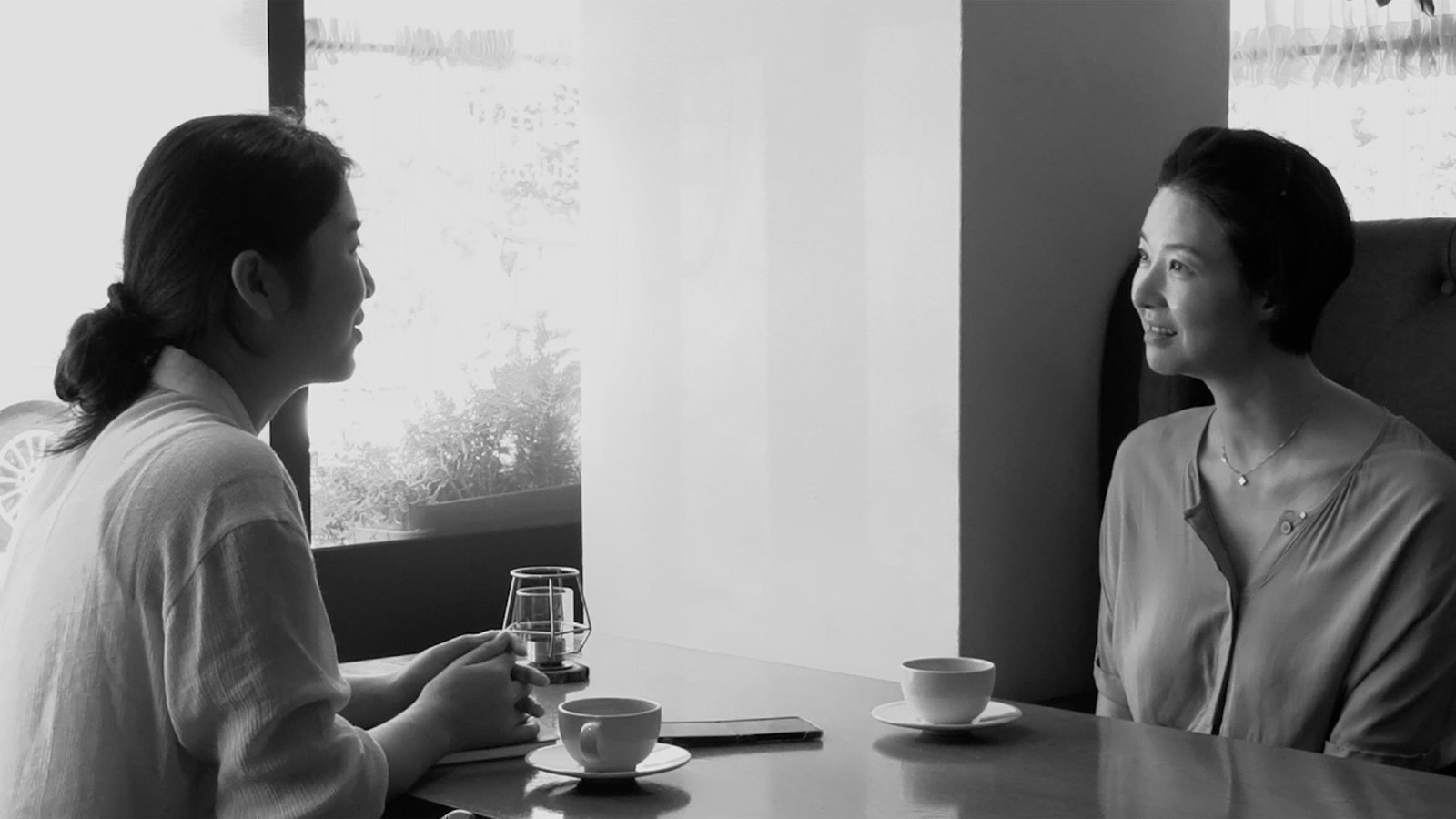
The Panorama program of thirty-seven films is now complete, and one of the highlights will be The Day She Returns, the thirty-fourth feature by Hong Sangsoo. A filmmaker’s acting teacher asks her to reenact three recent interviews she’s given—but she can’t remember them. The Generation section, too, is now fully lined up. In Fernanda Tovar’s debut feature, Sad Girlz, the lives of two sixteen-year-old friends are forever altered when one of them becomes a victim of sexual abuse. “I spent a long time wondering how to speak about a wound like this without reopening it,” says Tovar.
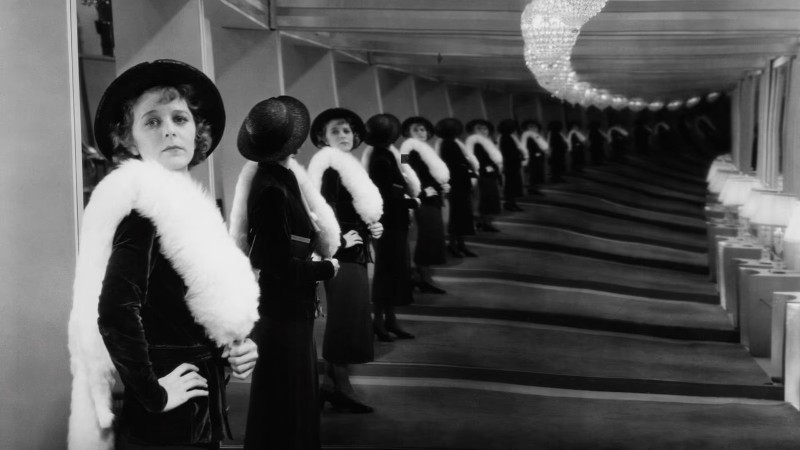
The Berlinale Classics program of ten features offers the world premiere of a new restoration of The Pornographers, the 1966 adaptation of Akiyuki Nozaka’s best-selling novel directed by Shohei Imamura, who had “a passion for everything that’s kinky, lowlife, or irrational in Japanese culture,” as J. Hoberman put it in 2003. For the first time, Berlinale Classics will screen a film from Morocco: Ahmed Bouanani’s Mirage (1979). And Hryhorii Hrycher’s Crystal Palace (1934) is the first Ukrainian film to be included in the program.
Another highlight will be the presentation of a new restoration of Věra Chytilová’s Prefab Story (1979). Writing for Senses of Cinema in 2018, Cerise Howard called Prefab Story a “scathing, semi-vérité skewering of Normalization (1969–1987),” which was essentially a reestablishment in Czechoslovakia of the pre-Prague Spring status quo. This year’s Berlinale will run from February 12 through 22.
Don’t miss out on your Daily briefing! Subscribe to the RSS feed.