Modern Italians
Share
Over the past few months, Patrick Wang, “an unusually gifted and criminally undersung talent in independent filmmaking,” as Justin Chang put it a few years ago, has been posting a series of hour-long discussions of Giuseppe Tomasi di Lampedusa’s novel The Leopard—published in 1958, a year after Tomasi’s death—and two adaptations. One is a Netflix miniseries we don’t need to dwell on here other than to mention that it has a fairly decent Metacritic score of seventy-two, and the other, of course, is Luchino Visconti’s, the winner of the Palme d’Or in Cannes in 1963.
Burt Lancaster stars as a Sicilian prince who, in the 1860s, comes to realize that the unification of Italy, the Risorgimento, is the beginning of the end of the aristocracy and the old world order. As Martin Scorsese pointed out in 2014, The Leopard “culminates in an hour-long sequence at a ball in which you can feel, through the eyes of the prince, an entire way of life (one that Visconti himself knew quite well) in the process of fading away.” Born into Milanese nobility in 1906, Visconti served in the anti-fascist resistance during the Second World War, and many of his films are set in those crucial moments when Italy lurched a few steps at a time toward modernity.
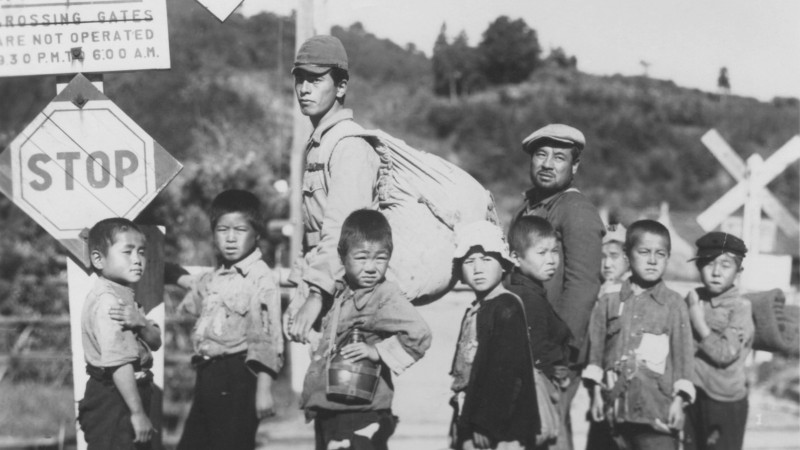
The Leopard will screen in Vienna on Friday and again on February 5 and 25 as part of the near-complete Visconti retrospective currently running at the Austrian Film Museum. Then, on Saturday, the Harvard Film Archive will begin showcasing films from its collection directed by Michelangelo Antonioni, Bernardo Bertolucci, and Ermanno Olmi. On Thursday and again on January 24, MoMA will present the Cineteca di Bologna’s restoration of Luigi Comencini’s The Window to Luna Park (1957), which premiered at last summer’s Il Cinema Ritrovato, where programmers Francesca Comencini and Emiliano Morreale called it “one of the hidden masterpieces of 1950s Italian cinema.”
The story of a common laborer working abroad who learns that his wife has died and returns home to reunite with his son, The Window to Luna Park, screening as part of MoMA’s ongoing festival of film preservation, To Save and Project, stars Gastone Renzelli—who was himself an anonymous laborer until Visconti cast him in Bellissima (1951) as the husband of Maddalena (Anna Magnani), a working-class mother desperate to get her young daughter cast in a movie. Bellissima, a bridge between Visconti’s neorealist classics Ossessione (1943) and La terra trema (1948) and the later, lusher historical dramas such as Senso (1954) and The Leopard, is “in essence a satire on the Italian cinema industry,” wrote Ian Johnston at Not Coming to a Theater Near You in 2008.
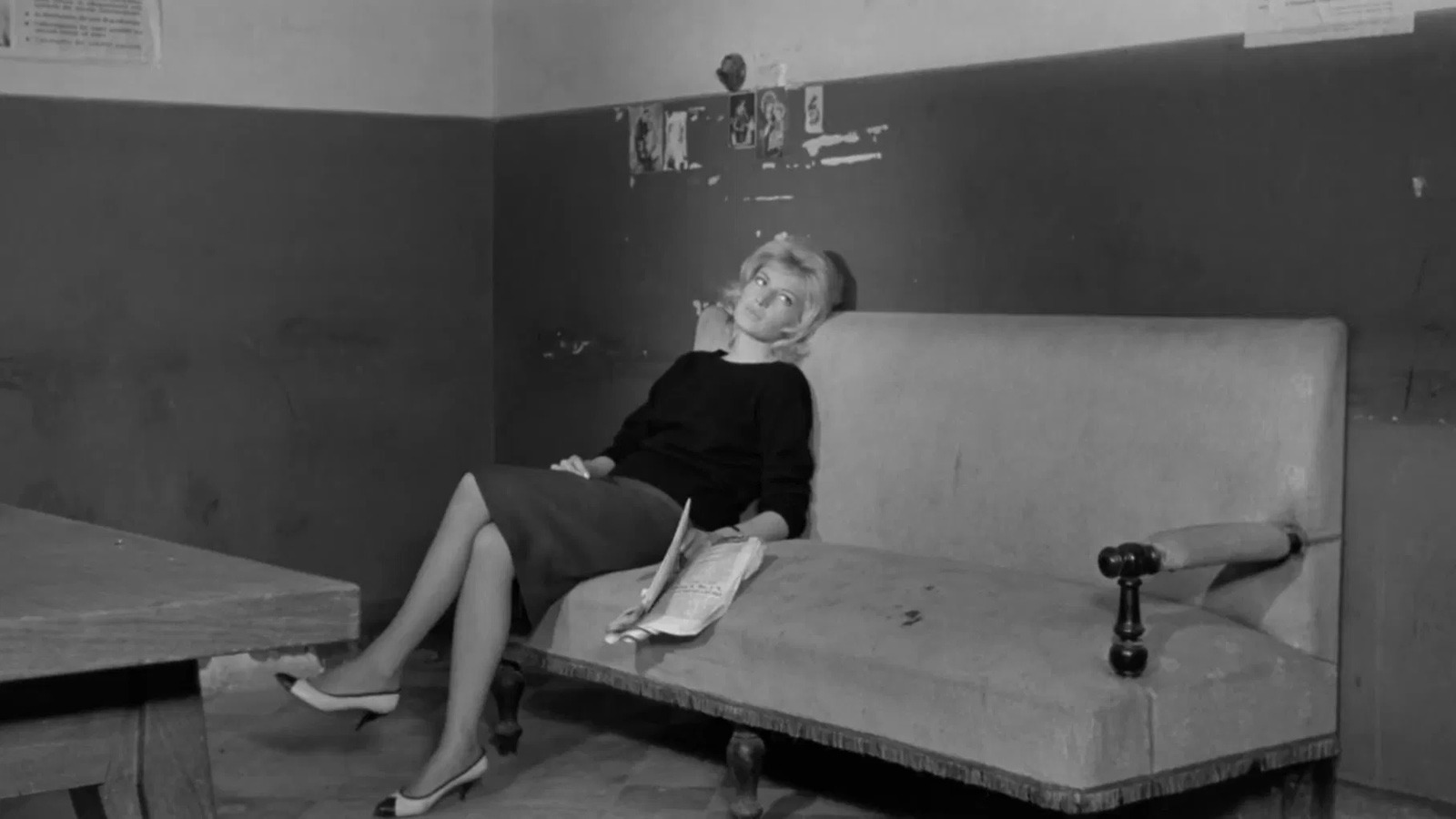
The story of that industry took some odd turns during and after the war. Antonioni started out as a writer, working with Roberto Rossellini on A Pilot Returns (1942), a war movie based on a story by Vittorio Mussolini, the son of Benito who went on to become a producer at Cinecittà and the editor of the film journal Cinema, which published several left-leaning critics, including Antonioni. With films such as Story of a Love Affair (1950) and Le amiche (1955), Antonioni dissected the Italian bourgeoisie, and beginning with L’avventura (1960), he initiated what Stephen Holden, writing in the New York Times in 2006, called a “trilogy on modernity and its discontents.”
“What did it mean to reject a storytelling architecture that had served dramatists well since Aeschylus?” asked Robert Koehler in a 2012 piece for Sight and Sound on L’avventura, “the film that—more than any other at that moment—redefined the landscape of the art form, and mapped a new path that still influences today’s most venturesome and radical young filmmakers. For some that film would instead be [Jean-Luc Godard’s] Breathless [1960],” but for Koehler, L’avventura, La notte (1961), and L’eclisse (1962) “have exerted a greater long-term impact.”
“Where the directors of the French New Wave each created his or her own unique poetic universe, Italian cinema of the same period feels like a series of moons circling around one planet,” wrote Kent Jones in 2003. “Again and again, one sees the construction sites, the quick-stop cafes, and the cramped apartments owned by nosy landladies that were constants of postwar Italian society . . . Of all the great filmmakers who visited this terrain, none responded more soulfully than Ermanno Olmi, whose second feature, the 1961 Il posto, ushered something new into world cinema: a sense of intimacy between director and characters that surpassed anything in the neorealist canon.”
Harvard will screen Il posto as well as Olmi’s The Fiancés (1963) and A Man Named John (1965), but it’s Bertolucci who will usher viewers into post-1968 Italy. In Partner (1968), loosely based on Fyodor Dostoevsky’s The Double, Pierre Clementi plays both a drama teacher and his more charismatic doppelgänger. Together, they “enlist a group of students for a series of happenings that recall the motifs of Jean-Luc Godard’s 1960s period,” writes Kelley Dong in the program notes: “logo-flashing, giddy graffitiing, direct addresses, obvious quotations. But the timing of this homage—slightly after May 1968—suggests more ambivalence than reverence, foreshadowing the patricidal gesture against Godard to come in The Conformist [1970], with which Bertolucci also took a hard line against the ‘destruction of structure’ so precisely expressed in Partner.”
Don’t miss out on your Daily briefing! Subscribe to the RSS feed.