Little Constellations
Share
The week has brought lineup announcements from Venice and Toronto and word from Film at Lincoln Center that this year’s New York Film Festival will close with the world premiere of Ava DuVernay’s 14th. Ten years ago, DuVernay’s 13th—a fiery documentary on the exploitation of loopholes in the Thirteenth Amendment to the U.S. Constitution that led to the mass incarceration of Black Americans—opened the NYFF.
Ratified in 1865, the Thirteenth Amendment was followed three years later by the Fourteenth. At its core, the amendment guarantees birthright citizenship, due process, and equal treatment under the law. DuVernay says she aims to “interrogate a promise powerful enough to change a nation—and controversial enough to divide it for more than 150 years.” As announced last week, the sixty-fourth NYFF (September 25 through October 12) will open with Paper Tiger, the latest feature from James Gray—who will receive the Pardo alla Carriera in Locarno on August 9.
“If there was one person I always looked to as a model of discernment and integrity, it was Simon Field,” writes NYFF artistic director Dennis Lim. Field, who passed away last week at the age of eighty, was a founding coeditor of the British journal Afterimage (1970–1987), director of the ICA Cinema in London from 1988 to 1996, director of the International Film Festival Rotterdam from 1996 to 2004, and thereafter an active producer and distributor. He was working with Apichatpong Weerasethakul on the Thai director’s forthcoming Jenjira’s Magnificent Dream when he died.
“Those are the bare facts of Simon’s illustrious career,” writes programmer and critic Geoff Andrew, “but they convey little of the man himself, other than his abiding interest in, devotion to, and seemingly unquenchable thirst for nonmainstream cinema. His comprehensive knowledge, his taste, and his ability to spot new talent were what earned him widespread respect around the world.”
This week’s highlights:
- In the Hollywood Reporter, Thomas Doherty, the author of a good number of books on Hollywood in the mid-twentieth century, tells the story of the triumphant arrival of Jean Renoir’s Grand Illusion (1937) in the U.S. at a time when reviewers and distributors “were careful to explain to the first-time foreign filmgoers that ‘English titles translate the dialogue.’” Doherty maps the film’s road to a nomination for an Oscar for Best Picture in 1939 and then relates how, in 1940, Franz Hensel, head archivist for the Reichsfilmkammer, ignored Goebbels’s order to seize and destroy the original negative and helped Henri Langlois save it for posterity.
- A new restoration of Luchino Visconti’s White Nights (1957), the first of many adaptations of Dostoyevsky’s 1848 short story, opens today at New York’s Film Forum. “Dostoevsky told a claustrophobic story of lonely souls lost in a metropolis,” writes Eli Friedberg for Slant, “but Visconti’s reimagining frames the Livorno-like postwar Italian city at his film’s center as a shimmering nocturnal dream shared by all. Filmed on a massive, gorgeous set, actors and extras continually weave their way through a world molded by chiaroscuro lighting and dotted by blazing street lamps, through crisscrossing canals, stout old apartments, and bombed-out building husks.” Marcello Mastroianni stars as Mario, a new man in town who catches sight of—and immediately falls for—Maria Schell’s Natalia, who is waiting to reunite with her lover. In the New York Times, J. Hoberman notes that Schell “was then one of Europe’s most popular actresses, but Visconti’s real star and the object of his adoration is his enormous rain-slicked set. White Nights anticipates the artificial extravaganza of Francis Ford Coppola’s One from the Heart, even as Nino Rota’s emphatic score confirms Visconti’s mock operatic aspirations.”
- Melissa Anderson, the film editor at the late great 4Columns and the author of The Hunger: Film Writing, 2012–2024, has launched a new column for Film Comment that “delves into the career of a cinema luminary, past or present.” Though she’s most famous for a performance she delivered half a century ago, Ronee Blakley is still very present at eighty, having released an album, Atom Bomb Baby, in 2020 and appeared in Rolling Thunder Revue: A Bob Dylan Story by Martin Scorsese in 2019. Blakley’s turn as the fragile country music star Barbara Jean in Robert Altman’s Nashville (1976) “was so exceptional that Hollywood conflated the real Ronee with the fictional creation she had brought so vividly to life,” notes Anderson, who proposes that her work with Dylan in Renaldo and Clara (1978) may have “led Blakley to realize that films with porous boundaries between fact and fiction were the ideal vehicles for her acting talents.”
- A couple of years ago, Carey Baraka attended a literary event in India. “As often happens at such gatherings,” he writes in an essay for Equator, “the Africans found each other. We were four, and gathered one evening to drink: two South African poets, a Congolese artist, and me, a Kenyan.” Conversation turned to The Gods Must Be Crazy (1980), an unlikely global hit comedy about a hunter-gatherer in the Kalahari Desert ridding his community of a troublemaking Coca-Cola bottle. The film spawned a sequel and three knockoffs. “Everyone had watched them, it turned out, though it had been ages,” writes Baraka, “and we spent a while recounting our favorite scenes, round-robin. When we exhausted this, we were a little flushed with embarrassment. There was something deeply uncomfortable about thinking back on those films now, cultural products of apartheid-era South Africa that peddled undeniably racist myths about indigenous Africans.” Baraka soon found himself heading to the films’ locations to investigate the tall tales behind their making.
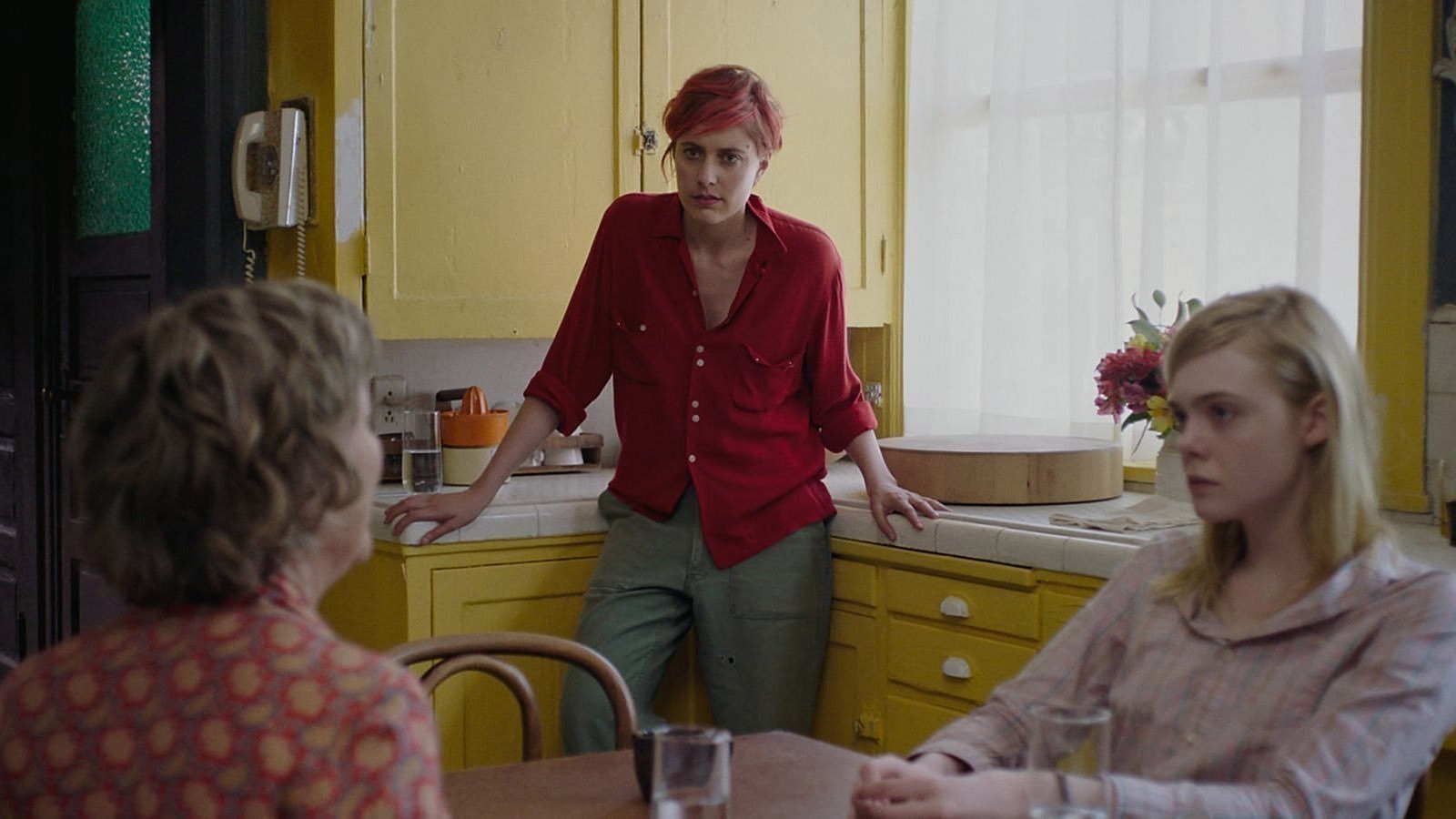
- Mike Mills has taken time out from preparing his next project to talk to Nick Newman at the Film Stage and the Playlist’s Rodrigo Perez about the new box set I’ll Remind You of Everything: The Films of Mike Mills. For admirers of his work, producer Kim Hendrickson’s conversation with Mills about the documentaries and music videos included here is essential reading. Talking to Mitchell Beaupre at Letterboxd, Mills says that Beginners (2010), 20th Century Women (2016), and C’mon C’mon (2021) “became an unintentional triptych of not just my family interrelations, but this idea of parents and children and families that are not just biological, but a little constellation of people who happen to fall together and help and cocreate each other. That theme was so much [stronger] in those three movies. I was really writing from my life, I wasn’t adapting something else. In that way, it felt like the same plant or soil or something.”
Don’t miss out on your Daily briefing! Subscribe to the RSS feed.