Kelly Reichardt’s The Mastermind
Share
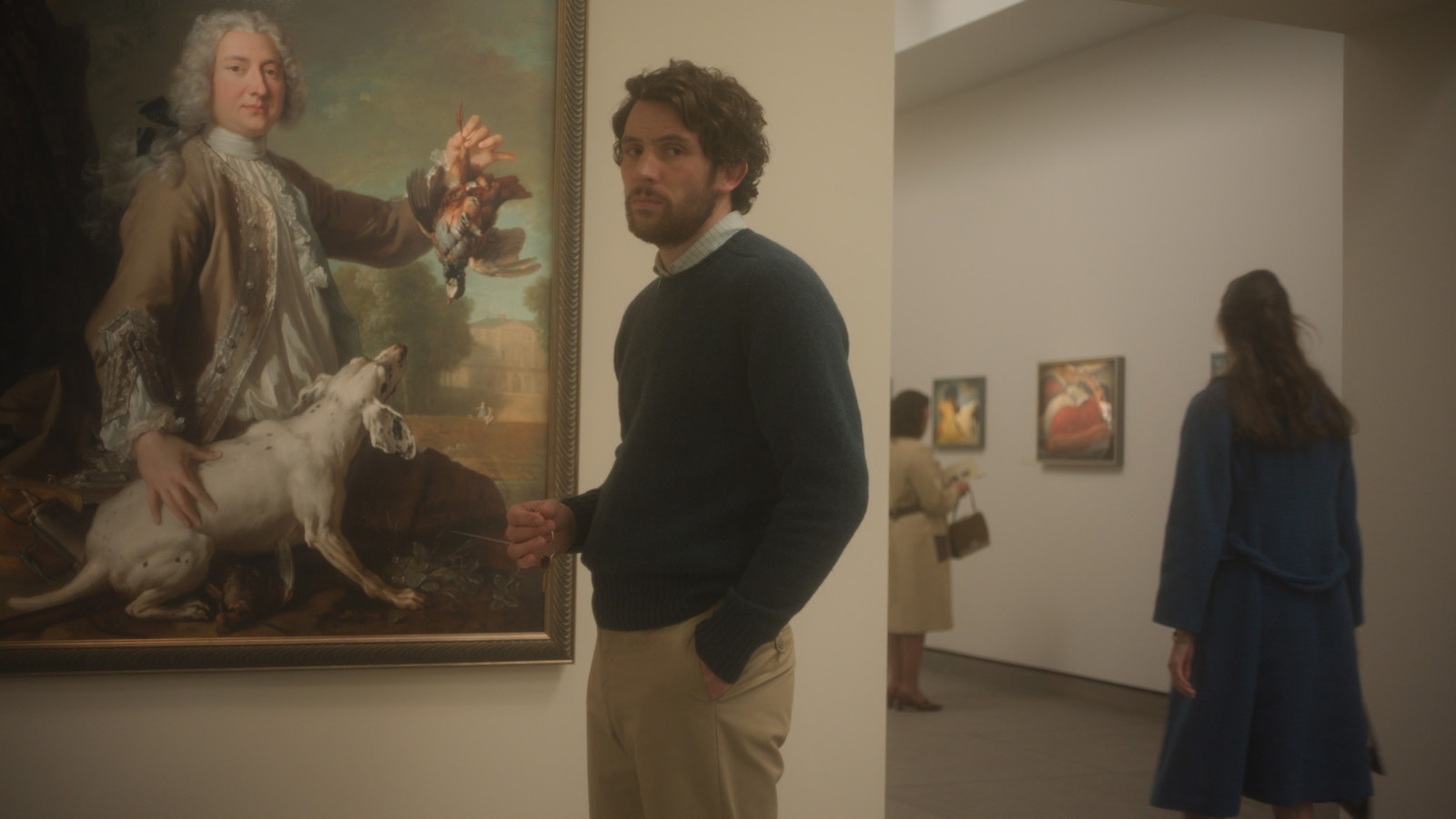
Talking to the Hollywood Reporter’s Scott Roxborough back in May, Kelly Reichardt recalled the moment that she realized that The Mastermind—the first screenplay she’s written neither with a collaborator nor drawing on someone else’s story—“no longer has a structure to follow after the first quarter. From a heist movie, it kind of organically turns into another genre. For a while, I thought, ‘What have I done to myself?’ But I liked how it turned.”
Critics do too. Seventeen of the best of them at Cannes, where The Mastermind premiered, rated every film they saw throughout the festival. All five of the top-ranked films on the Moirée grid will be screening at this year’s New York Film Festival, which opens on Friday. And the clear favorite is The Mastermind.
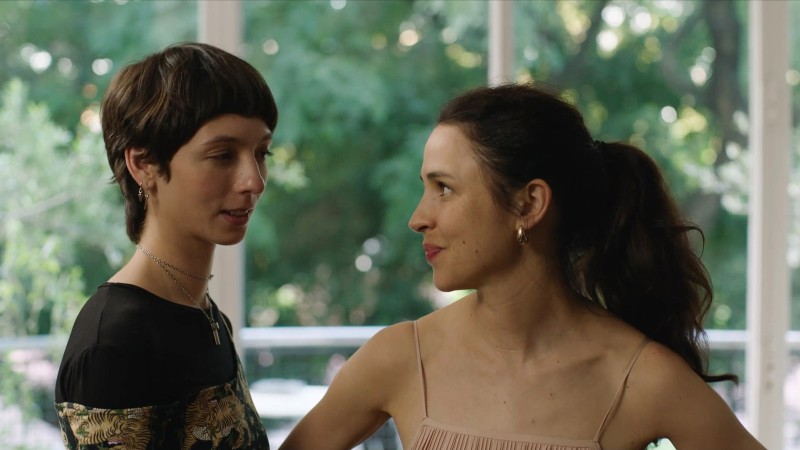
Josh O’Connor stars as James Blaine Mooney, a carpenter who has been casing out the local art museum in a modest Massachusetts town. It’s the early 1970s, and security measures are slack. While his wife (Alana Haim) and two sons wait and the security guard dozes, J. B. inspects four paintings by the early modernist abstract artist Arthur Dove. He owes money to his mom (Hope Davis) but borrows more to hire three guys (Eli Gelb, Cole Doman, and Javion Allen) to lift the paintings while he waits outside in the getaway car.
The bungling of the ill-thought-out plan is practically inevitable, and after a visit from the police, J. B. skips town to hide out with some old friends (John Magaro and Gaby Hoffmann). The Telegraph’s Robbie Collin finds that O’Connor gives J. B. “the quality, somehow, of a misbehaving labradoodle that knows how to slip its leash. He’s an incorrigible liar, a draft dodger, and a bad husband, who claims his criminal schemes are all for his family’s benefit. But we still have a lot of time for him.”
“In a role ostensibly similar to his La chimera character, right down to the stubble, the grimy suit, and the strange psychological attachment to the objets d’art he purloins,” writes Jessica Kiang in Variety, O’Connor “manages to create a wholly different character. Without the textures of soulful tragedy that etched his face in Alice Rohrwacher’s film, here his J. B. is a soft-spoken, put-upon nice guy. But as a hairline crack in his seemingly decent personality is worked open by overreach and unlucky circumstance, we gradually discover (because he may never) that he isn’t really that nice after all, and maybe never was. Just because you’re hapless doesn’t necessarily mean you’re harmless.”
“There are shades of Elliott Gould and Gene Hackman in O’Connor here,” finds Hannah Strong at Little White Lies, “while Alana Haim’s small but crucial supporting performance as his had-enough-of-this-shit wife is further proof of her captivating on-screen presence.”
The Mastermind “feels modest when you’re watching it and downright brilliant once it’s had some time to settle in your mind,” writes Vulture’s Alison Willmore. Reichardt’s films are “so present and unguarded from moment to moment, like they’re unfolding spontaneously, that the thoughtfulness of their details and structure is more easily appreciated in retrospect.”
Writing for Sight and Sound, Nicolas Rapold observes that Reichardt “retains her genius for slowly but surely shifting a film’s course until it’s become something else again, subtly leaving us space to reevaluate what we might have thought of J. B. and his maverick path. It’s not unlike her eco-terrorism drama Night Moves (2013) in this movement, but definitely more successful.”
The Mastermind “alternates between comedy of a kind and gripping suspense which emerges from nowhere,” writes Filmmaker’s Vadim Rizov, “which is one of Reichardt’s most reliable and mysteriously-emerging modes; think of the outstandingly tense, completely unexpected Mexican triangle standoff at the end of Meek’s Cutoff.”
“One of the most reliable pleasures of Reichardt’s films is the way she and her regular cinematographer Christopher Blauvelt reference the work of 1970s photographers like Stephen Shore and William Eggleston, offering up muted tableaux of the post-industrial U.S. to update the visual grammar of the American West and its myths of freedom,” writes Mark Asch for the Art Newspaper. “That’s especially true of The Mastermind.”
“Vietnam is everywhere in the film, moving from what appears to be period window dressing to a central role in the film’s structure,” writes Brad Hanford at Slant. “The closest thing Reichardt offers to a stylistic flourish is a 360-degree pan around a boarding house room that locates, among other things, Walter Cronkite reporting on the bombing of Cambodia before landing back on the oblivious J.B.” In a dispatch to Artforum from Cannes, Jordan Cronk noted that “despite its sly stylistic ornamentation and lightly humorous tone, the film is up to something trickier and more shrewd than initially appears, which in the end may be its most quintessentially Reichardtian quality.”
Don’t miss out on your Daily briefing! Subscribe to the RSS feed.