
Masaki Kobayashi Plays Hardball

Share
Baseball’s back in America—as of this writing, anyway—though for much of spring and early summer the Major League season hung in the balance as negotiations between the owners and the players’ union approached a peak of acrimony. Being a baseball fan in 2020 has meant reading more business reporting than box scores; the game itself was a structuring absence as thirty monopolists slow-walked negotiations with the aim of playing as few games—and paying as little of their players’ salaries—as possible. Now the games have begun: television-only spectacles with jerry-built new rules and out-of-sync players, with series after series suspended due to outbreaks, and the entire thing seems surreal and artificial. In this baseball season without the usual romance and dailiness, with closed-door dealings marked by suspicion and cynicism, the film that feels most like baseball in 2020 is Masaki Kobayashi’s I Will Buy You (1956), a baseball movie that’s almost all business and no play—an anti-sports movie, structurally as well as otherwise.
Masaki Kobayashi built his reputation on critiquing systemic corruption and the abuse of individual rights (as Michael Koresky explains in detail in his liner notes for an Eclipse set of the director’s films). He began as a Shochiku apprentice making conventional shomin-geki before The Thick-Walled Room (1953), a raw, despairing portrait of former enlisted men imprisoned for war crimes while their superior officers rebuild American-occupied Japan. The film was such an indictment of the national conscience that it was withheld from release for three years. It prefigured his emergence, at the end of the fifties and into the sixties, as a major figure with the muscular, didactic widescreen epics The Human Condition—a semiautobiographical three-part epic about the conscience of a leftist enlisted soldier in occupied Manchuria—and the revisionist samurai movies Harakiri and Samurai Rebellion, all three of which star Tatsuya Nakadai, the actor who most fiercely embodied Kobayashi’s conscience on-screen. In narratives of Kobayashi’s career, I Will Buy You often gets lost between the political breakthrough of The Thick-Walled Room and the stylistic breakthrough of Black River (1956), with its jazzy score, dynamic compositions, and star-making first collaboration with the twenty-four-year-old Nakadai—Stephen Prince, in his book about the director, A Dream of Rebellion, flatly states that the movielacks “the stature and distinction of its counterparts in the period.” But in its grimy, comprehensive deconstruction of the national ideals embedded within the institution of Japanese baseball, I Will Buy You is unmistakably a formative work by one of cinema’s great moralists.
Kishimoto (Keiji Sada) is a scout for the Toyo Flowers, who are interested in star college player Goro Kurita (Minoru Oki), a left-handed slugging outfielder whose name the uniformed students of the oendan chant in unison. “Passionate young men gather” at baseball games, as another chant goes—and so do jaded older men. Casting his eyes away from the field and into the stands, Kishimoto sees rival scouts from the Handen Lillies and Osaka Socks running the rule over Kurita with equal avidity.
The way to Kurita is through Kyuki (Yunosuke Ito), the benefactor who pays the prospect’s college tuition, molds his game (as Kurita idly swings his bat, Kyuki tells him he’s “opening too early,” though to my eyes a more pressing issue is Kurita’s stiff front leg, which impedes a fluid weight transfer), is entrusted with his professional affairs, and keeps his pockets filled with walking-around money. Identified by the scouts as a “leech,” Kyuki is a figure close to the Dominican busconeswho train, identify, and broker deals on behalf of teen prospects—an arrangement that has facilitated scandals involving the falsification of players’ ages and identities, and the skimming of their signing bonuses. The Flowers, Socks, and Lillies vie for Kurita’s signature, wining and dining and snowing him under with tickets and losing on purpose at mahjong. Kyuki—a bigamist, and, it’s rumored, a spy during the war—plays the scouts off each other expertly, using a chronic medical complaint as a screen to maneuver behind Kishimoto’s back even as Kishimoto considers how best to manipulate him. In this context of intrigue and deceit, the film’s title is ironically reassuring: Kishimoto says it when he promises Kyuki a salary; it’s what passes for a sincere bond of trust formed against the odds.
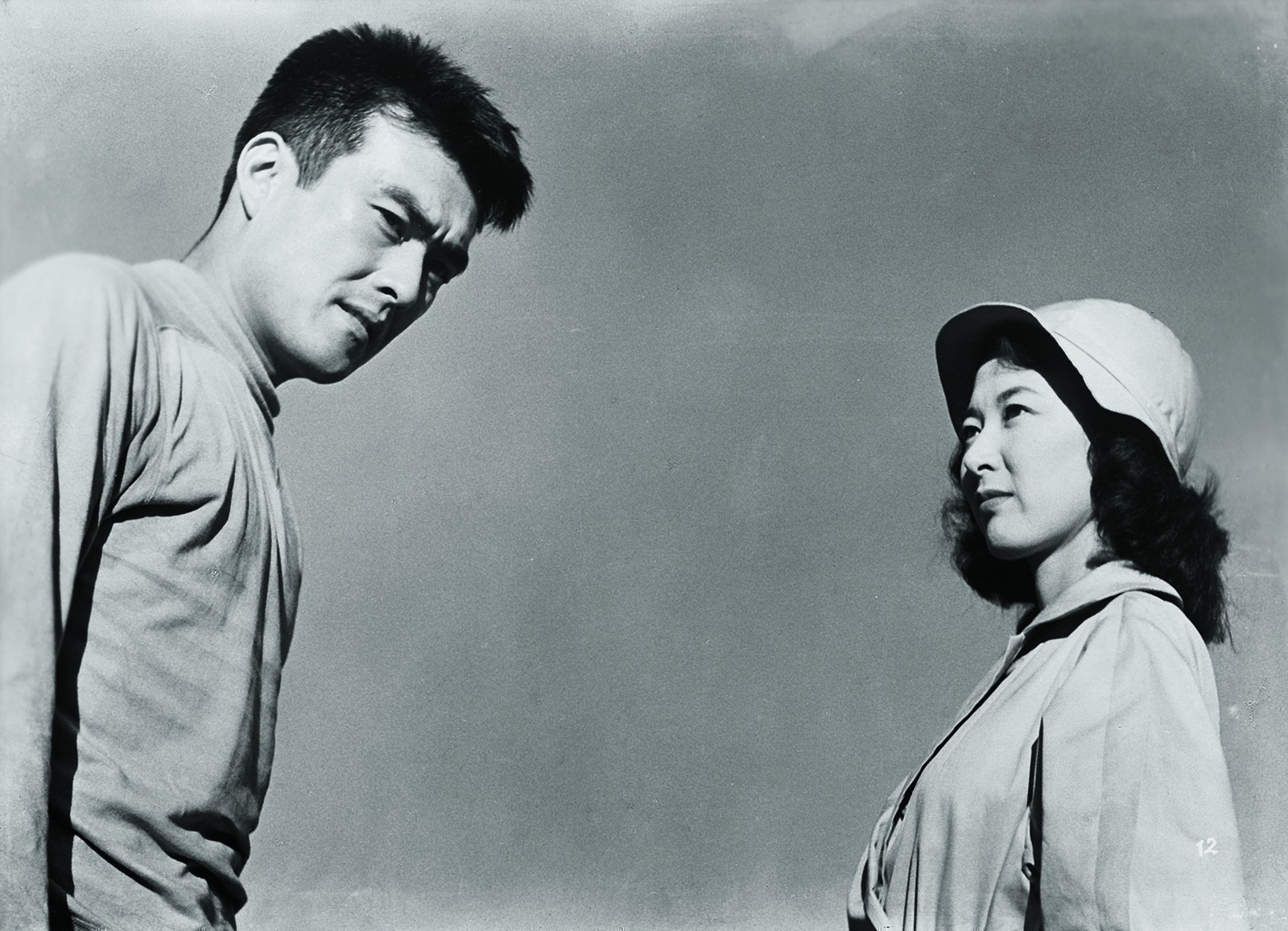
Kobayashi draws binary, ironic contrasts between this shadow world in which, as Kishimoto says, “we see people like Kurita not as players but as commodities,” and the love of the game embodied by the country-boy sports prodigy. But as Kurita’s girlfriend exhorts him not to lose his innocence and accuses him of leveraging his humility as a negotiating ploy, Oki’s prideful face assumes an inscrutable hardness. The fall season progresses, and the occasional newsreel and insert clips from the baseball diamond are composed less of game highlights and more of Kurita’s postgame interviews and photo shoots. The headlines of the spinning newspapers superimposed over the footage have less to say about Kurita’s on-field accomplishments than about scouts, speculation, and money. The media, which had built up the mythos of “Kurita, Master of the Extra-Base Hit,” is now a proxy used by Kyuki and the agents to negotiate, undercut each other, and sow discord.
The fall college league in which Kurita plays could be the Tokyo Big6 Baseball League, a biannual university tournament that evolved out of the rivalry between Waseda and Keio universities. Waseda was Masaki Kobayashi’s alma mater. In the early twentieth century, as its baseball team emerged as a powerhouse, its coach Suishu Tobita instilled the values of “bushido baseball”; according to Robert Whiting, author of the definitive English-language volumes on Japanese baseball, “he invoked concepts of loyalty, courage, and honor and exhorted his players to ‘practice until you die,’ or at least until they had ‘collapsed on the ground and froth was coming out of their mouths.’” Japanese baseball has its roots in the Meiji-era nation-building out of which the concept of bushido, the samurai’s code of honor, likewise emerged, and the same values—devotion to the team, perseverance through suffering—are said to have informed the first serious baseball team in Japan, that of the elite Ichiko school, with their military training regimes. This ethos continues into the present day in the venerated annual Koshien high school tournament, in which teenagers become stars through frankly outlandish displays of physical sacrifice—like future Boston Red Sox standout Daisuke Matsuzaka, a national icon ever since the summer of 1998, when he threw a 17-inning, 250-pitch complete game at Koshien, and came back to toss a championship-clinching no-hitter two days later.
In contrast to this cult of the amateur, the 1950s saw the formation of Nippon Professional Baseball, Japan’s major league. As the academic Christopher Keaveney notes in his study Contesting the Myths of Samurai Baseball, the other major Japanese baseball film of 1955 was a sports movie in a far more conventional, conservative, patriotic, and triumphal mode: Immortal Pitcher, a biopic of Eiji Sawamura, the seventeen-year-old schoolboy who struck out Babe Ruth and Lou Gehrig back-to-back on their 1934 exhibition tour of Japan, and died ten years later, a sacrifice on the altar of nationalism, when an American torpedo sank his transport ship in the Pacific. (In the film, he dies on land, in pitched battle.) In I Will Buy You, Kishimoto sells Kurita on professional baseball as “a world of man-against-man.” As in Black River, with its depiction of craven, mercenary souls operating in the black-market economy around an American military base, greed is spreading like gangrene through the character of modern Japan and rotting the bonds that hold it together.
This sports movie is filmed more like a noir, with strikingly murky, moody lighting apt for furtive exchanges of numbers and information in shadowy bars and secret meetings in inns, for late-night handoffs of envelopes and suitcases full of cash. Kobayashi’s tableaux, which activate foreground and deep space, often crackle with a psychological tension, a charged stasis, that would be more overt in the widescreen Harakiri and Samurai Rebellion. As the scouts from the Lillies and the Socks bypass Kyuki to glad-hand or bribe Kurita’s bumpkin brothers, I Will Buy You appears like a dry run for Kobayashi’s The Inheritance (1962), in which a higher class of family makes a similar travesty of loyalty while positioning themselves for a dying industrialist’s fortune.


More: Features
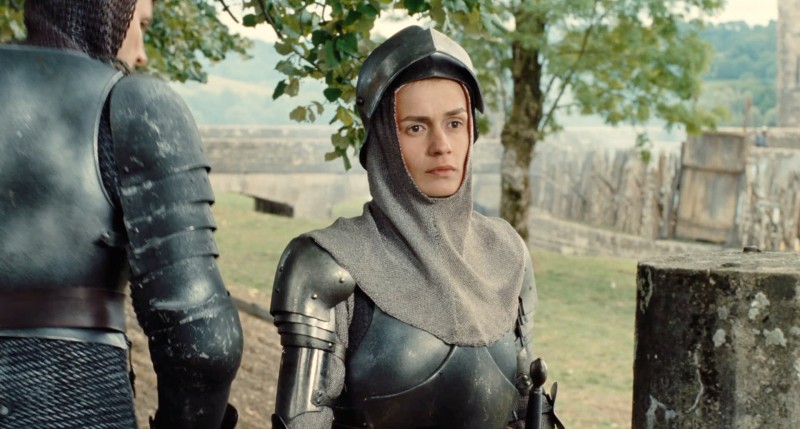
Jacques Rivette Envisions a More Human Joan of Arc
Anchored by an extraordinary performance from Sandrine Bonnaire, the epic historical drama Joan the Maid strips away its saintly protagonist’s mythic aura and gives us a humbler, more intimate version of her life story.
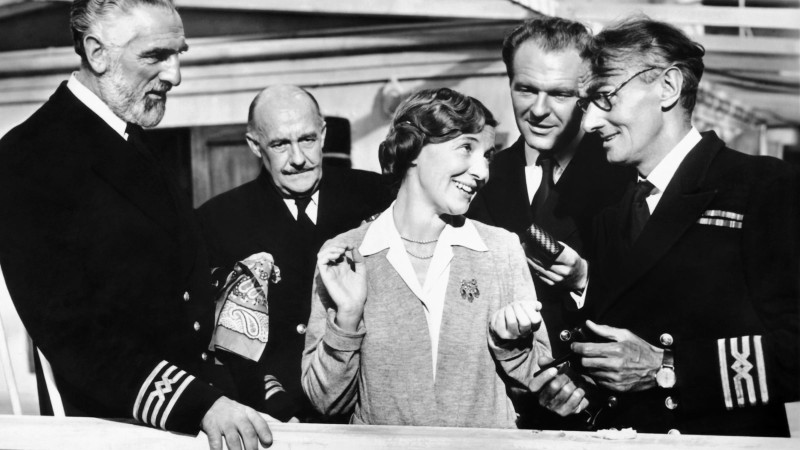
Anthologized: The World of W. Somerset Maugham On-Screen
The elegantly crafted portmanteau films Quartet, Trio, and Encore adapt twelve spellbinding tales of deception and passion from one of the best-selling authors of the twentieth century.

The Inner Worlds of Neon Genesis Evangelion
A Japanese-television phenomenon that sparked a boom in anime production and fandom, Hideaki Anno’s magnum opus is a mind-bending mix of kinetic action, sci-fi spectacle, and introspective human drama.
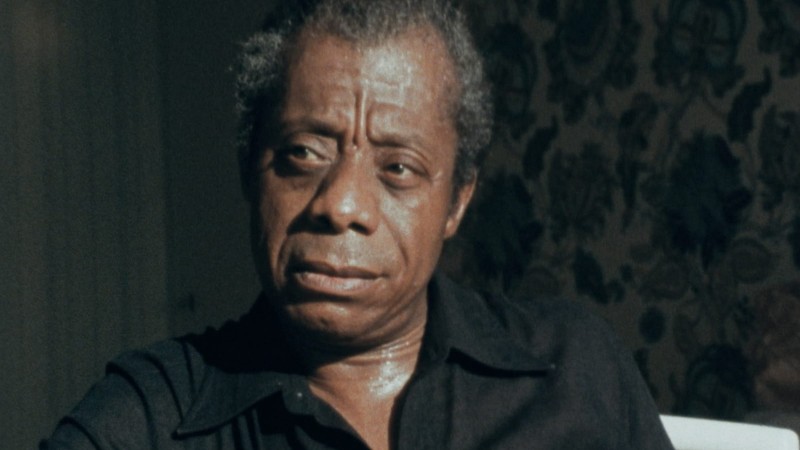
James Baldwin Looks Back
The illuminating 1982 documentary I Heard It Through the Grapevine follows the celebrated author on a journey through the American South, as he attempts to reckon with the legacy and losses of the civil rights movement.