Once Upon a Time: Patrick McGoohan’s The Prisoner
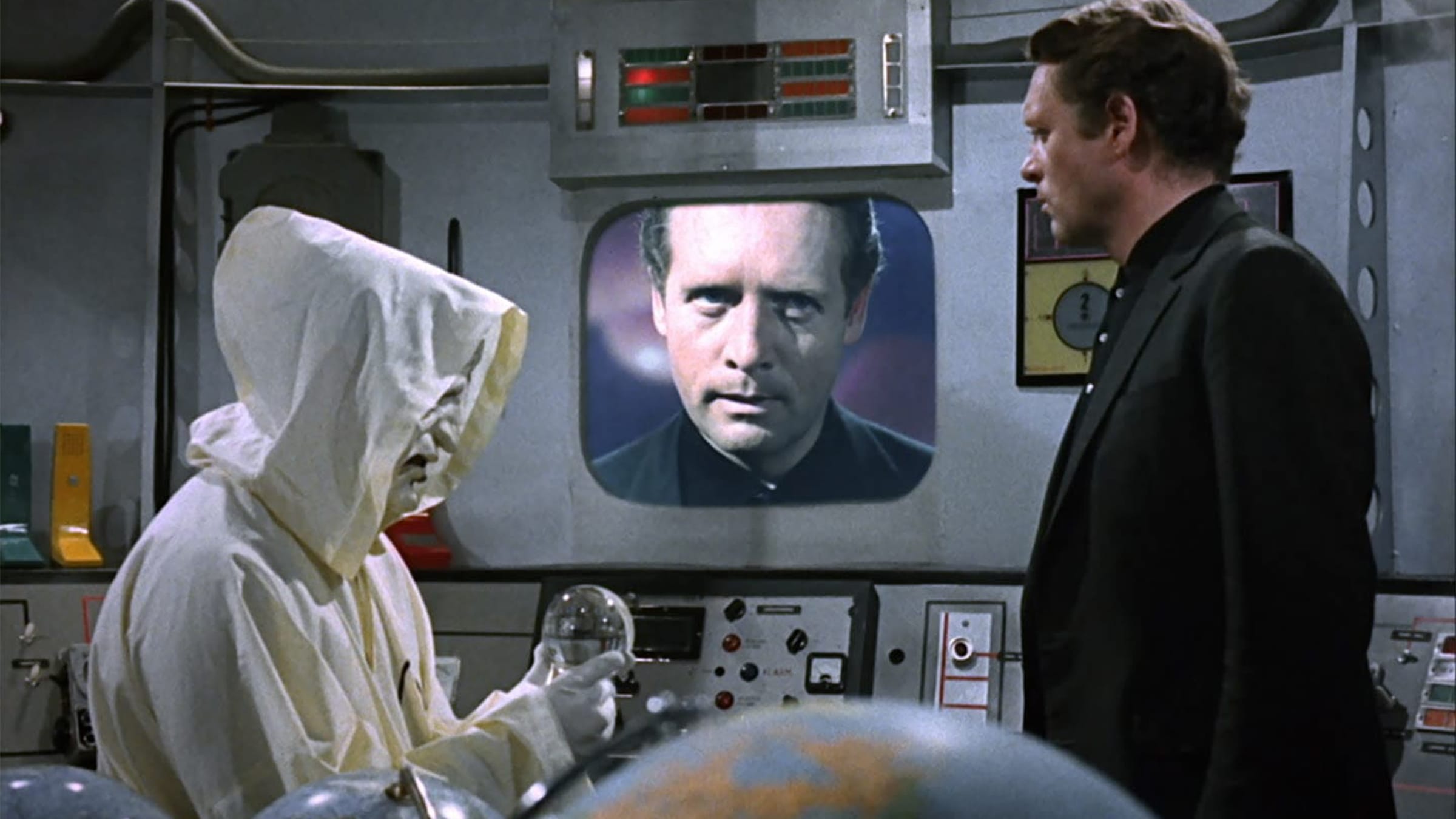
In 1955, more than a decade before the television series The Prisoner premiered on British airwaves for a solitary season, show creator and star Patrick McGoohan was in Milan shooting scenes for Orson Welles’s now lost Moby Dick Rehearsed, an adaptation of Welles’s play-within-a-play about a Shakespearean troupe that puts on an impromptu performance of Melville’s great whaling epic. The young firebrand, cast opposite Welles’s Ahab as Starbuck, had been so fierce onstage during the show’s initial West End run that even Welles was supposedly intimidated, or so the story goes. Over the course of three weeks, McGoohan would recount, the two had many conversations. But one stood out for him. Welles had playfully posed the question,“What do you think is the most dangerous thing on earth?” McGoohan surmised that Welles could not mean the bomb, and indeed Welles answered his own question in a fittingly elusive manner: television. Welles had affected this same trepidation for the nascent medium earlier that year, claiming, rather impishly, in a January appearance on the BBC public affairs show Press Conference, that he was “simply frightened” of television, though he also expressed awe and excitement for its potential: “I think that we’re going to find new forms in television,” he remarked. “I think we’re going to return to old forms too—to the storyteller.” Welles, the wunderkind who breathed new life into radio, cinema, and theater, would work only sporadically in the format, dismissing its promise in a few years’ time as commercial interests overtook artistic possibility. By 1969, he would lament the fate of his own former castmate too: “[McGoohan] would now be, I think, one of the big actors of our generation if TV hadn’t grabbed him.” McGoohan, by that point, had gone on to a career defined by television and, with The Prisoner, had become as much an enigma as the only television series he ever conceived, a revolutionary work that ended with such deliberate provocation that it incited a “near riot,” jammed up network switchboards, and drove its star into hiding.
Focused on a retired British secret agent abducted to the mysterious Village—an inescapable de Chirico landscape ruled by an unknown authority obsessed with knowing the reason for his resignation—The Prisoner debuted in the fall of 1967 as not just an interruption in regularly scheduled programming but as an unclassifiable agitator. An improbable turn from Britain’s most popular television lead at the time, the show earned an assortment of puzzled descriptors from contemporary critics—“bold,” “bizarre,” “Tele-Kafka.” But its controversial, against-the-grain slant would delight as well, stirring enthusiasm among the public. It has only grown in stature in the years since, finding admirers in Isaac Asimov, Roland Topor, the Beatles, XTC, Alan Moore, Mark Frost, and Christopher Nolan, among others. Anticipating a modern appetite for twisty, mystifying, challenging storytelling, this pop-surrealist allegory marked a then rare transmission of an auteur vision on prime-time television. And it all started with one man and his disenchantment with the world.

More: Features
Terror on the Airwaves
In the 1970s, up-and-coming mavericks like Steven Spielberg and John Carpenter honed their craft by bringing a taste of the grindhouse to the small screen.
Death Is a Highway
Classics of highway horror, like Road Games, The Appointment, and Race with the Devil, present the open road as a dangerous landscape and automobiles as single-minded killing machines.
Deeper into Horror
To get you in the mood for Halloween, we invited a group of six writers and filmmakers to tell us about horror movies on the Criterion Channel that they feel deserve more attention.
The Silence of the Lambs: Reckoning with Jame Gumb
The serial killer in Jonathan Demme’s Oscar-winning film remains a powerfully influential and dominant trans film image with a complicated legacy that cannot be taken lightly.