Deeper into Horror
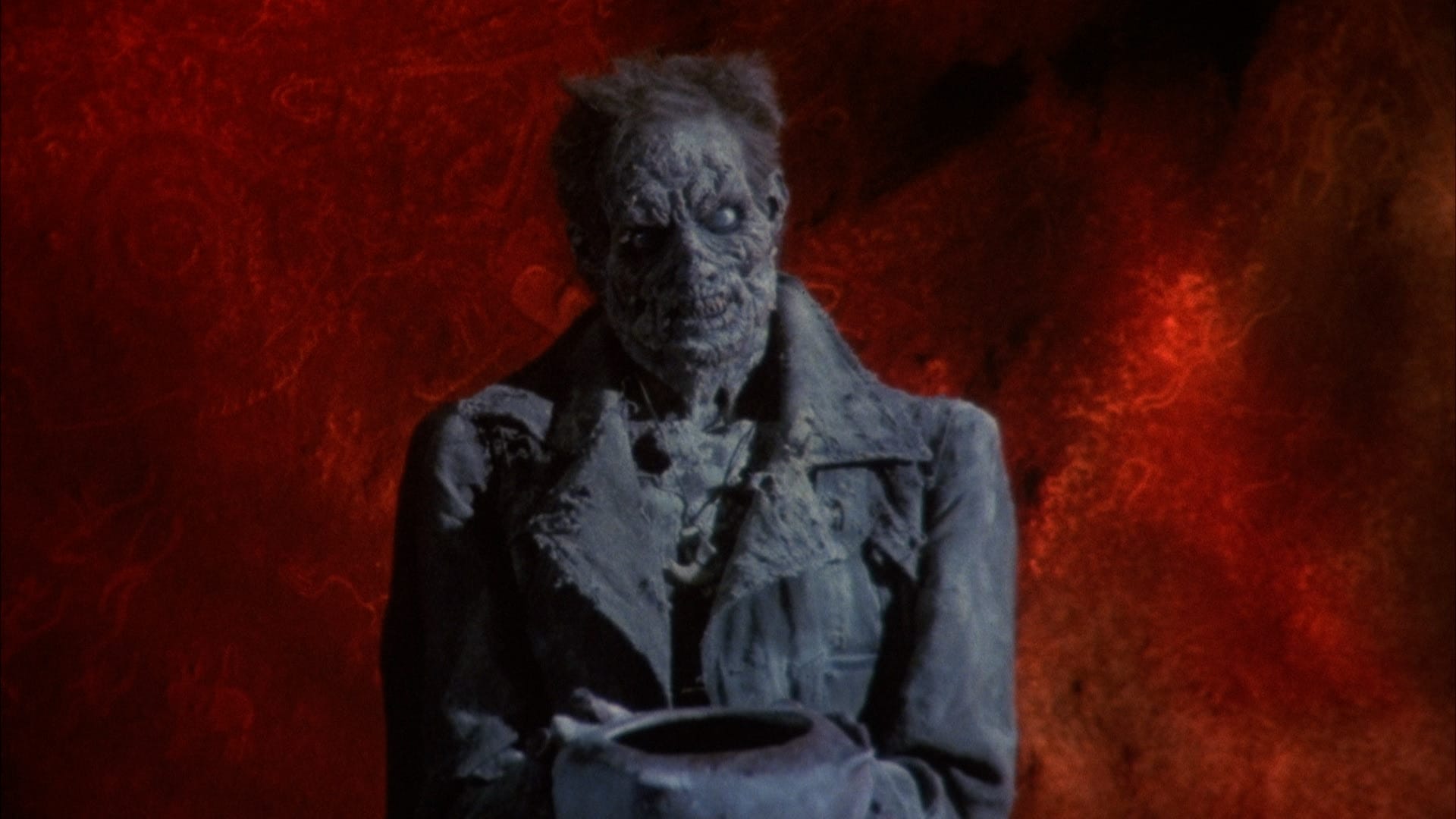
The Criterion Channel includes a treasure trove of horror movies ranging from the widely celebrated to the rare and unknown. To get you in the mood for Halloween, we asked six writers and filmmakers who love the genre to peek into the dark corners of the Channel and find underappreciated gems that have terrified, thrilled, and unsettled them. A mix of different eras and styles, the group of films they’ve chosen to champion include deeply strange, lesser-known works by two Japanese masters, a psychedelic horror western filled with old-school monster effects, and an unbearably tense tale of crime and trauma from actor-director Joel Edgerton.
Matango (Ishiro Honda, 1963)
By Nathan Lee
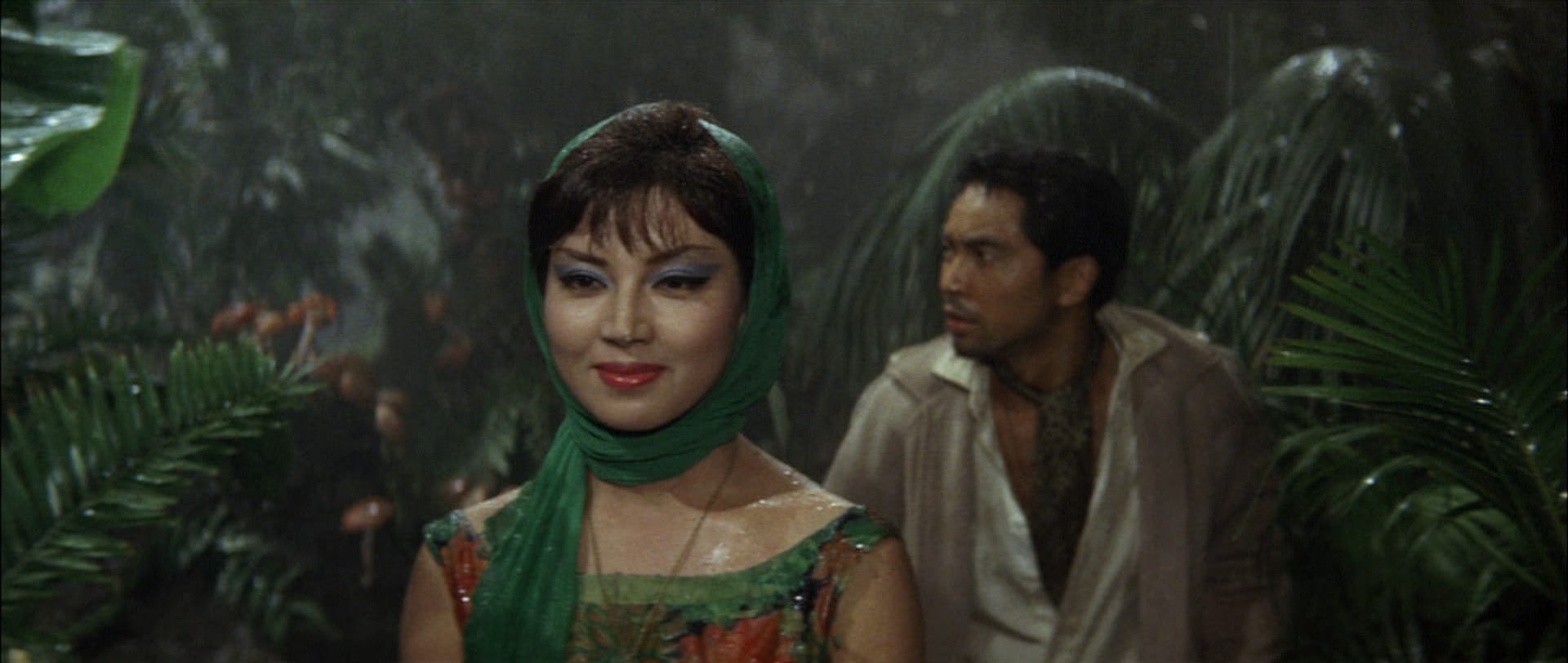
If you strand people on a deserted island and warn them “absolutely do not eat the mysterious toxic mushrooms,” there is one thing you can be sure of: they are going to eat the mushrooms. So it goes in Matango, a moody exercise in postwar Japanese horror that played on midsixties American TV under the title Attack of the Mushroom People. Stumbling over this oddity while flipping channels surely produced an effect, albeit of a subtler nature than its hyperbolic title would suggest. A musty, gloomy survivalist parable thick with shadows and subterranean unease, Matango isn’t just about weird fungi; its aesthetic mulch feels dank enough to sprout them.
Directed by Ishiro Honda, best known for helming the original Godzilla (1954), Matango wraps an X-Files enigma in a Twilight Zone narrative to craft something like an extremely sinister episode of Gilligan’s Island. We open in a Tokyo hospital where quarantined psychology professor Kenji Murai (Akira Kubo) stares at a neon skyscape and begins to recount the saga of his ordeal and eventual rescue. Taking to the seas for an afternoon jaunt, a highly improbable friend group—professor, industrialist, writer, student, nightclub chanteuse—is shipwrecked and quickly devolves into resource-scarcity psychosis and gendered antagonism. The threat of starvation and sexual assault transmogrify into something else entirely upon the discovery of a strange mold with hallucinogenic properties. Adding to the generalized anxiety and intensifying break with reality, the island begins to manifest something . . . not . . . quite . . . human . . .
Deliciously weird and genuinely unnerving, Matango is a downbeat freakout that climaxes on a note of apocalyptic psychedelia—then fades to black with a ghastly coda. That the film should be narrated by a psychologist does not seem incidental. No less than Godzilla, the movie channels the horrors of Hiroshima and Nagasaki into a blatantly symptomatic genre film. The parallel between radiation deformity and the mutations suffered by the mushroom eaters were sufficiently disturbing that the film was reportedly almost banned at home. Abroad, it became a cult favorite of John Carpenter and Steven Soderbergh, the latter of whom attempted to produce a remake. (The closest he would get is the altogether more rational Contagion). What ultimately gives Matango its kick, however, is less the social subtext than its rich evocation of the Fungal Bizarre—that eldritch kingdom that sustains and decays, delights the palate and deranges the mind.
Nathan Lee is an assistant professor of film at Hollins University and a widely published critic.
Dark Night of the Scarecrow (Frank De Felitta, 1981)
By Samm Deighan
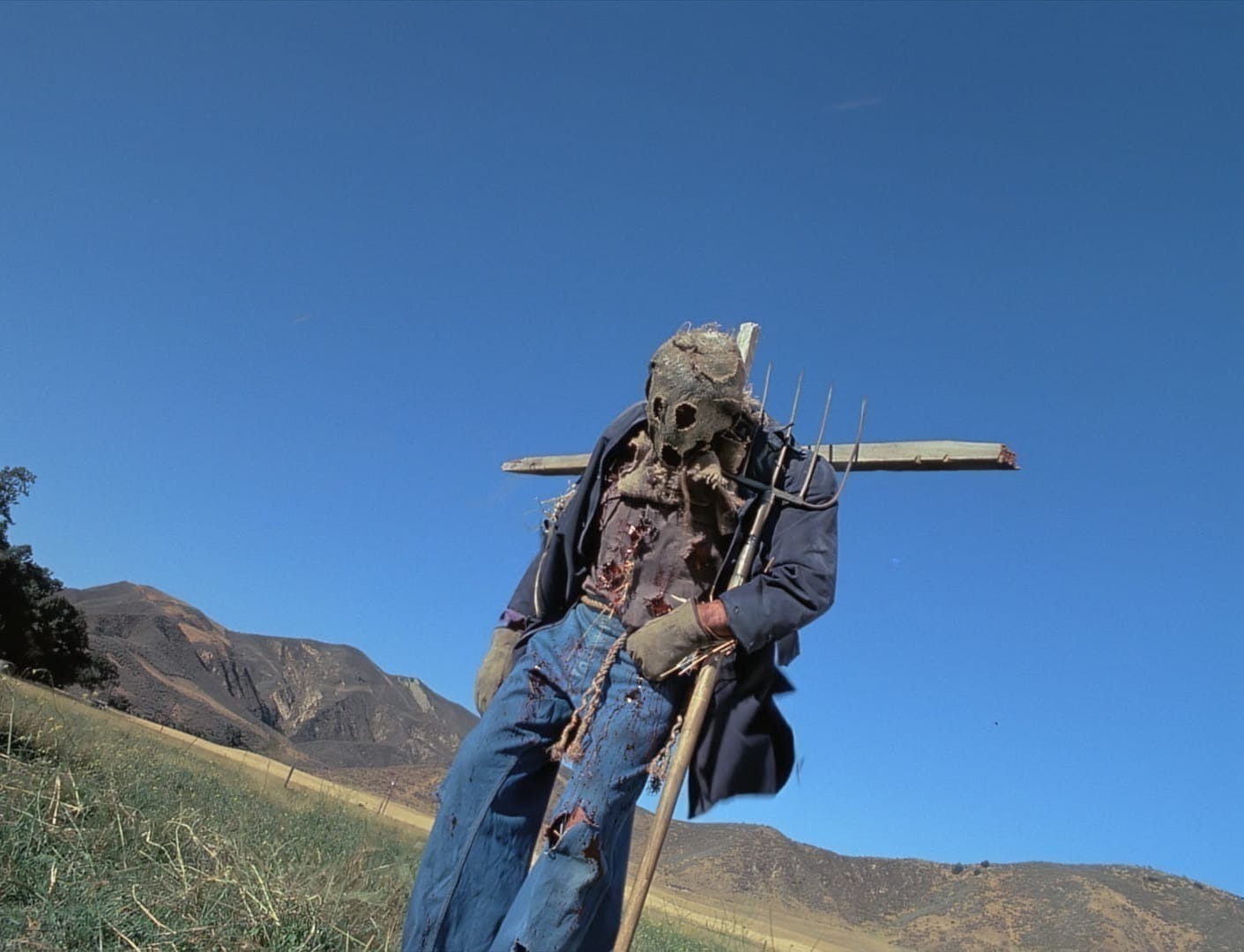
The grim, atmospheric made-for-television movie Dark Night of the Scarecrow is among the underrated gems of early-1980s genre cinema. When a mentally challenged man, Bubba (Larry Drake), is falsely accused of killing his young friend Marylee (Tonya Crowe), a group of vigilantes murder him, allegedly in the name of justice. They shoot him to death as he cowers in fear in a cornfield, hiding inside the clothes of a raggedy scarecrow. Though the local court fails Bubba, the gang who killed him—led by a cruel postal worker (Charles Durning)—soon begin mysteriously dying. Director Frank De Felitta (author of Audrey Rose and The Entity) leaves it ambiguous for much of the film whether the men’s deaths are accidents fueled by guilt or if Bubba is pursuing vengeance from beyond the grave.
Dark Night of the Scarecrow is a particularly effective example of the many horror movies and thrillers made for American television during this period. Because theatrical films were often prohibitively expensive to license for television in the 1960s and ’70s, networks began experimenting with producing their own movies. The made-for-TV horror movies from this period were subject to content restrictions. While theatrical films increasingly depicted nudity, sex, blood, gore, and more overt violence, television directors had to rely on mood, atmosphere, and suggestion.
As a result, Dark Night of the Scarecrow is awash with autumnal ambience: changing foliage, pumpkin patches, and lonely farmhouses. In a particularly chilling sequence, the postal worker is desperate to discover the identity of whomever—or whatever—might be killing his friends. After exhuming a grave in the town cemetery, he finds his way to a desolate cornfield, where he comes across Marylee inexplicably playing late at night. While the sight of the child playing alone in the dark is eerie in its own right, the sense of dread is amplified as he chases her past massive pumpkins and through the corn stalks, unwittingly racing toward his doom.
Much of the film’s strength relies on its revenge plot, where Bubba’s killers inevitably get what is coming to them. In this sense, the film follows in the wake of earlier anthology shows like Alfred Hitchcock Presents (1955–1962)—which largely focused on dark, often ironic lessons in morality—and also anticipates later, more violent television fare such as HBO’s Tales from the Crypt (1989–1996). It is a bleak but satisfying tale of small-town injustice, perfect to watch on a crisp October night.
Samm Deighan is a film historian and programmer, the author of Hysterical Excess and Inhuman Ecstasy: The Cinema of Andrzej Zuławski, and editor of Revolution in 35 mm: Political Violence and Resistance in Cinema from the Arthouse to the Grindhouse, among other books. She hosts the Eros + Massacre podcast.
The Hitcher (Eric Red, 1986)
By Daniel Goldhaber
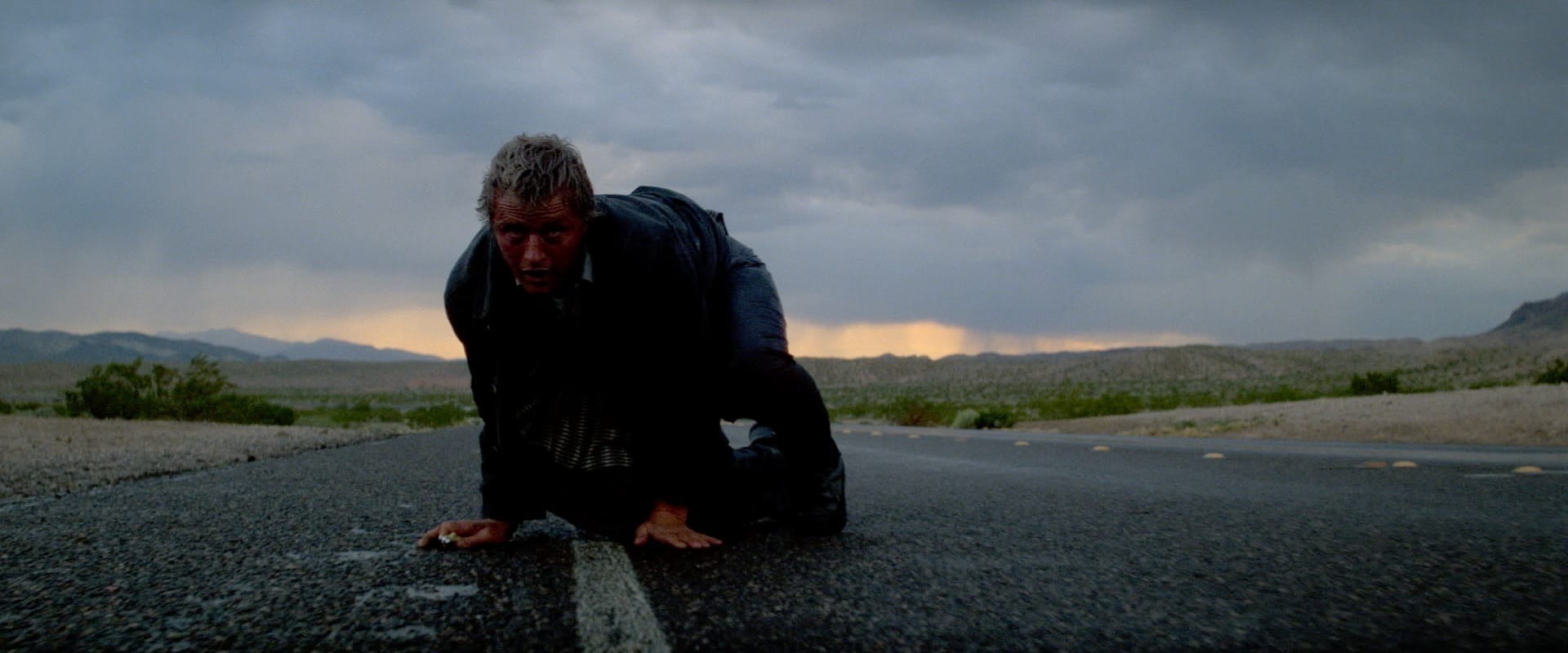
A perfect movie is one that entirely delivers on its premise, where every aspect of the filmmaking joins together to bring a singular idea to life. The Hitcher, a taut thriller in which a naive young man picks up a mysterious hitchhiker who proceeds to terrorize him and everyone he encounters in increasingly supernatural ways, is arguably a perfect movie. It is a perfectly calibrated synthesis of dream logic and genre cinema that never finds the need to explain itself, or even to set clear rules for how its narrative mechanics will operate. Instead, its diabolically simple premise unfurls into an existential nightmare that cannot be explained, even by its characters. The Hitcher’s otherworldly presence in the movie is never questioned. That he is perceived as an undeniable fact only adds to his menace.
The Hitcher stands in sharp contrast to contemporary genre trends requiring filmmakers to spoonfeed audiences overly articulated backstories and “universally relatable” themes (often infused with a trauma du jour) in order to justify the thrills that follow. This derives from a pathological, corporately mandated need to ensure that a general audience will identify with the story being told. The Hitcher has no use for such pleasantries. There is no conventional characterization, yet the performances are nevertheless finely textured and nuanced. The film confidently relies on its simple premise, the pleasures of its brutality, and the horror of an exquisitely photographed and endlessly empty American west to tell its story.
Rutger Hauer’s John Ryder (the titular Hitcher) is terrifying in part because he seems to know that he’s in a movie. His omniscient smirk indicates an awareness that he holds the other characters’ fates in his hands. Every time Ryder defies the laws of space and time, it is with such deft narrative complication that it feels like Hauer’s character is directing the movie himself. Dreams work this way too. They subvert our narrative expectations to reveal deeper personal truth. But that subversion is a hard line to walk in a narrative film. Too much obfuscation, and the audience simply gives up. Yet there is not a moment of The Hitcher where we are not fully present with C. Thomas Howell’s bewildered Jim Halsey as he tries to make sense of the undeserved nightmare he has found himself in. There is no rhyme or reason to why he has been subjected to this fate. There is no thematic architecture for him, or the audience, to grab onto. There is only the unrelenting violence of an enigmatic terror. It’s as if Jim must accept the inexplicable riddle of the film’s premise in order to defeat its villain.
Is there a moral lesson in all this? Not really. Even at its end, The Hitcher seems hell-bent on denying the audience catharsis. What remains is a pure evocation of the terror of being haunted for a sin that you’re not sure you ever committed.
Daniel Goldhaber is a filmmaker based between Berlin and Brooklyn. He has made three feature films: CAM, How to Blow Up a Pipeline, and Faces of Death. He looks forward to making more feature films in the near future.
Dust Devil (Richard Stanley, 1992)
By Payton McCarty-Simas
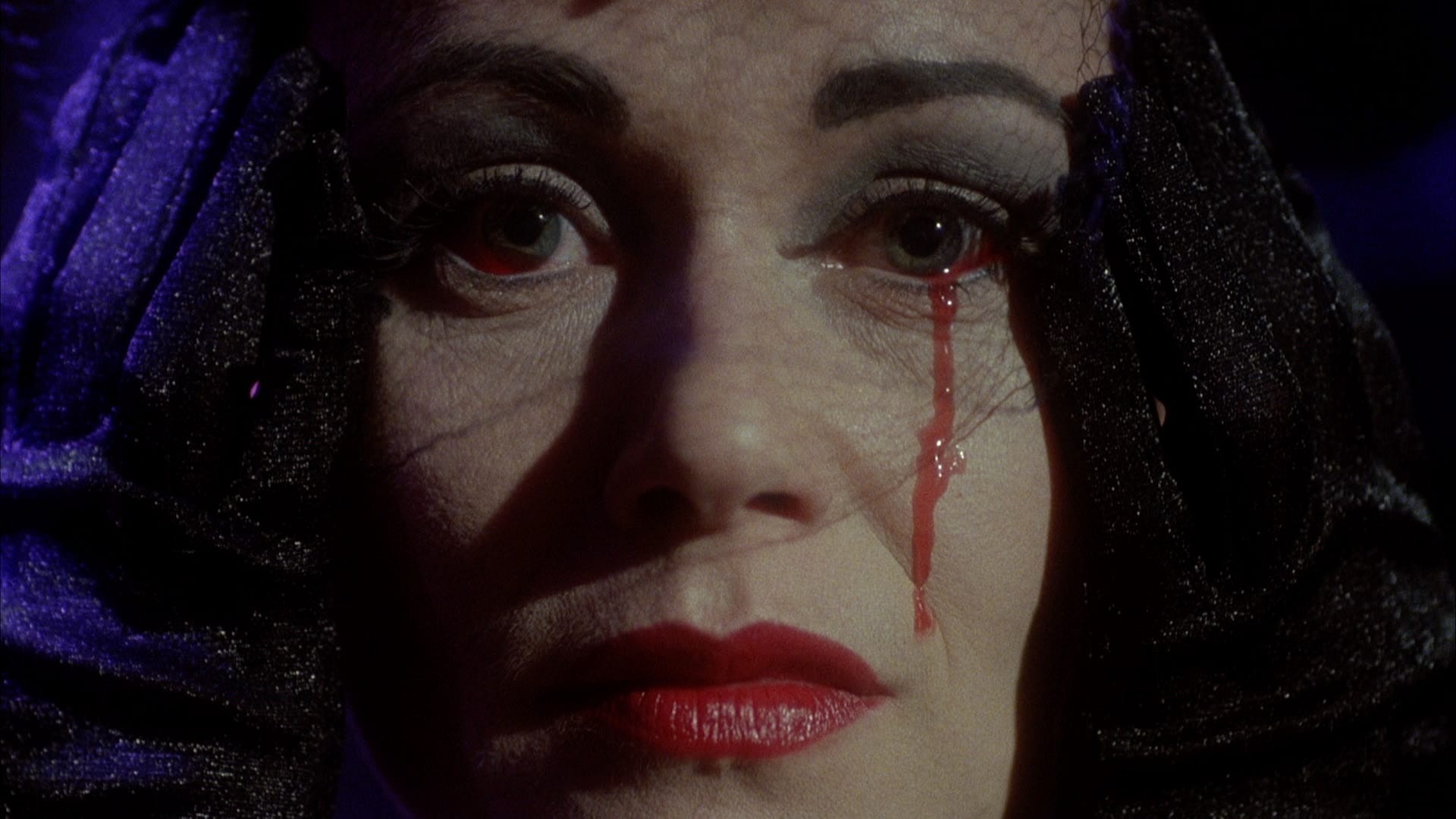
Dust Devil feels like a half-remembered run of dreams snatched during a brief moment of wakefulness on a long car ride through the desert. This psychedelic horror western, the sophomore feature by cinematic
Stanley delivers his political commentary opaquely, opting for stripped-down surrealism, Lynchian play with genre tropes, and frequent eerie voice-over that would feel right at home on a Rob Zombie track. The fact that those voice-overs are delivered by South African antiapartheid activist-poet John Matshikiza, though, speaks to the film’s rich blend of experimentalism and genre fun. Its imagery flickers between arresting delicacy and stark transgression: heat haze crests off a deserted highway; a ritually desecrated female corpse resembles a neolithic mummy under autopsy lights; an inky void gapes from behind a spotty bathroom mirror; children play war games with automatic weapons, overseen by priests; a drive-in movie plays for no one in a (real) desert ghost town; white police beat Black civilians and laugh. The film’s practical gore and old-school monster effects, meanwhile, deliver the classic pleasures of an ’80s creature feature. It’s a potent mix, a spell cast by a sorcerer-anthropologist with the heart of a horror buff.
Payton McCarty-Simas is the coeditor of the Brooklyn Rail’s film section and the author of two books of film history, One Step Short of Crazy: “National Treasure” and the Landscape of American Conspiracy Culture, and That Very Witch: Fear, Feminism, and the American Witch Film. Their film criticism has also been featured in the Hollywood Reporter, Filmmaker Magazine, Bright Wall/Dark Room, and numerous other publications, and they have programmed film series at Anthology Film Archives in New York City.
Pulse (Kiyoshi Kurosawa, 2001)
By Michael Almereyda
“If two dots get too close together, they die, but if they get too far apart, they’re drawn closer.” This description of a floaty screensaver-style animation—drifting white dots on a black background—doubles as a preview of Pulse’s essential plot, with Kiyoshi Kurosawa steering his core cast of cute slim young people through a series of set pieces that attribute ghost-in-the-machine malevolence to self-activating PC consoles and glitching screen images. Kurosawa’s premise: What if the internet, that great gateway leading us into the future, is in fact channeling phantoms from an overcrowded afterlife, unhappy presences that “ooze” into three-dimensional space, depleting and displacing the souls of placid (half-dead) humans moping around in the workaday world?
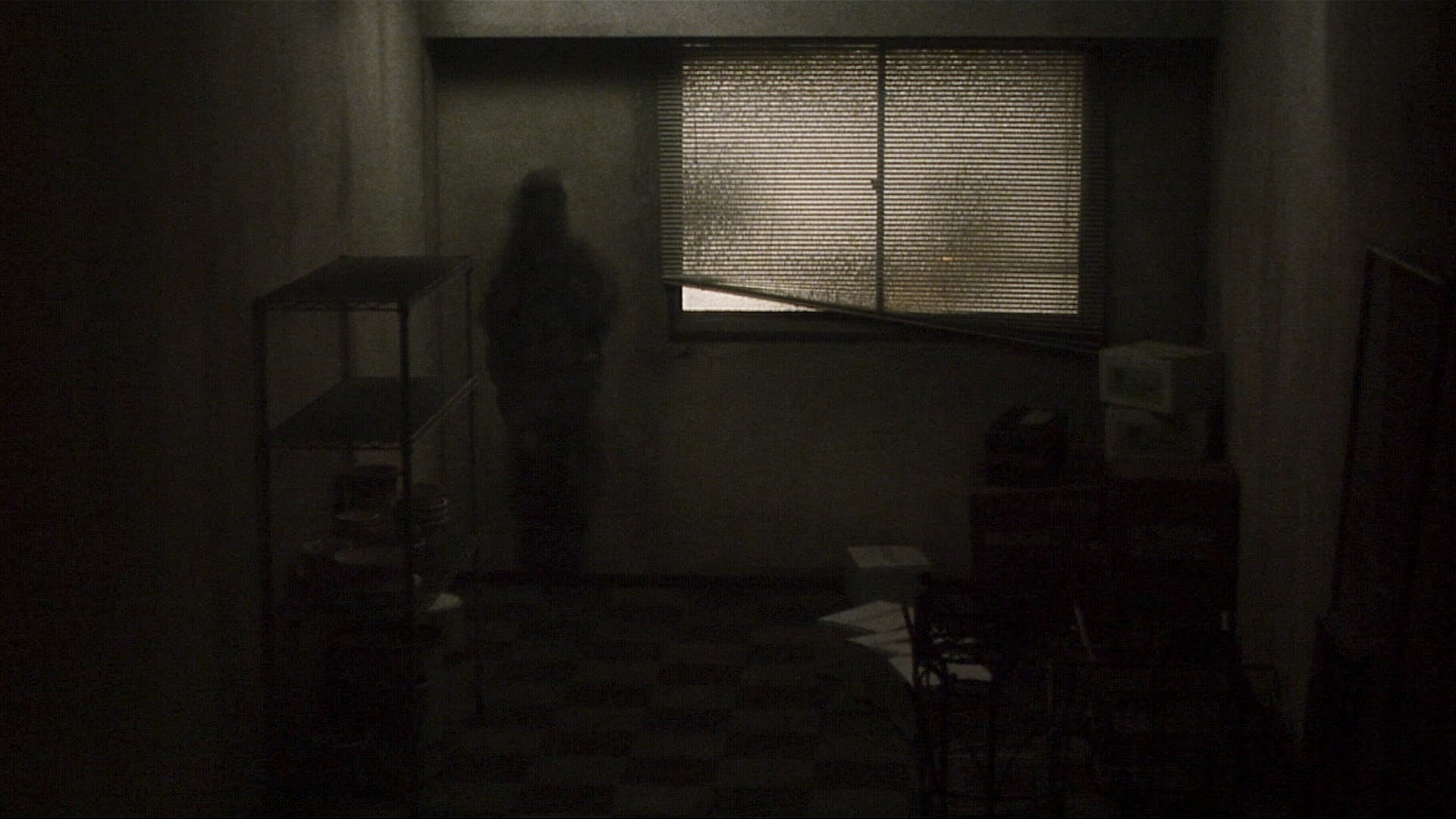
Kurosawa’s camera glides in and around a commercial greenhouse, a college computer lab, wan Tokyo streets, and a few dim apartments where people live and sleep alone. The clean frames and elegant camera moves offset increasingly uncanny developments as alienated dotlike characters get too close, morph into suicidal zombies, or simply disappear. Which is more creepy—a silhouette, a shadow, or the person-sized ashy smudge that appears on a wall or floor when a human life has been supernaturally extinguished? The sense of dread is pitched to the (now prehistoric) strangulated sound of a dial-up modem, but the movie gradually admits that loneliness, not the internet, is the real threat and theme. Within a beautifully choreographed five-minute single take, computer-savvy Harue (a haunting actress named Koyuki) confesses her fear of death, her intuition that humans and ghosts are one and the same, alive or dead, which spurs her fumbling friend, an adorably clueless economics student (Haruhiko Kato), to shout that they are both alive, a distinction worth insisting on. (Note how the inanimate red and mint-green chairs match and mock the two fretful humans wearing clothes that are the same colors.)
It can seem like Kurosawa introduces too many conceits and justifications for his evolving nightmare, as if giving his story more shoes than it has feet, but his shot-for-shot mastery is so assured and compelling that the film remains beguiling even as it stops making strict sense. The action goes offline, and characters vanish, resurface, and recombine, as if amnesia and trauma could bring people close together. (And who’s to say they don’t?) The film escapes domestic spaces, venturing into more expansive Invasion of the Body Snatchers territory—an empty highway, an abandoned factory—as loneliness and self-estrangement propel the dazed survivors into a world on the brink of mass extinction. Welcome to the internet, indeed.
Michael Almereyda’s newly published Writings and Relics: 1990–1995 is available from Sticking House Books. His film adaptation of Don DeLillo’s Zero K, featuring Caleb Landry Jones, Peter Sarsgaard, Britt Lower, and Inga Ibsdotter Lilleaas, is in postproduction.
The Gift (Joel Edgerton, 2015)
By Karyn Kusama
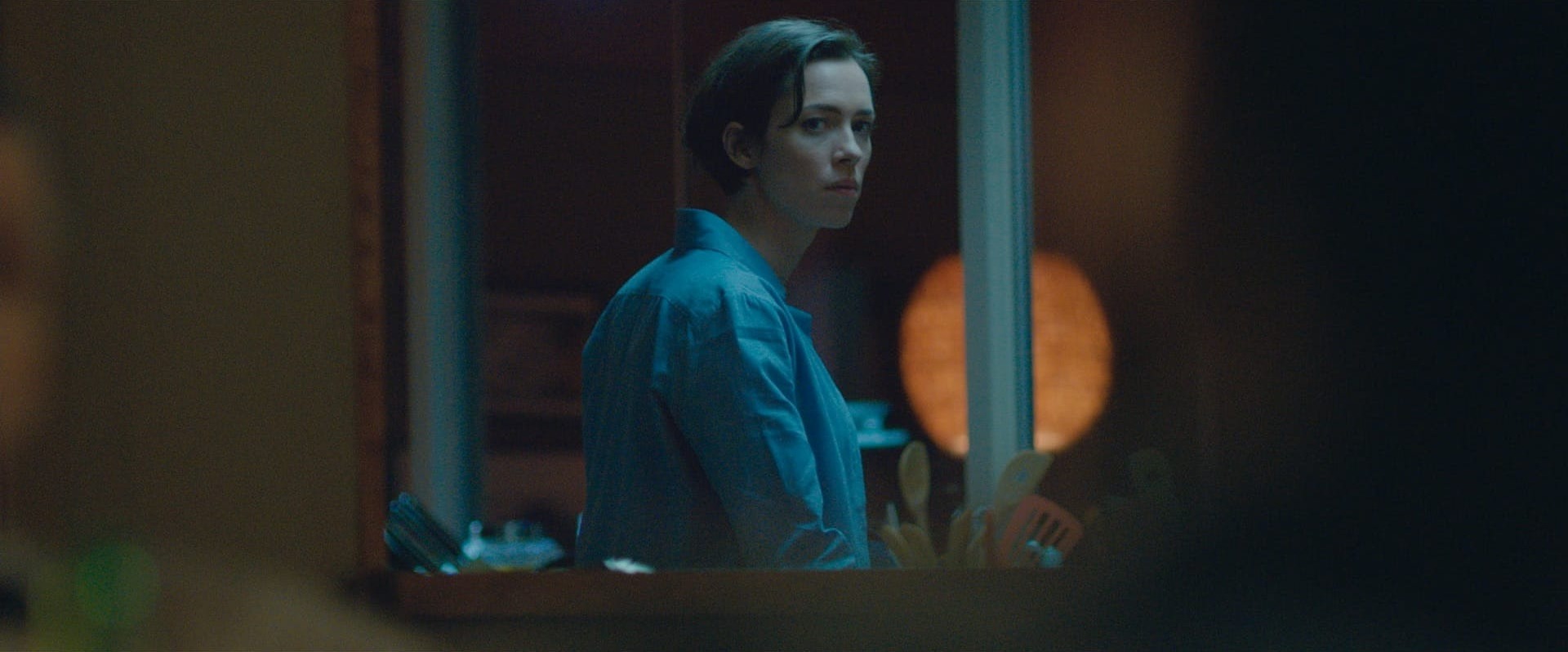
The Gift has a narrative simplicity and a refreshing sense of shifting sympathies for its characters. Jason Bateman and Rebecca Hall—both incredibly likable actors—are Simon and Robyn, a well-off couple who run into a friend from Simon’s high-school days. Soon, old pal Gordo, played with stealth menace by Edgerton, invites them over for dinner. It’s not long before the social fissures start to show. Simon seems to only hazily remember Gordo, though it’s clear there’s a thorny past there for the latter. Things sour quickly, and eventually Simon and Robyn are stalked and terrorized by Gordo, whose obsession with them reveals a deep-seated desire to avenge Simon’s cruel adolescent crimes.
The Gift does a beautiful job of presenting a complex story of victimhood—first through Simon, who is both affable and perilously arrogant in equal measure, seeming to genuinely struggle to understand how he has invited Gordo’s wrath. Gordo—vulnerable, jagged, and authentically dangerous—is no less a victim, and the film probes how young men carelessly torture each other as a sickening rite of passage. As a queasy side note, The Gift also explores the many ways in which women end up as the collateral damage in these twisted psychological orbits. Much as women are used as objects and pawns in real-world arenas of male dominance, it’s Robyn—truly the innocent bystander in this escalating game between the two men—who suffers the most indignity.
At the time of the film’s release, I remember thinking that Jason’s performance was particularly revelatory—slippery and unpredictable—and I appreciated seeing an actor play someone who was so good at lying to himself. In presenting its unreliable dual protagonists, The Gift displays filmmaking confidence and tonal mystery: with its distorted reflections and undulating surfaces, the movie seems to suggest that the crimes of the past can never be buried, only obscured—and never for very long.
Karyn Kusama is a writer and director. Her films include Girlfight (2000), Jennifer’s Body (2009), The Invitation (2015), and Destroyer (2018).
More: Features
Terror on the Airwaves
In the 1970s, up-and-coming mavericks like Steven Spielberg and John Carpenter honed their craft by bringing a taste of the grindhouse to the small screen.
Death Is a Highway
Classics of highway horror, like Road Games, The Appointment, and Race with the Devil, present the open road as a dangerous landscape and automobiles as single-minded killing machines.
The Silence of the Lambs: Reckoning with Jame Gumb
The serial killer in Jonathan Demme’s Oscar-winning film remains a powerfully influential and dominant trans film image with a complicated legacy that cannot be taken lightly.
Jacques Rivette Envisions a More Human Joan of Arc
Anchored by an extraordinary performance from Sandrine Bonnaire, the epic historical drama Joan the Maid strips away its saintly protagonist’s mythic aura and gives us a humbler, more intimate version of her life story.