Five Radical Documentaries by Kazuo Hara and Sachiko Kobayashi: Restlessness Refusing Resolution
At the request of the author, Japanese names are given here in their traditional form: surname first.
“I make bitter films. I hate mainstream society.”
Hara Kazuo
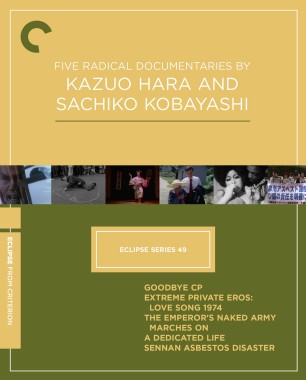
This collection represents the finest work to come from the partnership between director Hara Kazuo and producer Kobayashi Sachiko. Together, they have created a diverse body of films that marks a turning point in post–World War II Japanese documentary. Indeed, their work helped drive this transformation, while also influencing documentarians around the world. The five films gathered here span the breadth of what I think of as two Hara Kazuos: Hara 1 and Hara 2. They have an interdependent relationship—one is unthinkable without the other. Each is always secreted inside the other. Hara 1 centers on spectacular, edgy personalities, and Hara 2 is embedded in collectives under duress.
Interestingly, these two phases can be seen as corresponding to two fiction filmmakers in Hara’s life; he served as an assistant director for both, and they deeply impacted his thinking about the world and cinema. In a 2017 interview, Hara told Joel Neville Anderson about these two mentors, Imamura Shohei and Urayama Kirio. Both encouraged him to concentrate on people and to elevate their humanity, but in seemingly incompatible ways. Imamura told him that people are “cowardly, they’re lecherous, they’re cheap, they’re immoral—and that’s what makes them interesting.” By contrast, Urayama told Hara to focus on the proletariat in order “to make the lives of the downtrodden and the weak better, and bring happiness to them.” This conflicting advice is at the heart of the two Haras.
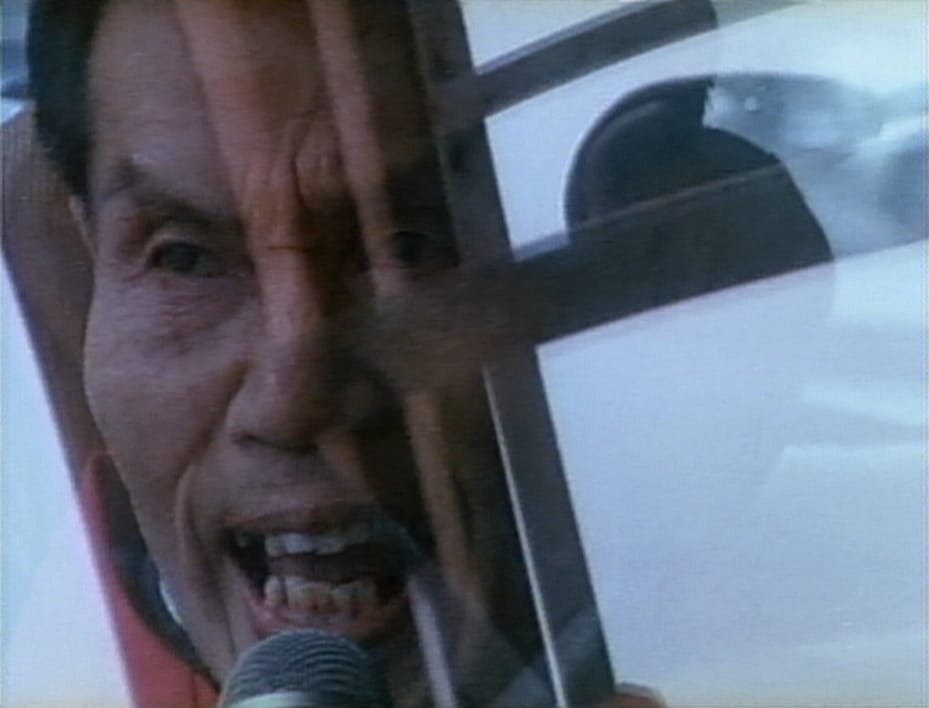
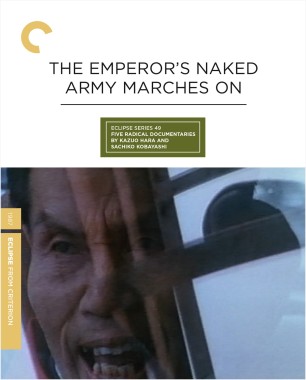
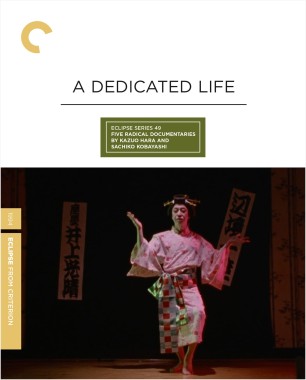
The director’s reputation, particularly outside of Japan, is almost entirely built around his first handful of films—what I am calling Hara 1: Goodbye CP (1972), Extreme Private Eros: Love Song 1974 (1974), The Emperor’s Naked Army Marches On (1987), and A Dedicated Life (1994). These are works that are profoundly inflected by Imamura’s earthy anthropology or, as the fiction filmmaker famously put it, “the relationship of the lower part of the human body and the lower part of the social structure.” Each of the above films pivots around a charismatic individual’s body. And to one degree or another, each involves a struggle over directorial control.
In contrast to this, there is the more challenging Hara 2, who emerges in his works of the new century. Here he embeds himself—and the viewer—in groups of regular folks engaged in struggles and in need of advocacy: the weak and downtrodden people that Urayama encouraged Hara to support. This mode is epitomized by Sennan Asbestos Disaster (2016).
This arc is fascinating in relation to the larger backdrop of Japanese cinema. Postwar documentary was dominated by filmmakers allied to massive social movements, such as those protesting American military bases, nuclear weapons, industrial pollution, and the Vietnam War. This trend is best represented by Tsuchimoto Noriaki’s Minamata series (on mercury poisoning caused by chemical-factory wastewater) and Ogawa Productions’ Sanrizuka series (on the epochal protests against the construction of Narita Airport). Around the turn of the century, this kind of collective, politicized 16 mm filmmaking was eclipsed by essayistic, personal films that were often made by single directors with consumer camcorders and without crews. Amid these historical developments, Hara always chose to push against the prevailing currents.
Hara had initially aspired to a career in still photography, and to that end entered the Tokyo College of Photography. He decided to leave that path for motion pictures because “photography only allowed me to get to know people on a superficial level.” This was his starting point, in the wake of the failed 1970 protests against the security treaty that kept Japan under the U.S. nuclear umbrella, and amid the newly extreme militancy of the Japanese Red Army. However, he rejected radical collectivity to embark on profoundly personal films as a lone, maverick, independent director. Decades later, as those political collectives gave way to young filmmakers making private documentaries, Hara, always the contrarian, turned to collectivities, traversing the historical arc backward.
He navigated this path with his life partner, Kobayashi Sachiko. When they met, he took the role of director and she producer, and their practice formed around a deep collaboration that has spanned more than half a century. The Hara I’ve known over the decades is a funny and charming figure. Possessing an almost aggressive curiosity, he is both an incessant talker and a listener who leans into every conversation with total concentration. He’s also a mess. “I’m a ball of complexes,” he told critic Nicolás Carrasco, and indeed he is. By contrast, Kobayashi is self-deprecating and strikes one as anxious and flighty at first glance. In fact, I’ve found she has nerves of steel, and her steady brilliance is what has ultimately made Hara’s films possible. It is a partnership of strange and wonderful complementarity.
Getting Personal
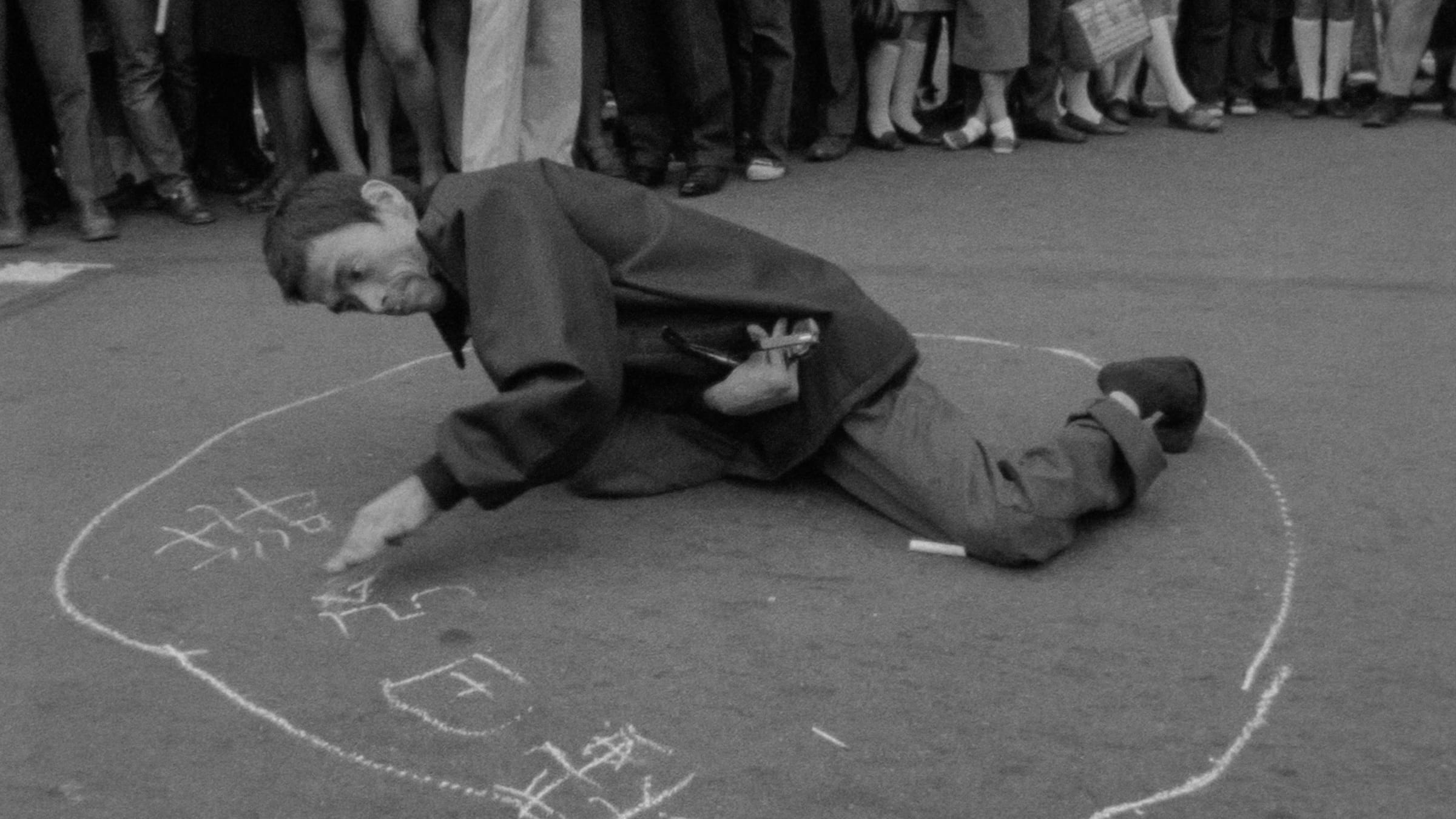
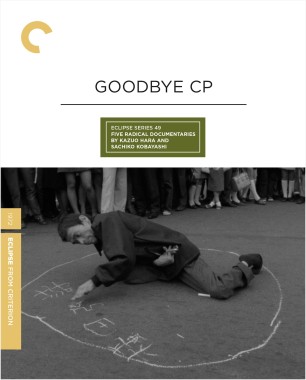
Hara Kazuo and Kobayashi Sachiko’s first work depicted people living with cerebral palsy (CP). From a certain perspective, this places it among the movement documentaries of disability activism, such as the powerful films of Tsuchimoto Noriaki and Yanagisawa Hisao, which elevate their subjects in an aura of purity and innocence. However, Goodbye CP was something entirely new: an unsentimental portrait of the daily life of a poet with the disease, Yokota Hiroshi, his body and voice cruelly distorted as if trapped in eternal agony. He argues with his wife, gets drunk with his disabled friends. In a society going to great lengths to hide the disabled, he crawls across city streets buck naked. The film offers a frank visual and aural representation of the damage the disease wreaks on the human body. Scholar Phil Kaffen has pointed out that this film forces spectators to think about their own bodies in relation to the bodies on-screen. He argues that Hara is not “building easy bridges or . . . erecting insurmountable barriers. Instead, the various excesses of the film push viewers into an uncomfortable in-between space, a deep chasm without rope or ladder in which we must wade through the muck of their own sensibilities, knowledge, perception of their own bodies, and understanding of film and documentary.” Faced with not only the struggles of the physical handicap but also the indignity of being disregarded by the “normal” people surrounding them, Yokota and his friends are shown in a new, taboo-breaking light.
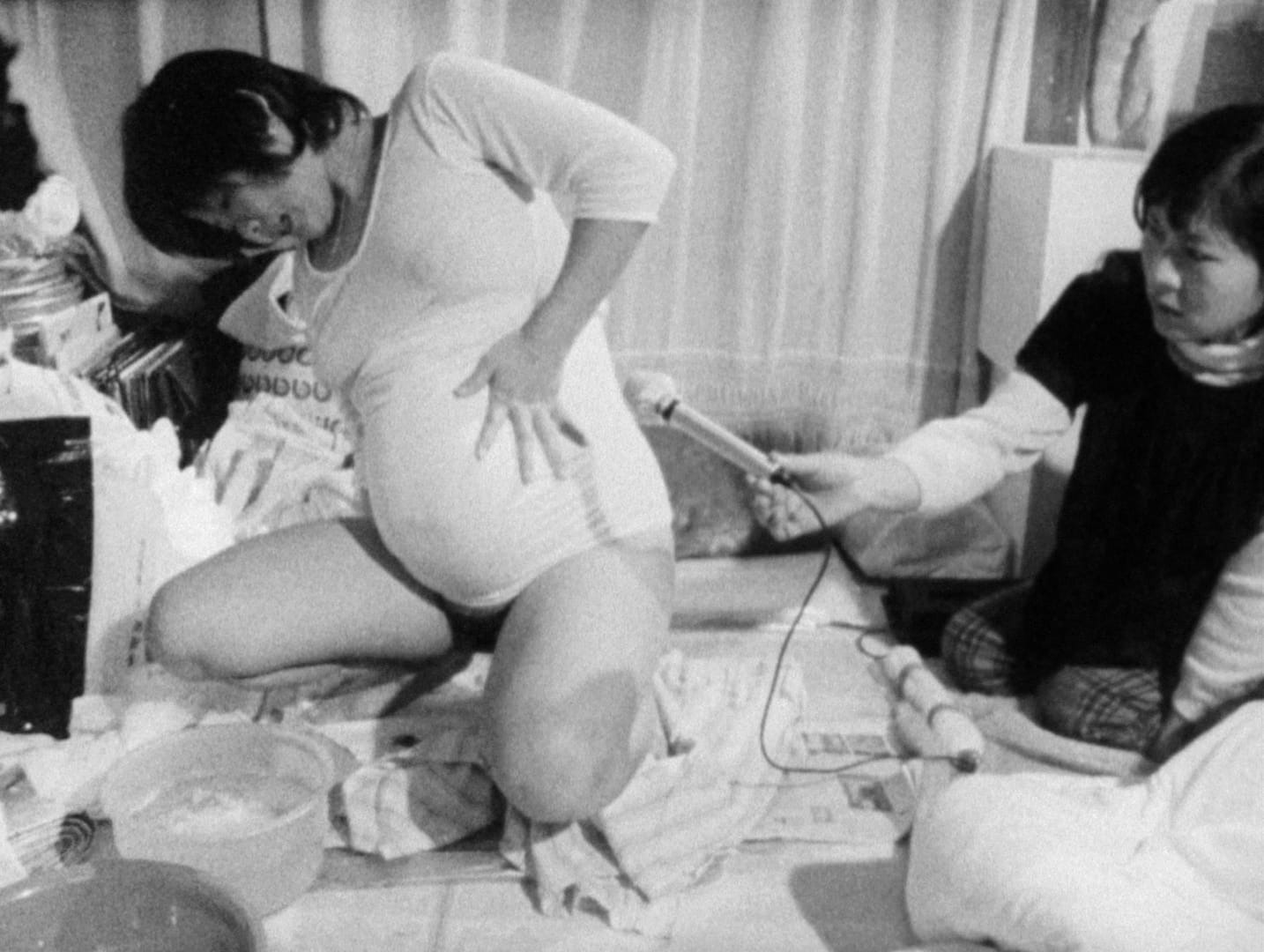
Two years later, Hara again sent a shock wave through the Japanese film community with Extreme Private Eros: Love Song 1974. The documentary chronicles something of a love triangle between Hara, Kobayashi, and Hara’s ex-wife, Takeda Miyuki. It’s an unlikely situation. Kobayashi was, at the time, both the director’s lover and producer. As for Takeda, she proves to be a force of nature—a feminist activist interested in both men and women, and not only Hara’s former lover but also the mother of his child. The film centers on the spectacular life and personality of Takeda, but it is really about her tangled, three-way relationship with Hara and Kobayashi.
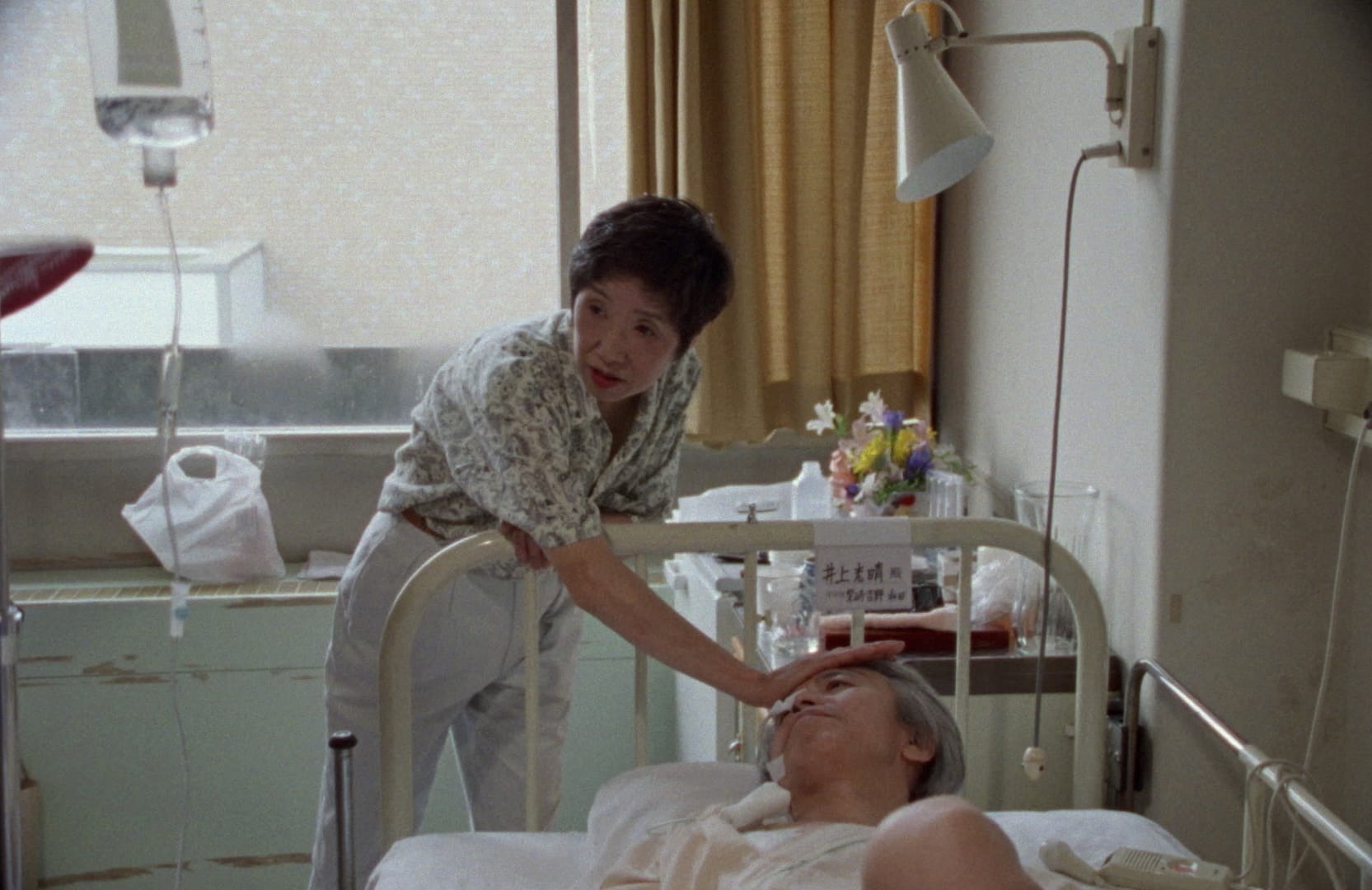
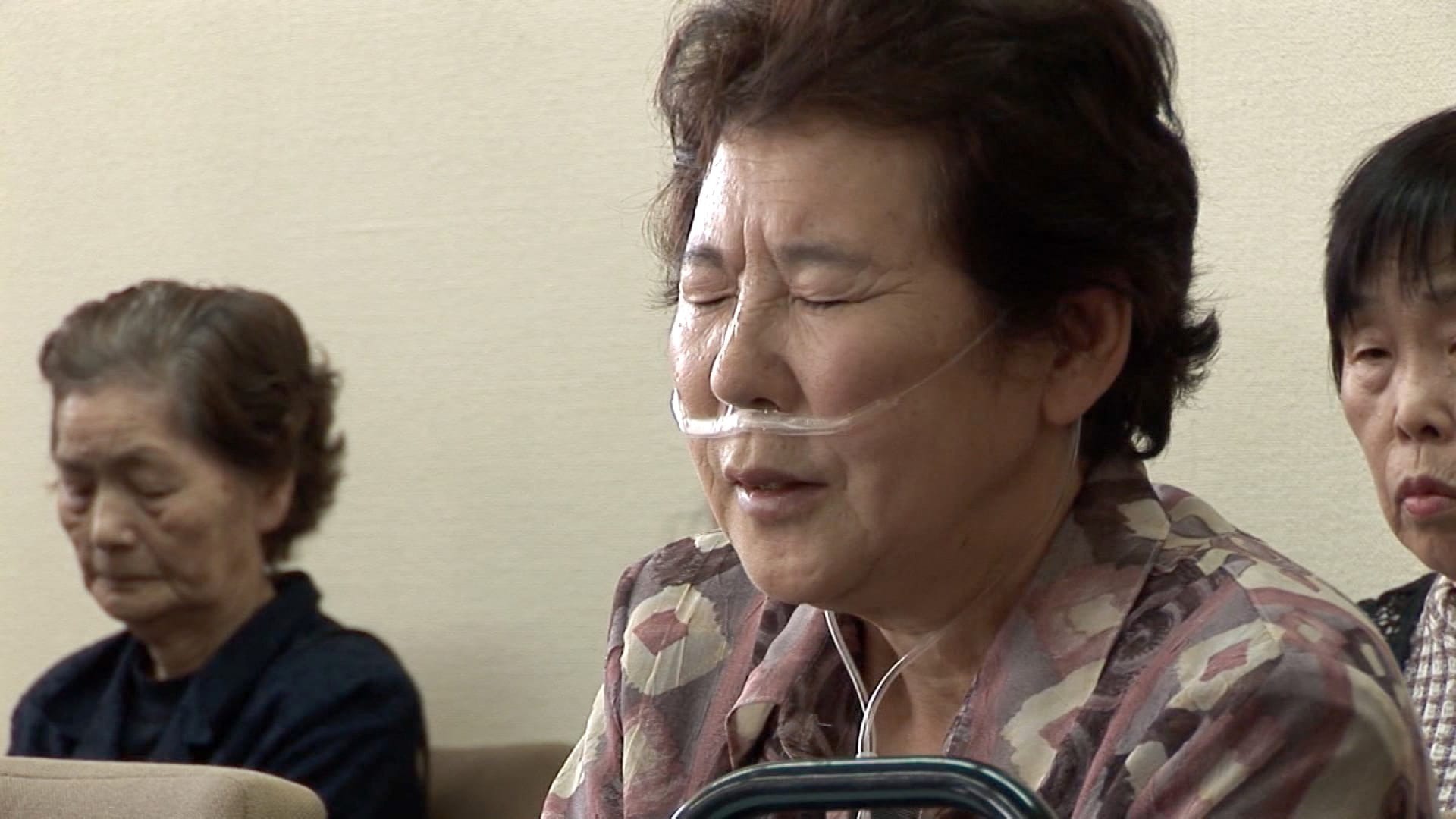
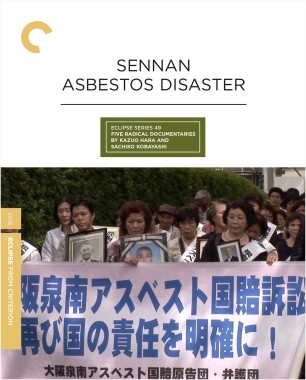
However, the film that best represents their new approach, and the scale and tone of Hara 2, is Sennan Asbestos Disaster. This also follows the legal battles of a group of citizens, in this case poisoned by asbestos factories in their Osaka neighborhood. Kobayashi and Hara participated in their struggle for almost ten years, but the film’s purview reaches back to the industrialization of the country after the Meiji Restoration in 1868. The setting is Sennan, whose economy had come to revolve around the spinning of asbestos into fireproof fabric. Most families were involved in this work in one way or another, but no one was left untouched because of the dangerous nature of asbestos.
The film makes clear that the government long knew about the perils of these factories, but it looked the other way while protecting the factory owners. Waves of illnesses finally provoked the lawsuit that Hara and Kobayashi follow. After its swift historical overview, this lengthy film focuses on the victims. Hara introduces them one by one as the lawsuit moves through the courts at a most painful pace, and follows them as some pass away. From time to time, the action-film approach of Hara 1 appears, as we see him frustrated at the victims’ timidity, goading them on to act before the camera and in the face of the government’s cruel indifference to their suffering.
In this sense, the apparent divide between Hara 1 and Hara 2 ultimately resolves into a single, evolving practice—one that moves from the volatile singular body to the fragile, embattled collective without ever relinquishing the tensions that define either mode. The later films do not abandon the provocations of the earlier work; rather, they redistribute them across a wider social field, where individual bodies remain the irreducible sites through which history, violence, and responsibility are felt. What emerges is not a softening but an expansion: a cinema that insists on the inseparability of the personal and the political, the singular and the communal. If Hara’s films continue to unsettle, it is because they are driven by a restlessness that refuses resolution, a commitment to confrontation that is directed as much inward as outward. As he has reflected, “In my case, my sustenance is my own question mark about myself. There is the unknown within me that would lead me somewhere that I don’t know, and I’m perhaps afraid of that . . . Therefore, although I am shooting my subjects with my camera, I am also carrying the camera toward the inside of myself, and going further and deeper within.” It is this recursive movement—between others and the self, between action and reflection—that binds this body of work together, and that ensures its enduring urgency.

More: Essays
Guillermo del Toro’s Frankenstein
In one of his most personal films, the Oscar-winning director imbues Mary Shelley’s gothic tale with elements of family melodrama and traces of his own Catholic upbringing.
God Laughs: Stanley Kubrick’s Cinema
Throughout his enormously influential body of work, the great director explored the conflict between humankind’s obsession with control and our capacity for error and failure.
Christiane F.: Up Against the Wall
Uli Edel’s harrowing tale of youth rebellion is one of cinema’s greatest Berlin films, a visceral urban portrait that captures the city’s doom and decadence during the Cold War era.
The Shout: Sound and Fury
Blending elements of psychological thriller, social satire, and psychedelic film, Jerzy Skolimowski’s Cannes-award-winning classic uses its audacious sound design to evoke the terror of English civilization.