West Indies: The Fugitive Slaves of Liberty: Torrents of Fire, Torrents of Blood
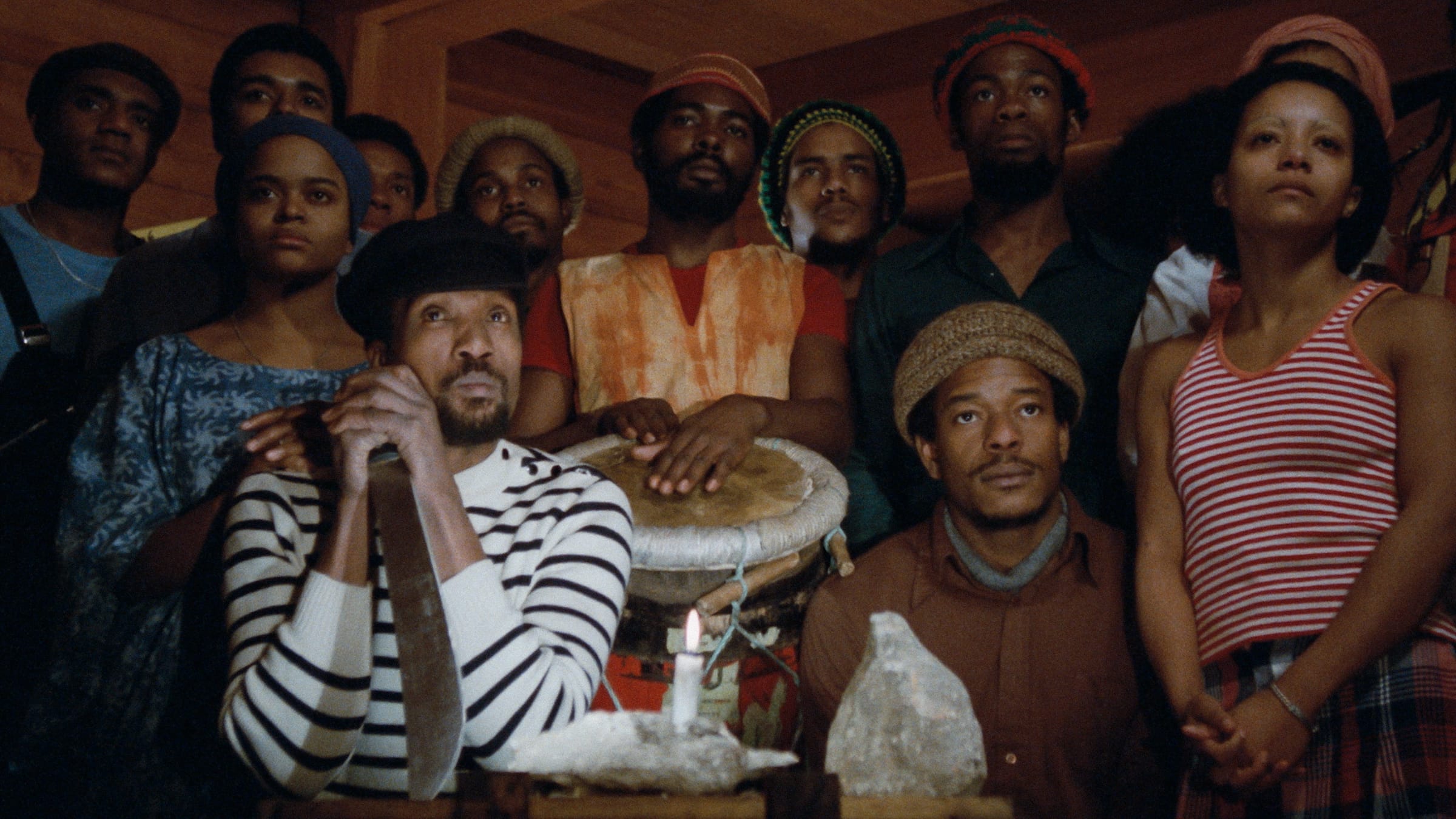
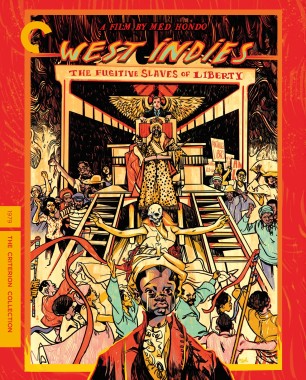
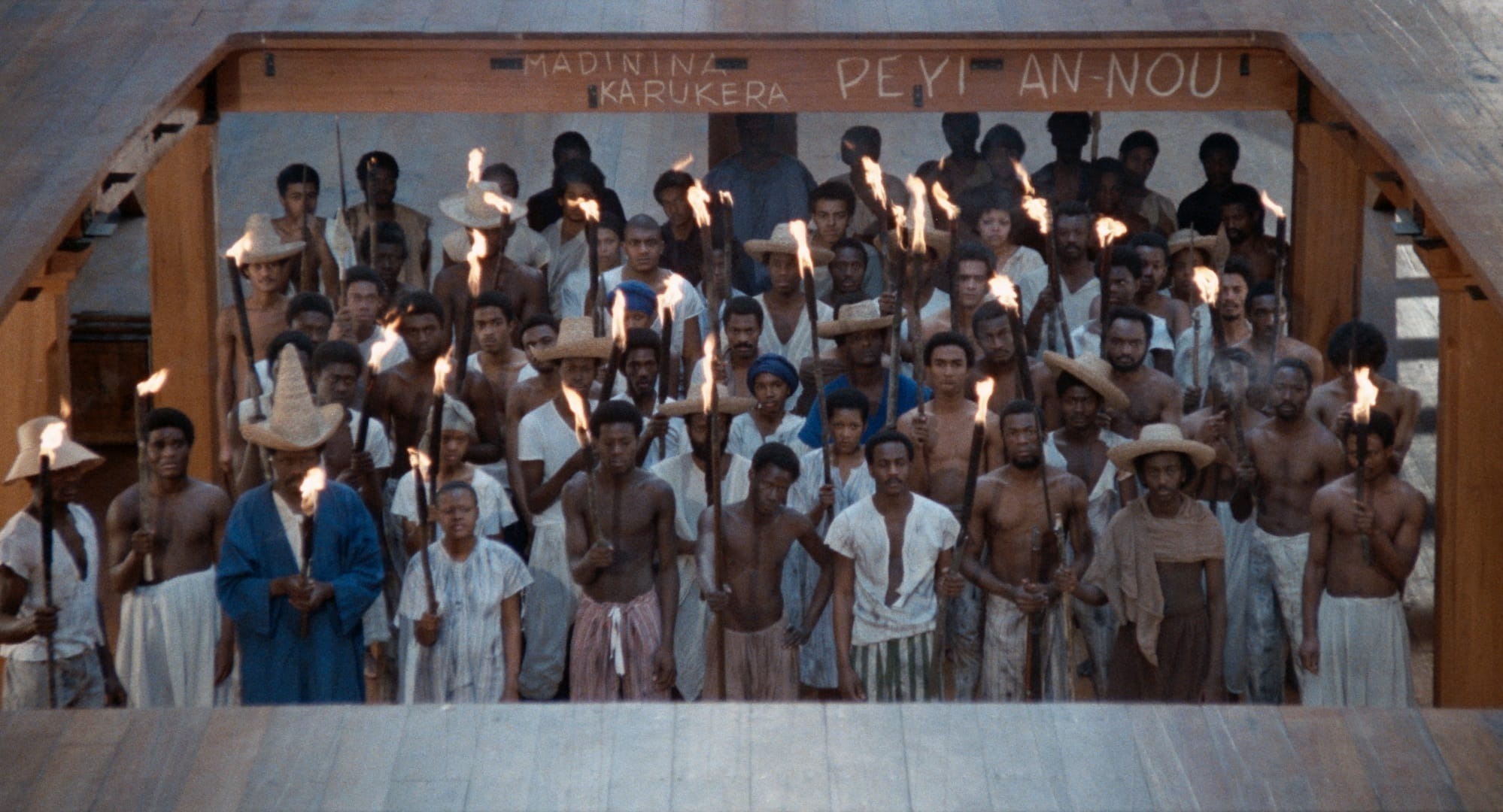
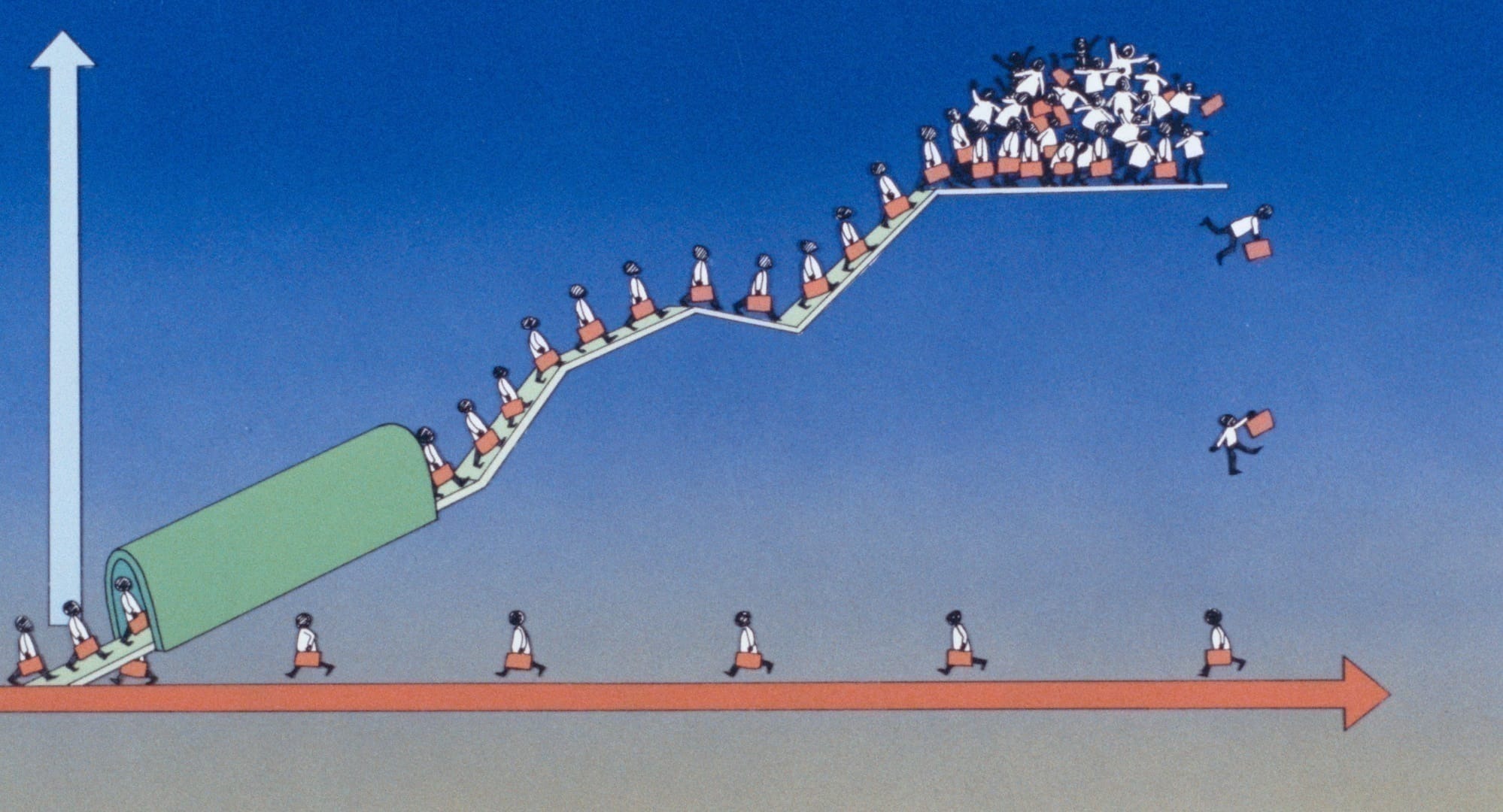
Over the course of four decades, the great Mauritanian French filmmaker Med Hondo created a stylistically diverse, politically trenchant body of work that frequently tapped into his own Pan-African roots and explored the existential and material stresses of Black people across the African diaspora. Hondo channeled his love for them—and his untrammeled fury at their oppression—into the creation of wholly singular films like Soleil Ô (1970), Sarraounia (1986), and his towering masterpiece, West Indies: The Fugitive Slaves of Liberty (1979).
Hondo was born in 1935 in Morocco to a mother from Mauritania—a nation that bridges the Arab Maghreb and sub-Saharan West Africa regions—and a father from Senegal, the westernmost country in Africa. Hondo spent his childhood in a Mauritania that was still under French colonial rule (it would not win independence until 1960). As a young man, he found a creative outlet working as a chef in Morocco, but his immersion in artistic practice—and in the often grinding realities of life as a Black African immigrant—truly began following his emigration to Marseille, France, in the 1950s. In between various low-paying jobs, Hondo took theater classes, moved to Paris, became a mentee of the legendary French actress Françoise Rosay, and started to perform in classic plays by the likes of Shakespeare, Racine, and Molière. Small film roles eventually came calling, and Hondo appeared in Jean-Luc Godard’s Masculin féminin (1966), Costa-Gavras’s Shock Troops (1967), Robert Enrico’s Zita (1968), and John Huston’s A Walk with Love and Death (1969).
Increasingly aware of the way Black and African experiences were absent from, or misrepresented in, much of Western art—and smarting from the lack of multifaceted roles for Black actors—Hondo sought means of authentic expression. In 1966, against a backdrop of successful decolonization efforts by many African nations and a radicalizing international Black consciousness, he cofounded a theatrical company called Shango (named after the Yoruba god of thunder) that performed work by playwrights from the African diaspora, including Aimé Césaire, Amiri Baraka, and René Depestre.
More: Essays
God Laughs: Stanley Kubrick’s Cinema
Throughout his enormously influential body of work, the great director explored the conflict between humankind’s obsession with control and our capacity for error and failure.
Christiane F.: Up Against the Wall
Uli Edel’s harrowing tale of youth rebellion is one of cinema’s greatest Berlin films, a visceral urban portrait that captures the city’s doom and decadence during the Cold War era.
The Shout: Sound and Fury
Blending elements of psychological thriller, social satire, and psychedelic film, Jerzy Skolimowski’s Cannes-award-winning classic uses its audacious sound design to evoke the terror of English civilization.
Welcome II the Terrordome: The Future Is Furious
A dystopian drama that draws on the influences of African mythology and hip-hop, Ngozi Onwurah’s debut feature uses a mix of speculative forms to expose anti-Blackness as a system that underpins the modern world.