Hope and Fjord
Share
Last year, in the main competition alone, Cannes launched Jafar Panahi’s It Was Just an Accident, Oliver Laxe’s Sirāt, Kleber Mendonça Filho’s The Secret Agent, Bi Gan’s Resurrection, Joachim Trier’s Sentimental Value, and Kelly Reichardt’s The Mastermind—and that’s just skimming off the top of a stellar lineup. By this point in the festival’s seventy-ninth edition, the general consensus seems to be that, even with a few days left to go, there is no way this year is going to measure up. But the consensus stops there.
A glance at the critics’ grids cited in yesterday’s roundup reveals an unusual diversity of clashing opinions. When Kyle Buchanan, the New York Times’ man on the awards circuit, predicted the other day that Scarlett Johansson’s performance in James Gray’s Paper Tiger would put her in the running for an Oscar, a fellow pundit scoffed that Johansson’s turn was more deserving of a Razzie. Buchanan reports on a debate over Ryusuke Hamaguchi’s All of a Sudden that seems to have gotten a lot noisier than the movie.
And just when Buchanan was thinking that Fjord might win Cristian Mungiu another Palme d’Or—his 4 Months, 3 Weeks and 2 Days won in 2007—“as the closing credits began, the journalist in front of me broke into derisive laughter,” he writes. “But I don’t expect any competition film still to come will prove more polarizing than Hope,” Na Hong-jin’s long-awaited follow-up to The Wailing (2016).
Hope
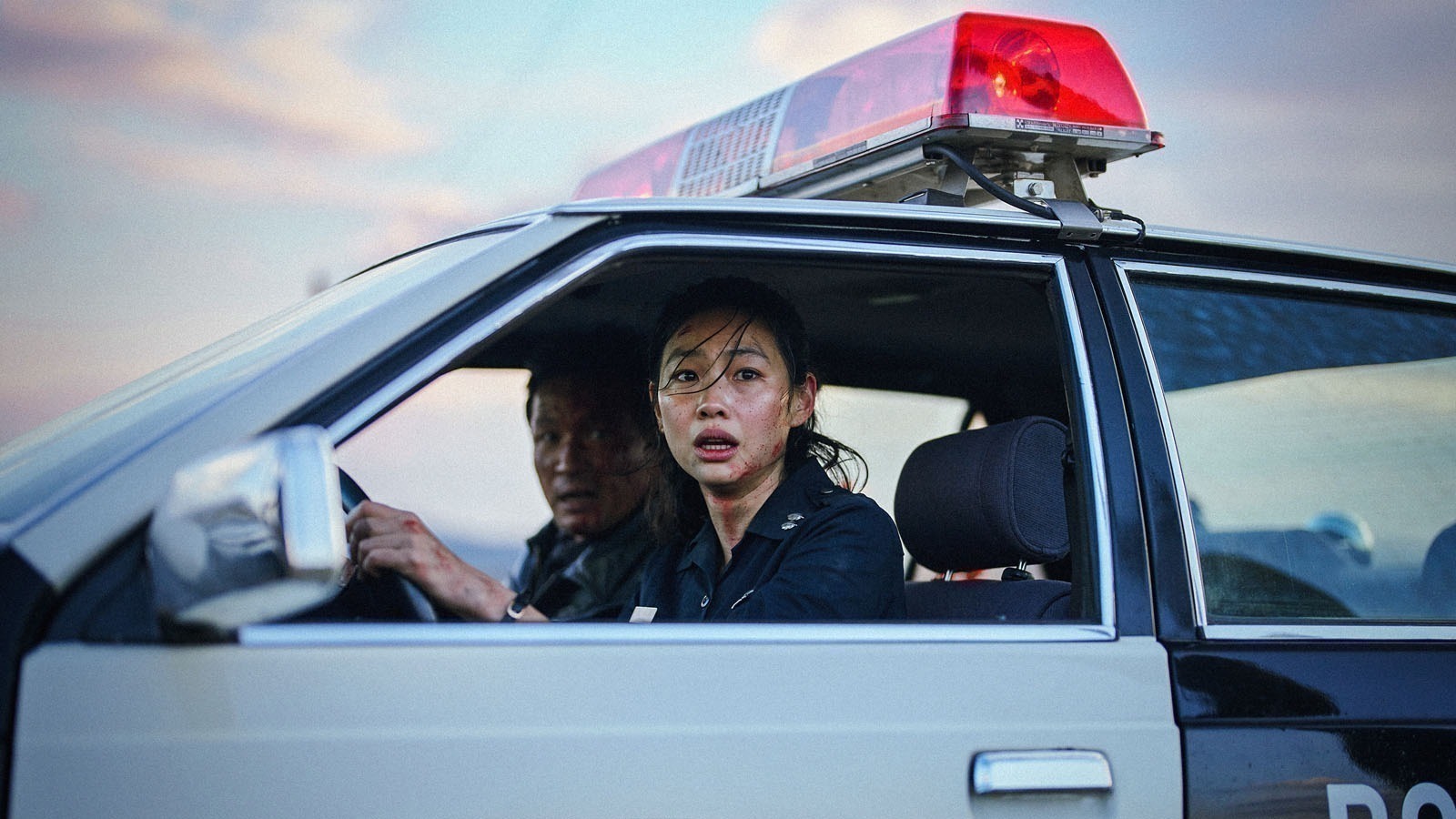
The mostly elderly residents of Hope Harbor, a remote South Korean town tucked up near the DMZ, are alarmed by reports of a tiger wandering down across the border, ravaging a bull, and leaving the bloody mess in the middle of a road. It isn’t long, though, before police chief Bum-seok (Hwang Jung-min) and rookie cop Sung-ae (Hoyeon, the model-turned-actor who broke through in Squid Game) realize that no tiger could have torn a tank-sized hole through the local real-estate office or flung a car halfway across town.
“It’s hard to overstate just how wildly entertaining this first hour is,” writes Jessica Kiang in Variety. Na’s alien invasion movie is “inflected with Western and 1950s sci-fi B picture flourishes, so that it plays like an expansive and expensive riff on Ron Underwood’s cult classic Tremors, with genius cinematographer Hong Kyung-pyo (Parasite, Burning, The Wailing) wielding his gliding camera with such insolent grace that it seems like serenely sarcastic commentary on the chaos and carnage of Lee Hwokyoung’s production design.” Kiang’s problems with Hope have to do with “the weightless, old-school video-game aesthetic of the alien monster design” and a “slack middle section” of a movie that runs well over two and a half hours.
“Set piece after kick-ass set piece, the movie delivers, from the vehicular daredevilry to the electrifying horseback scenes in the forest, with lots of superbly choreographed clashes,” writes the Hollywood Reporter’s David Rooney. But for IndieWire’s David Ehrlich, Hope is “a trite and tedious bumpkins vs. monsters saga that only has the creative propulsion to sustain itself for about forty-five minutes, and not enough to spare it from some of the worst creature effects this side of the Syfy Channel or The Mummy Returns . . . It’s clear that something went terribly wrong in the making of this movie, but the worst part about it is how much goes ecstatically right before the wheels fall off.”
The most expensive movie in Korean history, Hope also stars Michael Fassbender, Alicia Vikander, Taylor Russell, and Cameron Britton in roles that the spoiler-sensitive are not going to want to hear about. “I don’t know whether there’ll be a sequel after this one,” Na tells Joshua Rothkopf in the Los Angeles Times, “but if so, that sequel is going to be centered around them. So picking the right actors was very important for me.”
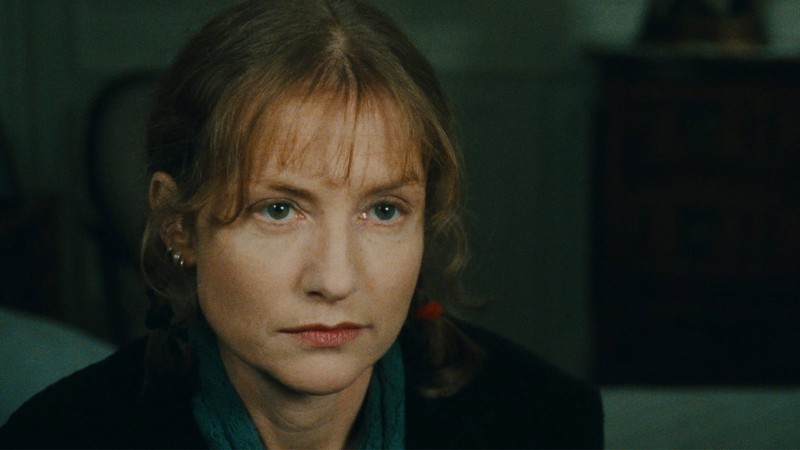
Fjord
The Gheorghius are a no-phone, no-internet conservative Christian family who have just moved from Bucharest to a small Norwegian town where the prevailing air is friendly, respectfully agnostic, and liberal. Mihai (Sebastian Stan) and Lisbet (Renate Reinsve) have four kids and a baby, none of whom are allowed to listen to secular music. Misdeeds earn a whack on the butt.
When the eldest daughter, Elia (Vanessa Ceban), shows up at school one day with a few bruises, child services are alerted. The children are questioned and whisked off to foster families—the baby, too. “It’s never made precisely clear just how severely, or how knowingly, Mihai and Lisbet have harmed their children,” writes Variety’s Guy Lodge, “while both Stan’s and Reinsve’s measured, tightly clenched performances are courageously dour in affect, inviting no easy sympathy from viewers, whatever their degree of culpability. As this community scandal grows, mutates and eventually reaches the judiciary . . . the stakes shift: In certain lines of questioning from the prosecution, the Gheorghius’ personal beliefs seem to be on trial as much as their parenting.”
“If Fjord were a film involving, say, a family of Muslim immigrants, you might expect certain rhythms to its conflicts and power dynamics,” writes Vulture’s Alison Willmore. “But the Euro-on-Euro aspect and subsequent value clashes in Mungiu’s film create wildly unpredictable rearrangements of sympathies as the story unfolds. Mungiu remains shockingly gifted at drawing suspense out of characters who are trying to navigate unfair systems, but even if it’s never really in doubt that the Gheorghius should be allowed to have back the children they clearly love, it’s also enjoyably disorienting to watch a movie in which the main underdog is a bigoted pro-spanking Christian traditionalist who is being menaced by cheerfully polite humanists who keep citing the word trauma. It wouldn’t take much to turn this scenario into a right-wing culture-war fantasy.”
At Little White Lies, David Jenkins isn’t having it: “You could imagine the high priest of bureaucratic cynicism himself, Franz Kafka, watching this film . . . and saying, ‘No, sorry lads, it’s too much.’” Fjord is “so hysterical about apparent top-down government oppression in the Scandinavian ruralities that it might play as the less-entertaining half of a double bill with famed anti-weed PSA, Reefer Madness. Watching this film, you’re left to wonder what Norway has done to Mungiu to prompt this wacky broadside.”
“Mungiu has spent years performing the same sleight of hand: presenting the absence of a thesis as the only thesis his films are willing to embrace,” writes Victor Morozov at Films in Frame. “Fjord is determined to convince us that no clear resolution is possible. But in doing so, it overlooks the fact that this is already a form of resolution in itself. The characters are reduced to dispensable pretexts, mere vehicles for an impeccably engineered dramaturgy. To be fair, Mungiu has remained entirely consistent in this regard, and contemporary society . . . may well seem to validate his position. But that does not save his cinema from feeling increasingly rigid and overdetermined.”
Don’t miss out on your Daily briefing! Subscribe to the RSS feed.