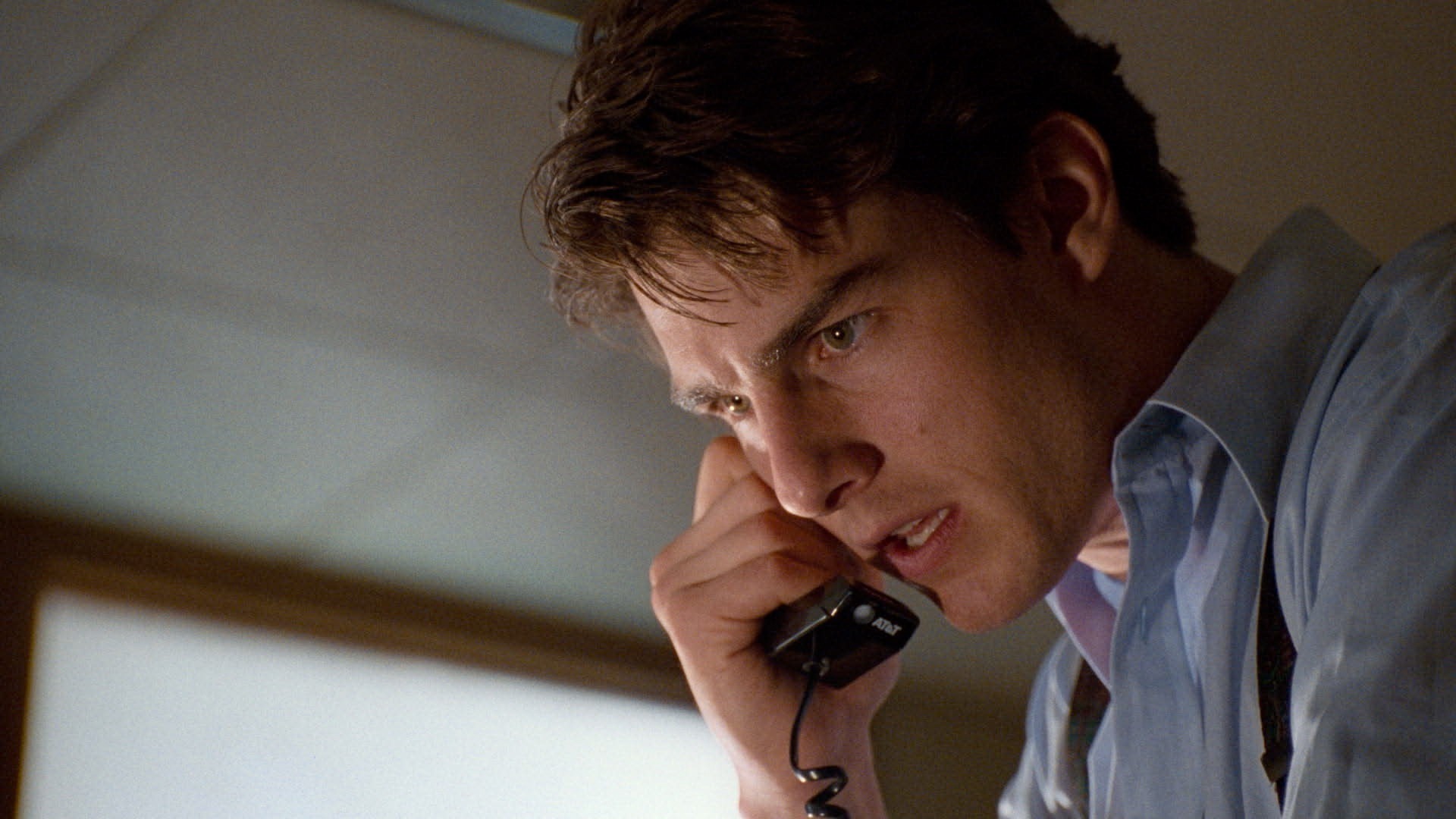
Befitting the strangeness of the Great Moderation economy, the stakes are effectively nonexistent—“If this deal goes through, we’ll be rich,” Sanders tells his wife, who responds, “we’re already rich”; when Johnson’s assault accusation is levied, the biggest threat to Sanders isn’t jail or even social sanction, it’s being sent to Austin, Texas—but are cast as existential. DigiCom’s business is about to be supercharged, everyone agrees, and the worst possible outcome is to be left behind. In the movie’s inevitable virtual-reality climax, Sanders becomes something like a ghost, watching helplessly as a wireframe Johnson, oblivious to his existence, goes about deleting exonerating files.
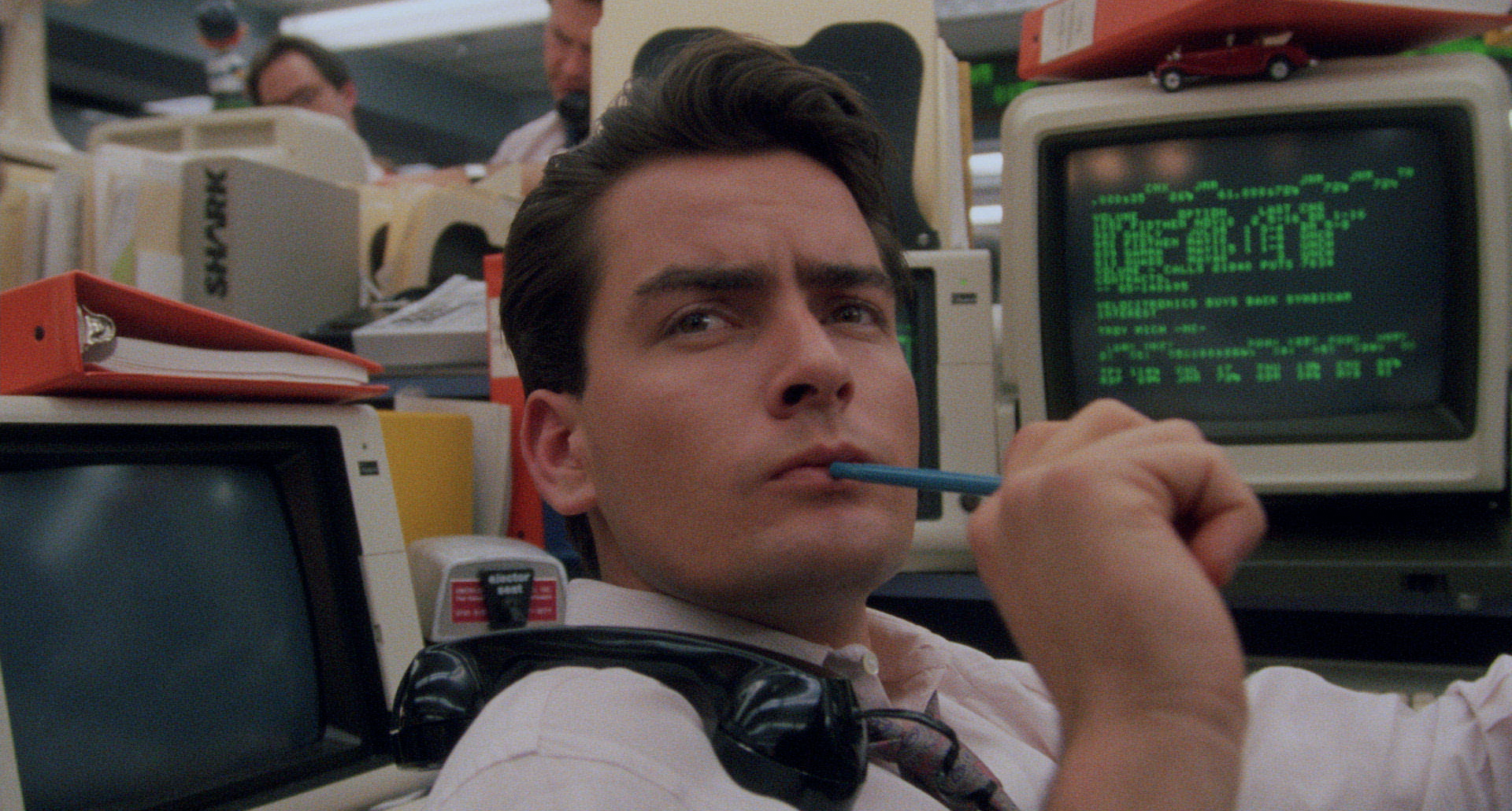
If the conspiratorial structure of corporate-thriller plots reflects an increasingly mystified and stratified U.S. economy, the recurring use of mergers and acquisitions to establish dramatic stakes in these movies—beginning with Wall Street, which uses Gordon Gekko’s hostile takeover of Bluestar Airlines its central dramatic device—should be seen as a reverberation of Hollywood’s own experience of consolidation over the twenty years between Black Monday and the GFC. Sanders’s jockeying for position around corporate restructuring was probably a familiar experience to the executives at Warner Bros who greenlit Disclosure; the studio had merged with Time, Inc., in 1989, in a deal that was nearly thwarted at the last minute by a hostile-takeover bid from Paramount parent conglomerate Gulf+Western.
The rapid consolidation that would follow over the following two decades didn’t necessarily seem like a hazard for the movie industry as either a creative or a business concern; major studios and especially their independent arms enjoyed a remarkable run of critical and commercial success even as their ownership concentrated, and corporate profits soared. In the eighteen months before Disclosure was released, Viacom bought Paramount for $10 billion, and Disney bought Miramax for $60 million; the resulting conglomerates would win the Best Picture Oscars for the next five years and make the executives involved unimaginably rich (while also, notably given Disclosure’s subject matter, ignoring horrifying whispers of serial sexual assault by Miramax’s CEO Harvey Weinstein). No wonder, then, that the DigiCom merger is treated mainly as a threat to Sanders’s personal standing and potential future earnings, rather than the business’s product or profits.
Sanders ultimately clears his name, and despite the internal conspiracy he’s discovered, the merger goes through. He isn’t left behind—yet. But who can say what might happen to DigiCom, over the next decade? Maybe it would be capsized by the tech bubble bursting in 2001, or, given the clear problems with its corporate culture, caught in an accounting scandal like the one that collapsed Enron that same year. Or maybe the disc-drive manufacturing company—a tempting acquisition for a media empire driven by DVD-sales profits—would end up as a subsidiary of one of the Big Six conglomerates that, by the mid-2000s, bankrolled the vast majority of movies seen by Americans.
Where the mergers and acquisitions in Wall Street, Disclosure, and Antitrust—morally ambiguous though they might be—appear as gateways to wealth and success for those movies’ heroes, the plot-driving merger in Michael Clayton (2007) is treated more like a closing bell. The New York–based firm Kenner, Bach & Ledeen is about to merge with an unnamed London counterpart, and the stakes are existential; if the deal doesn’t go through, explains partner Marty Bach—played by none other than Sydney Pollack—“we’ll be selling off the goddamn furniture.” (Pollack might well have been talking to himself: his personal shingle Mirage was one of the three production companies behind Michael Clayton, all of which were shuttered or reduced in size in the years on either side of the film’s release.)
In the movie’s opening scene, an army of lawyers gather in a conference room in an office high-rise, trying to get a settlement finished—and any bodies, metaphorical or literal, fully buried—before the merger deadline. The portentous emptiness of the office hallways, the secrecy of the meeting (Bach tells a Journal reporter fishing for info to kiss off), and the manic voice-over monologue of partner Arthur Edens (Tom Wilkinson) make the scene feels like a prefiguration of the bankruptcy-driven mergers and acquisitions that would ripple through the finance industry the year after the film’s release—a series of all-night negotiations and conferences more literally depicted from the other side of the crisis in the 2011 financial thriller Margin Call.
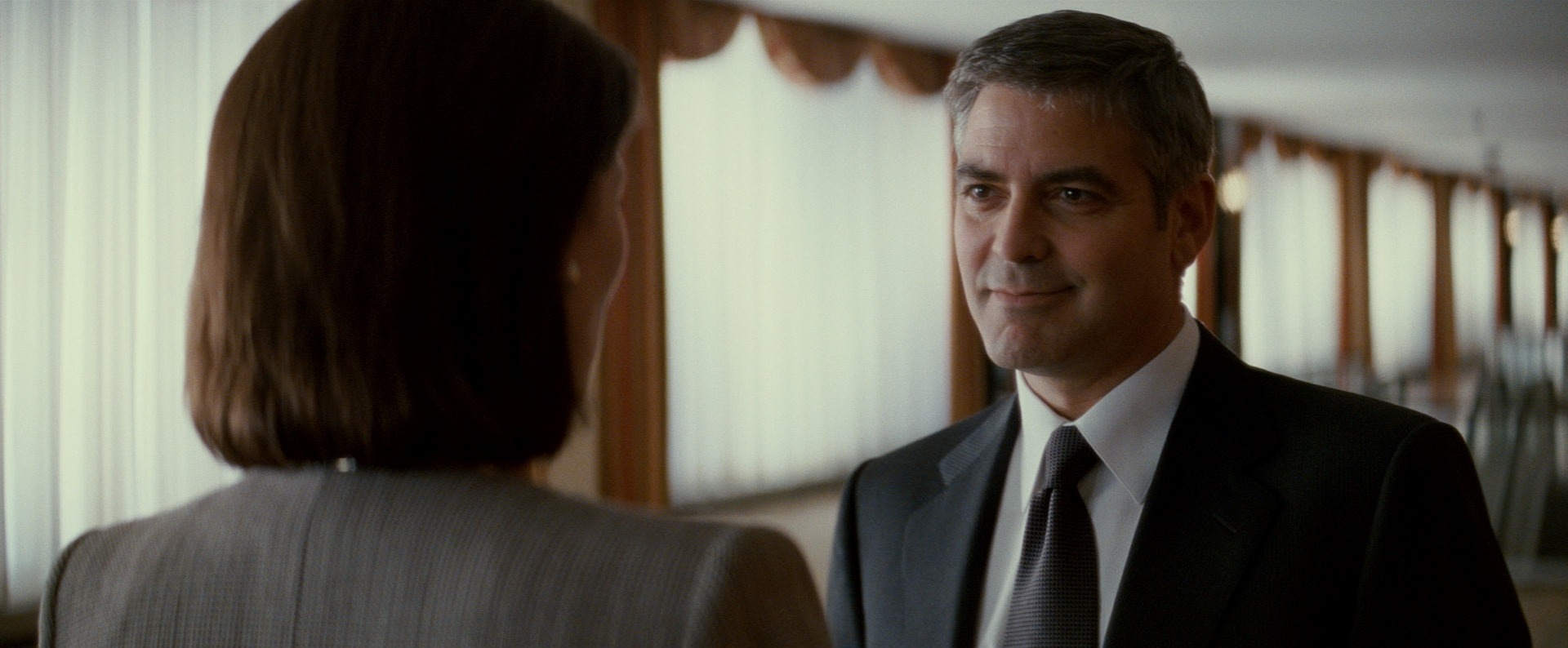
Somebody might get rich from this deal, but it isn’t our titular hero (George Clooney); in fact, he’s worried it will end his career and leave him without protection, another casualty of a shifting economic environment, “trying to explain what the hell it is I do around here.” Unlike the Foxes and McDeeres of early-period corporate thrillers, Clayton isn’t a bushy-tailed young naif but a greying fixer. Those conspiracies that our heroes uncover in The Firm and Antitrust? That’s the kind of thing Clayton is paid to cover up. He’s there to keep business orderly and functioning, one bribe, bail bond, or called-in favor at a time. As he tells a client early in the movie, “I’m not a miracle-worker. I’m a janitor. The math on this is simple. The smaller the mess, the easier it is for me to clean up.” (Tony Gilroy, making his directorial debut at fifty, could probably relate, having become one of Hollywood’s most celebrated script doctors in the years since The Devil’s Advocate.)
The mess, in this case, involves an agrochemical giant called U-North, facing a class-action lawsuit over toxic pesticides. Edens, overseeing the U-North defense, has diligently protected his client from accountability. But the constant stress that accompanies years of concealment and rationalization has broken him, and Edens can no longer live with himself. “Am I just some freak organism that’s been put here to eat and sleep and spend my days defending this one horrific chain of carcinogenic molecules?” he asks Clayton, his former protégé. After he steals an incriminating memo and threatens to release it, Clayton is tasked with tracking him down and cleaning up.