Directors’ Fortnight 2026 Lineup
Share
First announced in 2022, Kantemir Balagov’s Butterfly Jam will finally see its world premiere as the opening film at this year’s Directors’ Fortnight. Balagov’s two previous features premiered in the Un Certain Regard program at Cannes, where Closeness (2017) won the FIPRESCI Prize and Beanpole (2019) won both the FIPRESCI and the award for Best Director. Presenting the Fortnight lineup on Tuesday morning, artistic director Julien Rejl said that Butterfly Jam “brings to mind the films of James Gray.”
With a cast headlined by Barry Keoghan and Riley Keough and featuring Harry Melling, Tommy McInnis, and Monica Bellucci, Butterfly Jam tells the story of fifteen-year-old Pyteh, an aspiring professional wrestler who helps out at the Circassian restaurant in New Jersey run by his father and his aunt. One of his dad’s misguided schemes blows up in his face, and Pyteh will have to come to terms with the man his father truly is.
Founded in 1969 by the French Directors Guild, the Fortnight will screen nineteen features and nine short and medium-length works during its fifty-eighth edition, which runs from May 13 through 23. The selection of features is finely balanced between new work by established directors, debuts, fiction, nonfiction, and animation.
Big Names, Fresh Work
Octave Mirbeau’s 1900 novel The Diary of a Chambermaid has been adapted by Jean Renoir, Luis Buñuel, and Benoît Jacquot, and last summer, Radu Jude told the Hollywood Reporter’s Georg Szalai that his version will be “like a very distant dialogue” with the original story. “I want to speak about immigration and about Romanians working abroad. It’s about a woman who works for a French family in Bordeaux while her own small daughter remains home . . . I’m interested in exploring this connection between the Western world and Romania and Eastern Europe through the story of a character.”
Adapted from Keiran Goddard’s 2024 novel by playwright Enda Walsh, who wrote the screenplays for Steve McQueen’s Hunger (2008) and Lynne Ramsay’s Die My Love (2025), Clio Barnard’s I See Buildings Fall Like Lightning tracks five friends who have grown up together in a working-class neighborhood in Birmingham, England. They had dreams and plans to realize them, but the first sentence of Goddard’s novel reads: “And then none of it happened.”
Lisandro Alonso’s Double Freedom (La libertad doble) is a sequel to his 2001 debut, La libertad, which spent seventy-three mostly quiet minutes with Misael, an Argentine woodcutter simply going about his day. Twenty-five years later, Misael is still at it, still working alone in the forest, and still free—until his older sister falls ill and he’s called on to care for her.
Dominga Sotomayor has won a Tiger Award in Rotterdam for Thursday Till Sunday (2012) and a Leopard for Best Direction in Locarno for Too Late to Die Young (2018). La perra, adapted from Pilar Quintana’s 2017 novel and produced by Rodrigo Teixeira, will star Manuela Oyarzún (Pablo Larraín’s No) and Selton Mello (I’m Still Here) in the story of a woman living on an island off the southern coast of Chile. She rescues an abandoned puppy and calls her Yuri—the name she was going to give the daughter she never had.
July Jung’s A Girl at My Door (2014) premiered in the Un Certain Regard program and her follow-up, Next Sohee, closed out the 2022 edition of Critics’ Week. Jung’s third feature, Dora, features former K-pop idol Kim Do-yeon in the title role and Sakura Ando, who has starred in films directed by Hirokazu Kore-eda and Kiyoshi Kurosawa. The new film is “a very free and contemporary adaptation of Dora’s case study by Freud in 1900,” says Julien Rejl. “It’s a very famous case but transposed here to contemporary Korea . . . The issue of desire and the desire for a young woman is at the core of the film.”
Arie Esiri and Chuko Esiri’s Eyimofe (This Is My Desire) was met with outstanding reviews when it premiered in Berlin in 2020 and then went on to win five Africa Movie Academy Awards. The brothers’ follow-up, Clarissa, is a reimagining of Virginia Woolf’s 1925 novel Mrs. Dalloway set in contemporary Lagos, and it stars Sophie Okonedo, David Oyelowo, Ayo Edebiri, and Nikki Amuka-Bird.
Jorge Thielen Armand has screened his work in Venice, Rotterdam, New York, and at Sundance, and his latest feature, Death Has No Master, centers on a middle-aged woman who returns to her family’s cacao plantation in Venezuela after thirty years. She’s been thinking about settling down there, but former workers have taken over the place. The inevitable standoff turns violent.
First Features
Sompot Chidgasornpongse has made well over a dozen short films, but he’s best known for his close work with Apichatpong Weerasethakul as an assistant director, from Tropical Malady (2004) through Memoria (2021). As a producer, Apichatpong has overseen Sompot’s first feature, 9 Temples to Heaven. Nine members of one family aim to spend a full day visiting nine temples in order to build up the good karma they hope will prolong their grandmother’s life. “The film is an ensemble piece, and the audience will be immersed as an invisible member of the family,” says Sompot.
Sarah Arnold’s 2014 short Totems won the Pardino d’oro (Concorso nazionale) in Locarno, and her first feature, Too Many Beasts, opens with a conflict between hunters and farmers in northeastern France sparked by roaming wild boars. When one of the farmers goes missing, a Corsican police officer is called in to investigate.
Eivind Landsvik, whose 2023 short Tits screened in competition at Cannes, directs singer-songwriter Marie Ulven, better known as Girl in Red, in his debut feature, Low Expectations. Ulven plays Maja, an acclaimed artist who has worked, toured, and partied to the point of exhaustion. And she’s only twenty-nine. She decides to pull back, move in with her mom, take a part-time job, and just watch life go by from the sidelines—if life will let her.
Reed Van Dyk’s DeKalb Elementary (2017) was nominated for an Oscar for Best Live Action Short Film, and he’s lined up Kenneth Branagh, Hiam Abbass, and Boyd Holbrook to head the cast of Atonement. Based on Dexter Filkins’s 2012 piece for the New Yorker, Atonement tells the story of a marine who seeks forgiveness from the surviving members of an Iraqi family he and his unit fired on in 2003.
Lila Pinell’s Shana is “the type of comedy we’d like to see more of,” says Julien Rejl. Pinell has made a handful of short films, worked quite a bit in television, and codirected two features. This is her first solo outing, an expansion of her 2021 short Le roi David, the winner of the Prix Jean Vigo. Eva Huault once again plays Shana, the inheritor of a ring she hopes will bring her better luck than she’s been having lately. The cast also features Noémie Lvovsky.
Documentaries
Now ninety-four, Alain Cavalier has been making films for nearly seven decades, and his Thérèse (1986) won Best Film and Best Director at the César Awards. Cavalier was also “among the pioneering discoverers of new films and talents at the start of the Fortnight,” says Julien Rejl. “We are extremely proud to present the final installment of his filmed diary,” Thanks for Coming.
Gabin, a portrait of the youngest son in a family that runs a butcher shop in northern France, is the first feature from Maxence Voiseux. Gabin is expected to take over the business, but he dreams of breaking free. Shot over the course of a full decade, Gabin traces a life from ages eight to eighteen.
The third documentary in the lineup premiered to raves at Sundance. Shot in the summer of 1972, when William Greaves (Symbiopsychotaxiplasm: Take One) gathered luminaries of the Harlem Renaissance for an evening in Duke Ellington’s townhouse, Once Upon a Time in Harlem is directed by Greaves’s son, David Greaves, who manned one of the cameras. The New Yorker’s Richard Brody has called Once Upon a Time in Harlem “one of the greatest cinematic works of creative nonfiction.”
Animation
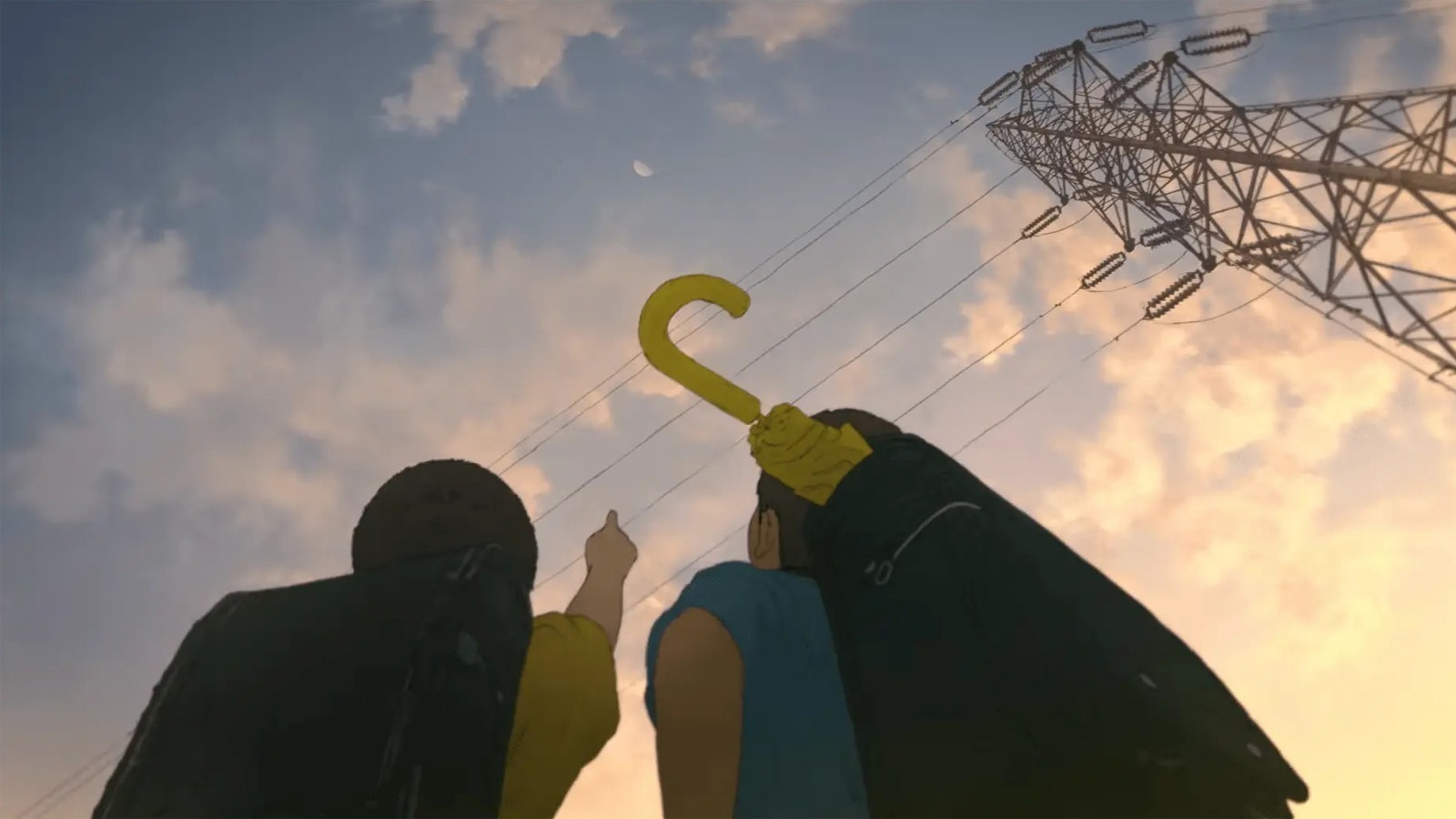
We Are Aliens, the first feature from anime artist Kohei Kadowaki, traces the story of two friends who meet in the third grade, grow close, and then, over the course of thirty years, grow apart. Sébastien Laudenbach is best known for codirecting Chicken for Linda! (2023) with Chiara Malta, and he’s gone solo on Viva Carmen, an adaptation of Georges Bizet’s 1875 opera, “but also,” he says, “a spin-off.” The story is told from the point of view of thirteen-year-old Salva, a street kid in 1840s Andalusia who is determined to prevent Carmen’s death.
The 2026 edition of the Fortnight will wrap with Le vertige, a late and entirely unexpected entry from Quentin Dupieux, who already has Full Phil lined up to premiere in Cannes as a Midnight Screening. Julien Rejl won’t say much quite yet about Le vertige other than that it’s a 3D motion-capture animation featuring the voices of Dupieux’s frequent collaborators Alain Chabbat, Jonathan Cohen, and Anaïs Demoustier.
Endnotes
During the Fortnight’s opening ceremony, the French Directors’ Guild will present the Carrosse d’Or, an award presented since 2002 to “a filmmaker who has left their mark on the history of cinema,” to Claire Denis. And when all is said and done, the Fortnight will announce the winner of this year’s People’s Choice, introduced in 2024 as the first audience award to be presented in Cannes. The first winner was Matthew Rankin’s Universal Language, and last year’s winner was Hasan Hadi’s The President’s Cake, which also took home the Camera d’Or, the prize given to the best first feature to premiere in Cannes’ Official Selection, Directors’s Fortnight, or Critics’ Week.
Don’t miss out on your Daily briefing! Subscribe to the RSS feed.