New Directors/New Films 2026, Part One
Share
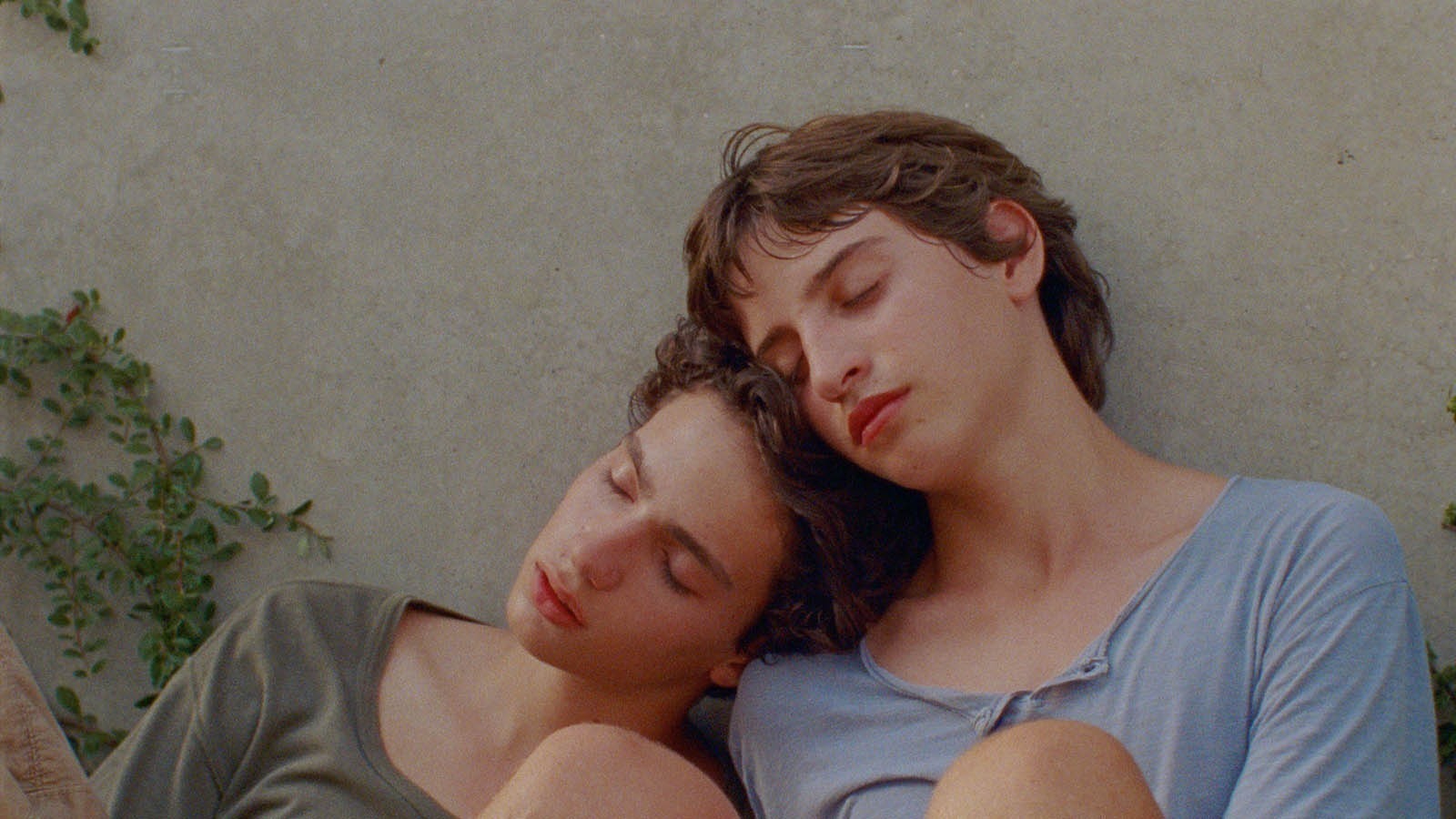
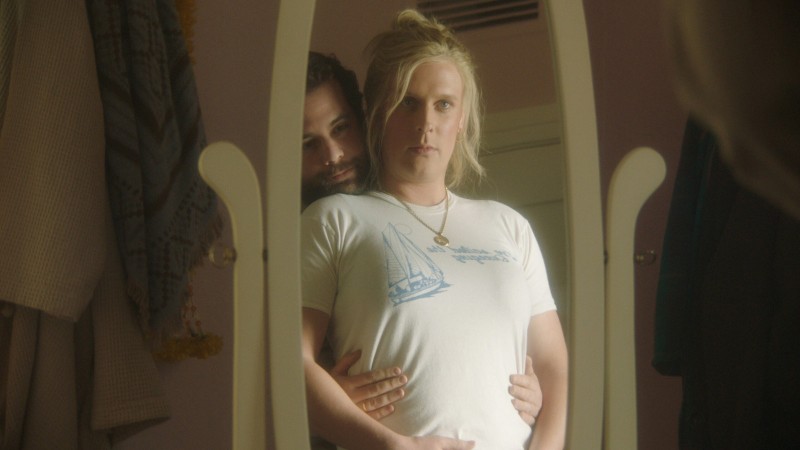
With his first feature, Leviticus, Adrian Chiarella has opened the fifty-fifth edition of New Directors/New Films, taking part in Q&As on Wednesday at the Museum of Modern Art in New York and this evening at Film at Lincoln Center. A critical hit when it premiered in the Midnight program at Sundance, Leviticus stars Joe Bird and Stacy Clausen as Naim and Ryan, two teens who have fallen in love.
That does not go down well in their isolated Australian town, where the prescribed treatment is conversion therapy. The rituals they’re sentenced to undergo call forth a curse. At any moment one of the boys is alone, the other may show up—but he will not be who he appears to be. This entity is a demonic, murderous force taking the form of one’s deepest desires. More than a few reviews note Chiarella’s nods to John Carpenter’s The Thing (1982) and David Robert Mitchell’s It Follows (2014).
Dispatching to the Guardian from Sundance, Benjamin Lee observed that the premise “lends the film not only a piercing sadness but also a swell of giddy, against-all-odds romance (love might actually tear us apart, but what if it’s worth the risk?). It would be too easy and too of the moment to dwell in the grim trauma of the story but, when ears aren’t being sliced and heads aren’t being decapitated, Chiarella leans into the epic star-crossed swoon of the story. Visually, he’s as adept at capturing the chilly horror of isolation as he is at capturing the soft-hued buzz of togetherness.”
“There is also, perhaps, a slightly radical suggestion teased out toward the end of Chiarella’s film,” writes Richard Lawson in the Hollywood Reporter, “one that harkens back to so many narratives of the past: Those stories told of uncles and sons and countless others who fled their oppression in search of something they knew to be true and decent, waiting for them in distant, glittering cities. Leviticus has the sturdy nerve and conviction to plainly state that sometimes home and family are irredeemable and worth abandoning. It is not so concerned with changing hearts and minds, but with saving lives.”
Three on Thursday
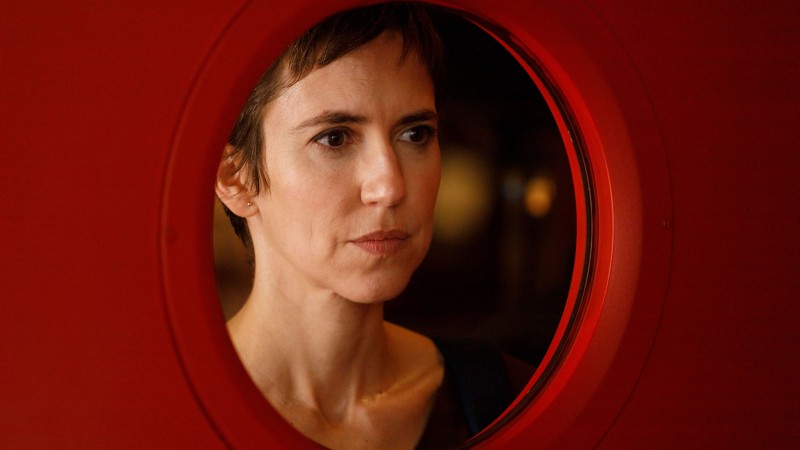
The first full day at ND/NF will offer Isabel Pagliai’s Fantasy, the winner of the First Film Award at FIDMarseille; Irati Gorostidi Agirretxe’s Aro berria, which scored a Special Jury Mention in San Sebastián; and Ique Langa’s The Prophet, which premiered in the Tiger Competition in Rotterdam. At the center of Fantasy is Louise, a young woman alone with her cat and her phone. She watches clips, makes video diaries, and leaves messages for a man who doesn’t reply.
“Pagliai builds a fascinating tension between the stillness of the compositions and Louise’s agitated psyche,” writes Phuong Le in the Guardian. “In contrast to this melancholic mood, Pagliai’s visual style is thrillingly eclectic. The mix of painterly static shots and lo-fi, handheld footage channels a state of emotional paralysis.”
Irati Gorostidi Agirretxe has spent years researching the sort of alternative communities her parents lived in before she was born. In 1978, a metalworkers strike in San Sebastián led several leftists to leave the city for a commune where, as Nicholas Vroman notes, sessions lasting for weeks on end involved “a sort of mix of Reichian therapy and Tantric spiritual philosophies.”
Oliver Laxe (Sirāt) pops up here as a Tantric guru. “Working with a superb ensemble of largely unfamiliar faces—and drawing on production design and costumes that recreate the period with remarkable fidelity—Aro berria transports us to a time and place that prove riveting,” writes Cristóbal Soage at Cineuropa.
Mozambican writer-director Ique Langa spent nine years researching The Prophet and then working with the nonprofessional actors from his father’s rural village of Manjacaze to tell the story of Hélder, a pastor who aims to revitalize his waning faith with witchcraft. Talking to the Hollywood Reporter’s Georg Szalai, Langa says that “there’s been a huge surge of these pastors, with a lot of rumors about them using alternative powers. There are all these churches that are coming out of nowhere with these pastors that are quote, unquote prophets.”
Into the Weekend
In Tuesday’s preview of this year’s Los Angeles Festival of Movies, we took a couple of quick looks at John Early’s Maddie’s Secret and Jack Auen and Kevin Walker’s Chronovisor, and both films will screen during the first weekend of the festival. Friday sees the New York premiere of Do You Love Me.Multidisciplinary artist Lana Daher calls her first feature “a personal journey through Lebanon’s audiovisual memory, composed entirely of archival footage.”
It’s “a substantive feat of excavation,” writes Yassin El-Moudden in the Guardian. “A significant amount of Do You Love Me consists of scenes from past Lebanese movies, therefore showcasing the country’s cinema—including the works of trailblazing female filmmakers such as Jocelyne Saab and Heiny Srour—while also reframing conventional narratives of its own image.”
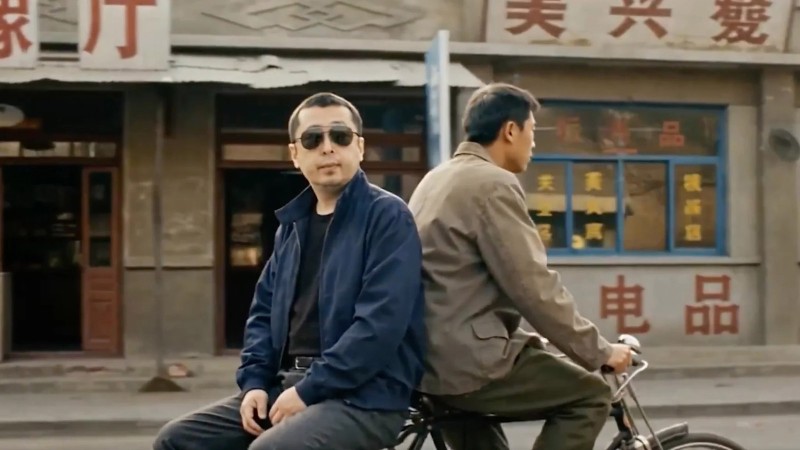
Xinyang Zhang spent eight years working on his debut feature, Panda, which saw its world premiere in February in the Forum Expanded program at the Berlinale. Four people wander the banks of the Yangtze River: “Xing Qiji, the doctor, resembles a summoner of souls,” Xinyang Zhang tells Forum head Barbara Wurm. “The young woman is a mythic figure, a being filled with spirituality, almost like a bodhisattva. Wang Laodao, the cook who cuts his own finger, resembles a suffering ordinary man. And the homeless man is like a fanatical shaman—a scientist and a dreamer. They all move through this human world together: they encounter one another. Their social classes and their ways of thinking all seem quite different, but when they are together, these people attain a kind of equality.”
Kai Stänicke’s Trial of Hein opened the Berlinale’s Perspectives program of first features this year. Hein (Paul Boche) has spent fourteen years away from home, a village on a remote island in the North Sea. When he returns, no one in the community recognizes him (or admits to recognizing him). Hein will have to prove he is who he says he is, and Stänicke’s screenplay “toys with us as well as its protagonists,” writes Screen’s Lee Marshall, “swerving toward folk horror, flirting with comedy, and standing on the brink of symbolic portentousness before pulling back.”
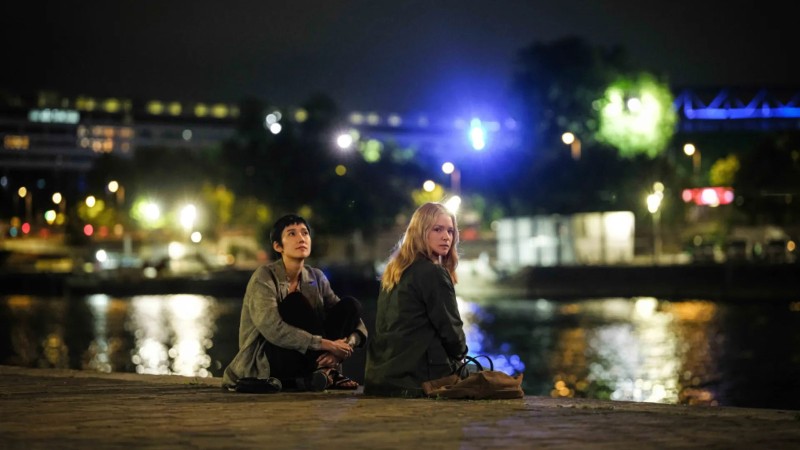
Charli XCX stars in Pete Ohs’s Erupcja as Bethany, a Londoner ostensibly in Warsaw for a romantic getaway with her devoted boyfriend (Will Madden), but all she really wants to do is hang out with an old friend, Nel (Lena Góra). Erupcja is “a work of novelistic amplitude,” writes the New Yorker’s Richard Brody. “Emotional turbulence courses through the film, conveyed less by spectacular blowups than with a finely tuned mechanism of phone calls and voice mails, visits and absences, plans made and forgotten and brazenly broken. The web of secrets and confessions, schemes and counterplots, short-term pleasures and far-reaching decisions, are couched in dialogue that is pugnacious, vulnerable, comedic, and sometimes richly poetic, and which feels as spontaneous as it is carefully crafted.”
During his last weeks at Filmmaker, Scott Macaulay wrote that Erupcja’s “many considerable strengths—its beautifully natural performances (Charli makes a fantastic screen debut here, and she and Góra have a lovely chemistry), its subtle and relaxed dramatization of characters whose inner lives are often opaque to each other, and its freewheeling depiction of Warsaw youth culture—are inseparable from the purity of its making. Five features in, Ohs has finely honed his method with this new picture, expanding his canvas both in terms of location but also theme and emotional expression. With an off-screen narrator spinning Bethany and Nel’s tale into the realm of fable, Erupcja will touch any romantic who’s gone on a trip to a place that can make you change.”
Its title echoing the ancient Greek word for the sort of athletic contest that eventually became what we know as the Olympics, Agon is the first feature from Giulio Bertelli, the younger son of Fondazione Prada cochairs Miuccia Prada and Patrizio Bertelli. The film is “structured around three parallel portraits,” notes Davide Abbatescianni at Cineuropa, “a trio of women embodying different stages of life, and different shades of fragility and strength. Fencer Giovanna Falconetti (Yile Vianello), judoka Alice Bellandi (here playing a fictionalized version of herself), and rifle shooter Alex Sokolov (Sofjia Zobina), an Italian champion of Russian origins, move through sterile environments and aseptic settings, their routines alternating between intense training, long moments of solitude, and glimpses of competition.”
In Strange River, the debut feature from Jaume Claret Muxart, a Catalan family takes a summer biking tour along the Danube. “Mixing sensuality and lyrical atmospherics with an unapologetically highbrow frame of reference (German Romantic drama, modernist architecture),” writes Jonathan Romney in Screen, “this elegantly confident offering” is “tender, enigmatic, and gorgeously shot on 16 mm” by Pablo Paloma.
Monday and Tuesday
Written and directed by actor Lorenzo Ferro (Simon of the Mountain, Narcos) and music video director Lucas A. Vignale, The River Train introduces Milo Barría as Milo, a nine-year-old growing up in a small town in Argentina and training to become a great Malambo dancer—because that’s what his father wants him to do. Milo’s own dream is to live as an artist in Buenos Aires, and one night, he slips some sleeping powder into his family’s dinner takes off for the big city on a sky-blue train. “Ferro and Vignale don’t shout the film’s ambitions,” writes John Lynn for the International Cinephile Society. Instead, “they let them drift into view, like the train itself, moving steadily through fields and memory.”
Inspired by The Tibetan Book of the Dead and executive produced by Carlos Reygadas, Next Life, the first fiction feature from multimedia artist Tenzin Phuntsog, focuses on a Tibetan American family in Northern California as they prepare for the death of their father. At In Review Online, Chris Cassingham writes that the “simplicity of the premise . . . at once justifies [the film’s] austere tone and atmosphere and belies its complex and sensuous spirituality. The dialectical nature of Phuntsog’s point of view allows contradictions and ironies to take precedence over character development and narrative logic, and suggest a bridge between life and death that is, perhaps, not one-way.”
In Sanju Surendran’s If on a Winter’s Night, executive produced by Payal Kapadia, Sarah (Bhanu Priyamvada) and Abhi (Roshan Abdool Rahoof) set out together from Kerala to start a new life together in Delhi. Reviewing this “quiet, pensive film about choices and regrets,” Daniel Eagan writes that “it’s about how even the most confident and hopeful of us can be reduced to helplessness. Early in the film Sara walks past a poster for Devi, and the work of director Satyajit Ray may be a clue to Surendran’s methods. I was reminded of Ray’s Distant Thunder, which slowly and calmly detailed how a doctor and his family are ruined during World War II by forces they don’t fully understand.”
Don’t miss out on your Daily briefing! Subscribe to the RSS feed.