Los Angeles Festival of Movies 2026
Share
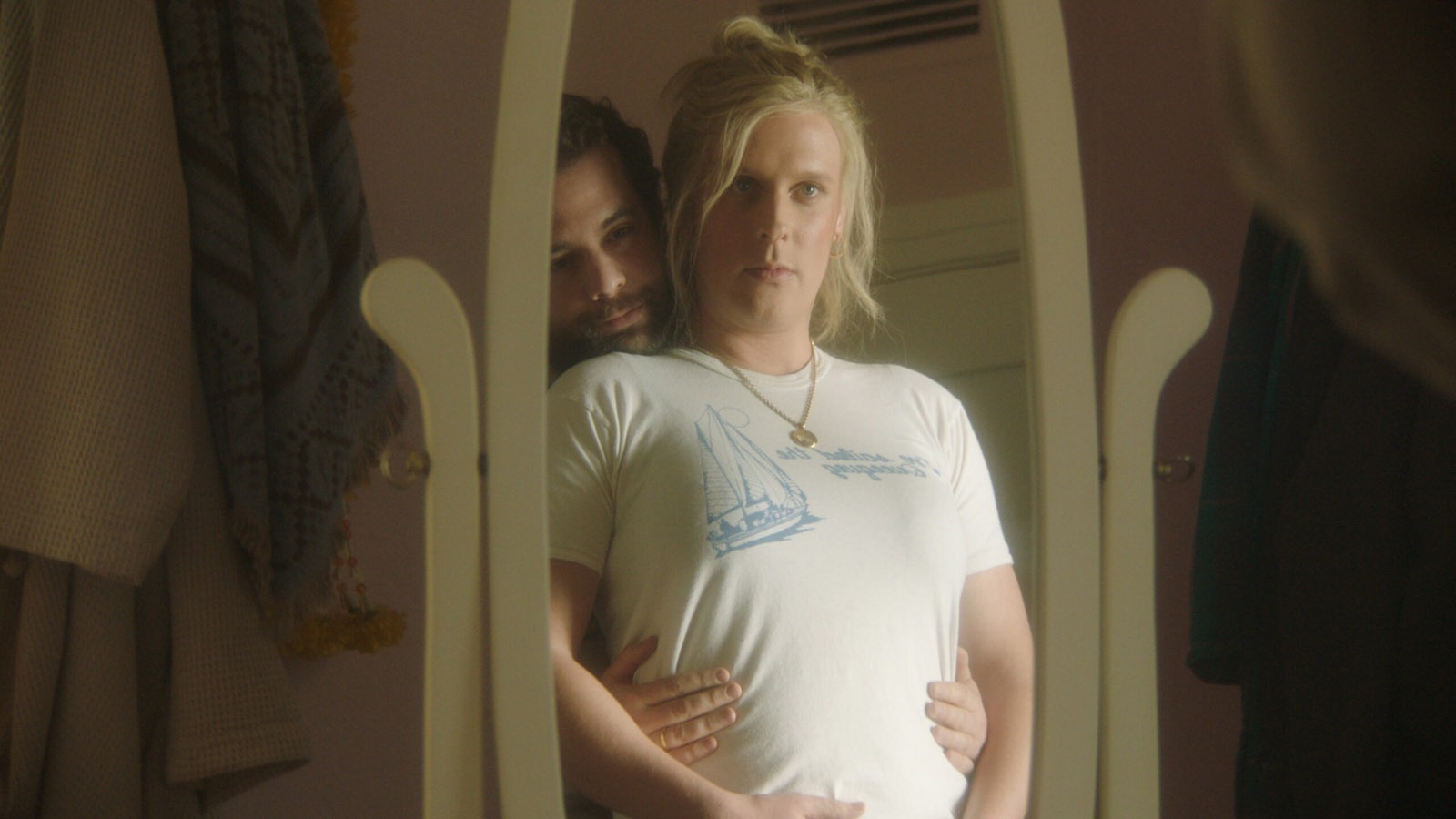
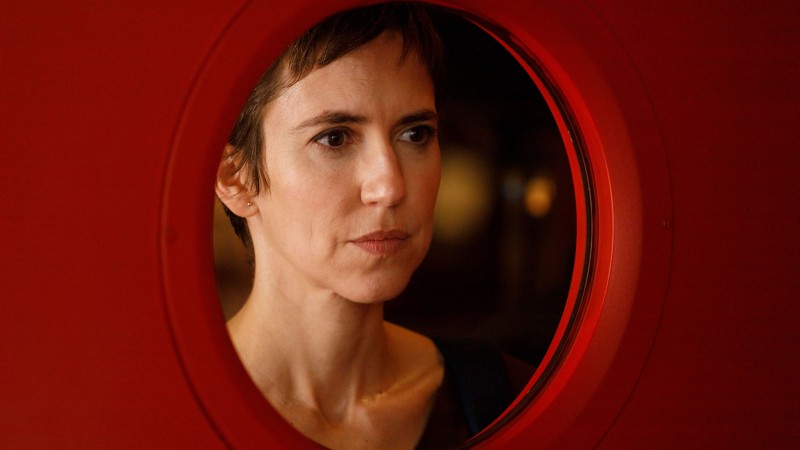
When Maddie’s Secret, the first feature directed by comedian John Early, premiered in Toronto last fall, Adam Nayman, writing for the Ringer, called it “a loving pastiche of after-school specials featuring Early in a remarkably assured and tender distaff performance as a would-be culinary influencer struggling with bulimia. If that sounds like a recipe for disaster, Early aces his own high-degree-of-difficulty assignment by leveraging his alt-comic instincts against a reverent (and revelatory) cinephilia.”
“Early is one contemporary filmmaker—Todd Haynes is another—who sees the exquisite, manicured melodramas of Golden Age Hollywood as a useful template for the era of social media, in which every gesture is also a performance,” writes Mark Asch at Little White Lies. “The cast of Maddie’s Secret—particularly tomboyish Kate Berlant, as Maddie’s spiky and besotted sapphic sidekick—put an overenunciated gloss on every scene . . . That Maddie is a domestic-goddess entrepreneur is also a throwback to the classic women’s picture—Claudette Colbert was a single mother turned pancake-mix magnate in the original Imitation of Life, and Mildred Pierce was a baker who became a restaurateur, the kitchen being a place where a woman could transcend traditional gender constraints by embodying them to the hilt.”
On Thursday, Maddie’s Secret will open the third edition of the Los Angeles Festival of Movies, “one of the finest-curated festivals in America,” as far as Film Stage founding editor Jordan Raup is concerned. Running through Sunday, LAFM 2026 will present nine features plus three restorations, including Lino Brocka’s rarely screened Macho Dancer (1988); shorts programs featuring new work by Don Hertzfeldt, Neo Sora, Adam Piron, and Josephine Decker; a conversation with Decker and production designer and producer Lisa Hanawalt (BoJack Horseman); and another with writers Melissa Anderson and William E. Jones.
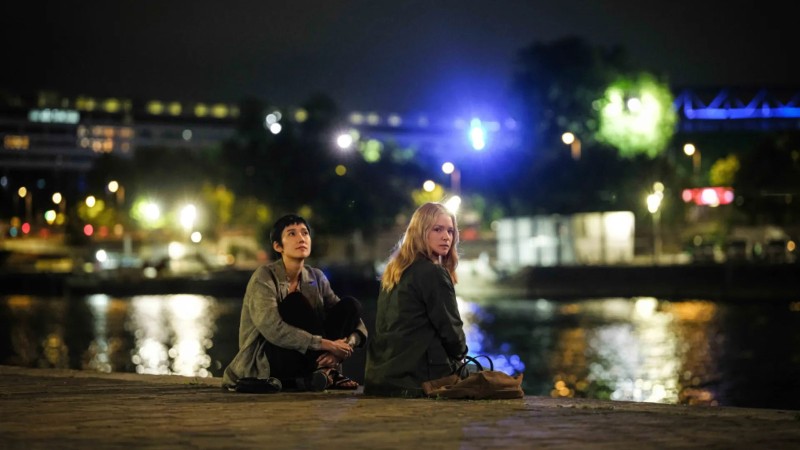
Maddie’s Secret is one of two films in the lineup set to screen in the next few days in New York as part of this year’s New Directors/New Films. The other is Chronovisor, the first feature from Jack Auen and Kevin Walker, who have been working together for years under the name Cosmic Salon. Anne Laure Sellier, a professor of behavioral sciences at HEC Paris, plays Béatrice Courte, a scholar at Columbia who comes across a real-life but shushed-up and forgotten chapter in history. “In the same way our character becomes obsessed with it, that was kind of our life for a few months,” Walker tells Alex Fields, who interviews the directors for Tone Glow.
In the 1950s, Pellegrino Ernetti, a Benedictine priest and musicologist claimed to have invented a device, the Chronovisor, that would allow us to peer into the past. Ernetti said he’d witnessed the crucifixion of Christ and a speech delivered by Cicero and had photographs to prove it—but his supposed evidence was dismissed along with his time machine by journalists, experts, and Pope Pius XII.
“While, on the one hand, Chronovisor seems to share some DNA with various Dan Brown adaptations and other Catholic-conspiratorial pulp,” writes Dylan Adamson in the Brooklyn Rail, “Walker and Auen are more interested in the fuzzy boundaries of conspiratorial thinking—its temptations, hazards, and stubborn grains of truth. The amount of prop literature the film summons in evidence of the Chronovisor beggars belief, until one verifies post hoc that all, or nearly all, of this material actually exists.” Chronovisor is “too tempted by fantasy to make a documentary of this material, and yet includes too much truth and documentary technique in its mix to exist comfortably in the category of fiction.”
When Christine Haroutounian’s After Dreaming premiered at last year’s Berlinale, the BFI’s Sam Wigley called it “the most transfixing, formally experimental first feature I’ve seen in an age, a nonlinear romance and road trip that unfolds against a landscape haunted by Armenia’s ongoing conflict with Azerbaijan.” The family of an Armenian man killed in the conflict asks a soldier, Atom (Davit Beybutyan), to take the man’s daughter, Claudine (Veronika Poghosyan), to a safer place.
“Utilizing a visual technique where only part of the frame is in focus, thanks to an additional lens affixed to the main camera body, Haroutounian tracks both the tension and growing amorous connection between the two young people, as they embark on their road trip to nowhere in particular,” writes David Katz for the International Federation of Film Critics. “Haroutounian mainly aims to hypnotize us, making the primary characters’ smallest gestures riven with suspense, as we can feel the feelings repressed by their previous parochial existences finally breaking through.”
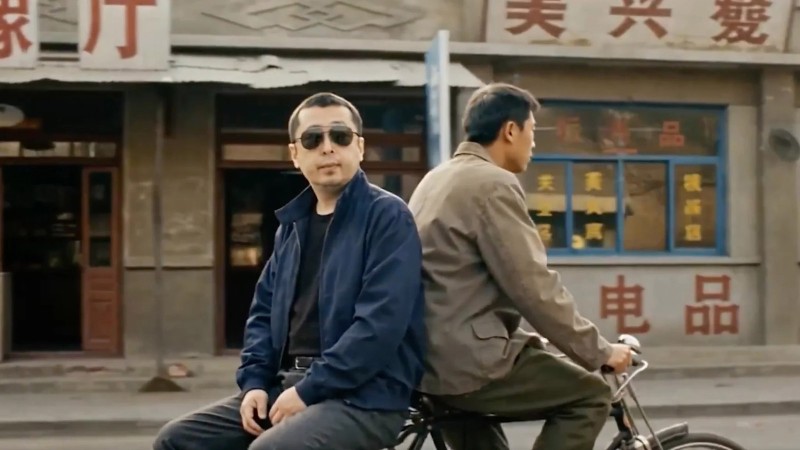
LAFM will present two films that premiered last summer in Locarno. With Hasan in Gaza, the winner of the Europa Cinemas Label award, is primarily made up of MiniDV footage Kamal Aljafari shot in late 2001 during the Second Intifada. With a guide named Hasan, Aljafari went looking for a man he’d shared a prison cell with years before. “Much of With Hasan’s pathos lies in our anachronistic encounter with Gaza’s once-vibrant streets and souks, where smiling children play and fresh vegetables abound,” writes Kareem Estefan for Film Comment. “But the rubble, subjugation, and poverty wrought by Israeli occupation are here too . . . With Hasan is poignant not only because it depicts Gaza before its annihilation, but because Aljafari explores its lifeworlds with a loving curiosity that has nothing to do with saving it or speaking on its behalf.”
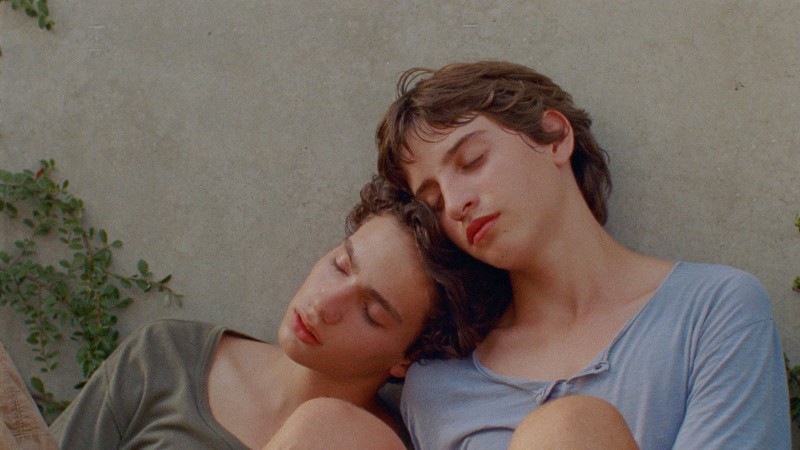
Closing out this year’s edition will be Sophy Romvari’s Blue Heron, the winner of the First Feature Award in Locarno and the Best Canadian Discovery Award in Toronto, which is where Jason Bailey caught up with it. Blue Heron “starts out as one kind of movie, a kind of sun-kissed memory play in which the filmmaker reanimates her scattered memories and big family full of tricky personalities,” wrote Bailey at Crooked Marquee, “and it does that well.”
Romvari “has a gift for recapturing the way it feels and sounds when kids are playing, when things are hectic around the house, when parents are fighting,” wrote Bailey. “And then, unexpectedly, she flips the script, jumping decades and changing styles, looking at this story from a completely different (and altogether unexpected) point of view, before crossing those streams in a manner both innovative and devastating.” Blue Heron is “an emotional haymaker, and Romvari’s quiet, observational approach, capturing even the most dramatic events without judgment, is astonishing.”
Don’t miss out on your Daily briefing! Subscribe to the RSS feed.