The Best Nightmares
Share
Graham Parkes, a cofounder of GoodbyeWorld Games, wrote and directed the independent video game studio’s first title, Before Your Eyes (2021), and now his first movie, Wishful Thinking, has won the Narrative Feature Competition at this year’s SXSW. Lewis Pullman and Maya Hawke star as a couple whose relationship has real-world repercussions. When they’re happy, the skies are sunny and the markets soar. When they fight, everything around them starts breaking down.
“It’s a goofy premise that would be done no favors by thinking about the rules too hard,” writes Angie Han in the Hollywood Reporter. “So, wisely, Parkes does not really try. Instead, he applies it as a Charlie Kaufman–lite thought experiment focused on exactly two people.” In Variety, Siddhant Adlakha finds that Wishful Thinking merges “a magical premise with a starkly realistic, anxiety-inducing relationship comedy-drama, buoyed by stellar lead performances and immensely impressive audio-visual control. It’s a blast of misery and euphoria bouncing off a filthy funhouse mirror, announcing the arrival of a director to watch.”
The winner of the Documentary Feature Competition is Summer 2000: The X-Cetra Story, the first feature from Ayden Mayeri, an actor who has appeared in films directed by Paul Feig and Greg Mottola. A quarter of a century ago, Mayeri was one of four preteens who formed the band X-Cetra, burned a few tunes onto CD-Rs, and then forgot about them until, twenty years later, those songs landed online and X-Cetra was being written up in Rolling Stone.
“If you were ever a giddy kid who spent summers hanging out with friends, making crazy pop videos, goofy short films, and composing off-key songs you were convinced were going to make you stars,” writes Leslie Felperin in the Hollywood Reporter, “then Summer 2000: The X-Cetra Story is the exact film you should watch, enjoy—and then have a bit of a cry after, mourning the happy, creative child you once were before you turned into whatever you are now.” In the Austin Chronicle, Kimberley Jones finds Summer 2000 to be “deceptively light—in the way it pulls into focus the four women’s different experiences, and how it articulates the magic in shared make-believe. So light, in fact, I felt my heart lift after 104 minutes in its company.”
This week’s highlights:
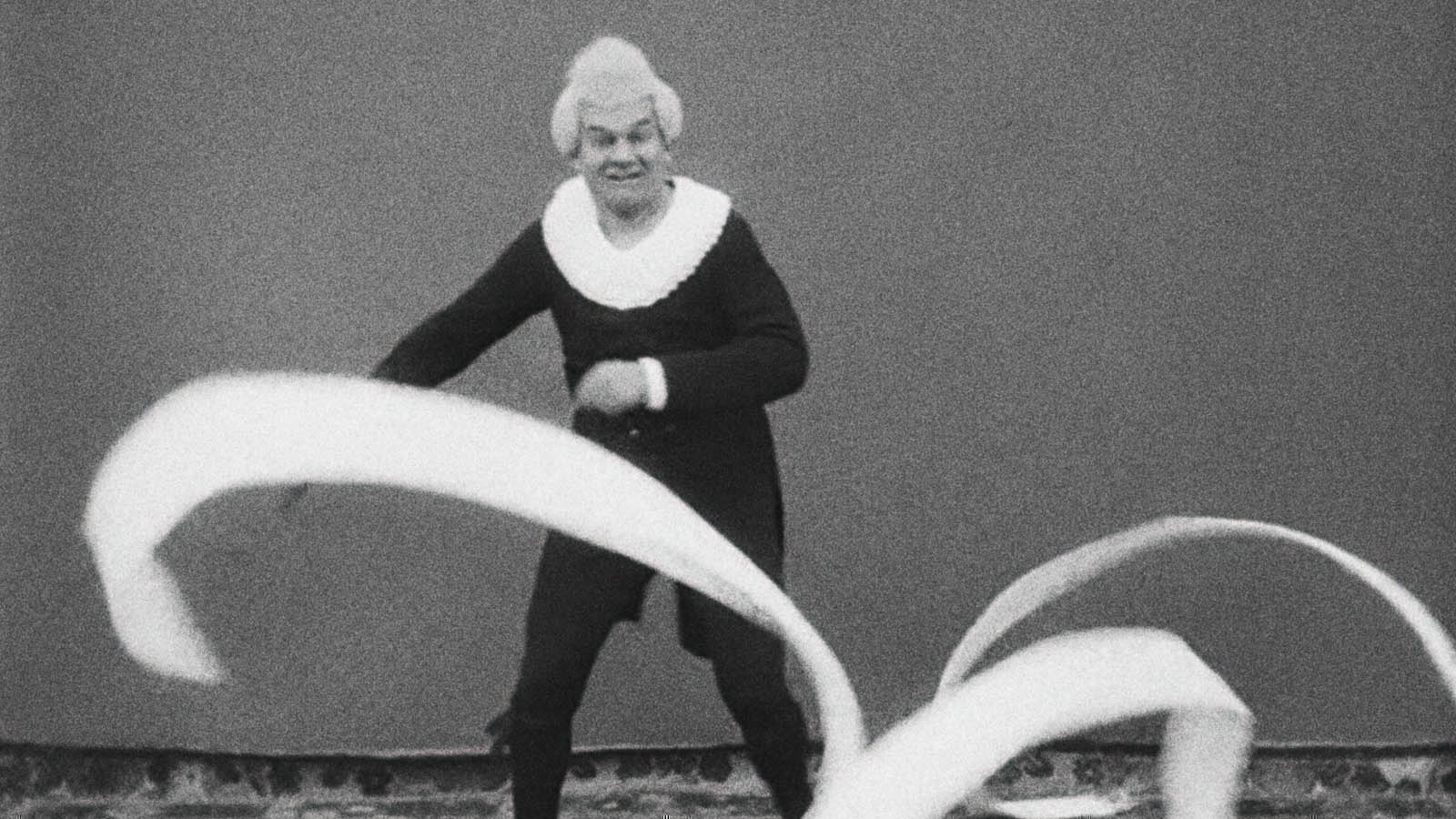
- Directed and narrated by Cannes artistic director Thierry Frémaux and opening today at the Museum of Modern Art in New York, Lumière, Le Cinéma! features new restorations of more than a hundred short films made by brothers Auguste and Louis. “When you screen those Lumière films today,” says Frémaux in Marshall Shaffer’s interview for Slant, “filmmakers generally say, ‘We have to go back to that. We have to get back that simplicity.’ Picasso said, ‘All my life, I have tried to draw like a child.’ That’s why I mentioned Godard when he talked about how, if we want to reinvent language, we have to go and see those who don’t know what language is. [Louis] Lumière was the first filmmaker, so he had to invent his own language. What’s quite impressive is that it’s coherent, but always different. In two thousand movies, not one is similar to the other. But it’s the same idea of cinema, especially that those fifty seconds must mean something.”
- Made for PBS’s American Playhouse but picked up by Paramount for a theatrical release in 1983, Testament is documentary filmmaker Lynne Littman’s first and only fictional feature. Jane Alexander stars as a mother of three going about her day in the suburb of a northern California town when a nuclear blast takes out San Francisco, just sixty miles south. “It’s not about the bomb going off,” Alexander tells the Hollywood Reporter’s Seth Abramovitch. “It’s about what comes after—how you keep love alive, how you keep community alive in the face of this overriding catastrophe.” “For me,” says Littman, “it was about creating the images of what’s precious and that must not be destroyed. We can’t lose the breakfast table. We can’t lose singing a lullaby . . . The fear then for me was that we would be attacked. The fear now is that we will attack. And that’s more horrifying in some ways.”
- In Metrograph’s Journal, Curtis Tsui writes about The Most Terrible Time of My Life (1994), The Stairway to the Distant Past (1995), and The Trap (1996), all of them starring Masatoshi Nagase as detective Maiku Hama, “whose name is the Japanese phonetic equivalent of crime novelist Mickey Spillane’s pugilistic hero Mike Hammer,” and all of them “deliriously entertaining mystery-driven mashups of nostalgic cinephilia as well as clear-eyed sociocultural examinations of mid-’90s Japan, dreamed up by one of cinema’s most singular creative voices, Kaizo Hayashi.” The director “has entertainment under his magnifying glass across the trilogy, exploiting chiaroscuro-centric cinematography for film noir vibes; fabulous and sometimes hilariously clever costumes courtesy of Masae Miyamoto (bubble wrap has never been utilized more imaginatively); an energetic, jazzy score by Meina Co. (Yoko Kumagai and Hidehiko Urayama); and a surfeit of self-conscious metaness.”
- For e-flux, Nataliia Serebriakova talks with John Smith about Being John Smith (2024), a twenty-seven-minute riff on having one of the most common names in the English-speaking world. “Smith’s humor is black as onyx here, as he assesses the hubris of artists of his generation who are assembling their archives for a planet that is unlikely to survive,” writes Michael Sicinski for Notebook. In a terrific profile for the Quietus, David Moats writes that Smith’s films are “all about questioning the authority of the moving image, the way we are inclined to blindly trust what we see and hear. This makes his work increasingly relevant in an age defined by deep fakes, disinformation, and generative AI slop. But Smith’s ideas extend further. Even in the late twentieth century, when journalistic institutions and political discourse were apparently healthy, we’ve had good reason to doubt the camera’s unblinking gaze.”
- We began the week with Christian Petzold’s trip to New York, and at 4Columns, Melissa Anderson writes about the “strange, mesmerizing power” of Miroirs No. 3. Petzold has been talking with Daniel D’Addario (Variety), Saffron Maeve (Screen Slate), and Nick Newman (Film Stage), and at Letterboxd, he tells Isaac Feldberg that he’s thinking about casting both Paula Beer and Nina Hoss in an upcoming project. The conversation naturally turns to the film that haunts Petzold’s entire oeuvre, Hitchcock’s Vertigo (1958). “I love it so much, and I hate it so much at the same time,” says Petzold. “I have seen it a hundred times in my life, and twenty times I’ve hated it. This movie, it’s too much. There are other movies by Hitchcock, like Notorious or Rebecca, that I simply love. But Vertigo is a movie about movies, about cinema itself. Hitchcock’s other movies are about human beings, but the characters of Vertigo are just one part of this nightmare, a fantastic nightmare, the best nightmare ever told in the history of cinema.”
Don’t miss out on your Daily briefing! Subscribe to the RSS feed.