The Eclectic Continuum
Share
The deaths of Robert Duvall and Frederick Wiseman hit more than hard enough, but a few days later, we learned that we’d lost Tom Noonan as well. “If often considered a cult figure for roles in Manhunter, Last Action Hero, RoboCop 2, and The Monster Squad (among sundry similar), Tom Noonan is perhaps most deserving of praise for his fiercely intelligent, emotionally lacerating, masterfully composed work as a writer-director,” wrote Nick Newman in the introduction to his 2021 interview for the Film Stage.
Noonan’s What Happened Was . . . (1994), the winner of a Grand Jury Prize and the Waldo Salt Screenwriting Award at Sundance, “began its life as an off-Broadway show about a surreally disastrous first date between two longtime colleagues—a seriocomic, fully neurotic cringe fest about modern metropolitan mating rituals set entirely in one location and pressurized in real time,” writes Adam Nayman. “There’s a rare and real pleasure in movies that are ready equipped for shape-shifting, and What Happened Was . . . is as unpredictable from moment to moment as any American movie of its era.”
This week’s highlights:
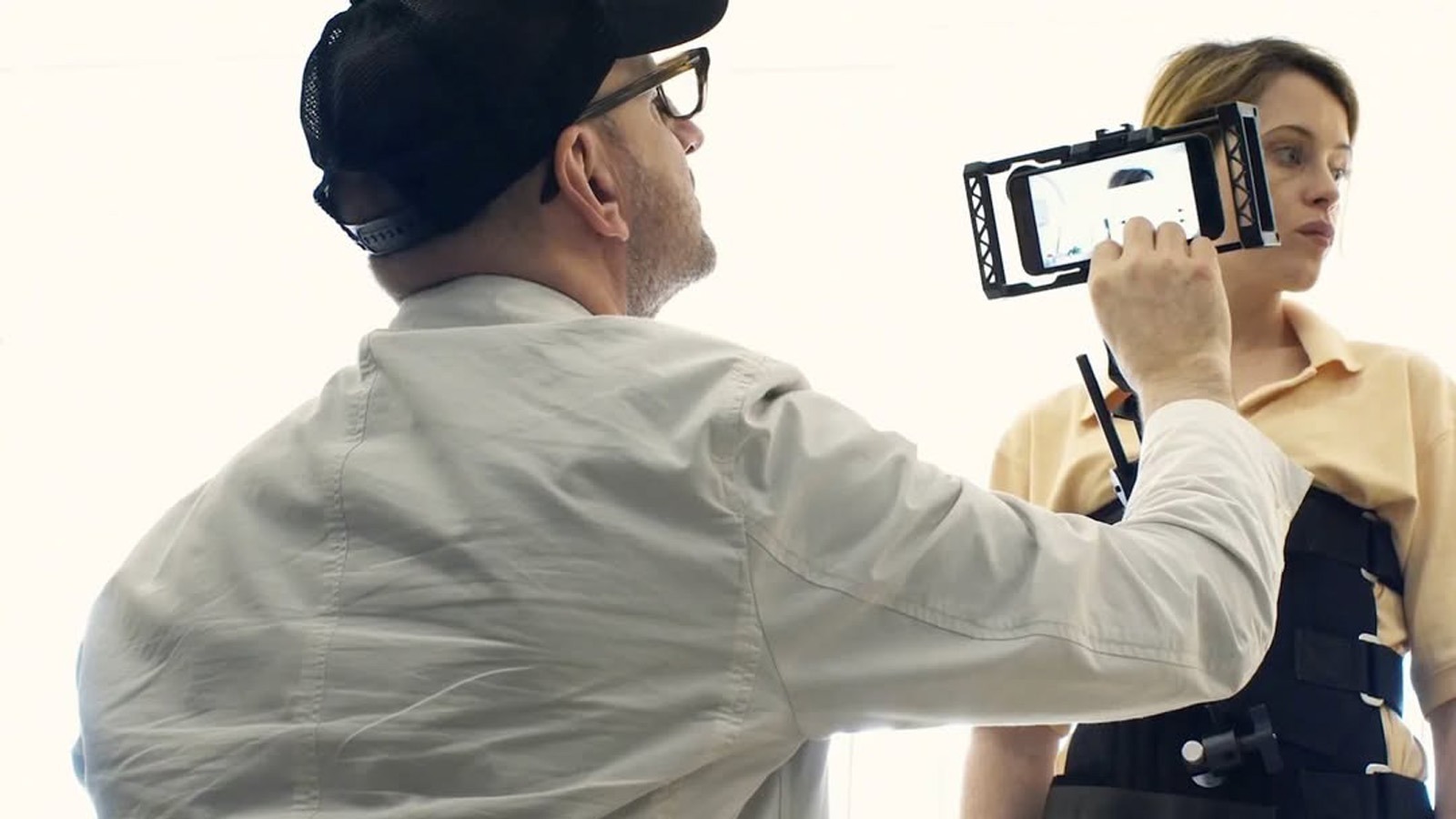
- Steven Soderbergh has selected one film from each of the past nine decades to present at the Nitehawk Cinema in Brooklyn each Wednesday through April 15. At Letterboxd, he talks to Isaac Feldberg about the impact of Do the Right Thing (1989) and the entirety of Spike Lee’s career on American cinema, “peak Lubitsch,” and what he drew from Joseph Losey’s The Servant (1963) when making sex, lies, and videotape (1989). For Brooklyn Magazine, Abe Beame asks Soderbergh about the nixed Star Wars movie he was going to make with Adam Driver and the status of his deep dive into the making of Steven Spielberg’s Jaws (1975). “Well, it’s done,” says Soderbergh, “and it was a book, but now it’s an app.”
- Film at Lincoln Center and TIFF Cinematheque are copresenting a series of films by the great documentarian Raymond Depardon, which opens today in New York and runs from February 28 through March 31 in Toronto. “By contrast with the work of other documentary filmmakers of similarly observational ardor,” writes the New Yorker’s Richard Brody, “Depardon’s method is rugged. Where Frederick Wiseman’s attention is analytical and the Maysles brothers’ attention is dramatic, Depardon’s is a tree trunk—blunt, rough, heavy, a raw thing to hew that keeps its rings of history even after shaping and trimming. His patience as a documentarian is that of the longue durée—of a childhood spent under the fourteenth-century gates of his parents’ property. He keeps the camera in place long enough that it seems to grow roots and draw strength from the earth. The beauty of his images, amid unnatural constraints, isn’t a matter of style but of natural force.”
- In his latest piece for the New Left Review, Leo Robson takes Richard Linklater’s “shrewd and absorbing” Nouvelle Vague (2025), which focuses squarely on the making of Jean-Luc Godard’s Breathless (1960), as a springboard from which to delve into the critical back-and-forth going on at the time in the offices of Cahiers du cinéma. By 1958, Godard was expressing “a newfound preference for openness over control, for—as if conceding defeat to the Bazinian aesthetic—Rossellini and Welles over Hitchcock and Lang. He took every opportunity to praise the ethnologist-filmmaker Jean Rouch, whose docudrama about Nigerian immigrants in the Ivory Coast, Moi, un noir (1958), he called ‘the great French film since the Liberation.’ This wasn’t a recantation but a broadening. If Godard initially combatted Bazin’s essentialism with a version of his own—cinema isn’t all about realism, it’s about construction—now he was arguing that all techniques existed on a continuum.”
- A program currently touring the UK well into the summer, The Consummate Professional: John Schlesinger at 100, naturally includes Billy Liar (1963), Darling (1965), and Midnight Cowboy (1969). “The films are familiar but the name doesn’t ring a bell for people,” Claire Nicolas, one of the producers of the season, tells Ryan Gilbey in the Guardian. “Eclecticism may be partly to blame,” suggests Gilbey. “A director whose résumé includes a scabrous study of Hollywood decadence and immorality (The Day of the Locust), a gentle wartime love story (Yanks), and a vulgar big-budget comedy featuring car crashes and a waterskiing elephant (Honky Tonk Freeway) will always be a challenge to pigeonhole or commodify. ‘I think he contained a few too many multitudes,’ says Nicolas’s co-curator, Marc David Jacobs. ‘Luca Guadagnino is a great modern parallel. He’s another director who makes very different films, some of which click and some don’t. And without Sunday Bloody Sunday, you wouldn’t have a film like Challengers.’”
- Let’s wrap with pointers to two short films that have just come online. Mona Fastvold (The Testament of Ann Lee) has directed Discipline for Miu Miu Women’s Tales, and she talks to Nolan Kelly (Mastermind) and Daisy Woodward (AnOther) about her work on it with Amanda Seyfried, composer Daniel Blumberg, and choreographer Celia Rowlson-Hall. And Ricky D’Ambrose’s The Sky Is Clear and Blue Today (2019) features Caroline Luft, A. S. Hamrah, and Glenn Kenny in a fragmented narrative that draws wry comedy from the aftermath of 9/11. “Covering items as disparate but interconnected as the children’s book George W. Bush read aloud while the attack took place and an advertising photo taken at the exact same moment,” wrote Adrian Martin when The Sky Is Clear screened at the Viennale, “the film gazes into the dizzy vertigo of history’s simulacra.”
Don’t miss out on your Daily briefing! Subscribe to the RSS feed.